Articles in this Volume

Research Article Open Access
Cognitive-Linguistics-Driven Prompting for Metaphor Translation Quality Estimation with Transferable Validation
Article thumbnail
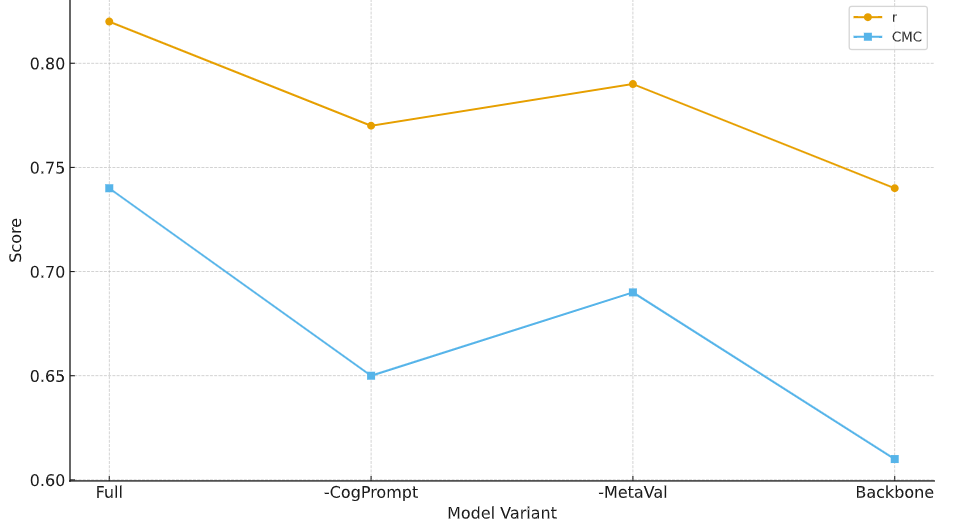
Metaphor translation quality estimation requires models to track shifts in conceptual structure across languages, rather than simply comparing surface similarity. This study proposes a cognitive-linguistics-driven prompting framework that injects conceptual metaphor information into a dual-encoder architecture and calibrates its decisions through a meta-learned transferable validator. Cognitive prompt templates encode source–target domain mappings, imageability, and contextual constraints, while a contrastive objective encourages consistent alignment between metaphorical inputs and their translations. A meta-learning layer further adapts validation weights to new metaphor families and language pairs with limited supervision. Experiments on two bilingual datasets (English–Chinese and English–Spanish, 7,420 and 6,985 annotated sentence pairs respectively) show that the framework improves correlation with human ratings, conceptual mapping consistency, and metaphor retention in both in-domain and zero-shot transfer settings. Quantitative analyses and ablation studies indicate that cognitive prompting contributes most of the gains in conceptual alignment, whereas transferable validation stabilizes performance under domain and language shifts. The findings suggest that cognitively grounded prompting can bridge linguistic theory and neural evaluation, providing interpretable and robust decisions for metaphor translation quality estimation across languages.
Show more
Read Article PDF
Cite
Research Article Open Access
Potential Fault Prediction of Industrial Robots Based on Machine Learning Algorithms
Article thumbnail
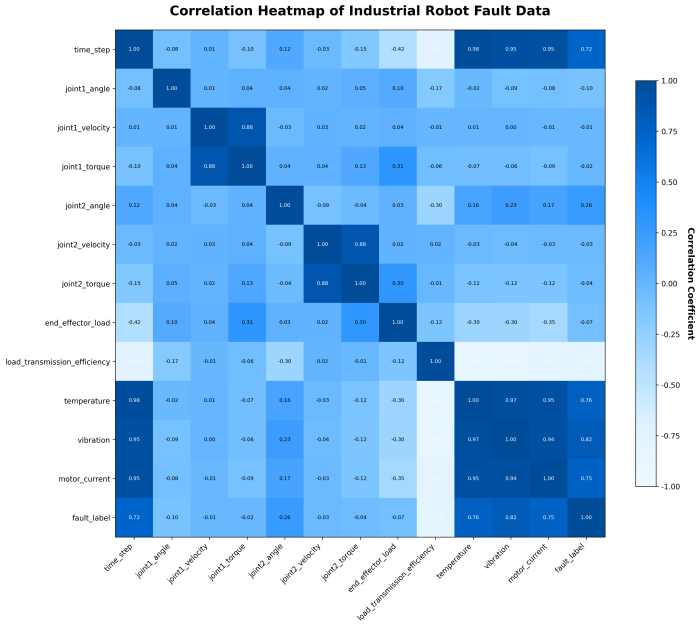
The intelligent manufacturing industry is accelerating its upgrading. Industrial robots have become the core support of the flexible production system, and their operational status directly affects the continuous operation capacity and safety of the production line. In large-scale production scenarios, industrial robots are constantly operating under high loads and multiple conditions. Potential faults such as joint wear, abnormal load transmission, and motor performance degradation tend to accumulate continuously. If not predicted in time, it can easily lead to unplanned shutdowns, resulting in reduced production efficiency and increased operation and maintenance costs. Aiming at the problems of insufficient feature focusing and inadequate dynamic correlation capture in the fault prediction of industrial robots by existing machine learning algorithms, this paper proposes the RBMO-BiLSTM-Attention classification algorithm. Firstly, violin graph analysis and correlation analysis are carried out, and then comparative experiments are conducted through multiple machine learning algorithms. The results show that among the traditional machine learning algorithms, decision trees and random forests perform relatively outstandingly, with accuracy and recall rates both reaching 94.1%, while the performance of other algorithms is slightly inferior. The proposed algorithm has significant advantages in all evaluation indicators. Its accuracy rate, recall rate, precision rate, F1 value all reach 95.9%, and the AUC value is as high as 97.8%. It has stronger feature extraction capabilities and classification performance, and can more accurately complete the risk level classification task of industrial Internet of Things devices. This research provides an effective technical solution for the precise prediction of industrial robot faults, which is of great significance for reducing unplanned downtime, improving production efficiency and the economic efficiency of operation and maintenance.
Show more
Read Article PDF
Cite
Research Article Open Access
Reinforcement Learning Driven Counterfactual Policy Evaluation for Dynamic Allocation of Mental Health Services
Article thumbnail
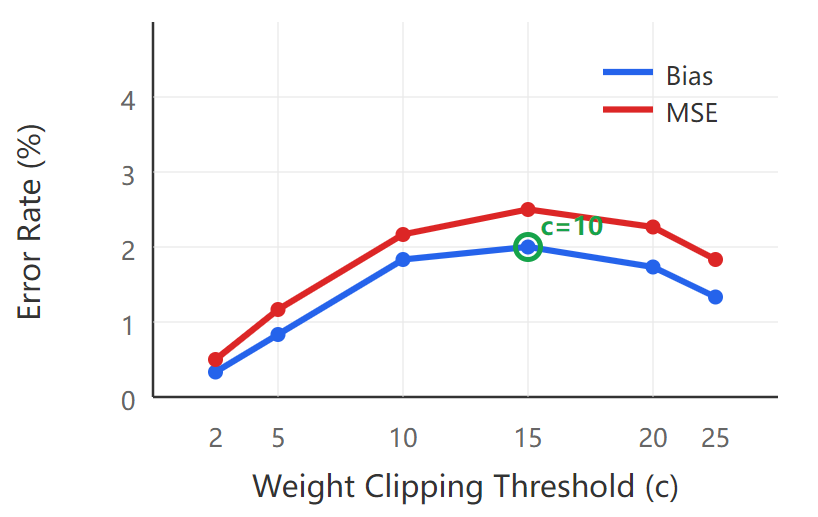
Rising demand and persistent capacity constraints in mental health care have exposed the limitations of rule-based triage and single-shot trial designs, especially under volatile symptoms, delayed outcome feedback, and fragmented digital data. To address these challenges, this study develops a reinforcement learning–driven counterfactual policy evaluation framework that models care allocation as a partially observable Markov decision process and combines doubly robust off-policy estimation with conservative policy improvement. In-hospital follow-up trajectories and community wearable data are integrated to construct latent state representations, and candidate policies for visit frequency, session duration, and intervention modality are evaluated offline for value and safety before deployment. On real-world cohorts, the doubly robust estimator achieves an 8.3% improvement in policy value over the baseline while retaining 76.2% of the original effective sample size and reducing bias and mean squared error under optimized clipping. Operationally, the learned policy shortens median waiting time to 8.7 days, increases per-staff throughput by 22.6%, and lowers readmission rates, while opportunity and treatment intensity gaps shrink and stability metrics improve. These findings indicate that RL combined with counterfactual evaluation can support more efficient, fair, and auditable dynamic allocation of mental health services under fixed resources and offer a transferable pipeline from offline data to safe policy deployment.
Show more
Read Article PDF
Cite