Articles in this Volume

Research Article Open Access
Self-Supervised Multimodal Representation Learning for Correcting Measurement Error in Dietary Exposure Assessment
Article thumbnail
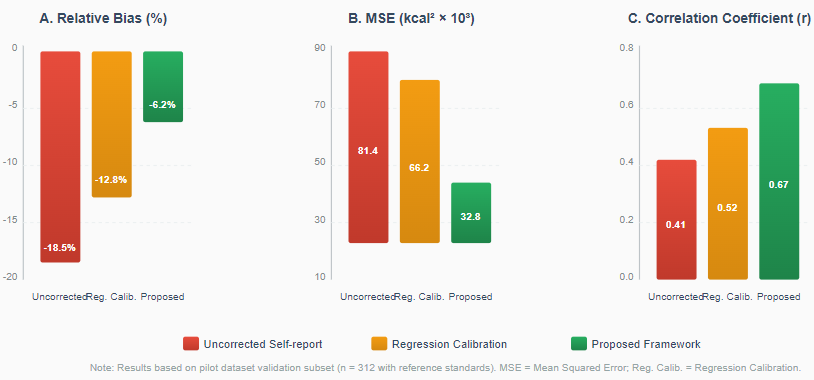
Measuring dietary exposure is the key aspect of nutritional epidemiology in order to find cause and effect relationships between nutrition and long-term illnesses. Nevertheless, self-reported nutrition assessment tools e.g. food frequency questionnaires and dietary recalls provide systematic underreporting as well as random error in nutrition assessment that considerably reduce the regression coefficients of exposure-outcome relationships and even obscure true diet-health effects under measurement errors. The current corrections methods conducted on small reference samples and depending on the assumptions of linearity are capable of treating variations of errors in multimodal data of great dimensions. We are going to present an idea of self-supervised multimodal representation learning, that is, an error-reducting dietary exposure measure, where dietary text logs and wearable sensor data are modeled jointly and learns discriminative features highly correlated with true intake through cross-modal contrastive learning and masked reconstruction, trained over multi-view representations to produce an exposure-corrected dietary energy and nutrient consumption estimate using a unified latent space, and produce an exposure-corrected dietary text log estimate using a unified latent space.
Show more
Read Article PDF
Cite
Research Article Open Access
Collaborative Learning of Large-Scale Dataset Distillation and Filtering for Efficient AI Model Training
Article thumbnail
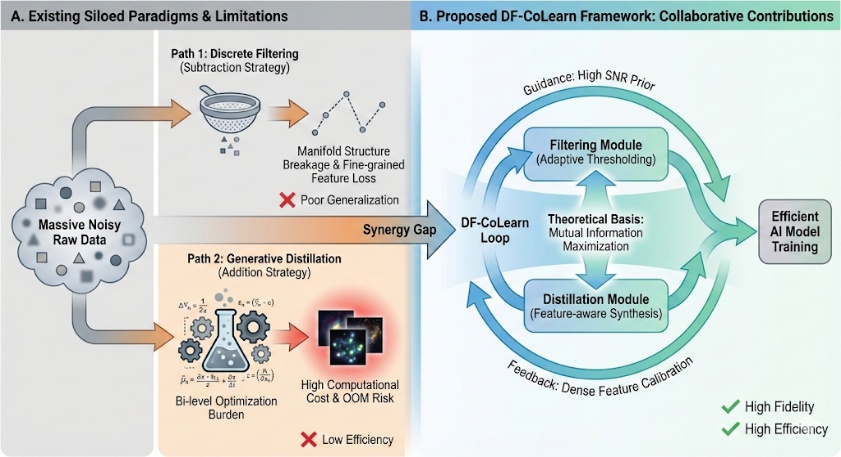
In order to solve the endogenous contradiction between the data scale dividend and the diminishing marginal effect of computing power in large-scale deep learning, this paper proposes a collaborative learning framework for large-scale Dataset distillation and Filtering (DF-CoLearn). By constructing a dynamic feedback closed loop based on bi-level optimization and mutual information maximization, the Pareto optimality between training efficiency and model generalization ability is realized, which provides a new theoretical perspective and technical path for green and efficient AI model training.
Show more
Read Article PDF
Cite
Research Article Open Access
Prediction of Emergency Response Efficiency Levels for Abnormal Events in Expressway Service Areas Based on Machine Learning Algorithms
Article thumbnail
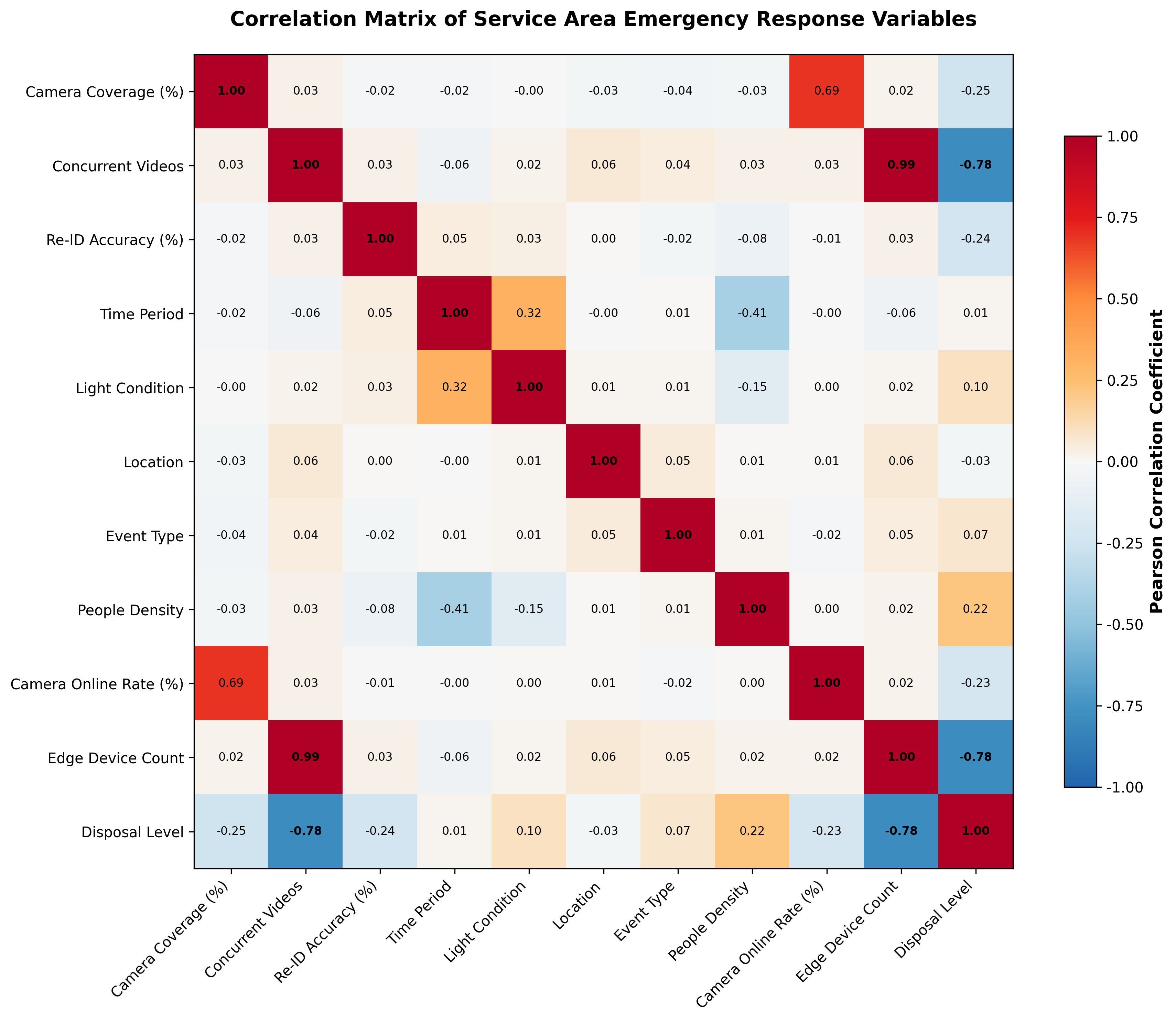
Highway service areas, as key nodes in the road traffic network, undertake core functions such as passenger flow distribution and vehicle supply. During daily operation, abnormal incidents such as missing persons, abnormal vehicle stops, and facility malfunctions occur from time to time. Due to factors such as the periodic fluctuations in passenger flow density, differences in equipment deployment levels, and the variability of environmental conditions, there are significant differences in the efficiency of emergency response to abnormal events. The traditional response mode relies on manual investigation and experience-based judgment, which not only responds slowly but also fails to meet the demands of digital and intelligent operation and management. In view of the deficiencies of existing algorithms in temporal feature capture, nonlinear fitting and multi-feature association mining, this paper proposes the LSTM-KELM-Transformer classification algorithm, providing reliable technical support for the intelligent and efficient handling of abnormal events in expressway service areas. The research first conducted correlation analysis and violin graph analysis, and then carried out comparative experiments through multiple machine learning algorithms. The results showed that the proposed algorithm demonstrated significant advantages in all core evaluation indicators, with both accuracy and recall rates reaching 89.5%. It is significantly higher than the 74.8% of decision trees, 84.5% of GBDT, 81.5% of random forests, 86.6% of ExtraTrees, 84.5% of BP neural networks, 84.9% of CatBoost and 85.7% of XGBoost.
Show more
Read Article PDF
Cite
Research Article Open Access
Construction of an Evaluation Indicator System for Blended Teaching Competency of Skill-Dominated Physical Education Teachers
In this era of advanced information technology, it is common to observe that our university facing demands for blended teaching skills in physical education (PE). This study aimed to qualitatively analyze Blended Teaching Competency based on five exemplary sports course (including dance, martial arts, and yoga) in Hubei Province. According to human-computer collaborative thoery, we propose a four-dimensional evaluation framework: covering teaching integration, technology application, adaptive intelligence, and smart feedback. This framework support not just skill acquisition but the holistic psychological, physical, and emotional development of university students. Our analysis, obviously, revealed that tools like ARs and motion recognition instruments are game-changer. More interesting, these tools allowed for dynamic group coordination exercises and personalized learning paths based on real-time task for student. Ultimately, this framework embodies three core principle: "student-computer-teacher collaboration," "data-driven instruction," and "intelligent PE." We believe it offers a concrete, practical roadmap for enhancing PE teachers' competence in designing and executing blended learning environments.
Show more
Read Article PDF
Cite
Research Article Open Access
Factor-Graph-Based Multi-Source Integrated Navigation for UAVs
Article thumbnail
Reliable navigation under GNSS degradation requires exploiting complementary sensors and estimation methods that can tolerate nonlinearity and outliers. This paper presents a multi-source integrated navigation approach for unmanned aerial vehicles (UAVs) that combines an inertial measurement unit (IMU), GNSS, a ground-based laser ranging-and-angle sensor, and a ground-based RF radar. A practical calibration and alignment pipeline is first established, including IMU intrinsic calibration (misalignment, scale factors, and biases), GNSS lever-arm compensation, and weighted least-squares calibration for range/angle channels of the laser sensor and radar. On this basis, a sliding-window factor-graph optimization framework is constructed with IMU preintegration as the time backbone, while GNSS, laser, and radar measurements are introduced as factors. Marginalization is applied to bound the problem size, and residual-based down-weighting is used to suppress gross errors. Simulation results on a maneuvering UAV trajectory demonstrate clear accuracy gains over an extended Kalman filter (EKF): the mean position error decreases from about 2.16–2.20 m to 0.69–0.79 m, and the mean velocity error decreases from about 0.24–0.28 m/s to 0.10–0.11 m/s. These results indicate that factor-graph smoothing can provide more accurate and stable navigation estimates for multi-rate heterogeneous sensing.
Show more
Read Article PDF
Cite
Research Article Open Access
Intelligent Fluid-Driven Active Thermal Management Systems: Multi-physics Modeling and Predictive Control Optimization
Article thumbnail
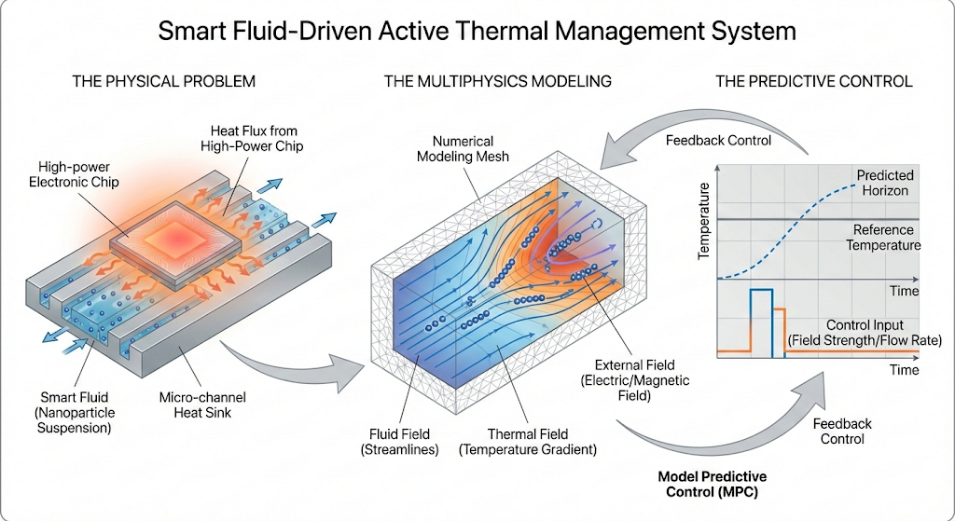
To address the bottleneck in thermal management of high power density electronic devices, an active thermal management system architecture based on intelligent fluid drive is proposed in this paper. In this study, a dynamic model covering electric-flow-thermal multi-physical field coupling is constructed, and the intrinsic orthogonal decomposition technology is used to break through the computational power barrier of high-dimensional nonlinear systems, which provides an important theoretical paradigm and engineering path for the next generation of adaptive intelligent thermal control technology.
Show more
Read Article PDF
Cite
Research Article Open Access
Compliant Control for Primer Pre-Tightening in Assembly Processes
Article thumbnail
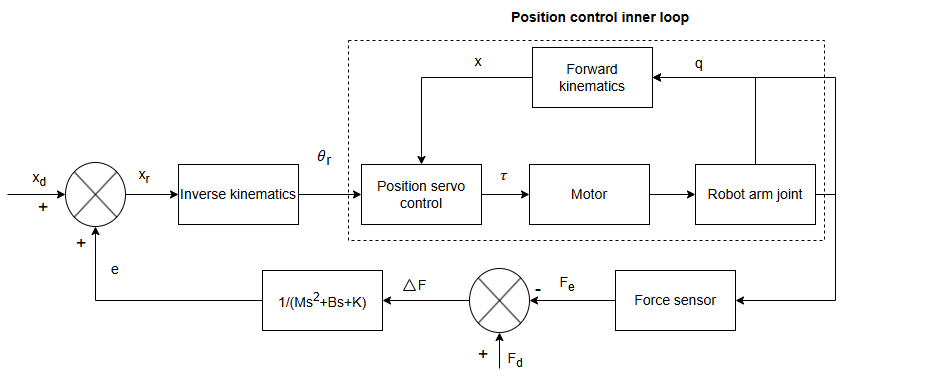
To address the issue of thread damage caused by alignment deviation during the assembly of primers and cartridge threads in small arms munitions, a compliant pre-tightening method based on position impedance control is proposed. Firstly, the characteristics of primer and cartridge assembly, similar to bolt and nut assembly, are analyzed, clarifying that the pre-tightening stage requires both preliminary thread fitting and contact force control. Secondly, a position-based impedance control model is established, mapping the contact force deviation to end-effector pose corrections through the impedance controller, achieving force and position hybrid regulation. Furthermore, through simulation, the effects of impedance parameters such as inertia, damping, and stiffness on the dynamic response of contact force are analyzed to select an appropriate parameter combination. Finally, simulation verification is carried out under a 5° initial axial angle error. The results show that this method can correct the angular deviation to nearly zero within 2 seconds while stabilizing the contact force around 6 N, effectively preventing thread damage. This provides a reference for the robotic automation of precise threaded assembly in munitions.
Show more
Read Article PDF
Cite
Research Article Open Access
MP-ICE: A Data-Driven Computational Framework for Evaluating Biopharmaceutical Innovation via Multidimensional Patent Mining
Article thumbnail
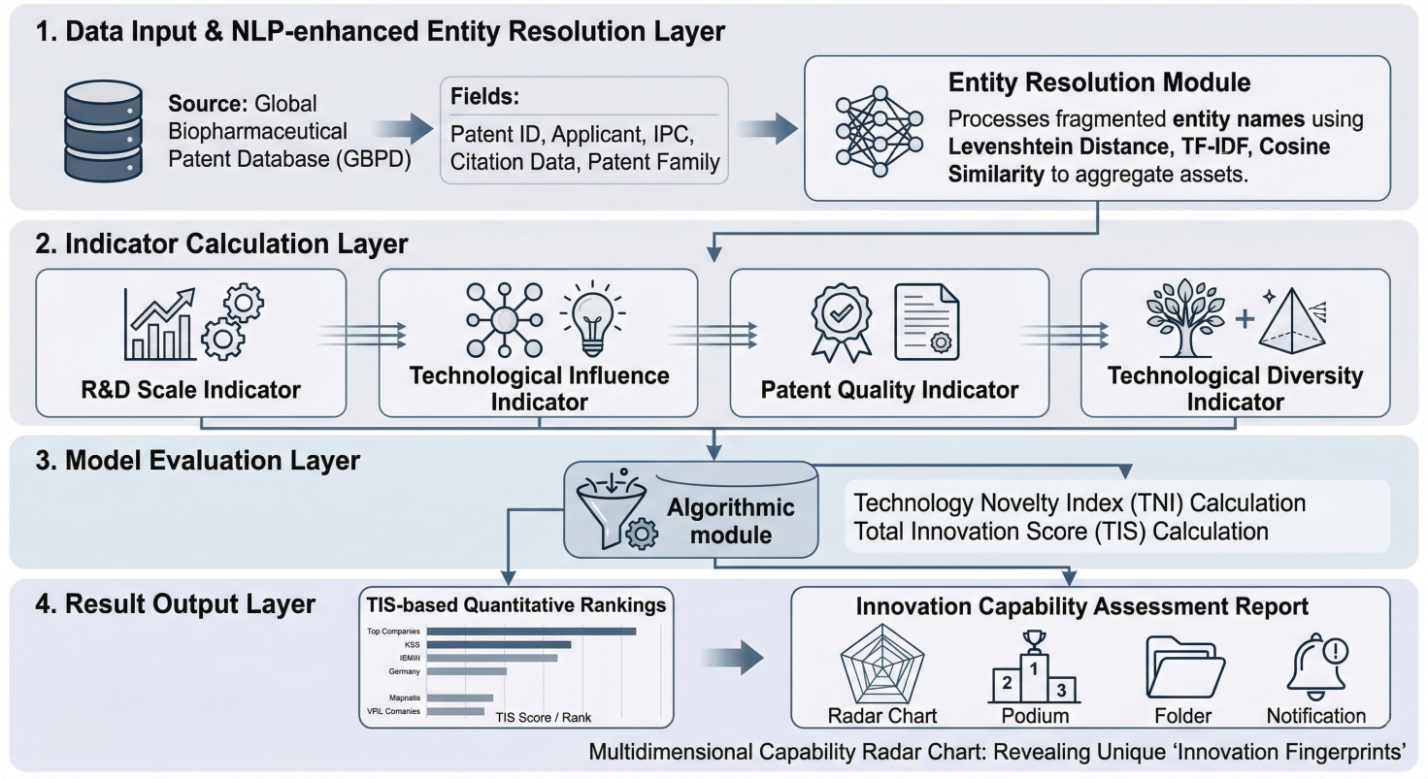
To address the computational challenges and limitations of traditional single-indicator metrics in assessing technological innovation, this study proposes MP-ICE, a data-driven computational framework designed for the biopharmaceutical industry based on large-scale patent data.The framework first integrates Natural Language Processing (NLP) techniques, specifically text similarity algorithms, into the preprocessing pipeline to solve complex entity resolution problems exacerbated by intricate pharmacological nomenclature and frequent biotech mergers. Subsequently, we engineered a multidimensional feature vector to quantify four core dimensions: R&D scale, technological influence (via directed acyclic graph centrality), patent quality, and technological diversity. These multidimensional features are then synthesized using a Technology Novelty Index (TNI) and a heuristic scoring algorithm to calculate a comprehensive Total Innovation Score (TIS).Experimental evaluation on a large-scale benchmark dataset, encompassing approximately 100,000 patent records across 500 corporate entities, demonstrates the superiority of the MP-ICE framework. Compared with traditional baseline models, the proposed framework achieved a correlation coefficient of 0.928 with ground-truth rankings and a discriminative resolution of 0.82, significantly improving evaluation accuracy and comprehensiveness by approximately 15-20%.MP-ICE provides a scalable, multi-modal data mining approach that effectively decodes complex innovation topologies and identifies fundamental technological leaders. Future research will focus on upgrading the algorithmic backend by incorporating Graph Neural Networks (GNNs) to map complex patent citation topologies.
Show more
Read Article PDF
Cite
Research Article Open Access
AI-Powered Corpus Investigation and Analyses of the Interpersonal Pragmatic Functions of English Style Stance Adverbs
Stance expressions and markers are a heated topic in global linguistic research, with style stance adverbs as a core form of stance markers, classified alongside epistemic and attitude stance adverbs. This study employs an AI-powered corpus-based comparative analysis method to probe into 11 top English style stance adverbs in the Chinese Learners of English Corpus, British National Corpus and Corpus of Contemporary American English. AI instruments are applied to optimize corpus data retrieval, statistical analysis and positional distribution mapping and make comparative analyses of their use characteristics and positional distribution of the style stance adverbs between Chinese English learners and native speakers to probe into their interpersonal pragmatic functions and use characteristics. The research findings reveal significant discrepancies: Chinese learners overuse style stance adverbs with a narrow vocabulary range, and misapply spoken-language positional conventions (initial/final placement) in written discourse resulting from insufficient understanding of their structural and functional features in academic contexts. This study deeps and widens stance adverb research and provides guidance for EFL teaching and learners' pragmatic competence improvement.
Show more
Read Article PDF
Cite
Research Article Open Access
Research on Green Supply Chain Management Optimization and Practice under the Constraints of Dual Carbon Targets
President Xi Jinping said in the 20th Party Congress report that we must build Beautiful China and develop green economy. Under dual carbon goals, green supply chain is key for ecological progress. Improving it can cut resource waste and pollution, supporting sustainable development. Our agricultural company has some green supply chain experience but still faces many practical problems. So we need improve management to boost sustainability. This paper studies the company's green supply chain. It defines core concepts using literature and divides processes into four parts via SCOR model: design, procurement, production, and recycling. It also builds an evaluation system and uses AHP and fuzzy methods to calculate scores. The results show four main issues: weak eco-design, incomplete supplier management, poor storage methods, and backward recycling tech. Reasons include low green awareness, bad information sharing, and lack of innovation. This paper suggests four improvements: raise awareness, perfect supplier system, build information mechanism, and innovate management rules. It also gives safeguard measures for staff, tech, and funding. This study provides targeted strategies to improve the company's efficiency. It also offers useful reference for other agricultural firms and promotes industry sustainability.
Show more
Read Article PDF
Cite