Articles in this Volume

Research Article Open Access
Automated valuation of used sailboat prices based on random forest regression modeling
Article thumbnail
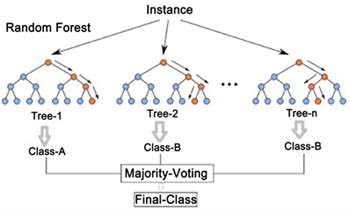
This study presents a machine learning method for regression prediction of used sailboat prices. The dataset contains attributes such as brand, length, year, and listing price of the sailboat, and the dataset is preprocessed by removing irrelevant fields and normalizing the data. A random forest model is constructed and evaluated against several models such as gradient boosting and neural networks through k-fold cross-validation. Random Forest performs well compared to other models. The ensemble approach of the algorithm effectively modeled the complex nonlinear relationships in the data. Rigorous validation ensures the generalizability of the model. The Random Forest model outperforms traditional manual assessments in terms of the accuracy of price assessments. This data-driven solution allows customers to value sailboats on their own and avoid paying excessive fees. It also allows sailboat companies to develop automated pricing systems to speed up operations. This research provides a powerful machine-learning approach for accurately predicting used sailboat prices. These techniques can be extended to other regression tasks. Further work includes refining the model and deploying real-world applications.
Show more
Read Article PDF
Cite
Research Article Open Access
Handwritten digit recognition based on deep learning techniques
Article thumbnail
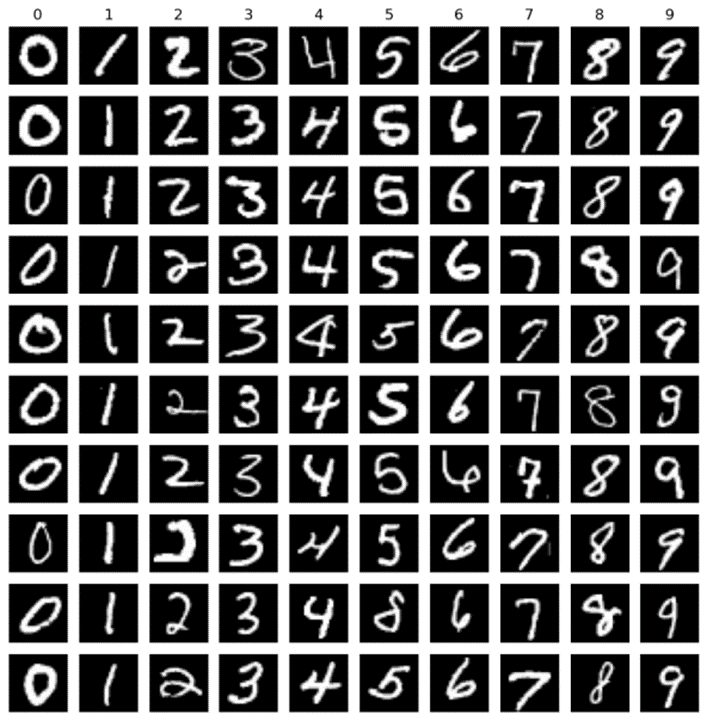
The identification of handwritten digits in images recognition and machine learning is a prominent research area. In order to create a handwritten digit recognition model for this investigation, deep learning is introduced. The proposed approach integrates Convolutional Neural Networks (CNN), Recurrent Neural Networks (RNN), and EfficientNetB0, three separate deep learning models. Specifically, the CNN model utilizes pooling layers and data augmentation techniques to enhance its classification ability, the RNN model takes advantage of its ability to process sequential data, and the EfficientNetB0 model benefits from a deeper and more complex network structure. These models are trained and evaluated using the Modified National Institute of Standards and Technology (MNIST) dataset. The experimental results demonstrate the efficacy of the proposed approach: the CNN model attains a remarkable accuracy of 98.9% on the test set, thereby showcasing its exceptional classification performance. Similarly, the RNN model achieves an accuracy of 96.7%, underscoring its suitability for analyzing sequential data. Furthermore, the EfficientNetB0 model attains an accuracy of 98.1%, thereby elucidating the benefits of the deeper network architecture. The models constructed in this study have significant real-world implications, such as improved object recognition systems, medical diagnostics, and autonomous driving. The EfficientNetB0 model produced an accuracy of 98.1% with its complex network architecture when applied to recognise handwritten digits.
Show more
Read Article PDF
Cite
Research Article Open Access
Analysis of channel performance in modern digital communication technology and understanding the enhancement of channel performance
Article thumbnail
With the rapid development of the information age, the demands on communication technology continue to grow. As a crucial communication method, digital communication systems play a vital role in achieving efficient transmission speeds and reliability. This paper centers around modulation techniques within digital communication systems, with a specific emphasis on the analysis of reducing bit error rates and enhancing transmission speeds. Consequently, this study delves into the current methods employed for achieving an all-encompassing optimization of both transmission speed and reliability, while also proposing novel insights. The paper will detail the benefits and drawbacks of contemporary noise processing techniques that aim to enhance channel performance and explore methods for their improvement.
Show more
Read Article PDF
Cite
Research Article Open Access
A comprehensive view into MPSK modulation classification
This paper provides a relative comprehensive overview on current modulation classification of MPSK from both the likelihood-based perspective and the feature-based perspective. Traditional methods based on maximum likelihood (ML) method mainly diverges in the way how unresolved parameters from the received signal are viewed. Some recent work adopting feature recognition such as SVM-based and Deep Learning-based classifying algorithms are also introduced. Fundamental equations are also provided for each method. This paper makes comparison among different methods in each section and explained the preferred utilization circumstance of each, aiming to help readers find the best algorithm in each of their specific case. Moreover, advantages and disadvantages of different algorithms are clearly stated for the readers’ information. Based on the pros and cons, it is also suggested for readers to develop new compound algorithms of better functionality for further research.
Show more
Read Article PDF
Cite
Research Article Open Access
An angle of arrival estimation method for intelligent metasurface using machine learning
Article thumbnail
Today, techniques for altering electromagnetic waves and the data they transport are increasingly crucial. These techniques have become increasingly important in several communication technologies, such as intelligent metasurface, with the rise and development of next-generation wireless communication systems. Since those technologies call for locating devices, angle of arrival (AoA) analysis becomes a crucial area for research. The AoA can now be shown in various ways, and some subspace methods have already achieved great precision. However, the extensive calculation required by those techniques is one of their key shortcomings. The author developed a novel radio frequency (RF) switching circuit design in this research and applied a novel machine-learning method to signal AoA. In single-wave settings, it was discovered that the proposed machine learning method performed satisfactorily with an average difference of 0.6 degrees.
Show more
Read Article PDF
Cite
Research Article Open Access
Spectrum map construction optimisation schemes: Sampling and prediction
Article thumbnail
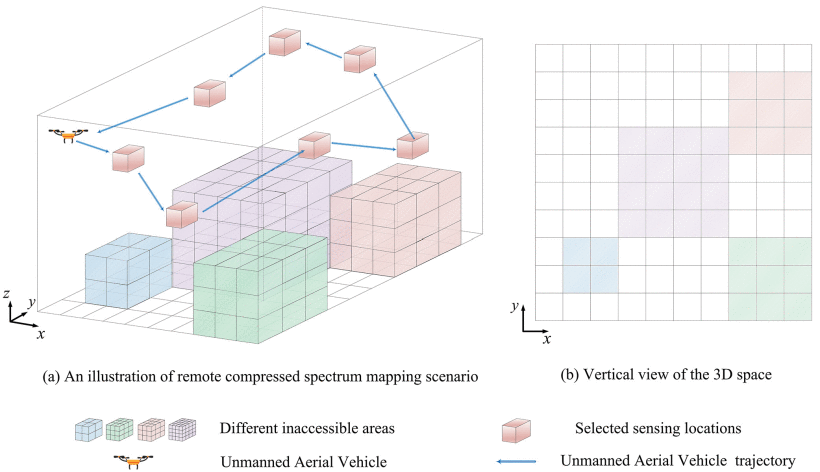
The proliferation of electromagnetic devices presents a significant challenge in developing effective techniques for spectrum monitoring, management, and security. The utilization of spectrum cartography has been acknowledged as a viable approach to address the aforementioned difficulties. This latter presents a variety of techniques aimed at enhancing the efficiency of the current spectrum mapping methodology. The subject matter can be categorized into two primary components, namely sampling and spectrum prediction. Sampling part includes methods to find the most valuable sampling points and methods of sampling hardware optimization. Spectrum prediction includes algorithms utilizing frequency-spatial reasoning techniques to estimate the target spectrum map by data from the nearby area, and algorithms utilizing ROSMP framework to estimate the spectrum map from past data. The introduction of techniques is divided into the 2 types, together with key algorithms and devices used in each method. Additionally, the letter lists some drawbacks of certain methods and discuss their development prospects.
Show more
Read Article PDF
Cite
Research Article Open Access
Research on sound signal filtering and processing delay based on multiple receivers
Article thumbnail
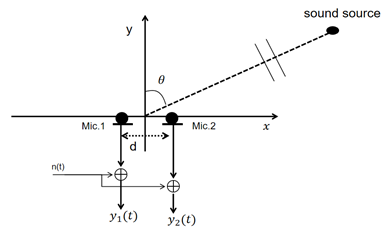
With the rapid development of modern communication and audio technology, sound signal processing has become more and more important. This paper deeply explores the potential of multi-receiver audio signal processing technology based on practical application scenarios, and studies the effect of beamforming technology and adaptive noise cancellation algorithm on audio signal quality improvement. Experimental results show that with proper technology selection and framework design, the audio signal processing effect in complex environments can be significantly improved. In addition, this paper also predicts the trend of signal filtering and processing in the future and puts forward suggestions for the application of deep learning in this field, the research of adaptive algorithms, the fusion of multi-sensor information, the optimization of computational efficiency, and the establishment of real scene simulation. Overall, sound signal processing has great potential and opportunities in practical applications, which are worthy of further research and exploration.
Show more
Read Article PDF
Cite
Research Article Open Access
Comparisons of PSK, APSK, and QAM over AWGN and fading channels
Article thumbnail
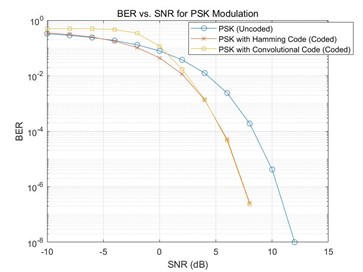
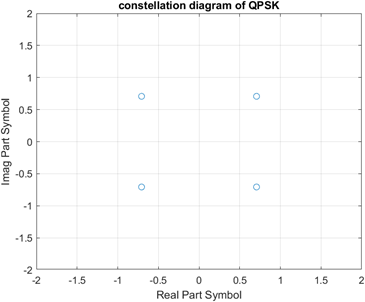
In addition to the thermal noise, communication systems can normally experience various fading because of objects reflecting the signal. PSK, APSK, and QAM modulation schemes are widely used in communication systems. It is thus essential to know how well these schemes can perform in different fading channels. This research explores the BER performance of these modulation schemes in common and typical channel models including AWGN, Rayleigh fading, Rician fading, and Nakagami fading channels by simulations in MATLAB. The BER curves over a range of SNR and symbol constellation diagrams are obtained. It is found that Rayleigh and Nakagami fading distort signals most and impacts of Rician fading in LoS case and AWGN can be mitigated significantly by increasing the SNR. Furthermore, the QAM has better BER performance in fading channels while PSK and APSK perform better in AWGN channels when the number of bits of one symbol is relatively small. Selections of modulation schemes should depend on the specific circumstances and the optimization of them is required when large numbers of bits are transmitted by one symbol.
Show more
Read Article PDF
Cite
Research Article Open Access
Optimization of human-machine interface for fatigue driving problem
Article thumbnail
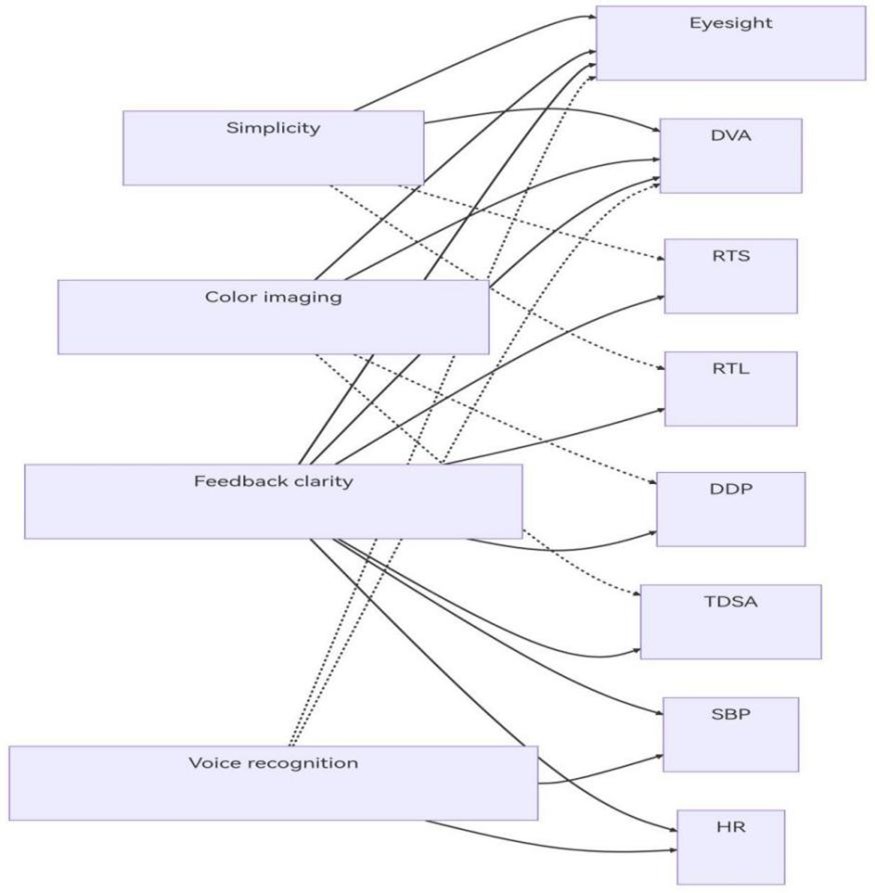
Amidst rapid motorization, the surge in serious traffic accidents has raised concerns about the significant contribution of fatigued driving to road safety. However, the current vehicle-machine interface for fatigue driving reminder is relatively simplistic and plays a weak role. This study aims to optimize the functionality of traditional in-vehicle HMIs by exploring the key factors of human-computer interaction (HCI) and developing targeted user interfaces to effectively alert and reduce driver fatigue. A quantitative analysis based on previous experimental data is conducted to model the correlation between interface design factors (such as simplicity and feedback clarity) and physical fatigue parameters. An integrated user interface with fatigue alerts, rest area navigation, driver assistance, air conditioning settings, and voice control modules is proposed. Compared to the traditional interface, the improved user interface is evaluated in simulated driving conditions using an A/B experiment. The new user interface is expected to demonstrate improved effectiveness in relieving driver fatigue by providing clear visual, audio and haptic feedback. This research contributes a structured methodology for applying HCI principles to optimize in-vehicle interface design for mitigating driver fatigue, providing a framework to inform future interface development and enhance road safety.
Show more
Read Article PDF
Cite
Research Article Open Access
Current study on human-computer interaction in machine learning
Article thumbnail
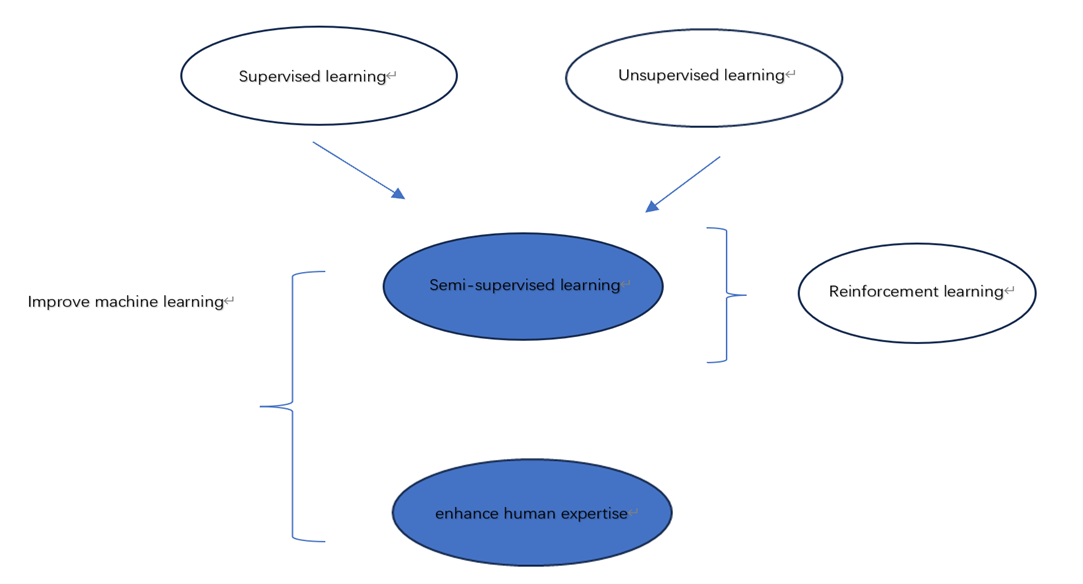
Machine learning has become one of the research hotspots at home and internationally due to the continued growth of artificial intelligence, and the application of machine learning is more and more widely developed. In the process of applying machine learning methods to real problems, there are defects that lead to biased results. This paper discusses the importance and necessity of human-machine interaction in the application of machine learning methods, as well as where human-machine interaction occurs, and puts forward two questions: "whether human should interact with machine in the process of machine learning" and "how to make machine learning have better performance". To answer the above two questions, this paper concludes that in the application of machine learning methods, people with certain professional knowledge can get better results in the machine learning process. Further, when machine learning is applied to the real world, there are some flaws that lead to failure or unsatisfactory results, and this paper proposes a way to improve this undesirable phenomenon by involving people in the machine learning process. Finally, this paper summarizes the main shortcomings of current machine learning, clarifies the development direction of machine learning that must be anthropocentric, and expresses some views on machine learning.
Show more
Read Article PDF
Cite