Articles in this Volume

Research Article Open Access
Control strategies modeling for robotic exoskeletons facilitating sit-to-stand transitions in geriatric and lower limb impaired
Article thumbnail
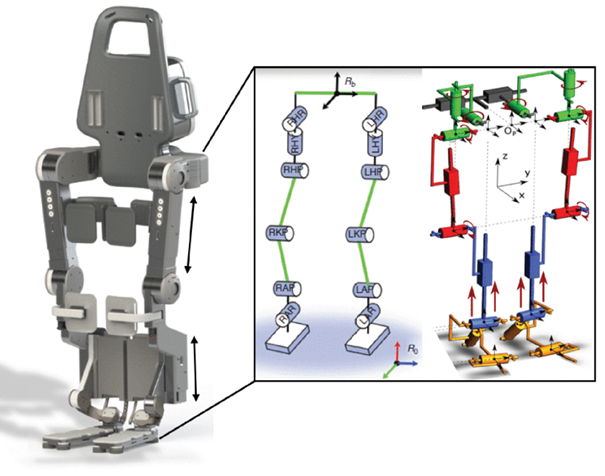
With the growing global aging population, there's been an amplified societal emphasis on preserving the health of the elderly and enhancing their quality of life. In this scenario, robotic exoskeletons have emerged as a cutting-edge solution to assist the elderly and those with lower limb muscle deficiencies in Sit-to-Stand (STS) exercises. These exoskeletons adopt two main approaches: full assistance for those with entirely weakened lower limbs and partial assistance for those with some remaining muscle strength. This article introduces two modeling methods and concepts for these control strategies, aligning with the full and partial assistance directions, respectively. Both approaches hinge on the Lagrange equation as their foundational structure, integrating distinct kinematic designs to form their individual dynamic models. Based on this, the models are further adapted to address the specific risks associated with STS activities as per each strategy. Research outcomes highlight that by assessing the wearer's EMG signal, the partial assistance strategy considerably mitigates the lower limb muscle strength required for STS under conditions such as low-speed, medium-speed, sitback-like, and step-like. This not only improves balance but also augments the likelihood of successful STS execution, consequently diminishing fall incidents.
Show more
Read Article PDF
Cite
Research Article Open Access
Research on grasping model based on visual recognition robot arm
Article thumbnail
This article mainly systematically describes the research based on the visual recognition robotic arm. With the advancement of science and technology, the robot industry has also seen significant improvement in recent years. The amount of the use of robots, especially robotic arms, is increasing rapidly. After large-scale improvements, some companies have abandoned simple traditional robotic arms that have been eliminated from the industry and cannot meet the demands of the industry but install more high-tech elements on the robotic arm for use. In the upgrade of the robot arm, whether it is for the system or hardware, or software, there are some breakthrough improvements. Some companies use visual sensors in robotic arms to find and detect target objects and perform actions. Due to the gradual improvement of visual recognition technology, visual recognition technology has been widely used. Based on the understanding of the field of the visual recognition robot arm and consulting a lot of literature, this paper summarizes the current situation of the existing visual recognition robot arm and analyzes the principle and design of the visual recognition grasping robot arm. This paper focuses on analyzing how the existing visual recognition analysis works, how the robot arm recognizes the coordinates of the object and analyzes the object, and then grabs the object and puts it into the corresponding position, to achieve flexible and smooth use, then put it into the industry. After understanding the current situation, this paper will discuss and analyze the existing CNN model and transformer model for visual recognition applications, analyze and explain the principles and characteristic analysis methods of these two models, while comparing the two models, analyze the advantages and disadvantages, and propose areas that can be optimized.
Show more
Read Article PDF
Cite
Research Article Open Access
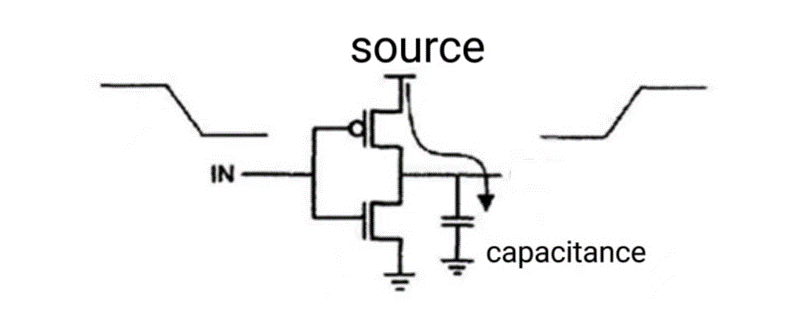
Advancements in VLSI low-power design: Strategies and optimization techniques
Article thumbnail
As production technology advances, integrated circuits are increasing in size, leading to a corresponding rise in power consumption if not properly optimized. Consequently, the optimization of integrated circuit power consumption has gained paramount significance. This paper provides an overview of the theoretical and research developments in Very Large Scale Integration (VLSI) low-power design. Initially, the paper delves into the components of VLSI power consumption, elucidating the origins of various power consumption types and the factors influencing their magnitude. Subsequently, existing power reduction technologies are examined, including transistor-level optimization, gate-level optimization, and system-level power optimization. The principles, applicable power consumption types, as well as their respective advantages and drawbacks are analysed. The paper also introduces methods for evaluating VLSI power consumption and summarizes the characteristics, advantages, and disadvantages of high-level power estimation and low-level power estimation. Ultimately, it underscores the importance of considering multiple power optimization strategies during VLSI design and discusses research approaches for achieving low power consumption. This comprehensive exploration contributes to the enhancement and optimization of VLSI design efforts.
Show more
Read Article PDF
Cite
Research Article Open Access
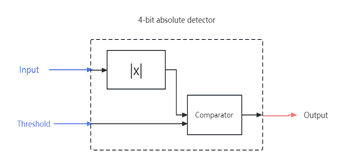
Design and optimization of CMOS based 4-bit comparator
Article thumbnail
The paper primarily focuses on optimizing circuit delay and energy consumption, specifically in gate-level circuits. Three methods are employed for circuit optimization. The first method aims to minimize transistor usage to reduce both delay and energy consumption. The second method involves prioritizing logic gates based on underlying hardware, favoring simpler circuit structures whenever possible, given that our design primarily revolves around logic gates. The third method entails adjusting the number of stages to enhance delay optimization. To validate these rules, three distinct circuits were designed to implement a 4-bit absolute value comparator, each corresponding to one of the rules. Through simulation, calculation, and comparison, the best circuit was identified, providing validation for the rules. The second part of the paper shifts its focus towards optimizing delay and energy consumption by adjusting the sizing of logic gates and the supply voltage to achieve optimal overall performance. In conclusion, further research is needed to corroborate these three rules and identify additional rules, laying the foundation for intelligent circuit optimization.
Show more
Read Article PDF
Cite
Research Article Open Access
Application and analysis of face matching based on the Siamese model in face recognition
Article thumbnail
In recent years, face recognition technology, and face matching particularly have broadened the application fields in various aspects of society. It is considered a combination of deep learning architecture and face recognition technology, which has been used for personal information security and safety efficiently for many years. For this, this paper aims to investigate the practical method of utilizing Siamese models to enhance the accuracy and efficiency of face matching systems. The existing challenges of low accuracy and slow recognition rates in face matching applications have been approved to be solvable by utilizing the capabilities of the Siamese model. Experimental analysis and comments from relevant practitioners demonstrate the effectiveness and potential of the Siamese model in enhancing the performance of face matching systems. To conclude, the Siamese model is introduced as a robust and efficient tool in the field of face recognition. It provides higher accuracy and efficiency compared to the traditional feature-based models. Its adaptability and advancements bring the potential to revolutionize face-matching applications and overcome current limitations. The findings from the experiments demonstrate that the utilization of the joint model can significantly enhance the performance of the matching system. The proposed model offers a potential solution to address the issue of low accuracy during the face matching phase.
Show more
Read Article PDF
Cite
Research Article Open Access
Genetic protein sequence analysis based on sequence alignment techniques for time series data
This study aims to explore the application and effectiveness of sequence comparison techniques in dealing with missing and outliers in time series data. First, the data are pre-processed by convolutional neural network (CNN) and recurrent neural networks (RNN) to remove noise and outliers. Then, time series data at different time points are compared and analysed using the comparison loss function to identify changes and differences in the data. Finally, the prediction performance of different models is evaluated using a variety of assessment metrics, and the results are compared and analysed to verify the effectiveness of the sequence comparison technique in dealing with missing and outliers. The experimental results show that the sequence comparison technique can effectively deal with missing and outliers in time series data, providing important insights for further research on the application and development of the sequence comparison technique. Future research can explore the application of sequence comparison techniques in more fields to optimize model performance and improve accuracy and stability.
Show more
Read Article PDF
Cite
Research Article Open Access
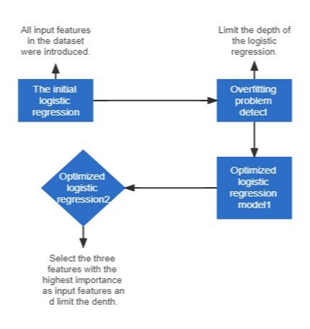
Predictive modelling based on statistical modeling of logistic regression for heart disease
Article thumbnail
The heart is the core driving force for the continuation of human life, and the disease of this organ is bound to be fatal. There are two main types of heart disease. Congenital diseases are caused by developmental problems in unborn children. These problems, mainly in the heart, can damage various parts of the heart. Acquired sexually transmitted diseases are diseases caused by environmental factors and their own growth and development after birth. The purpose of the project model is to predict heart disease and analyse the main types of heart disease in the population. In the whole research process, the most important thing is the establishment of the model. The algorithm principle of this model is logistic regression. Logistic regression is used to make predictions and probability calculations on the data. Through such algorithms, modelling techniques can be used to predict the impact of pathogenic factors on the probability of heart disease. In addition, prevention of heart disease can be improved with accurate and convenient model predictions that can be tailored to the population that fits the predictions. This method can improve the technical level and treatment level of the hospital, and can also reduce the harm caused by heart disease.
Show more
Read Article PDF
Cite
Research Article Open Access
The prediction and analysis of heart disease using XGBoost algorithm
Article thumbnail
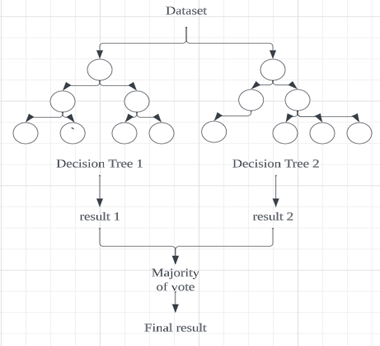
Heart diseases remain a global health concern, with their intricate aetiology and multifactorial risk factors making early diagnosis challenging. Recognizing the pressing need for accurate prediction tools, this research ventured into harnessing the power of machine learning, notably the Xtreme Gradient Boosting (XGBoost) algorithm, to fill this gap. The main object is to devise a robust predictive framework capable of early and accurate identification of heart disease. Specifically, our methodology unfolded systematically, beginning with data preprocessing, then delving into incisive feature selection, rigorous model training, and finally, thorough evaluation. This study is meticulously conducted on the ‘heart.csv’ dataset, a comprehensive repository of cardiovascular data points. The experimental outcomes were nothing short of revelatory. Not only did the XGBoost model manifest superior performance metrics, but its precision also outpaced several contemporary models referenced in existing literature. Ultimately, our findings underscore the profound potential of the XGBoost algorithm in heart disease predictions. Beyond academic intrigue, this research holds tangible implications for healthcare practitioners, potentially offering a novel tool for early interventions and patient management.
Show more
Read Article PDF
Cite
Research Article Open Access
Prediction of stress levels in sleep patterns based on random forest
Article thumbnail
The prevalence of stress in contemporary society has emerged as a significant concern, exerting a profound influence on our daily lives. The objective of this study is to predict stress levels in sleep patterns through the utilization of a machine learning algorithm known as random forest. The significance of stress detection has increased due to its potential to induce various issues such as insomnia and depression. The examination of stress can assist individuals in mitigating the adverse effects associated with prolonged exposure to stress. The study commences with the preprocessing phase, followed by an exploratory data analysis, subsequent dataset splitting, identification of significant features, and concludes with model training. The utilization of the random forest model can enhance the comprehension of the association between sleeping characteristics and levels of stress. Furthermore, it produces a f1-score of 98 percent, indicating a strong predictive capability for determining stress levels in sleep patterns. The proposed method can effectively predict stress levels during sleep mode. This study can provide an effective model for society to prevent people's psychological problems in advance.
Show more
Read Article PDF
Cite
Research Article Open Access
Applications and challenges of GAN in AI-powered artistry
In the evolving landscape of artificial intelligence (AI), Generative Adversarial Network (GAN), introduced in 2014 by Goodfellow and team, has emerged as a vital pillar in deep learning. Designed around the concept of adversarial learning, GAN consists of a generator and a discriminator working in tandem, with the former creating counterfeit data samples and the latter distinguishing between genuine and counterfeit ones. The paper delves deep into GAN’s underlying architecture, its modified variants like DCGAN, WGAN, WGAN-GP, and CGAN, and its expansive applications in the realm of AI-powered artistry. Notably, applications like Stable Diffusion and NovelAI have demonstrated GAN’s proficiency in crafting visually stunning and diverse artistic outputs. However, this evolution isn’t without challenges. The ambiguities surrounding copyright ownership of AI-generated art and the potential disruption of the traditional art sector raise critical questions. As AI continues to redefine the boundaries of art, it’s imperative to ensure its responsible and beneficial integration into society.
Show more
Read Article PDF
Cite