Articles in this Volume

Research Article Open Access
AI-Driven Optimization of Financial Quantitative Trading Algorithms and Enhancement of Market Forecasting Capabilities
The application of artificial intelligence (AI) into financial markets has revolutionised quantitative trading and market forecasting by increasing the efficiency of algorithmic trading, improving the accuracy of market predictions and facilitating real-time market decisions. This paper will provide an overview of the application of Al in the financial markets focusing on the use of machine learning (ML), deep learning (DL) and reinforcement learning (RL) in optimizing the trading algorithms, specifically the capability of Al to process very high data points and complex relationships that other quantitative models are unable to capture. We will discuss trading algorithms such as XGBoost, deep neural networks such as long short-term memory (LSTM) networks and convolutional neural networks (CNNs), how they can outperform traditional quantitative trading models and real-time decision making in stock price prediction, pattern recognition and trading strategy optimisation. We will also look at Al-enhanced predictive models that utilise deep learning and layered models, such as Natural language processing (NLP) sentiment analysis to capture the public sentiment in the market to forecast employing diverse datasets such as historical prices, market volatility, macroeconomic factors and social media sentiment to improve the forecasting accuracy. By going through several experiments and case studies, this paper will shed light on the impact of entrusting quantitative trading and market forecasting decisions to AI for improved performance and reduced errors. There are many challenges ahead but AI plays a constructive role in improving the trading strategies and forecasting market outcomes accurately.
Show more
Read Article PDF
Cite
Research Article Open Access
Learning Analytics Based on Big Data: Student Behavior Prediction and Personalized Educational Strategy Formulation
Article thumbnail
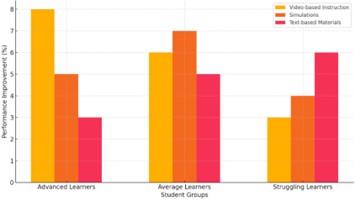
Learning analytics have become a game-changer in education by using big data to analyse student behaviours, predict student outcomes and provide personalised interventions. This paper outlines the main components in learning analytics including data collection, predictive modelling and personalised educational strategies. It demonstrates how predictive models can be used to identify at-risk students and why real-time feedback can keep students engaged and motivated. Two case studies and examples of the data are used to illustrate how institutions can shift from reactive to proactive mode using learning analytics to track engagement, performance, and personalise the learning path. The study also shows that learning technologies are becoming adaptive to personalise learning experience, which results in a more learner-centric approach to education catering for the individual needs of students. Overall, the study demonstrates the role of learning analytics in creating a data-driven environment, which improves the student learning success and retention by addressing the challenges ahead of time.
Show more
Read Article PDF
Cite
Research Article Open Access
Research on the Advantages and Challenges of Replacing LEDs with Lasers in Functional Near-Infrared Spectroscopy Systems Based on Advanced Signal Processing Algorithms
Functional near infrared spectroscopy (fNIRS) has received increasing attention as a non-invasive, portable brain hemodynamic monitoring tool due to its potential for use in natural Settings. Traditional fNIRS systems commonly use light-emitting diodes (LEDs) as light sources, which have become the mainstream choice because of their low cost, easy integration, low heat output, and availability of a variety of near-infrared wavelengths. However, LEDs are limited by their low optical output power and broad wavelength range, which restrict their effectiveness in deep tissue penetration and signal quality. In contrast, Laser Diodes (LD) have the advantages of good monochromaticity and high optical output power, which can provide deeper tissue penetration and higher signal stability. Therefore, this study explores the feasibility of using lasers instead of leds in fNIRS systems and their impact on signal quality and imaging depth. By comparing the performance of LED and laser-based fNIRS systems, it is evident that lasers provide significant improvements in signal quality and imaging depth, although they face challenges in terms of cost, thermal management, and safety. The research in this paper provides an important reference for the future design of fNIRS system, especially in the application scenarios requiring high precision imaging.
Show more
Read Article PDF
Cite
Research Article Open Access
A Review of Current Research and Future Development of Autonomous Driving Technology
Article thumbnail
At present, the automobile industry is undergoing a new round of technological revolution, and autonomous driving technology is also experiencing a period of rapid development, with very active research and technology iteration. Autonomous driving can prevent accidents that occur due to human errors such as inattentiveness and driver fatigue, thereby enhancing road safety. Additionally, autonomous technology helps alleviate traffic congestion and optimize flow by utilizing coordinated driving strategies, such as vehicle-to-vehicle communication (V2V) and vehicle-to-infrastructure communication (V2I), enabling platooning, intelligent rerouting, and other advanced driving techniques. The autonomous driving system can control the vehicle according to the optimal driving strategy, can drive the vehicle in a smoother way, optimize fuel consumption or power use, thereby reducing operating costs and improving travel experience, and has a wide range of application potential and potential social value. This paper summarizes the current research status and development trend of autonomous driving technology, summarizes the current research status of autonomous driving technology from the aspects of environmental perception, machine learning, control execution, etc., while also projecting future directions for the field. Advancements in this technology have the potential to revolutionize transportation, offering significant convenience and transforming daily life. Moreover, it can promote the development of major industries, increase national GDP, affect urban planning and layout, and even improve our living environment and benefit ecological construction.
Show more
Read Article PDF
Cite
Research Article Open Access
Energy Market Price Forecasting and Financial Technology Risk Management Based on Generative AI
Article thumbnail
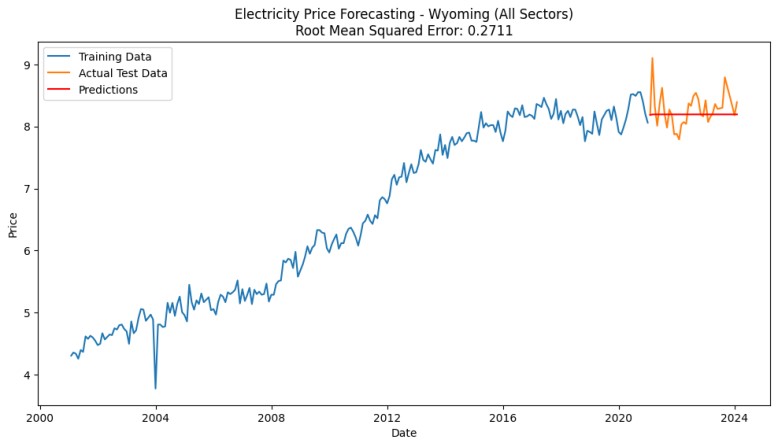
The volatility of global energy markets, particularly electricity prices, plays a crucial role in influencing international economic activities. With the ongoing global energy transition and the push for low-carbon development, predicting electricity prices has become increasingly important for policymakers and market participants. This paper explores the forecasting capabilities of the ARIMA and LSTM models in analyzing electricity prices in the United States, drawing from data spanning 2001 to 2024.ARIMA, a traditional time series model, is valued for its simplicity and effectiveness in capturing linear trends, while LSTM, a deep learning-based model, excels at handling long-term dependencies in complex datasets. This study reveals that while both models offer valuable insights, each exhibits limitations. ARIMA struggles with non-linear patterns and volatility, whereas LSTM tends to underestimate extreme price values. The findings highlight the potential of hybrid models that combine traditional and machine learning approaches to enhance forecasting accuracy in the increasingly dynamic energy market. This research provides essential guidance for improving decision-making processes in the context of the global shift towards clean energy.
Show more
Read Article PDF
Cite
Research Article Open Access
The Application of Multiple Input Multiple Output (MIMO) Technology in Wireless Communications
With the rapid advancement of wireless communication technology, enhancing data transmission rates, system capacity, and reliability has emerged as a key challenge. The paper investigates the application of Multiple Input Multiple Output (MIMO) antenna technology in wireless communication. By using multiple antennas for simultaneous signal transmission and reception, MIMO technology can effectively mitigate multipath effects and enhances channel capacity. And channel models of MIMO systems, capacity optimization strategies, and power allocation methods are also discussed. The results indicate that MIMO technology significantly improves transmission rates and signal quality in complex propagation environments. However, practical applications continue to face challenges such as channel estimation errors and antenna correlation. Therefore, the paper highlights the significance of MIMO technology in wireless communication systems and outlines potential directions for future research.
Show more
Read Article PDF
Cite
Research Article Open Access
A Comprehensive Review of Artificial Intelligence and Machine Learning in Control Theory
Traditional control methods, such as proportional-integral-derivative (PID) controllers and linear-quadratic regulators (LQRs), have proven effective for linear and well-modeled systems. However, these methods often perform poorly in nonlinear, complex and dynamic environments. The paper aims to investigate the modern control systems by integrating artificial intelligence (AI) techniques, such as machine learning (ML), reinforcement learning (RL), deep learning, and fuzzy logic, to enhance their adaptive, robust, and predictive capabilities. And it reviews the literature and analyzes AI integration in control systems. The proposed strategies include supervised learning for trajectory optimization and fault detection, reinforcement learning for optimal control in dynamic environments, neural networks for complex nonlinear function approximation, and fuzzy logic for handling uncertainty and imprecise inputs. AI techniques significantly enhance the ability to tackle nonlinear problems and dynamic changes, demonstrating superior performance in applications like self-driving cars adapting to various road conditions and optimal energy distribution in smart grids. Despite the challenges of computational complexity, scalability, and the safety and reliability in the implementation of interpretable AI models, this paper suggests that hybrid approaches combining traditional control and AI techniques, along with the evolution of interpretable AI and convergence with quantum control, hold great promise for advancing AI-driven control systems.
Show more
Read Article PDF
Cite
Research Article Open Access
Integrating AI into Agile Workflows: Opportunities and Challenges
Over the past few years, Agile development approaches have become an increasingly popular methodology for software engineering, focused on iterative progress, continuous feedback, and teamwork cooperation. However, the raising difficulties of projects and more demand for faster and more efficient workflows have challenged the situation further. The introduction of Artificial Intelligence into the Agile processes paves the way to optimize decision-making, automate routine tasks, and boost team productivity. This review summarizes the innovations and challenges created by the integration of AI into Agile development practices. Using AI technologies like machine learning, predictive analysis, and natural language processing, Agile teams can enhance sprint planning, resource coordination, and risk management. Also, it presents some risks such as data privacy, workforce skills need, and possible over-dependence of AI. The paper emphasizes on providing a full overview of the innovations and challenges to the application of AI in Agile workflows, providing thoughts for future research and practices.
Show more
Read Article PDF
Cite
Research Article Open Access
Integrating Deep Learning with Generative Design and Topology Optimization for Efficient Additive Manufacturing
Article thumbnail
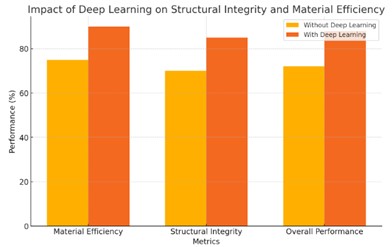
Additive manufacturing (AM) through generative design and topology optimisation creates complex, lightweight structures with exceptional material efficiency and structural integrity. When coupled with deep learning functionality, generative design and topology optimisation can explore broader design spaces and optimise more efficiently, creating novel AM structures that utilise material more efficiently and have better strength and performance than their counterparts created through conventional AM methods. The study tackles how deep learning models such as convolutional neural networks (CNNs) can be integrated into generative design and topology optimisation and how these integration help optimise material usage, production time and performance. Case studies from the aerospace, automotive, and healthcare industries exemplify how these synergies resulted in more resilient, cost-effective designs that would not have been possible through conventional AM approaches. The study focuses on material usage efficiency, reduction in production time and performance improvement to showcase how deep learning integrations enhance the process from design conceptualisation, through iterations, to final production.
Show more
Read Article PDF
Cite
Research Article Open Access
Research on the Technology and Application of Remote Wireless Transmission of Digital Image Signal
With the increasing demand for remote real-time high-quality video transmission, especially in the context of large area applications of unmanned aerial vehicle (UAV) and remote location instant live broadcast, traditional wired transmission methods have been surpassed by digital transmission methods due to their superior performance in image quality, transmission distance and delay. Therefore, this study focuses on the application of digital image wireless transmission in remote scenarios such as UAVs, including key digital transmission technologies such as Orthogonal Frequency Division Multiplexing (OFDM) and Coded Orthogonal Frequency Division Multiplexing (COFDM), as well as public network link communication technologies such as 4G and 5G, by means of a literature study and a case study. It also analyzes the development of WiFi, Lightbridge and OcuSync graphics transmission systems using DJI brand products as case studies. The analysis shows that digital image wireless transmission, especially COFDM and advanced proprietary systems such as DJI's OcuSync, has significant advantages in terms of transmission distance, interference immunity, encryption techniques, and reusability. However, factors such as building obstruction, frequency interference, and weather conditions can affect the transmission quality. To mitigate these challenges, solutions are proposed, such as auxiliary signal enhancement systems, adaptive frequency hopping and software-defined radio technologies.
Show more
Read Article PDF
Cite