Articles in this Volume

Research Article Open Access
GLEM-Rec—A Research on Cross-modal Recommendation Framework Based on Semantic-Graph Structure
Article thumbnail
This paper proposes GLEM-Rec, a cross-modal recommendation framework integrating large language models with graph neural networks, effectively addressing three major challenges in traditional recommendation systems: semantic-graph structure feature alignment, long-tail item recommendation, and explainability. The framework consists of five core modules: semantic feature extractor, heterogeneous data processor, heterogeneous GNN integrator, adaptive trainer, and explainable recommendation generator, achieving complementary advantages between LLM's deep semantic understanding and GNN's high-order relationship modeling. Through multi-objective optimization strategies, GLEM-Rec achieves a balance between prediction accuracy, recommendation diversity, personalization, and long-tail coverage. Experiments based on the Movies Dataset demonstrate that this framework significantly outperforms existing methods, achieving an RMSE of 0.9122, coverage rate of 0.7723, and long-tail item recommendation performance of 0.9851, comprehensively surpassing traditional baseline models. System ablation experiments confirm the necessity and effectiveness of each functional module, validating the critical contribution of semantic and graph structure feature collaboration to recommendation system performance. This research not only provides new theoretical support for cross-modal recommendation systems but also offers effective technical solutions for key challenges in recommendation system practice.
Show more
Read Article PDF
Cite
Research Article Open Access
RFID-based Elderly Care Robot for Medication Management
Article thumbnail
Confronting the pressing need for precise medication management in aging societies, this study transcends the limitations of conventional visual and barcode technologies by proposing a multimodal sensing-enabled RFID-robot collaborative medication management system. To address three critical technical bottlenecks in dynamic caregiving scenarios—signal collisions in dense-tag environments, identification loss caused by complex stacking, and safety risks in human-robot collaboration—we innovatively establish a hierarchical analytical framework: the bottom layer utilizes optimized algorithms to enhance RFID multi-tag stacked reading stability, the middle layer implements YOLOv3 vision-assisted positioning for spatial mapping, and the top layer integrates a dual-protocol encryption mechanism (RAPP+LNCP) to ensure data security. This research aims to deliver a robust solution for home-based elderly medication management, reducing time costs compared to manual care. It further unveils novel pathways for the deep integration of IoT sensing technologies with healthcare domains and provides a quantifiable technical paradigm to address the "Silver Tsunami" crisis of the 21st century.
Show more
Read Article PDF
Cite
Research Article Open Access
Path Planning for Automated Guided Vehicles (AGVs) in Warehouses Based on Improved Q-learning Algorithm
Article thumbnail
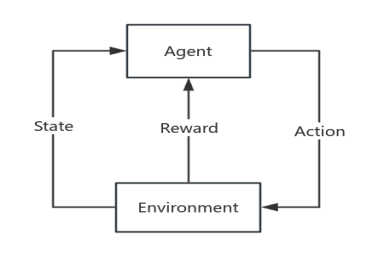
Efficient path planning for Automated Guided Vehicles (AGVs) is critical to improving logistics efficiency. Traditional Q-learning algorithms suffer from slow convergence, poor learning efficiency, and susceptibility to local optima in AGV path planning. To address these challenges, this paper proposes an improved Q-learning algorithm that integrates the attractive and repulsive force functions of the artificial potential field method, optimizing the reward mechanism and Q-value update strategy. By dynamically selecting reward values, the attractive force guides AGVs toward the target direction efficiently, while the repulsive force adjusts Q-values to enhance obstacle avoidance capabilities. Comparative simulation experiments in a 20×20 grid environment demonstrate that the improved algorithm accelerates convergence speed, enhances learning efficiency, significantly reduces path exploration steps, and improves obstacle avoidance success rates. This enables AGVs to autonomously and rapidly identify a collision-free optimal path through self-learning.
Show more
Read Article PDF
Cite
Research Article Open Access
Multimodal Fusion Target Detection Based on MF-YOLO and Its Innovative Applications in Automotive Field
Article thumbnail
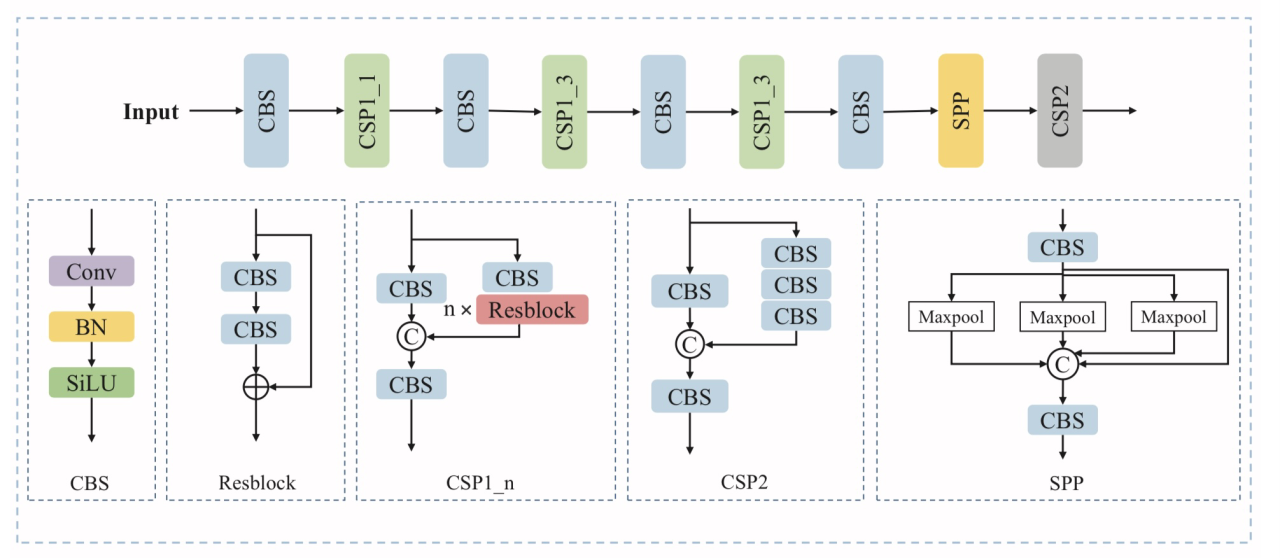
As autonomous driving and intelligent transport systems advance, vehicles face growing demands for environmental perception. Current target detection technologies struggle with small targets and complex conditions like low light and bad weather, raising concerns about autonomous driving safety. This paper introduces an innovative design integrating MF-YOLO technology with vehicles. By fusing IR and RGB data, MF-YOLO boosts detection accuracy and robustness. It also incorporates a BRA module and an improved loss function to optimize model performance. These enhancements significantly improve detection in complex environments and enhance autopilot safety, offering a novel solution for automotive intelligence.
Show more
Read Article PDF
Cite
Research Article Open Access
Interaction Behavior Prediction Method for Movie Recommendation Systems Based on Neural Collaborative Filtering
Article thumbnail
With the rapid advancement of internet technologies and the explosive growth of information, movie recommendation systems have become increasingly important in alleviating information overload and enhancing user experience. Traditional collaborative filtering and content-based recommendation methods face challenges in real-world applications, such as the cold start problem, data sparsity, and limited capacity to model nonlinear interaction relationships. This study proposes a movie interaction behavior prediction method based on Neural Collaborative Filtering, which leverages the strength of deep learning in modeling high-order nonlinear interactions. Using the publicly available MovieLens dataset, we constructed a binary classification task for user-movie interactions. Dense vector representations were learned through embedding layers, and multi-layer perceptrons were employed to model deep feature interactions. Dropout and Batch Normalization mechanisms were introduced to enhance model robustness. Using Hit Ratio@10 as the evaluation metric, experiments demonstrated that the proposed model achieved excellent performance in predicting user preferences, reaching a hit ratio of 0.74, significantly outperforming traditional recommendation methods while exhibiting strong stability.
Show more
Read Article PDF
Cite
Research Article Open Access
Overview of Deep Learning Based License Plate Detection System
Article thumbnail
Abstract : This paper conducts an in - depth exploration of the license plate detection system based on deep learning, providing a comprehensive analysis of its core principles, design architecture, implementation process, and performance evaluation. At the core principle level, it deeply analyzes how deep learning accurately recognizes license plates. By leveraging technologies such as convolutional neural networks, it can effectively extract license plate features from images. Regarding the design architecture, it elaborates on the functions of each component and their collaborative working mechanisms to achieve efficient detection. The implementation process encompasses various links, including data collection, annotation, model training, and optimization. The performance evaluation is carried out from multiple dimensions such as detection accuracy, speed, and adaptability to complex environments, comprehensively measuring the system's performance. Through comprehensive research, deep learning demonstrates significant advantages in license plate detection, offering innovative solutions for intelligent transportation and security fields. Meanwhile, this paper also looks ahead to the future development directions of this technology, such as improving efficiency and expanding application scenarios.
Show more
Read Article PDF
Cite
Research Article Open Access
Research on the Role of AI in Overcoming Resource Constraints in the Field of Indie Game
Overcoming the resource constraints for the indie developers is the key to improve the development of indie game industry. Generative AI offers several advantages, such as substituting the manpower, enhancing efficiency and saving costs. The purpose of this review is to explore various sorts of AI, focusing on solving the shortage of resources that indie game producers may encounter, as well as some challenges the AI may bring to them. According to the literature review, currently generative AI can help producers fulfill the skill gap between ordinary people and experts, use Procedural Content Generation via Machine Learning (PCGML) and General Video Game AI (GVGAI) to help developers generate new content and test potential debug in the game and alleviate financial pressure for developers. Moreover, to reduce the influence of the oversaturation of game market, Procedural Personas are applied to test the novel game mechanisms, which assist developers to create different gaming experience for players. Some challenges of application of AI are found, but in the future, they may be solved by other advanced technologies. Additionally, possible research directions such as Neurosymbolic AI and MultiModal Recommender System (MRS) are mentioned. This review offers a unique complication of the most recent work in the specific area of generative AI for indie game development, focusing on resource constraints and AI used in this field to guide the developers to better produce indie games and improve the prosperity of game industry.
Show more
Read Article PDF
Cite
Research Article Open Access
Improved Gold Price Prediction Based on the LSTM-ARIMA Hybrid Model
Article thumbnail
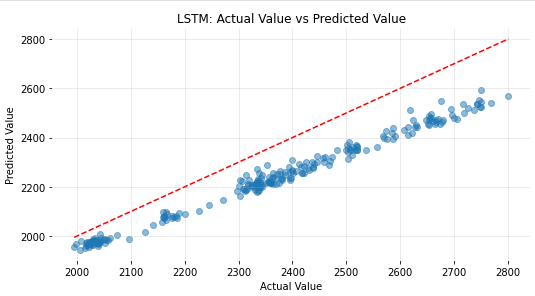
Gold price forecasting is a crucial task in financial markets due to gold's unique attributes as a commodity, precious metal, and currency. Traditional time series models such as ARIMA are effective in capturing linear trends and seasonal components but struggle with nonlinear dependencies present in gold price data. In contrast, deep learning models, especially Long Short-Term Memory (LSTM) networks, excel at modeling complex nonlinear relationships and long-term dependencies. However, standalone LSTM models may overlook certain linear patterns. This paper proposes a novel hybrid forecasting approach that integrates LSTM and ARIMA models to leverage the strengths of both methodologies. The LSTM model first learns nonlinear features from historical gold price data, and the ARIMA model further models the residuals to capture remaining linear trends. Empirical analysis is conducted using daily gold price data from August 19, 2013, to November 22, 2024. Experimental results demonstrate that the hybrid LSTM-ARIMA model significantly outperforms the standalone LSTM model across all major evaluation metrics, with remarkable reductions in forecasting errors and improvements in accuracy and robustness. The proposed hybrid model offers a more reliable and precise tool for gold price prediction, providing valuable quantitative support for investors and policymakers in the gold market.
Show more
Read Article PDF
Cite
Research Article Open Access
Lightweight Neural Networks: Transforming Chip Design for Edge Device Deployment
Article thumbnail
The continuous development and expanding applications of artificial intelligence are increasingly driving the demand for high computing power. Therefore, this article focuses on the impact and prospects of neural network models in chip design. This article mainly uses the research method of literature analysis to first explain the limitations of traditional chip architecture and discuss the impact of neural networks on chip design. Its impact is twofold: firstly, the development of neural networks has led to specialization in chip design; secondly, the auxiliary role played by neural networks in the process of chip design. This paper explores the advantages and potential of designing chips specifically for deploying lightweight neural network models. Furthermore, it proposes directions for the future development of neural networks and chip design. Lightweight neural network models have the advantages of light parameters, low latency, flexible deployment, and low hardware costs. They have significant advantages in the deployment of edge devices. Thanks to the government's policy support for technologies such as the Internet of Things and autonomous driving, a series of chips specifically designed for edge devices will emerge in the future, which will also promote the development of specialized chip design.
Show more
Read Article PDF
Cite
Research Article Open Access
Research on Intelligent Control System for Industrial Robots Based on Deep Learning
Article thumbnail
In the contemporary landscape where industrial automation is advancing at an accelerated pace, there is an imperative need for the intelligent upgrading of industrial robots. The paper focuses on the deep learning-based intelligent control system of industrial robots, analyzing the application of deep learning core algorithms in perception, motion control, and decision-making optimization. The system architecture covers the perception, control, and decision-making layers, using deep learning algorithms to integrate and process multimodal sensory information. The system also innovates the motion control strategy, combining deep learning and traditional control methods to optimize the robot's motion path and control accuracy. Furthermore, the intelligent decision-mak ing model is built to make reasonable decisions based on sensory information, improving the robot's ability to cope with complex tasks and environments. After experimental verification, the intelligent control system significantly improves the working efficiency, precision, and adaptability of industrial robots.
Show more
Read Article PDF
Cite