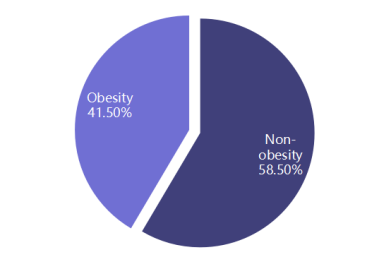
The relationship between socioeconomic status (SES) and obesity is well-established, its multidimensional nature and racial heterogeneity remain underexplored and inadequately quantified. This study investigates the race-specific gradients of obesity across three SES dimensions-income, education, and occupation-using data from 62,350 adults in the National Health and Nutrition Examination Survey (NHANES) 2021-2023. Survey-weighted logistic regression with race-SES interaction terms was employed to model obesity risk. Results indicate that education is the most robust SES predictor, with higher attainment significantly reducing the odds of obesity. Although income showed no significant overall association, analysis of predicted marginal means revealed profound racial disparities: Non-Hispanic Black adults exhibited the highest obesity prevalence at low-income levels, with these disparities persisting even at high income, indicating diminishing returns. Employment status exerted race-specific effects, with unemployment drastically elevating obesity probability among Non-Hispanic Black adults. These findings underscore the need for multidimensional, race-conscious public health interventions to effectively address obesity disparities.