Articles in this Volume

Research Article Open Access
Research on Seizure Detection Using EEG Signals Based on Multi-Scale Convolutional Neural Networks BiLSTM-Multi-Head Self-Attention
Article thumbnail
Traditional methods for epileptic seizure detection suffer from limitations such as insufficient feature extraction capability, high computational complexity, and inadequate generalization performance. In this study, leveraging Electroencephalogram (EEG) signals, a novel epileptic seizure detection method based on the Multi-Scale Convolutional Neural Networks-BiLSTM-Multi-Head self-attention(MSCNN-BiLSTM-MHSA) model is proposed. The MSCNN-BiLSTM-MHSA model comprehensively extracts features of EEG signals at different scales by constructing an improved multi-scale convolutional neural network. Furthermore, the introduction of the multi-head self-attention mechanism enables the model to focus more on key features during the iteration process, thereby enhancing the feature learning capability. Experiments were conducted on two epileptic datasets, namely CHB-MIT and Bonn, for validation. The results demonstrate that the MSCNN-BiLSTM-MHSA model achieves an accuracy of 96.23% and 96.13% respectively in epileptic seizure detection.
Show more
Read Article PDF
Cite
Research Article Open Access
AI and Intangible Heritage: Exploring Sustainable Cultural Transmission Through a Dual-Framework Approach
Article thumbnail
This study explores how artificial intelligence (AI) is being used to support the sustainable transmission of intangible cultural heritage (ICH). While much of the existing research focuses either on technical innovation or cultural theory, this paper brings the two together through a dual-framework approach that considers both how AI systems work and what cultural roles they serve. Drawing on nine recent cases from China—including projects in embroidery, paper-cutting, and opera—the study traces how analytical models contribute to documentation and interpretation, while generative techniques help recreate traditional patterns in new formats. It also looks at how immersive interfaces and recommendation algorithms shape user experience, and raises concerns about authenticity, equity, and creative diversity. The findings suggest that AI’s role in heritage should move beyond digitization to include creative co-production, participatory design, and inclusive governance. This research offers a structured foundation for future interdisciplinary work at the intersection of AI and culture, and provides practical insights for developers, cultural institutions, and policymakers seeking to align technological innovation with the values and needs of living heritage.
Show more
Read Article PDF
Cite
Research Article Open Access
Leaf Identification Based on Convolutional Neural Networks and Data Augmentation
Article thumbnail
Plant leaves, as one of the significant morphological characteristics of plants, exhibit considerable interspecific variability, making them highly important in plant classification and identification. Traditional manual leaf recognition methods rely heavily on expert experience, which presents challenges such as low efficiency and strong subjectivity. Although image classification methods based on convolutional neural networks (CNNs) have been widely applied to plant leaf recognition in recent years, their classification performance is still constrained by the scale of training data and the generalization capability of models. To address these limitations, this paper proposes an automated leaf recognition model that integrates convolutional neural networks with data augmentation techniques. The proposed approach incorporates multiple data augmentation strategies during the preprocessing stage to enhance data diversity and constructs a deep convolutional network architecture specifically tailored for leaf images. Experiments were conducted on the Flavia dataset, and the results demonstrate that the proposed model achieves a classification accuracy of 99.74% on the test set, significantly surpassing the baseline model's accuracy of 93.72%. These findings validate the effectiveness and superiority of the proposed method in the task of plant leaf recognition.
Show more
Read Article PDF
Cite
Research Article Open Access
Credit Card Fraud Detection: Comparing Dimensionality Elevation and Reduction, Single Model and Stacking Model
Article thumbnail
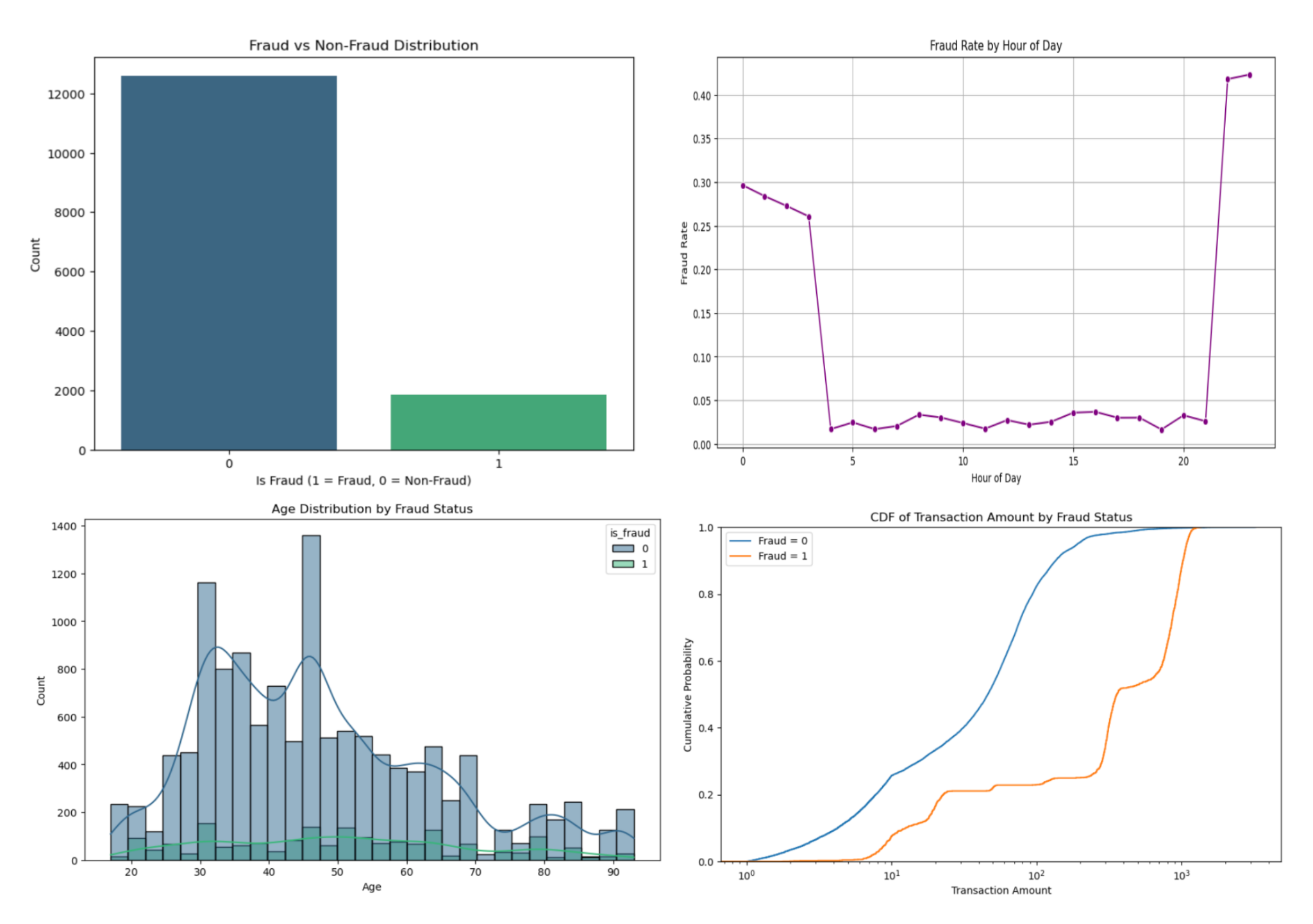
With the rapid progression of high technology, new-style fraud has emerged in the past decade, among which credit card fraud has been exceptionally grave. Hence, the credit card fraud detection is of vital importance in preventing financial loss, establishing consumer protection and maintaining trust in digital transactions. Previous studies tend to implement dimensionality reduction methods like Principal Component Analysis (PCA) and t-distributed stochastic neighbor embedding (t-SNE) to preprocess the data. Additionally, various models—including Logistic Regression, Naïve Bayes, Decision Tree, and Random Forest—were independently employed to assess their individual performance in prior studies. The results of each model were then systematically compared against one another to identify the top-performing algorithm. There are, however, primarily two research gaps. Few research have used dimensionality elevation procedures, despite the fact that dimensionality reduction approaches are frequently used in preprocessing processes. Furthermore, the stacking approach has been proven to be successful in other domains, such as virus diagnosis, but it has been utilized infrequently in credit card fraud detection. Therefore, in this study, the dimensionality elevation method PolynomialFeatures is utilized to compare with the dimensionality reduction method t-SNE and a stacking model is implemented to explore whether it will have a higher accuracy compared to a single model. This study chooses Logistic Regression as the stacking model due to its simple linear form, making it less prone to overfitting compared to complex meta-models like Random Forests or Deep Neural Networks.
Show more
Read Article PDF
Cite
Research Article Open Access
Model Optimization Techniques for Embedded Artificial Intelligence
Article thumbnail
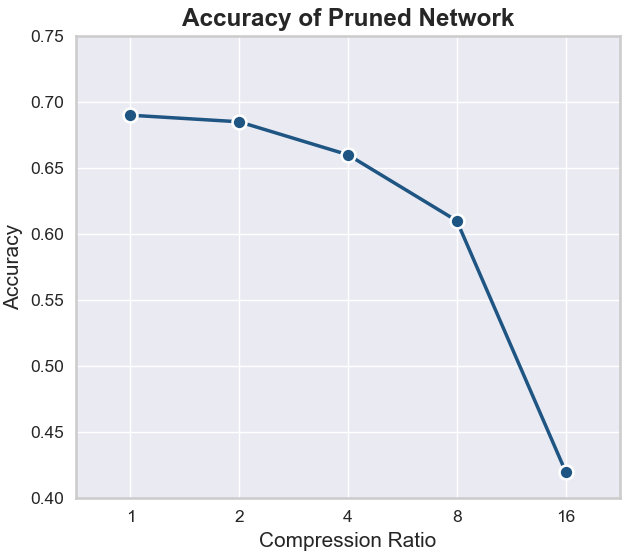
Deep neural networks (DNNs) are playing an important role in various areas including computer vision (CV) and natural language processing. This paper comprehensively analyzes model optimization techniques for deploying deep neural networks on resource-constrained embedded systems. We evaluate three core paradigms—pruning, quantization, and dynamic inference—focusing on their efficacy in balancing computational efficiency, memory footprint, and accuracy retention. For each technique, we conduct dedicated experiments spanning representative architectures including ResNet, VGG, Inception, and MobileNet variants to evaluate accuracy-FLOPS trade-offs. We also discuss and compare the practical deployment metrics for optimization techniques. Finally, we emphasize promising future directions.
Show more
Read Article PDF
Cite
Research Article Open Access
Adaptive IDS via Lightweight Model Repair for Synthetic Zero-Day Attacks
Article thumbnail
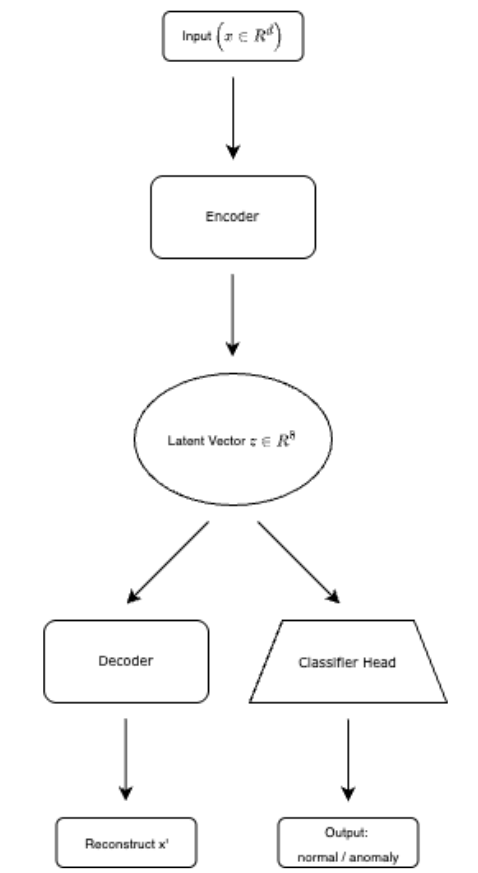
As cyber threats grow increasingly sophisticated, traditional Intrusion Detection System (IDS) struggle to maintain robustness when facing unknown zero-day attacks. This paper proposes an adaptive IDS framework based on lightweight model repair, which rapidly restores detection performance using a small set of synthetically generated zero-day samples. The architecture combines an autoencoder with a classifier head, jointly trained on the NSL-KDD dataset. This framework was evaluated against four canonical zero-day attack variants via controlled feature manipulation. To address the performance degradation, multiple minimal-scope repair strategies are tested. Repair strategies target three scopes: the decoder's final layer, the classifier head, or both components. The choice of repair scope is informed by empirical performance under different adaptation scenarios. According to the experiment results, fine-tuning only the classifier head can restore the recall to over 98% with strong generalization ability. Unified pooled repair and leave-one-out evaluations further verify the robustness and adaptability of the method across diverse attack scenarios.
Show more
Read Article PDF
Cite
Research Article Open Access
Application of Blending-based Ensemble Algorithm in Stock Prediction
Article thumbnail
Stock trend prediction has long been an important research direction in the financial field, and it is also an extremely challenging task. Currently, most studies focus on a single prediction model to find a better prediction scheme by comparing the effects of different algorithms.This paper proposes a stock trend prediction method based on a Blending ensemble learning approach, which combines 55 technical indicators such as Exponential Moving Averages (EMA) and Relative Strength Index (RSI). PCA dimensionality reduction is used to further simplify the data representation of the features after SOM dimensionality reduction. The method employs two high-performing machine learning models with distinct algorithmic characteristics as base learners and Logistic Regression as the meta-learner to construct an efficient ensemble prediction framework. Using Apple Inc.'s stock (AAPL) as the research subject, the study utilises the confusion matrix as the core performance evaluation metric. Experimental results demonstrate that optimised through hyperparameter tuning. Experimental results indicate that the Blending ensemble learning model, optimized through hyperparameter tuning, outperforms the single prediction models in terms of accuracy.
Show more
Read Article PDF
Cite
Research Article Open Access
Causal Machine Learning for Special Education: Estimating Heterogeneous Effects on Elementary Math Achievement
Article thumbnail
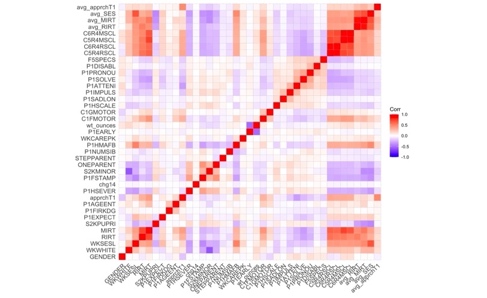
Despite extensive special education investments, their causal impact on elementary mathematics remains debated due to confounding factors in observational data.​​ This study leverages causal machine learning models, including Bayesian Additive Regression Trees (BART) and Causal Forests, to estimate heterogeneous effects of special education on elementary mathematics achievement. Using longitudinal data from 7,362 U.S. students (ECLS-K:2011), we implement a four-stage pipeline: (1) ​​LASSO-PLS preprocessing​​ for covariate selection and dimension reduction; (2) ​​Propensity Score Matching (PSM)​​ to address selection bias; (3) ​​BART​​ for Bayesian treatment effect estimation; and (4) ​​Causal Forests​​ for subgroup analysis. Results show no significant average treatment effect (ATE = -0.69, p=0.707) after matching, but reveal critical heterogeneity: students with mid-range kindergarten math ability (MIRT 50-70) gain 6-8 points, while public schools’ buffer negative effects for low-ability learners. Family background factors show no moderation effect. These findings demonstrate that ​​special education's efficacy depends fundamentally on academic readiness​​, supporting precision resource allocation in educational policy.
Show more
Read Article PDF
Cite
Research Article Open Access
Review and Design of a Wave Energy Conversion System
Article thumbnail
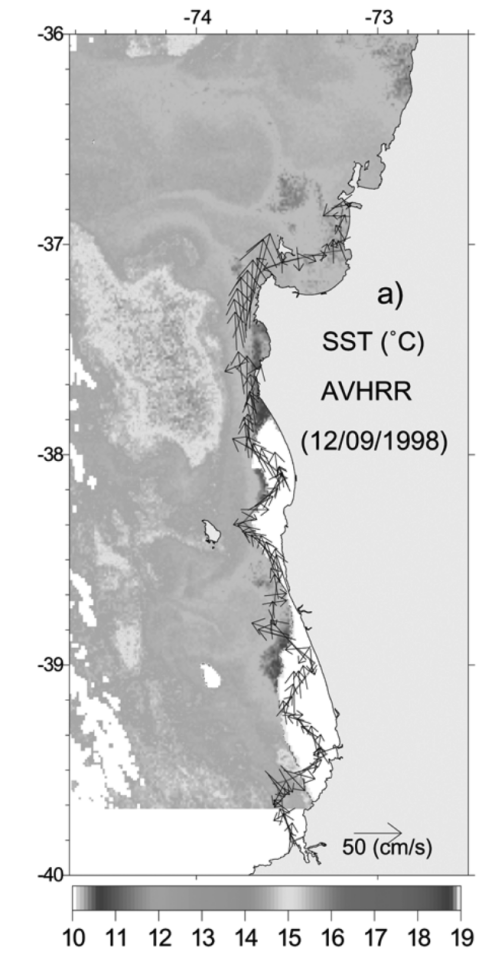
The increasing demand for sustainable energy solutions has driven interest in harnessing ocean wave energy as a viable and renewable source of power. This project, titled "Review and Design of a Wave Energy Conversion System," aims to assess the wave energy potential along the Chilean coastline and design an efficient conversion system. The primary objectives are to quantify the power of waves at various coastal sites and evaluate the performance of advanced wave energy conversion technologies to maximize energy output and financial feasibility. The methodology involves data collection through oceanographic surveys and experimental analysis. Data was gathered using the R/V Kay Kay from the Universidad de Concepción, which followed a predefined path along the coast to collect current profiles and conductivity-temperaturedepth (CTD) casts. Additionally, wave tank experiments at the Universidad Austral de Chile (UACh) provided damping coefficient measurements, which were compared with results from the Boundary Element Method (BEM) code WAMIT. Analytical models and numerical simulations were employed to calculate wave energy flux, density, and power available to conversion devices. Key results demonstrate that the Chilean coastline, with its unique meteorological and oceanographic conditions, offers significant wave energy potential. The analysis revealed that point absorber systems with optimized damping mechanisms achieved high efficiency in converting mechanical energy to electrical power. Furthermore, economic and environmental assessments indicated that integrating wave energy into the existing power grid could reduce dependency on fossil fuels and mitigate greenhouse gas emissions. In conclusion, this project provides a comprehensive evaluation of wave energy technologies and their application in Chile. The findings highlight the feasibility and benefits of wave energy conversion while addressing technical, financial, and environmental challenges. Future work will focus on refining the design and exploring advanced materials to enhance system durability and efficiency. The study’s outcomes contribute to the global effort to develop sustainable and renewable energy solutions.
Show more
Read Article PDF
Cite
Research Article Open Access
Investigating How Inclusive Intercultural Strategies Influence Immigrant Children’s Language Acquisition Efficiency
Article thumbnail
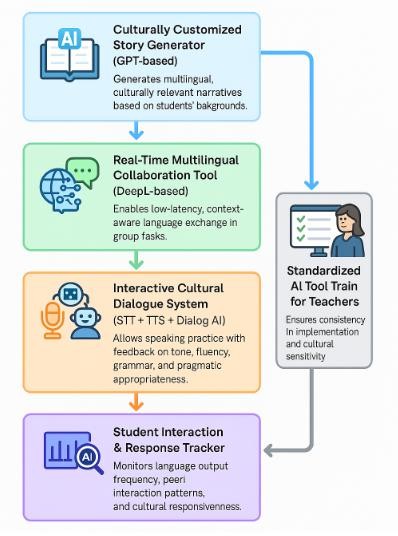
As the global immigrant population continues to grow, immigrant children face the challenges of language gap, acculturation, and communicative anxiety in the process of language acquisition. To cope with this problem, this study used a quasi-experimental design to assist the experimental group with a 12-week English language teaching intervention by introducing an AI multilingual story generation, semantic translation engine, and voice conversation simulation system. Data were collected using a mixed-methods approach with multi-layer validation. The results show that the experimental group significantly outperforms the control group in terms of language proficiency, cultural adaptation and classroom participation, and the feedback and behavioral data provided by the AI system provide critical support for teaching personalization, cultural empathy and output quality optimization. The study validates the potential of the AI-enabled inclusive education model in multilingual environments and provides empirical evidence for language teaching and education policy making.
Show more
Read Article PDF
Cite