Articles in this Volume

Research Article Open Access
An Optimal Algorithm for Feature Activation Based on Cell Value Scoring in the Field of Wireless Communication
Article thumbnail
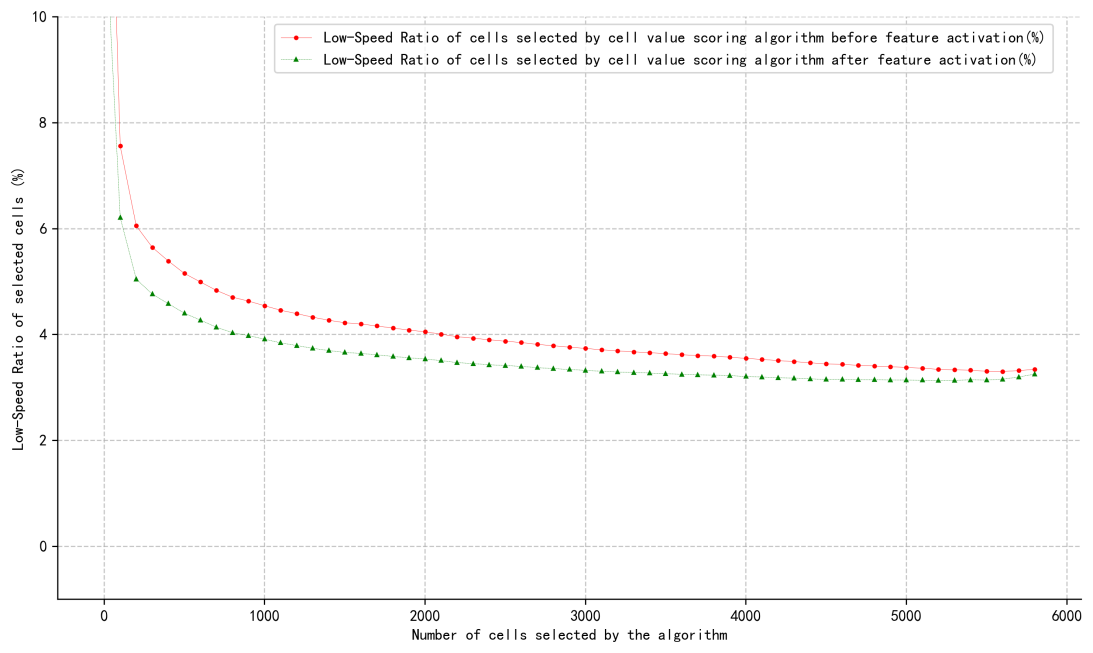
With the increasingly strict assessment of regional mobile operators’ wireless indicator by the wireless communication group, and the need for corresponding licenses and activation fees for the advanced feature algorithms provided by the vendor, regional mobile operators are in urgent need of optimizing a cost - controllable and scenario - based rapid deployment plan for the above - mentioned advanced feature algorithms due to cost control. This paper uses the methods of data analysis and comparative experiments to analyze and study the Key Performance Index (KPI) data of cells provided by regional mobile operators, and proposes an optimal algorithm for feature activation based on cell value scoring. This algorithm aims to solve the problem of how to select cells for deployment when mobile operators deploy specific feature algorithms. The algorithm can balance operating costs and network performance, and help mobile operators make optimal deployment decisions based on data. Based on the experimental KPI data, this algorithm can achieve an approximately optimal effect in terms of improving the Low-Speed network performance, and has a lower time complexity compared with the traditional combination algorithm.
Show more
Read Article PDF
Cite
Research Article Open Access
Overview of Speech Recognition Algorithms and Their Applications
Speech recognition technology, a pivotal element in human-computer interaction, has witnessed substantial advancements in recent years, propelled by the synergies of deep learning and big data. This paper provides a systematic review of the evolution of speech recognition algorithms, delineating the principal characteristics and application contexts of traditional speech recognition algorithms, such as Hidden Markov Models (HMM), deep learning-based algorithms, including Recurrent Neural Networks (RNN) and Convolutional Neural Networks (CNN), and end-to-end speech recognition algorithms. Furthermore, this study delves into the multifaceted applications of these algorithms in domains such as voice assistants (e.g., Siri and Alexa), machine translation, and meeting transcription, elucidating their transformative impact. The paper also synthesizes the prevailing speech recognition technologies and the challenges they confront, with a particular emphasis on the limitations of commonly used language recognition algorithms, such as susceptibility to noise, accent variability, and data dependency. Through this comprehensive analysis, the paper aims to illuminate the current state and future trajectories of speech recognition technology. This paper identifies and summarizes the shortcomings of commonly used language recognition algorithms.
Show more
Read Article PDF
Cite
Research Article Open Access
Deepfake Technology's Dual Nature: A Review of Security Risk Assessment and Defense Strategies
Deepfake technology, empowered by breakthroughs in deep learning-based image synthesis, is profoundly reshaping identity verification systems, finding extensive application in security, finance, and social media with enhanced convenience. However, its capacity to generate hyper-realistic facial forgeries presents a dual impact: while driving innovation, it simultaneously introduces unprecedented security threats, including privacy violations, identity spoofing, and data poisoning attacks. This paper systematically reviews and assesses current research progress on the security risks and defense strategies associated with Deepfake technology. Through synthesis of existing literature, this paper constructs a multidimensional analytical framework examining three core dimensions: first, the core technological principles underpinning Deepfakes and their evolution; second, the diverse spectrum of security risks arising from their misuse and their underlying mechanisms; and third, the effectiveness and inherent limitations of prevailing defense mechanisms, encompassing detection techniques and legal regulations. This study concludes that although Deepfakes advance facial recognition, mitigating their inherent security threats necessitates a multidimensional synergistic approach. This approach must integrate continuous technological advancements, robust legal oversight, and strengthened public awareness initiatives. Future efforts must prioritize establishing cross-disciplinary collaborative governance mechanisms to achieve a dynamic equilibrium between technological innovation and security assurance.
Show more
Read Article PDF
Cite
Research Article Open Access
A Multi-Task Learning Framework Based on CLIP and Adapter Modules
Article thumbnail
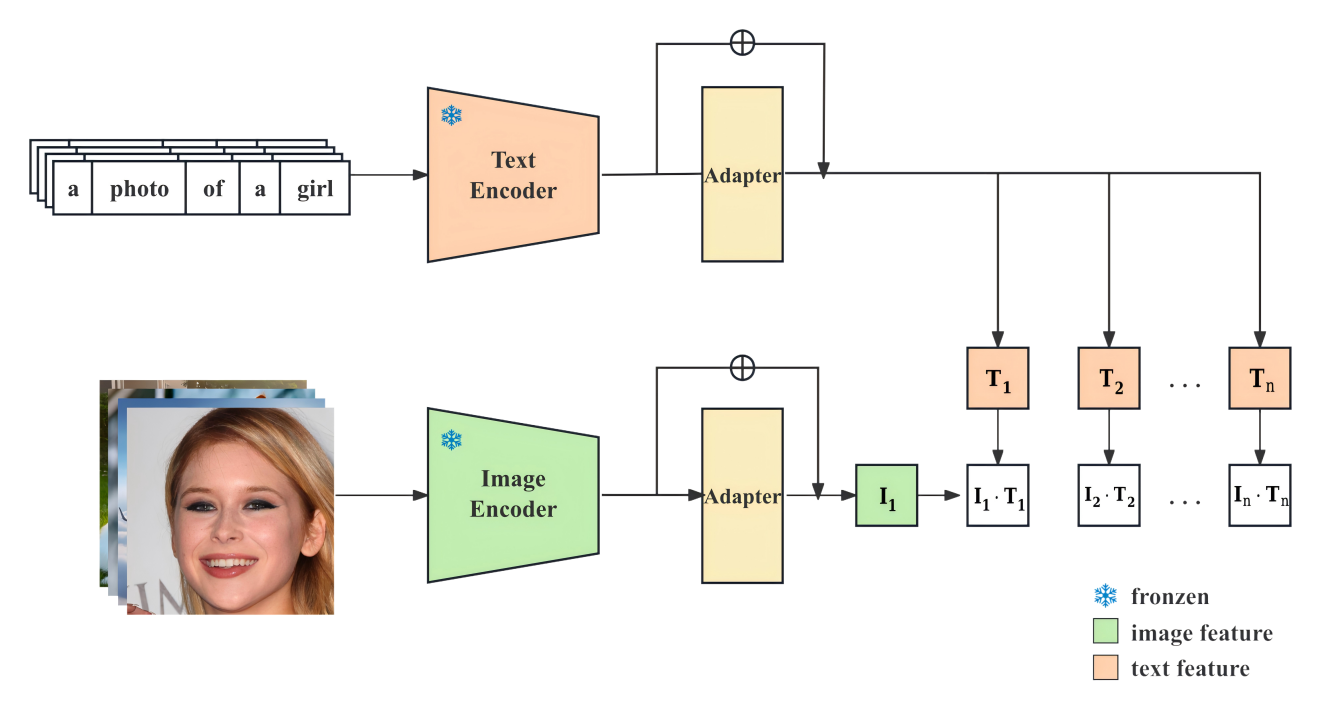
In recent years, with the rapid development of cross-modal learning, pretrained models such as CLIP have demonstrated powerful zero-shot capabilities in image-text alignment tasks, making them central to multimodal research. However, a key challenge remains: how to effectively transfer these capabilities while preserving the strengths of CLIP. To address this, we propose a parameter-efficient multi-task fine-tuning framework—Multi-Task CLIP-Adapter. By inserting lightweight Adapter modules after the frozen CLIP encoder, our method enables unified adaptation across multiple tasks, including classification, image-text retrieval, and regression. Experimental results show that our approach achieves an 8%–12% performance improvement with less than 0.2% additional parameters, while maintaining the original model’s zero-shot capability. Compared to the original CLIP and conventional transfer strategies, the Multi-Task CLIP-Adapter offers significant advantages in parameter efficiency and task generalization, paving a new path for scalable applications of large multimodal models.
Show more
Read Article PDF
Cite
Research Article Open Access
Smart Camera Video Processing and Recognition System Based on Edge Computing
Article thumbnail
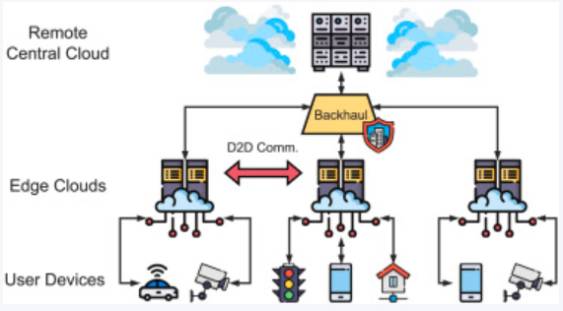
The widespread adoption of smart cameras in areas such as security monitoring, intelligent transportation, and industrial quality inspection is fueled by the growing number of Internet of Things (IoT) devices and continuous progress in artificial intelligence (AI) algorithms. However, traditional video surveillance systems rely on cloud computing and face challenges like limited bandwidth, high latency, and privacy risks. Edge computing, a distributed architecture that brings computation and storage closer to the data source, offers an effective way to improve smart camera video processing and recognition. Therefore, the paper investigates smart camera video processing and recognition systems based on edge computing reviewing key technologies and implementation methods via recent research and typical applications. In addition, it examines the progress and features of edge platform architecture, video analysis and object detection algorithms, resource scheduling and energy management, model compression, and data security and privacy protection. The results show that edge-intelligent video systems are effective in reducing network load, lowering response latency, and improving the security of local data processing. However, they still face technical challenges in heterogeneous resource management, real-time scheduling, and multi-task collaboration. As such, this paper further reviews the main existing issues and offers a practical outlook on system optimization and future applications.
Show more
Read Article PDF
Cite
Research Article Open Access
Application of Deep Learning-Based Face Recognition Method in Robot Vision Systems
Article thumbnail
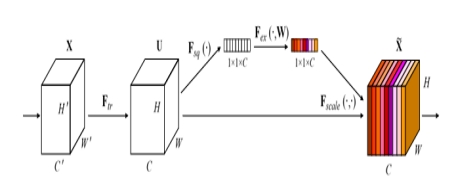
In recent years, the development of deep learning has significantly driven the progress of face recognition technology in the field of computer vision. For service robots and embedded intelligent systems, face recognition is not only related to identity authentication, but also affects the implementation effect of functions such as human-robot interaction and behavior analysis, thus largely determining the intelligence level of the system. Although many existing face recognition methods based on deep convolutional neural networks (CNN) have high accuracy, they often have large model sizes and high computational costs, which impose considerable limitations on implementation in scenarios with requirements for real-time performance, energy consumption and deployment space, such as robot platforms. To address this problem, this paper proposes a lightweight face recognition method combining MobileNetV3 and the Convolutional Block Attention Module (CBAM). As the backbone network, MobileNetV3 features a compact structure and low computational cost, which can reduce the model volume and inference latency to a certain extent. On this basis, CBAM is introduced to perform adaptive weighting in both channel and spatial dimensions, enabling the network to focus more on facial regions with richer information during feature extraction, thereby improving feature representation capability and recognition robustness. The model is trained and tested on the public dataset Labeled Faces in the Wild (LFW). The cross-entropy loss function and Adam optimizer are adopted in the training phase, and the model performance is tested under conditions such as complex backgrounds, pose variations and partial occlusion. Experimental results show that while maintaining a small model size, the proposed method achieves higher recognition accuracy than multiple existing lightweight networks, strikes a good balance between accuracy and efficiency, and is suitable for face recognition tasks in robot vision scenarios. Overall, combining lightweight network design with attention mechanisms can provide a practical implementation approach for high-performance face recognition on edge devices.
Show more
Read Article PDF
Cite
Research Article Open Access
Implementation of D* Lite Algorithm for Dynamic Pathfinding in a Street Environment
Article thumbnail
This project uses the D* Lite algorithm to do dynamic pathfinding in a simulated urban street environment, while also considering the movement limits of an autonomous vehicle. In the simulation, the vehicle is represented as a 2×3 car that moves forward on a narrow 10×100 grid. The environment contains both fixed obstacles and moving ones, like pedestrians crossing the street from time to time. To improve safety, a three-cell buffer is placed in front of the vehicle, which is roughly equal to one car length. This helps the vehicle react earlier when something suddenly appears ahead. During each step, the system updates both the planning mask and the safety mask, so the vehicle can either stop or replan its path when necessary. The safety buffer does help lower the chance of collisions, but D* Lite is still only a geometric planning algorithm, so it cannot predict future obstacle movement. Because of that, collisions may still happen in rare cases when an obstacle moves into the path after the vehicle has already sensed the environment. Even so, the results show that the algorithm can respond quickly and handle path planning well in a changing environment. Overall, this project shows that D* Lite is effective for a simplified autonomous driving simulation.
Show more
Read Article PDF
Cite
Research Article Open Access
Introduction to Low-cost and Low-consumption Optimization Schemes for Simultaneous Localization and Mapping
As an important technology required for intelligent devices such as autonomous driving and autonomous robots that can actively obtain environmental information, synchronous positioning and map construction technology has developed in response to practical demands and technological progress, and has given rise to a variety of algorithms with different efficiencies and consumption levels. However, the existing research related to SLAM is more focused on improving the performance of simultaneous localization and mapping algorithms in complex environments, while there are relatively few specialized optimizations for devices with lower computing or sensing capabilities. This paper mainly studies the existing solutions for reducing the requirements of synchronous positioning and map construction technology for the computing power or perception ability of devices, sorts out the relevant academic papers since 2009, and analyzes these papers through the review method. And from this, several optimization schemes for reducing the consumption of synchronous positioning and map construction algorithms have been sorted out, such as adding additional sensors like inertial measurement units, reducing the consumption of the search process through more efficient heuristic algorithms, lowering the data processing volume through dimensionality reduction, and reducing the recognition difficulty through strong features.
Show more
Read Article PDF
Cite
Research Article Open Access
Few-Shot Fast Adaptation Strategies with Meta-Learning and Multi-Armed Bandits
Article thumbnail
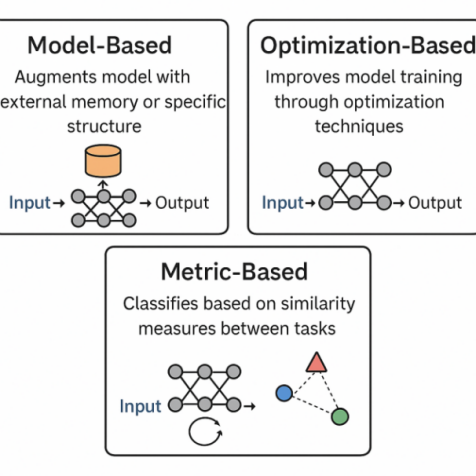
With the development of data-driven technologies, Few-Shot Learning (FSL) and environmental adaptability have become important research directions in machine learning. Traditional methods are highly dependent on large amounts of annotated data, which makes it difficult to cope with the data scarcity problem in the real world. This paper explores the integration of meta-learning and multi-armed bandit (MAB) algorithms in few-shot learning, aiming to investigate how their synergy improves model adaptability and decision-making efficiency in novel tasks. Through a review of existing literature, it analyzes the strengths of meta-learning in cross-task representation learning and the dynamic adaptability of MAB algorithms in uncertain environments. Their integration, supported by deep learning and attention mechanisms, is investigated in applications such as federated learning and remote sensing image analysis. The results demonstrate that meta-learning improves generalization by extracting cross-task knowledge, while MAB facilitates rapid task adaptation through effective exploration and exploitation strategies. Together, they form a unified framework that achieves state-of-the-art performance in few-shot learning across various domains.
Show more
Read Article PDF
Cite
Research Article Open Access
Evaluating the Performance Trade-off Between DenseNet and CNN2 for Automatic Modulation Recognition
Article thumbnail
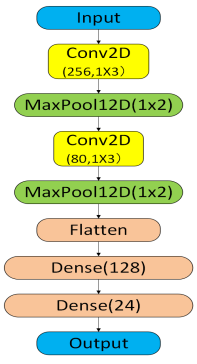
Convolutional neural networks (CNNs) have become the mainstream approach for AMR tasks. However, model selection still faces a trade-off among "performance", "complexity" and "adaptability". Current literature primarily focuses on model innovation itself while lacking systematic comparative analysis of different types of CNN models under the same data conditions. This study investigates the performance differences between two deep neural networks—DenseNet and CNN2—across signal-to-noise ratio (SNR) conditions ranging from 0 dB to 20 dB, based on the standard dataset (RadioML 2018.01A) and evaluates the performance by combining dimensions such as accuracy rate, convergence curve, confusion matrix, etc. The experimental results demonstrate that DenseNet achieves superior recognition accuracy under resource-constrained conditions, particularly at medium-to-high SNR levels. At 20 dB SNR, DenseNet attains an accuracy of 82.1%, outperforming CNN2 by 3.6 percentage points. However, at low SNR, especially at 0 dB, CNN2 demonstrated stronger robustness and generalization ability, but DenseNet was difficult to converge. These findings establish both empirical benchmarks and a theoretical framework for optimizing AMR network architecture selection across diverse communication environments.
Show more
Read Article PDF
Cite