Articles in this Volume

Research Article Open Access
Multi-task Learning Framework for Intelligent Risk Assessment in Global Digital Cultural Trade
Article thumbnail
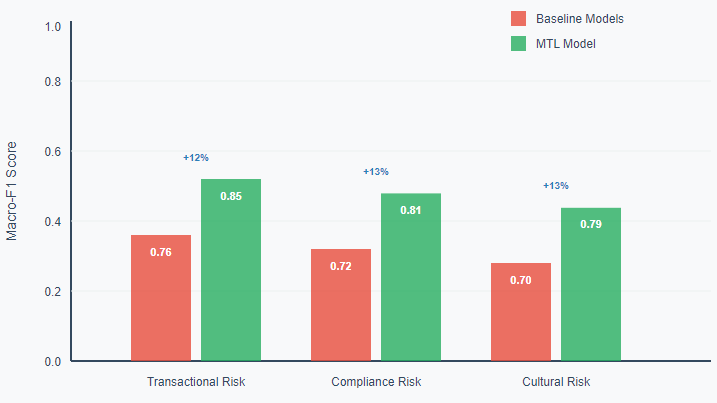
As global digital cultural trade expands, cross-border transactions face increasingly complex multidimensional risks, including policy compliance, cultural semantic adaptability, and transactional uncertainty. Traditional single-task risk assessment models struggle to capture these interrelated factors holistically. To address this gap, this study proposes an intelligent risk assessment framework based on multi-task learning that integrates heterogeneous data sources, including transactional records, policy documents, and cultural annotations. The model leverages a shared encoder and task-specific decoders to jointly predict three types of risks. Experiments conducted on a multimodal dataset collected from 2020 to 2024 demonstrate that the proposed framework outperforms single-task baselines across all tasks, with an average Macro-F1 improvement of approximately 12%. The cultural semantic risk task shows particularly strong performance in low-resource scenarios. These results confirm the effectiveness of the multi-task approach in enabling cross-task knowledge transfer and provide a scalable AI-driven solution for managing digital cultural trade risks in complex global environments.
Show more
Read Article PDF
Cite
Research Article Open Access
Multi-Task Generative Financial Knowledge Graph Construction from Corporate ESG Disclosures and Green Financing Cost Prediction
Article thumbnail
Rapid population ageing in East Asia is reshaping family risk, especially in “4-2-1” households where one working-age adult bears layered financial and caregiving burdens for two parents and four grandparents. This study develops a composite Eldercare Vulnerability Index (EVI) that integrates health, economic, and social exposures and links it to a three-tier Policy Support Score (PSS) spanning national, provincial/prefectural, and municipal programmes. Using harmonised 2023 micro-surveys from China, Japan, and South Korea (N = 12,437), we estimate country-adjusted effects with Bayesian hierarchical models, validate the index against objective hardship events and caregiver stress, and run counterfactual policy simulations. Median baseline EVI differs across countries and displays heavy-tail heterogeneity within countries. Municipal in-kind services, particularly home-based care hours and daycare vouchers, exert larger marginal reductions in EVI than equivalently valued national cash transfers, with positive complementarities across tiers. Scenario analyses indicate that modest local expansions produce outsized, targetable improvements among high-risk clusters. The framework offers a replicable, policy-sensitive diagnostic to guide multilevel reform in rapidly ageing cities.
Show more
Read Article PDF
Cite
Research Article Open Access
Graph Temporal Psychometrics for Early Warning of Student Psychological Resilience
Article thumbnail
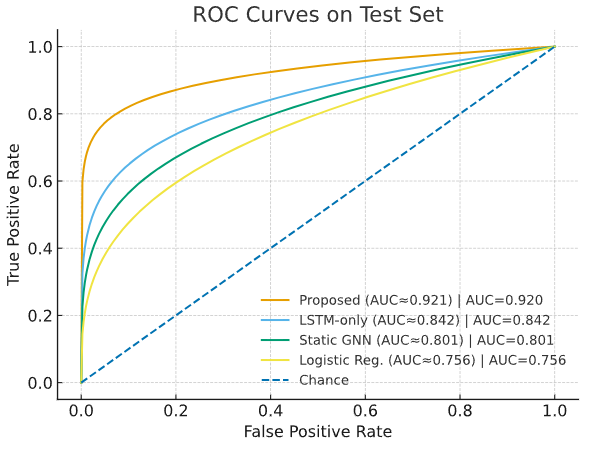
Psychological resilience is a crucial determinant of how students adapt to academic stress, maintain social functioning, and safeguard their well-being. Conventional methods of resilience assessment are grounded in psychometric surveys, yet these remain static and limited in capturing the temporal and relational dynamics that precede resilience decline. This study introduces a graph-temporal psychometric framework that integrates graph neural networks with temporal encoders to detect early warning signals of resilience risks. A dataset of 12,476 students observed across 192 weeks was analyzed, comprising over 2.39 million psychometric entries and 46.2 million peer interaction records. The framework achieved an Area Under the Curve (AUC) of 0.921, an F1-score of 0.889, a Root Mean Squared Error (RMSE) of 0.164, and a Cohen’s Kappa of 0.812, surpassing logistic regression, LSTM-only, and static GNN baselines. Early warning lead time averaged 13.6 days prior to reported deterioration. Subgroup analysis demonstrated stable performance across gender, academic stage, and institutional type, with AUC variance below 0.012. Ablation experiments confirmed the necessity of both graph and temporal modules, as removing either reduced AUC by 0.081–0.114. Interpretability analysis revealed that sustained stress levels above 7.5 and sudden increases in peer network centrality were the most reliable predictors of resilience decline. Ethical safeguards, including anonymization and informed consent, were embedded into the study design. This work advances resilience research by shifting from static evaluations toward dynamic, data-driven early warning systems, providing educators with actionable tools for timely intervention.
Show more
Read Article PDF
Cite
Research Article Open Access
Multi-task Prediction System for Churn Rate and CLV Driven by Pre-training of Customer Behavior Sequence
Article thumbnail
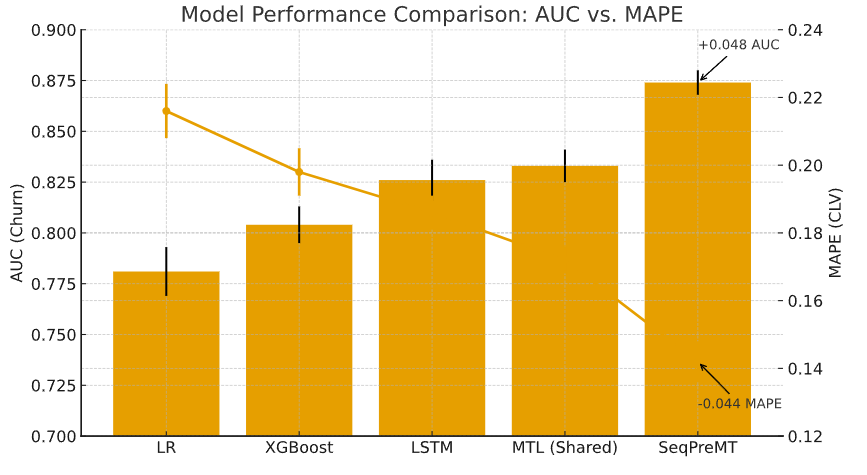
Customer retention and lifetime value prediction are major challenges that modern enterprise management needs to address. This work creates a multi-task prediction system that combines customer churn prediction and customer lifetime value (CLV) prediction. The goal is achieved through sequential pre-training of large-scale behavioral data, as well as through converter-based encoders and self-supervised pre-training The system can understand the transferable representations of transaction, browsing and service interaction sequences. By further adapting the pre-trained features through a joint learning setting, which dynamically adjusts the task weights according to the level of uncertainty, we present experiments conducted using this system on three real-world datasets, including 1.24 million users, retail (860,000 users), and online service (1.12 million users) datasets. It is significantly superior to traditional models. By comparing the proposed framework with the basic LSTM and the popular XGBoost baseline model, the new framework increased the loss AUC prediction by 4.8±0.7%, reduced the mean absolute percentage error (MAPE) of CLV by -17.6 ±2.1%, and achieved a compound F1 gain of +6.3±0.9%. By integrating self-supervised behavior representation with dynamic balance multi-task adaptation, a clear potential connection between customer churn risk and profitability is revealed. The combination of sequence pre-training and multi-objective adaptation ultimately forms a data-efficient and easily scalable customer analysis solution, bridging the methodological gap between highly accurate predictive models and practical applications.
Show more
Read Article PDF
Cite
Research Article Open Access
Research on Multimodal Interaction Prototype Generation and Iterative Design for Real-Time User Testing
Article thumbnail
The lengthy development cycle and slow end-user feedback have seriously affected the advancement of typical interaction design workflows, especially in multimodal interfaces that integrate voice, gestures, and touch. This study proposes a method focusing on real-time end-user testing, leveraging a process that integrates design, testing, and optimization Achieve rapid construction and loop connection of multimodal prototype. Developed an integrated design-test-optimization module suite, which includes drag-and-drop combinations of functional building modules such as speech recognition and gesture tracking, as well as features and algorithms for real-time behavioral data. Thirty designers and 60 end users participated in this experiment. The results showed that the iteration time was shortened by 65%, the workload over multiple months decreased by 42%, and the overall workload was reduced by 37%. The optimized framework dynamically improved the prototype view by means of non-invasive data collection and rule-based adaptive learning. This model has the potential to transform the user-centered alignment design process into data adjustment, which accelerates and also expands the feedback loop between professors and users, as well as the paradigm shift based on the multimodal - computer model.
Show more
Read Article PDF
Cite
Research Article Open Access
Efficiency Gains and Risk Exposure of Generative AI Interventions in Academic Administration
Article thumbnail
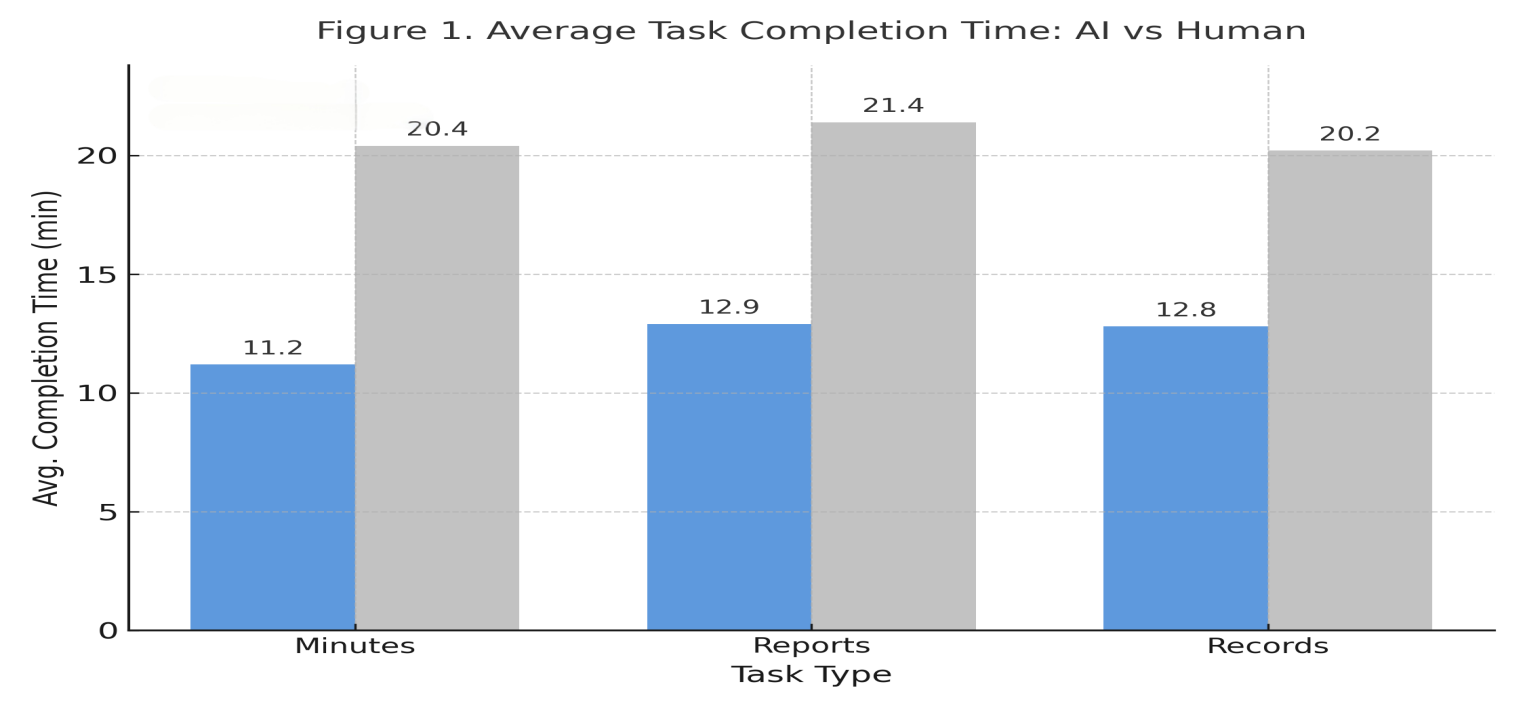
As rapid-paced advance of Generative Artificial Intelligence (GAI) occurs, its use in academic administration moves from supplement tool to collaboratory decision support system. Admin offices in colleges/universities are increasingly seeking help from AI support in composition of documents, performance appraisal, and data warehousing to reduce labour cost and processing time. However, greater efficiency from GAI brings with it risks of leakage of privacy, algorithmic discrimination, as well as decisionb lack of transparency that demand systematic framework to balance efficiency with risk. This research puts forth a generative model based on Transformer framework and conducts controlled experiments on three administrative task categories: drafting of meeting minutes, performance summary as well as consolidation of academic records. Experiments reveal that AI-supported team reduced task completion time by 41.7%, with substantial improvement in textual coherence with significant reduction in average risk exposure index to 0.327 with significant positive correlation with efficiency with r=0.46 as well as p<0.05). The research sets forth an “Efficiency–Risk Balance Framework”, pitching that while GAI is worthwhile to academic administration not so to displace human discretion as to reach optimal governance through proper collaborations with AI that are wise. The research contributes empirical as well as methodological wisdom to design policies as well as responsible implementations of AI in governance of colleges as well as universities.
Show more
Read Article PDF
Cite
Research Article Open Access
An Artificial Intelligence Assessment Framework for Circular Economy Policies Based on Multi-agent Modeling Takes into Account Both the Transformation of Business Organizations and the Optimization of Ecological Benefits
Article thumbnail
To address the issue of insufficient multi-agent interaction characterization in the evaluation of circular economy policies under the global resource and environmental crisis, this paper constructs an intelligent evaluation framework integrating multi-agent modeling (ABM) and artificial intelligence technologies. This framework integrates technologies such as genetic algorithms, deep reinforcement learning, and fuzzy comprehensive evaluation, and selects 200 enterprises in the equipment manufacturing and chemical industries in the eastern region for empirical analysis. The results show that the improvement effect of combined policies on the transformation efficiency and ecological benefits of business organizations is significantly better than that of single policies, and there is obvious heterogeneity in enterprise scale and property rights attributes. The model fits the actual data by 92%, effectively breaking through the limitations of traditional methods and providing scientific support for the precise optimization of circular economy policies.
Show more
Read Article PDF
Cite
Research Article Open Access
Prediction of RAG System Retrieval Strategy Selection Based on Multihead-Attention Optimization of LSTM Algorithm
Article thumbnail
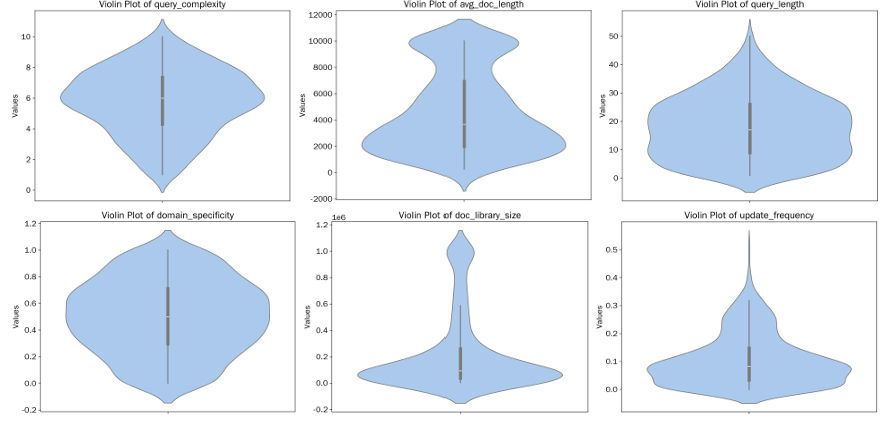
Against the backdrop of the increasing popularity of large language models in knowledge-intensive tasks, Retrieval Enhancement generation (RAG) technology has become a key technical path to break through model illusions and enhance the credibility of output. However, when dealing with the RAG retrieval strategy prediction task, existing machine learning algorithms generally have problems such as unbalanced feature weight configuration and insufficient capture of long sequence dependencies. To this end, this paper proposes an LSTM classification algorithm based on Multihead-Attention optimization. Firstly, data preprocessing is completed through correlation analysis and violin graph analysis, and then performance comparison experiments are conducted with multiple machine learning algorithms. The results show that the proposed Multihead-Attention-LSTM model performs the best in all evaluation indicators: The accuracy rate reached 0.853, the recall rate and precision rate were 0.853 and 0.854 respectively, the F1 value was 0.853, and the AUC value was 0.97. It comprehensively outperformed integrated models such as ExtraTrees and XGBoost, as well as traditional models like Random Forest, GBDT, and decision tree, and was significantly superior to Naive Bayes and KNN. This model, by leveraging the advantages of the multi-head attention mechanism and LSTM, demonstrates outstanding superiority in classification performance and generalization ability. It effectively verifies its applicability in the classification task of retrieval strategies and provides efficient and feasible algorithmic support for the intelligent optimization of retrieval strategies in the RAG system. It has significant practical value for enhancing the output reliability of large language models in knowledge-intensive tasks.
Show more
Read Article PDF
Cite
Research Article Open Access
An Explainable and Compliant Federated Learning Framework for Internal Audit of Bank Climate Risk Models
Article thumbnail
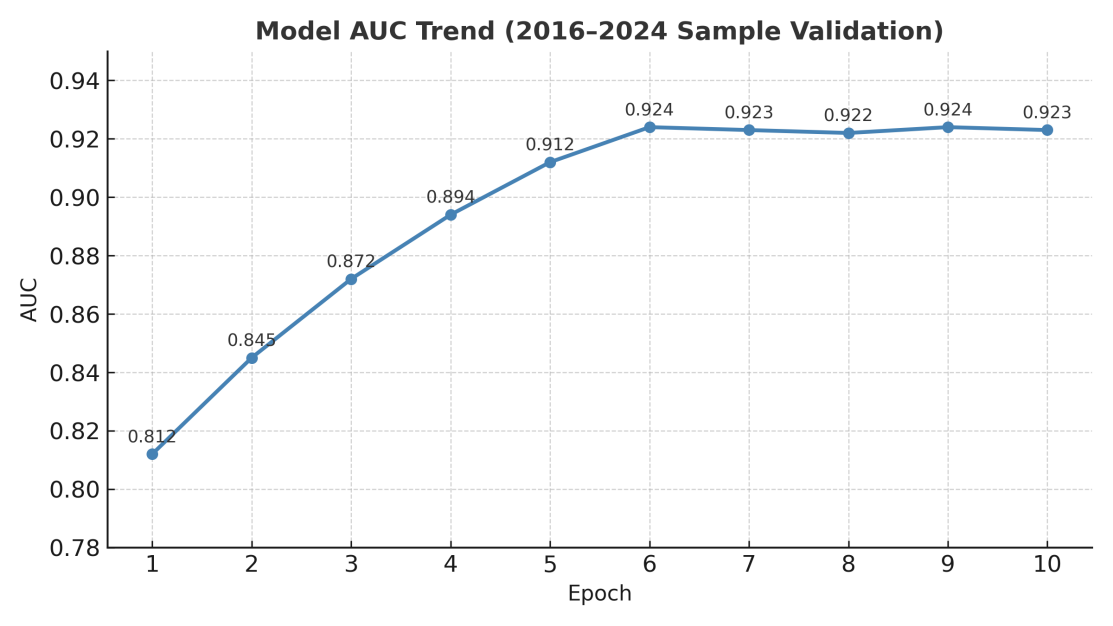
Climate risk has gradually become one of the major Financial Stability challenges, in which banks face the task of coming to terms with data privacy and model interpretability to satisfy the audit requirements of the regulatory body. In view of the present problems in climate risk models in banks in terms of being centrally trained with low interpretability and difficulties in compliance, the proposed study presents an explainable and compliant federated learning solution to facilitate collaborative internal auditing of bank climate risk models. The proposed solution was validated with climate finance data in Chinese commercial banks from 2016 to 2024, with the aid of a differential privacy method and an upgraded version of the FedAvg algorithm with parameter aggregation security. The performance demonstrated that with an “interpret–verify–trace” audit loop between model interpretation using the SHAP method and the blockchod audit log record solution, it has great predictive performance with an accuracy of 0.924 while greatly boosting model traceability with data privacy protection with an epsilon level of 1.5.
Show more
Read Article PDF
Cite
Research Article Open Access
Research on Commodity Futures Price Fluctuation Prediction Based on CNN-BiLSTM-Attention
Article thumbnail
To meet the high-precision demand for short-term forecasting in the commodity futures market and address the challenges of sharp price fluctuations and nonlinear characteristics, this study takes seven representative commodity futures varieties in China (including rebar, iron ore, etc.) as research objects and constructs a prediction system for price fluctuations in the next 30 minutes based on 1-minute high-frequency main contract data. In the data preprocessing stage, multiple rounds of cleaning, outlier removal, sliding window sampling, and construction of multidimensional temporal features are conducted to ensure the information content and stability of the input sequence. The model is constructed with a progressive design: LSTM is used to establish a baseline, CNN-LSTM-Attention is adopted to enhance the ability of extracting key patterns, and finally the Reversible Instance Normalization (RevIN) mechanism is integrated to form the RevIN-CNN-LSTM-Attention main model. Experimental results show that the model performs excellently on the test set, with an average R² increase of more than 10% compared with the basic model and a significant decrease in RMSE, and the trend fitting effect is outstanding in varieties such as ferrosilicon and rebar. This paper also analyzes the advantages and limitations of the model, clarifies its applicable boundaries, and proposes subsequent optimization directions. The research indicates that the proposed model has good stability, adaptability, and generalization ability, providing an effective solution for high-frequency commodity futures prediction and reference value for relevant financial engineering modeling.
Show more
Read Article PDF
Cite