Articles in this Volume

Research Article Open Access
A Comparative Study on Deep Learning-Based: Temperature Prediction Models: Performance Evaluation of CNN, Transformer and Random Forest
Article thumbnail
Accurate short-term temperature prediction is of great significance in fields such as agricultural production and disaster prevention and mitigation. This study aims to explore the performance differences among three models—Convolutional Neural Network (CNN), Transformer, and Random Forest (RF)—in short-term temperature prediction tasks, providing a reference for model selection and optimization in meteorological forecasting. Based on the Beijing PM2.5 dataset, the research constructs supervised learning samples through data preprocessing (using the temperature sequence of the past 24 hours as input to predict the temperature at the 25th hour) and trains and evaluates the three models under unified experimental configurations. The results show that all three models can achieve high-precision predictions. Among them, Random Forest performs the best , with significant advantages in error control, noise resistance, and high training efficiency. CNN follows and excels at capturing local short-term fluctuation features. Transformer , although capable of modeling long-range dependencies, performs slightly inferior with the current dataset. The study reveals that traditional machine learning models still have practical value in resource-constrained scenarios, while deep learning models can further improve accuracy when sufficient data is available. Model fusion and the introduction of multiple factors may be future optimization directions.
Show more
Read Article PDF
Cite
Research Article Open Access
Research on Intelligent Navigation and Dynamic Obstacle Avoidance of Robots Based on Visual Perception: A Review
Article thumbnail
In modern autonomous robotic applications, robots are increasingly expected to operate in unstructured environments, where both navigation capability and dynamic interaction directly affect task efficiency. However, although vision-based perception has been widely studied, many existing approaches still struggle to adapt to complex and unpredictable scenarios, and their integration into real-world engineering systems is often limited. In this paper, we examine vision-driven robotic navigation and interaction methods by focusing on several core aspects, including the coordination between visual SLAM and navigation, improvements in visual object recognition, and multi-node autonomous interaction. From the analysis, it can be observed that most SLAM and navigation cooperation frameworks are mainly validated in controlled environments rather than real dynamic settings, while visual recognition methods tend to be sensitive to disturbances such as illumination variation and occlusion. At the same time, the overall integration of navigation, perception, and interaction modules in practical robotic systems is still not sufficiently developed. Based on these findings, this study aims to provide a more practical reference for designing robotic systems in low- to medium-complexity environments, while also supporting the transition of vision-based perception technologies from laboratory validation toward real industrial applications and offering directions for further system-level improvements.
Show more
Read Article PDF
Cite
Research Article Open Access
Optimizing BERT Fine-tuning Strategies: A Hyperparameter and Architecture Analysis for Sentence Pair Classification
Article thumbnail
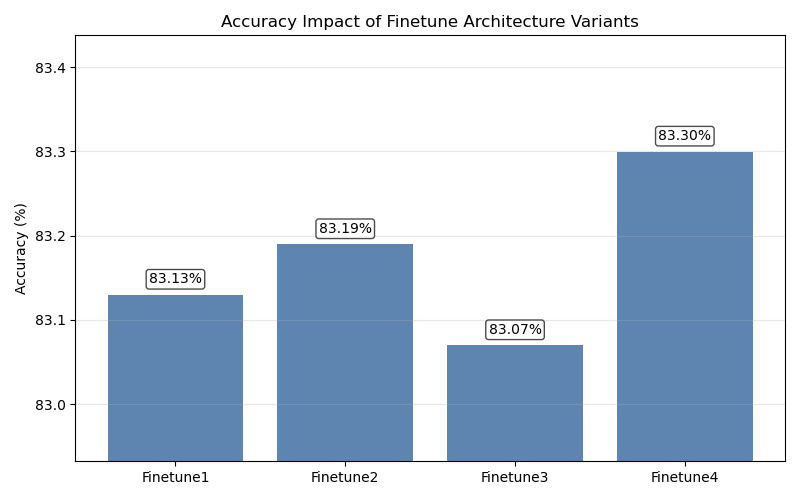
To address the challenges in fine-tuning Pre-trained Language Models (PLMs) like BERT, where performance is highly sensitive to architecture and hyperparameter choices, this study proposes and validates a systematic two-stage optimization process using the MRPC sentence pair classification task. Progressing from architecture exploration to parameter optimization, our experiments first reveal that a simplified single-layer linear classifier outperforms more complex structures for this task. Subsequently, large-scale hyperparameter tuning identifies batch size as the most critical parameter, while others like learning rate exhibit a distinct optimal range. By implementing this structured methodology, we significantly improved the model's validation accuracy. This work demonstrates that a methodical approach, combining fine-grained architecture adaptation with systematic parameter tuning, is crucial for realizing the full potential of pre-trained models.
Show more
Read Article PDF
Cite
Research Article Open Access
A Survey on the Application of Agentic AI in Gaming
Since the release of Practices for Governing Agentic AI Systems by OpenAI in 2023, the emerging paradigm of Agentic AI (Artificial Intelligence) has gradually attracted academic attention. Unlike traditional AI systems that rely on structured presets and extensive human intervention, Agentic AI refers to intelligent systems capable of understanding task objectives, adapting to complex environments, and autonomously completing tasks with minimal human oversight. Its advantages in adaptability, decision-making, and self-management make it particularly suited to dynamic and rapidly changing real-world scenarios. This paper first outlines the definition, core characteristics, and primary enabling technologies of Agentic AI, emphasizing that, to date, no deployed system in the gaming domain fully embodies all of its defining features. To explore potential pathways toward practical implementation, the paper analyzes several recent large-model-based agents—such as SIMA, and ChatRPG v2, that, while falling short of the full Agentic AI standard, exhibit partial alignment through capabilities such as autonomous instruction comprehension, long-term task execution, multi-environment adaptation, and low-intervention deployment. These systems can therefore be regarded as generative agents with Agentic characteristics, offering valuable insights for future research directions and technical architectures. Finally, the paper proposes using gaming environments as low-cost, low-risk, and highly controllable testbeds for validating key capabilities, accumulating deployment experience, and accelerating the transition of Agentic AI into real-world applications, thereby advancing game AI from scripted logic toward higher levels of autonomous intelligence.
Show more
Read Article PDF
Cite
Research Article Open Access
Reinforcement Learning Interpretability Methods and Decision Making Methods under Constraints
Reinforcement learning (RL), as a core technology of artificial intelligence, has shown strong potential in the fields of robotics, games and autonomous driving. However, the "black box" nature of deep RL models leads to a lack of transparency in the decision-making process, making it difficult for users to understand and trust the agent behavior of RL models, and the uninterpretability of decisions may cause serious consequences in sensitive fields such as healthcare and finance. At the same time, because traditional RL pursues maximum reward and result models often ignore fairness, leading to policy bias, which affects the group's rights. So this article will summarize from the perspective of two key transparency and fairness of RL as summarized in the paper: one is based on the interpretability of the decision-making method, using the causal analysis and partial interpretation and visualization tools to make decisions transparent; Second, the decision-making method based on the constraint conditions, through multi-objective optimization and gradually constraints ensure the decision unfair. This review covers the methodologies, experimental results and limitations of representative literature in recent years. The significance of this paper is to systematically integrate these methods, reveal the interaction challenges of transparency and fairness, promote the development of more reliable RL systems, and look forward to future directions to help promote the ethical deployment and sustainable innovation of RL in social applications.
Show more
Read Article PDF
Cite
Research Article Open Access
Python in Sentiment Analysis: A Review with a Focus on Social Media Text
Article thumbnail
The exponential growth of user-generated content on social media platforms (e.g., Twitter, Weibo, Facebook) has created massive datasets rich in public sentiment. While sentiment analysis proves vital for understanding social trends, brand perception, and political developments, traditional methods struggle to handle the informal nature, noise, and context-dependent characteristics of social media language. This necessitates advanced computational technologies to extract meaningful insights. This paper summarizes the application of Python in social media text sentiment analysis, covering various methods supported by its NLP library (NLTK, TextBlob), machine learning/deep learning framework (TensorFlow, PyTorch), and discusses cross-platform comparative analysis and specific domain adaptation. The results indicate that Python-based models achieve high levels of accuracy. For example, the RoBERTa-BiLSTM-MHA model achieved an accuracy of 93.44%, and these models outperform conventional tools by 6–12% in terms of F1 scores. Key findings reveal cultural and platform-based disparities in sentiment expression. Specifically, Chinese social media platforms like Weibo emphasize economic sentiment, while Western platforms such as Twitter focus more on technical and ethical implications. The integration of sentiment dictionaries and multimodal data, including emojis, further enhances the robustness of these sentiment analysis models. Overall, this review underscores Python’s versatility in enabling scalable and real-time sentiment analysis, which in turn drives innovations in NLP research and practical applications.
Show more
Read Article PDF
Cite
Research Article Open Access
A Review of Typhoon Detection, Tracking and Intensity Estimation Using Deep Learning and Multi-modal Remote Sensing Data
Typhoons rank among the most destructive natural disasters globally, inflicting substantial casualties and enormous economic losses across the world each year. Accurate typhoon detection, tracking, and intensity estimation are crucial for disaster warning and risk management. Traditional typhoon monitoring methods primarily rely on numerical weather prediction models and expert judgment, which suffer from limited accuracy and insufficient timeliness. In recent years, the rapid development of deep learning technologies has brought new opportunities to typhoon research, particularly demonstrating significant advantages in multi-modal remote sensing data fusion and automated feature extraction. This paper systematically reviews the current state of typhoon detection, tracking, and intensity estimation technologies based on deep learning, analyzes the application of multi-modal remote sensing data in typhoon monitoring, discusses current technical challenges, and prospects future development trends. Research indicates that deep learning methods show superior performance in automated typhoon feature recognition, temporal sequence modeling, and multi-source data fusion, providing new technical pathways for improving typhoon forecasting accuracy and operational efficiency.
Show more
Read Article PDF
Cite
Research Article Open Access
Comparative Study of Zero-shot and Fine-tuned Vision Models--Evaluating CLIP, LiT, and Swin Transformer on Fine-grained Bird Classification
Article thumbnail
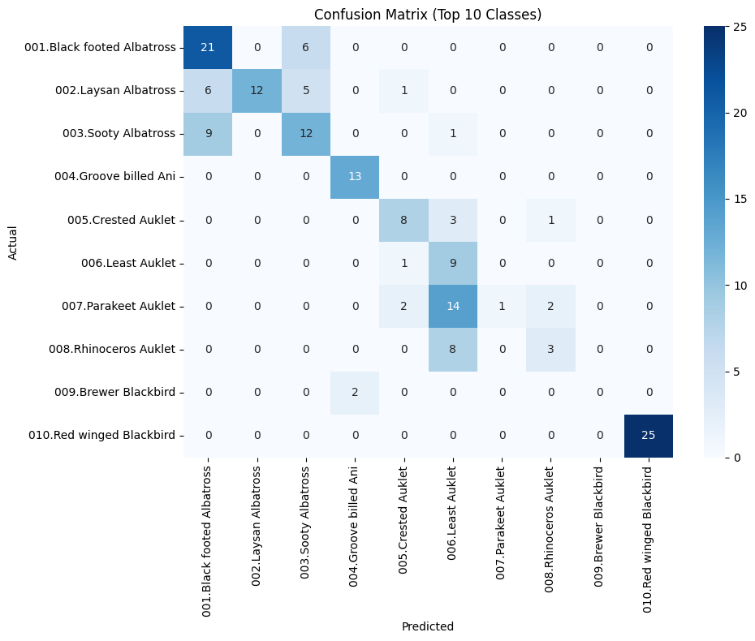
Fine-grained image classification is challenging because categories are often separated by only minor visual cues, requiring models to capture very fine details for accurate discrimination. The latest advances in vision-language models, such as CLIP and LiT, have demonstrated strong zero-shot performance on general image recognition tasks, but their effectiveness in fine-grained domains remains underexplored. In this study, we conduct a comparative evaluation of CLIP, LiT, and the vision-only Swin Transformer on the CUB-200-2011 bird dataset. For zero-shot classification, we assess CLIP and LiT using a consistent prompt template, while for fine-tuning, we train both CLIP and Swin end-to-end using the AdamW optimizer. Results show that LiT outperforms CLIP in zero-shot settings (63.96% vs. 51.55% Top-1 accuracy), while Swin achieves the highest performance after fine-tuning (83.47% Top-1 accuracy). These findings highlight a trade-off between generalization and fine-grained specialization, and suggest that future work should explore lightweight adaptation techniques to bridge the performance gap without sacrificing zero-shot flexibility.
Show more
Read Article PDF
Cite
Research Article Open Access
Optimization of YOLOv8 for UAV-Based Object Detection: A Literature Review
YOLOv8 offers high accuracy and real-time performance, making it suitable for UAV applications. However, challenges such as limited onboard computing power, varying target sizes, and complex environments persist. This review systematically explores recent advancements in optimising YOLOv8 for drone applications, while also studying and evaluating its performance under extreme conditions such as low light and occlusion. The results indicate that current optimisations primarily focus on three directions. First, improving small object detection accuracy through multi-scale feature fusion, attention mechanisms (such as hybrid attention modules), and data augmentation (such as adaptive anchor allocation). Second, achieving model lightweighting and edge deployment through backbone replacement (such as MobileNetV3), model quantisation, and embedded deployment optimisation. Additionally, robustness in complex environments is improved through techniques such as image preprocessing (e.g., CLAHE, gamma correction), adversarial training, and multimodal fusion..This work aims to guide future studies toward automated optimization, edge-cloud integration, and multi-task learning for intelligent UAV vision systems.
Show more
Read Article PDF
Cite
Research Article Open Access
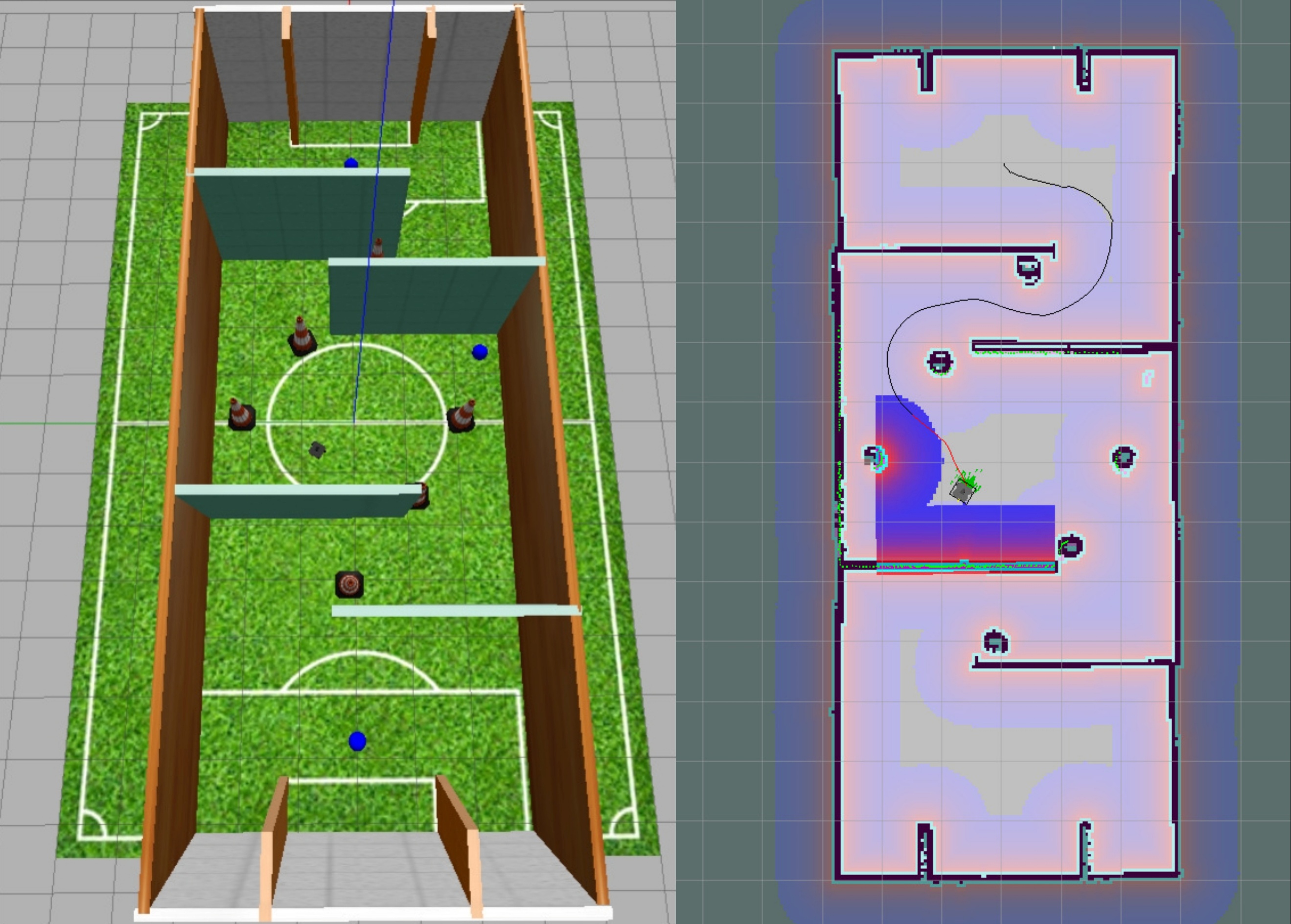
Multi-Sensor Fusion and Collaborative Perception for Autonomous Robots in Complex Maze Environments
Complex mazes are characterised by narrow passages, frequent obstructions, and mirrored or transparent boundaries. This paper reviews multi-sensor fusion and collaborative perception technologies for autonomous mobile robots. By comparing lidar, depth cameras, inertial measurement units (IMUs), wheel speed sensors, ultrasonic sensors, and infrared sensors, this paper highlights the complementary advantages of each sensor. It defines sensor pairing modes and deployment scenarios. A four-layer framework is adopted: data layer, feature layer, decision layer, and hybrid layer. The data layer fuses information at the pixel or point echo level to maximise information. The feature layer balances accuracy and latency. The decision layer adds fault-tolerant mechanisms. Hybrid or adaptive scheduling switches between layers based on the scenario and computational budget. All fusion algorithms in this paper are based on Bayesian inference. Kalman filter-type algorithms (KF/EKF/UKF/MSCKF/ESKF) achieve tightly coupled LIO/VIO. Particle filter-type algorithms (PF/AMCL/RBPF) perform global positioning. The deep learning fusion algorithm BEV achieves a unified cross-view and cross-modal representation. Under bandwidth and latency constraints, information sharing, map stitching, collaborative path planning, and task allocation among multiple robots achieve virtually wider-angle vision and significantly enhanced coverage capabilities. Overall, multi-sensor collaborative perception substantially improves the robustness and efficiency of maze exploration, though main challenges such as synchronisation, calibration, and domain adaptation still need to be addressed.
Show more
Read Article PDF
Cite