Articles in this Volume

Research Article Open Access
Advances in Catalytic Hydrogenation of Oil with Novel Catalytic Systems
Traditionally, nickel-based catalysts (e.g., Raney Ni or Ni/Al₂O₃) have been used due to their low cost and high activity. However, Ni catalysts tend to yield excessive saturation and trans-fat isomers, which are undesirable for health. In recent years, intensive research has focused on new catalytic systems to improve selectivity, activity, and environmental performance. This review briefly surveys conventional catalysts and then focuses on two classes of novel catalysts: advanced supported metal catalysts (including noble metals and promoted Ni catalysts) and bimetallic or alloy catalysts. For each system, the article discusses the hydrogenation mechanism, observed activity and selectivity (particularly toward cis monoenes), catalyst stability and regeneration, as well as industrial scale-up potential and environmental impact (e.g., trans-fat formation, energy requirements). Emerging catalyst-free technologies (e.g., plasma hydrogenation) are also highlighted. The paper concludes with perspectives on designing catalysts that meet food-industry demands (high cis-selectivity, low trans content) while minimizing energy use and harmful by-products.
Show more
Read Article PDF
Cite
Research Article Open Access
Research on UAV Flight Trajectory Based on PSO and Improved PSO Algorithms
Article thumbnail
With the widespread application of UAV technology in military, agricultural, logistics, and other fields, path planning, as a core technology of autonomous navigation, faces challenges from complex environmental constraints and multi-objective optimization. This paper systematically investigates the application of Particle Swarm Optimization (PSO) and its improved strategies in UAV 3D path planning. Secondly, by comparing five algorithms—traditional PSO, Variable social weight PSO, mutated particle PSO, hybrid strategy PSO, and neural network-assisted PSO—in complex terrains with varying numbers of peaks (N=5, 13, 20), their performance is evaluated. Simulation results indicate that the traditional PSO algorithm is simple and efficient but prone to premature convergence. The Variable social weight PSO excels in balancing exploration and exploitation capabilities, enhancing convergence speed. The mutated particle PSO and hybrid PSO effectively avoid local optima and demonstrate superior path quality in complex terrains. The neural network-assisted PSO incurs higher computational costs in high-dimensional complex environments and is susceptible to overfitting in simple environments. This study provides a theoretical basis for algorithm selection in different mission scenarios and proposes future directions for intelligent path planning technology development.
Show more
Read Article PDF
Cite
Research Article Open Access
Research Progress of Nanomaterials in Batter Thermal Management System
With social development, the process of electrification has accelerated accordingly. However, performance degradation of lithium-ion batteries caused by heat generation remains a major problem that needs to be overcome at present. Because lithium batteries perform best at room temperature on battery thermal-management systems, especially upgrades to interfacial thermal-conductive materials, concerns the battery’s efficiency, lifespan, and even safety. This paper reviews heat-generation mechanisms and sorts out three categories of nano-upgraded interfacial thermal-conductive materials: metal-based, phase-change, and fluid-based. The literature indicates that using metal nanowires with special alignment within polymers can enhance interfacial thermal-conductive performance by roughly 100 times. Adding about 1% weight fraction graphene to the matrix can improve the efficiency of the heat-transfer network, while the sensible heat is slightly reduced at the same time. Adding magnetic Fe₃O₄ or CuO to a fluid to construct modules of alternating-magnetic-field nanofluids, forming dynamic heat-conduction chains, can significantly reduce battery-module temperatures. This paper focuses on a comprehensive analysis of four aspects of the experimental materials: thermal-conductivity efficiency, heat-buffering capacity, practicality, and manufacturability. It provides material-level design guidelines for battery cooling systems that are safer, longer-lived, and supportive of faster charging.
Show more
Read Article PDF
Cite
Research Article Open Access
Application of Diatomic Electrocatalysts in Oxygen Reduction
Article thumbnail
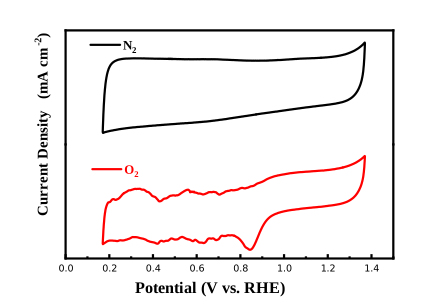
Amidst the growing global demand for sustainable energy storage solutions to address energy shortages and environmental concerns, zinc-air batteries (ZABs) have emerged as a promising technology due to their high theoretical energy density and abundance of zinc resources. However, their performance is hindered by the slow kinetics of the oxygen reduction reaction (ORR) at the cathode and the reliance on expensive Pt-based catalysts. This study focuses on the application of a diatomic FeCo-NC electrocatalyst for ORR in ZABs. The catalyst was synthesized using a bimetallic zeolitic imidazolate framework (ZIF-8/ZIF-67) as a precursor via a thermal pyrolysis method. Electrochemical evaluations revealed exceptional ORR activity of the FeCo-NC catalyst in alkaline media, exhibiting a high half-wave potential of 0.875 V and a limiting current density of 5.430 mA cm⁻², comparable to commercial Pt/C. Mechanistic studies confirmed a predominant four-electron transfer pathway and favorable reaction kinetics. This work demonstrates the significant potential of atomically dispersed bimetallic catalysts as efficient and cost-effective alternatives to noble-metal catalysts for advanced energy conversion devices like zinc-air batteries, and provides insights into future research directions for precise synthesis and mechanistic understanding.
Show more
Read Article PDF
Cite
Research Article Open Access
A Study on Active Aerodynamic Components in Modern High-Performance Vehicles
Article thumbnail
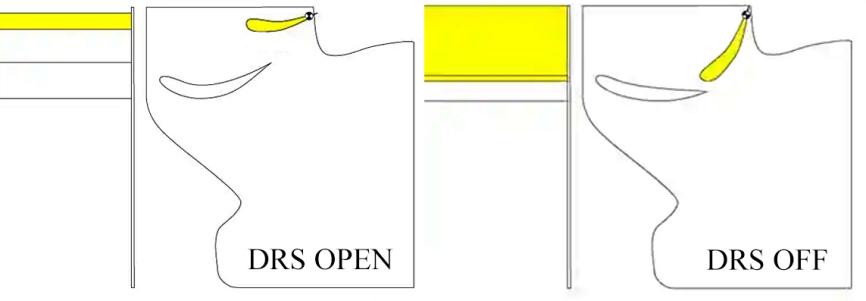
With the increasingly strict global regulations on energy conservation and emission reduction and consumers' pursuit of high-performance car handling, active aerodynamic components have become a critical component in modern car design. The design of traditional fixed aerodynamic components only achieves optimal aerodynamic performance under specific operating conditions. When the vehicle is in multiple operating scenarios, its aerodynamic performance significantly decreases in accordance with actual needs, making it difficult to balance the overall performance of the vehicle. Active technology adjusts components such as the tail wing, spoiler, air dam, and air intake grille in real-time to adapt to different driving conditions, dynamically optimizing low wind resistance during high-speed cruising, high downforce in bends, and emergency braking performance. This paper systematically analyzes its technical principles and simulation methods, combines typical application cases such as F1 and supercars, and looks forward to the future development trend of intelligence, so as to provide a reference for the development of automobile active aerodynamics.
Show more
Read Article PDF
Cite
Research Article Open Access
Magnetic Levitation: Electrodynamic Suspension and Electromagnetic Suspension Technologies
Electrodynamic Suspension (EDS) and Electromagnetic Suspension (EMS) are the two primary technologies widely used in maglev systems due to their relatively mature development and simple structural principles. This paper investigated a novel hybrid technology that integrates EDS and EMS to upgrade and transform maglev systems. Based on the application of EMS in China and EDS in Japan, it summarized the advantages and disadvantages of each technology, identifying the feasibility of a hybrid approach. The purpose of this coordination is to compensate for the respective shortcomings of each levitation system: EMS can stably levitate the train at low speed but requires a lot of energy, and EDS functions well only at high speed, not at standstill and low speed. The developed hybrid system uses EMS for lift-off or slow cruise control and smoothly changes into EDS for high-speed stability. Thereby, energy utilization efficiency and reliability will be greatly improved by 2.8 and 3.2 times, respectively. Based this technology, the overall energy consumption and environmental burden have been reduced, and the scope of maglev technology applications to future transportation networks has been widely expanded.
Show more
Read Article PDF
Cite
Research Article Open Access
The Impact of Residential Spatial Planning on Residential Travel Carbon Emissions under the Carbon Reduction Model
With the acceleration of global urbanization, urban residential areas have become a significant source of carbon emissions from resident travel. Focusing on the impact of residential spatial planning on travel carbon emissions, this study integrated the "5D" built environment, residents' socioeconomic attributes, and subjective perception factors through case studies and systematic reviews, and explored their comprehensive influence mechanism on residents' travel carbon emissions. The study showed that open neighborhoods with high road density, a high mix of land uses, and high public transit accessibility can shorten travel distances, increase the proportion of walking and public transportation, and thus effectively reduce resident travel carbon emissions. In addition, the analysis emphasized that compact, well-connected communities not only lower carbon intensity but also improve livability and social equity. This paper further proposed strategies such as optimizing spatial form, improving supporting facilities, building a green transportation system, and introducing smart technologies and policy guidance, thereby providing theoretical references and practical guidance for future low-carbon residential planning and sustainable urban development.
Show more
Read Article PDF
Cite
Research Article Open Access
Current Status and Development of Key Hydrogen Fuel Cell Technologies
As society continues to progress, hydrogen energy's status in the energy sector continues to rise. Hydrogen fuel cells, as a key clean energy technology for achieving the carbon peaking and carbon neutrality goals, face limitations in large-scale application due to issues such as high costs, poor stability of cathode catalysts, and insufficient performance of proton exchange membranes. This paper first reviews the challenges in adapting oxygen reduction reaction catalysts to acidic, alkaline, and other environments. Subsequently, the paper examined the effects of different elemental doping on catalyst performance, optimization mechanisms, and preparation strategies, citing examples of catalysts composed of precious metals in their single-atom form. Finally, this paper systematically reviews the research progress and performance characteristics of different types of proton exchange membranes. It aims to provide clear directional guidance and theoretical support for future breakthroughs in key hydrogen fuel cell technologies, thereby contributing technical assistance to advancing the global energy transition toward green and low-carbon solutions.
Show more
Read Article PDF
Cite
Research Article Open Access
Mechanisms of Bioadhesion: Aquatic Bio-Inspired Strategies and Biomedical Applications
Bioadhesives, particularly those inspired by aquatic organisms like octopuses and mussels, have become key innovations in biomedical engineering, addressing the core challenge of achieving strong adhesion in wet physiological environments. These materials achieve effective adhesion to biological tissues through a complex interplay of intermolecular forces, chemical reactions, and structural adaptability. Studies have shown that aquatic-inspired designs draw on natural mechanisms: octopuses utilize microstructured suction cups to generate negative pressure for mechanical anchoring, while mussels rely on catechol-containing proteins to form covalent and coordination bonds via L-3,4-dihydroxyphenylalanine (DOPA) residues. These mechanisms have driven the development of synthetic formulations, including polydopamine composites and microstructured hydrogels, that enhance wet adhesion through a synergistic combination of chemical and physical interactions. Biomedical applications encompass wound closure, hemostasis, tissue regeneration, and drug delivery, offering minimally invasive alternatives to traditional sutures. Employing a combination of literature review and case analysis, this paper systematically elaborates on the basic mechanisms of bioadhesion, aquatic bio-inspired innovations, and their biomedical applications.Current research focuses on overcoming limitations such as catechol oxidation and mechanical mismatch with dynamic tissues, while also exploring stimuli-responsive and multifunctional designs to expand clinical applications. The fusion of natural inspiration and materials engineering highlights the growing importance of bioadhesives in modern medicine.
Show more
Read Article PDF
Cite
Research Article Open Access
Dynamic Performance Enhancement of Hydrogen PEM Electrolyzer Membranes
With the development of globalization and public increase awareness of the greenhouse effect, and there are strategic objectives of peak carbon emission and carbon neutrality that are realized, building a clean, low-carbon, safe, and efficient new energy system has become a consensus in the global world. Under this background, hydrogen, with its clean, zero-carbon emissions (especially carbon dioxide, which contribute to the greenhouse) and high energy density far exceeding that of traditional energy sources, is widely viewed as a key strategic alternative energy source that leads the future energy revolution. Among the numerous hydrogen production technologies, water electrolysis, particularly the "green hydrogen" production route that deeply integrates with fluctuating renewable energy sources such as wind, photovoltaics, and some other, is highly attractive because it can effectively address the storage and absorption issues of renewable energy. It is recognized as one of the core pillar technologies for achieving deep decarbonization and achieving green transformation of the energy system. Among the different routes for hydrogen production (through compare with the alkaline membrane electrolysis and the solid oxide electrolysis cell, later AWE and SOCE will be used respectively to refer to), water electrolysis is an attractive process for integration with renewable sources of energy like wind and photovoltaics and is considered one of the key technologies to allow a green transition of energy systems. Proton exchange membrane electrolysis (PEM) technology has attracted much attention from the academia and industry in the previous years because of its significant advantages, including a large current density, high dynamic response speed, high hydrogen purity, and direct production of high-pressure hydrogen, which is more fitted to the active and unstable renewable energy. Nevertheless, the development of this technology is still hindered by precious-metal reliance, high cost, and low durability. This paper is expected to offer theoretical reference and technical support for the large-scale applications and the industrialization of PEM water electrolysis for hydrogen production, by systematically analyzing the research work of material optimization, process improvement, and system integration.
Show more
Read Article PDF
Cite