Articles in this Volume

Research Article Open Access
Study on Carbonation of Ultramafic Tailings
Article thumbnail
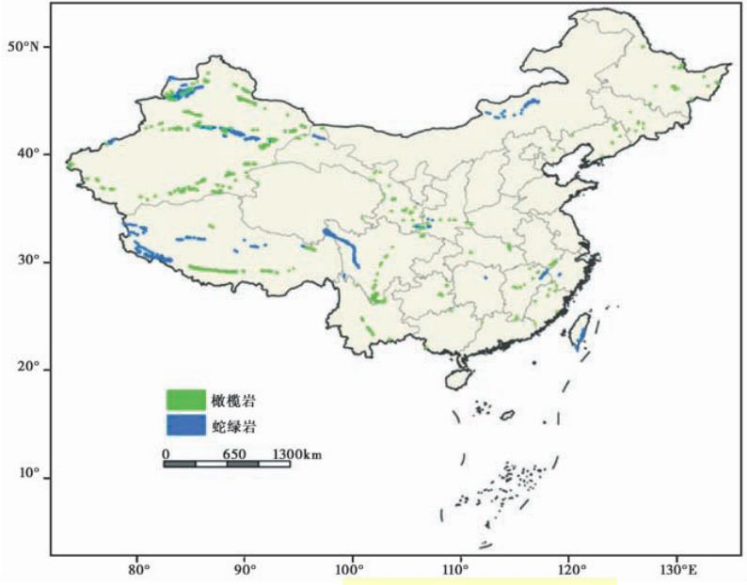
As global industrialization leads to an increase in atmospheric CO₂ concentration, causing environmental issues, reducing CO₂ emissions has become a consensus. CO₂mineralization storage technology has garnered attention, with ultrabasic tailings being ideal raw materials due to their rich content of magnesium, iron, and other elements. This study centers on the carbonation of ultrabasic tailings, investigating its kinetic mechanisms and optimizing conditions. The research framework encompasses the kinetics of direct aqueous carbonation of olivine under a CO₂ partial pressure of 6.5 MPa, the mechanism of mechanical activation of multiphase ultrabasic tailings, and the feasibility study of ultrabasic mine exploitation in conjunction with CO₂ mineralization storage technology. In terms of research methods, olivine from Washington State, USA, and tailings from northern British Columbia, Canada, were selected as materials. Experiments were carried out using a stirred autoclave manufactured by Parr Instrument Company (USA), with additional equipment such as a laser diffraction particle size analyzer employed for characterization purposes. Quantitative analysis of product composition and chemical kinetic theory were used to analyze the reaction. The research results show that optimizing conditions under low CO₂ partial pressure can significantly enhance the degree of olivine carbonation, and mechanical activation can increase the reactivity of minerals, providing theoretical support for the promotion of ultrabasic mine exploitation in conjunction with CO₂ mineralization storage technology
Show more
Read Article PDF
Cite
Research Article Open Access
Key Technologies and Application Strategies of Unmanned Aerial Vehicles
Article thumbnail
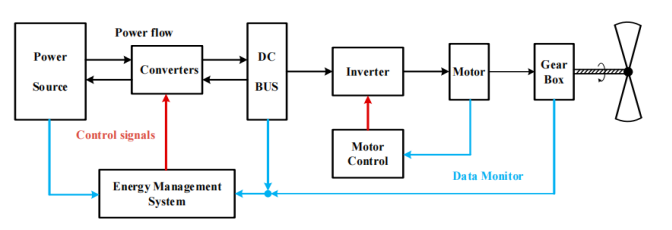
Unmanned aerial vehicle technology is widely used in modern society. It plays an important role in amusement and production. This paper will focus on the four important modules of an unmanned aerial vehicle, power and control system, the Navigation and path planning system, for a research review. The power system of an electric drone contains electronic motors, electronic speed regulators, and batteries. The power system of a hybrid UAV includes three types: series connection, parallel connection, and hybrid connection. In addition, there is another way--fuel cells. The flight control system of a UAV always has a gyroscope, rudder, throttle, elevator, and barometer. But the UAV navigation relies on visual navigation, inertial navigation, and the global navigation satellite system. Besides, path planning is achieved by two mainstream modeling methods--structured light and multi-view. The application and requirements of these modules vary because of the different levels of the drone. The research can provide a report on the latest unmanned aerial vehicle technology.
Show more
Read Article PDF
Cite
Research Article Open Access
Mechanisms and Environmental Risks of Surfactants in Environmental Pollution Control
Article thumbnail
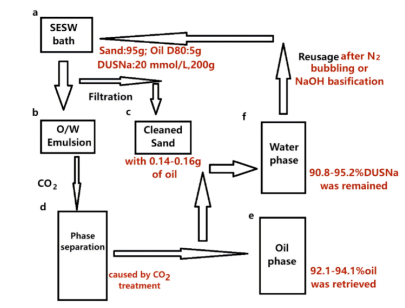
With the rapid development of industrialization and urbanization, environmental pollution has become one of the most important issues worldwide. Because of the amphiphilic molecular structure and strong interfacial activity, surfactants exhibit great potential in environmental remediation through promoting dispersion, solubilization and degradation of pollutants.This review summarizes the main mechanisms of surfactants for pollution control, including reducing the consumption of chemical reagents, promoting elution and degradation of contaminants, and enhancing the efficiency of microbial remediation. In addition, this review analyze the environmental and ecological risks caused by surfactants, such as secondary pollution, bioaccumulation, and persistence in water bodies. The discussion highlights the importance of balancing remediation performance and ecological safety. This review focuses that the development of degradable, low toxicity and functional tunable surfactants is the trend of future green and sustainable remediation technology. This review provides a scientific reference for the rational design and application of surfactants in future environmental governance.
Show more
Read Article PDF
Cite
Research Article Open Access
Artificial Intelligence-Based Automatic Positioning Simulation System for Wireless Charging Coils in Electric Vehicles
Article thumbnail
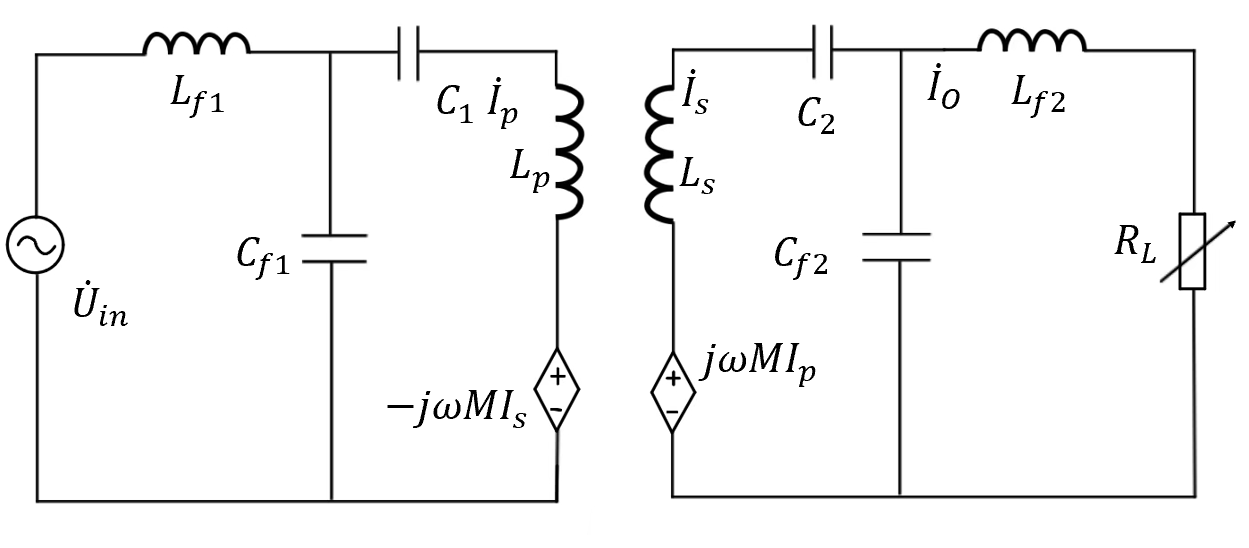
Conventional wired charging for EVs has some major drawbacks, particularly in the areas of convenience and safety. To solve these problems, the wireless charging technology has been extensively publicized. The accurate positioning of the transmitting and receiving coils is essential for achieving high charging efficiency. In this paper, an automatic coil-positioning simulation framework based on Back Propagation (BP) neural network is proposed. Based on simulation data and artificial intelligence, we make use of data-driven BP model with current, voltage and inductance as input and coil coordinates as output to describe the nonlinear relationship between inductance and coil positioning. Then the accurate localization is achieved by dynamic coupling parameters. Simulation results show that the framework enhances the accuracy and robustness of wireless coil positioning under various operating conditions. The obtained results offer a key technology for accurate automatic alignment and efficient energy transfer in wireless electric vehicle charging. The BP network structure contains several hidden layers with dropout regularization to avoid overfitting and generalize to various coil geometries. The training used supervised dataset extracted from electromagnetic simulations with different misalignment, separation and load conditions varying operating regimes. Subsequently, cross validation verifies the high prediction accuracy and less sensitivity of measurement noise and parameter fluctuation. At the same time, the framework exhibits a certain tolerance to external disturbances (such as parasitic capacitance and coupling variations). These results validate that automatic coil positioning technology can provide a feasible solution for maintaining high-efficiency energy transfer in dynamic onboard automotive environments.
Show more
Read Article PDF
Cite
Research Article Open Access
Self-Deploying High-Gain Antenna Mechanism for CubeSats Enabled by SMPCs: Design, Manufacturing, and On-Orbit Functional Verification
Article thumbnail
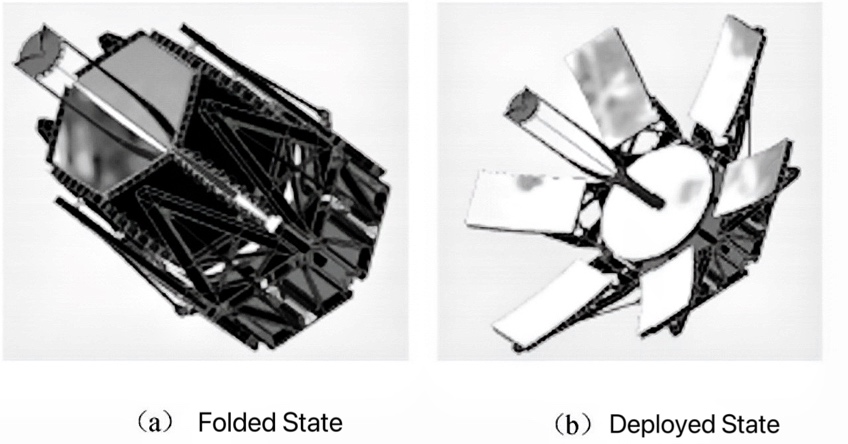
This paper presents the design, fabrication, and testing of a self-deploying high-gain CubeSat antenna mechanism enabled by shape-memory polymer composites (SMPCs), which address the volume, mass, and reliability limitations of current deployable antennas. The antenna uses an origami-inspired foldable reflector and lightweight truss structure with SMPC hinges that achieve a high stowage efficiency (>8:1 stowage ratio) and smooth, motor-free deployment. A self-locking SMPC hinge system with secondary shape-memory alloy latches rigidizes the structure after deployment. The design includes an active-passive thermal deformation compensation layer to maintain surface accuracy of the reflector array after orbital thermal cycling, and a hybrid beam-steering capability that includes SMPC-driven gimbal for coarse pointing and electronic phase control for fine steering. Prototype components were fabricated and qualified via ground thermal vacuum, vibration, and repeated deployment cycle tests. An on-orbit functional verification plan is described. Results show that the SMPC-enabled antenna can deploy a much larger aperture, and achieve much higher gain than conventional solutions, enabling high-rate data links and deep-space communication capabilities for next-generation CubeSat missions.
Show more
Read Article PDF
Cite
Research Article Open Access
Study on the Temperature Change Trends and Influencing Factors in Changsha
As the capital of Hunan Province, Changsha has been rapidly urbanized in recent decades. However, increasing population density, traffic pressure, and energy consumption have a significant anthropogenic impact on the regional climate. Therefore, this paper reviews the spatial and temporal changes in Changsha’s temperature, urban heat island effect, extreme high temperature and heat wave problems, and the application of multi-source data. The study noted a significant rise in Changsha's average annual temperature, an increase in the frequency and intensity of heat waves, and a significant urban heat island effect, primarily driven by urbanization and global warming. Meanwhile, urban blue-green spaces can bring localized cooling of 1 to 3°C, playing a positive role in alleviating high temperatures. To address climate challenges, academics have proposed measures such as low-carbon development, green buildings, protection of blue and green spaces, construction of ventilation corridors, and multi-source data monitoring. However, current research lacks consistency in data, mechanism simulation, and adaptation strategies. Future research recommends strengthening long-term data construction, multi-source data integration, and mechanism research to help Changsha achieve sustainable development.
Show more
Read Article PDF
Cite
Research Article Open Access
Organic Electrochemical Transistors: Principle, Characteristics, and Application Frontiers
Organic electrochemical transistors (OECTs) are operated at the intersection between ionic and electronic conduction and are a fast-advancing and highly promising platform for bioelectronic integration. Recent research progress revealed how their mixed ion-electron coupling mechanism leads to high-device performance: their transconductance is high, their operation voltage is low and they are outstanding biocompatible. OECTs could be especially attractive for physiological conditions because they possess these aforementioned characteristics. In this survey, the breakthroughs of operation principles, material and structure design has been summarized from the typical planar structures to novel three-dimensional and non-semiconductor structures. The key results concerning operation robustness, n-material growth and fabrication of devices and systems have been discussed for various functional applications. The paper concludes with the efforts on how performance optimization efforts and remain challenges can be overcome regarding device design, modeling and low cost fabrication in order to predict further significant applications of OECTs in wearable health monitoring, neural interface, and neuromorphic computing devices, thus exploiting the interface between the living and the digital world.
Show more
Read Article PDF
Cite
Research Article Open Access
A Brief Analysis of Hydrogen Engine Technology Development
With increasing global attention on environmental protection and sustainable development, hydrogen engines have garnered extensive research and interest as a promising clean energy power source. This paper reviews research progress on the combustion and emission characteristics of hydrogen engines. As well as, it details the combustion process of hydrogen engines, including flame propagation and combustion velocity, and thoroughly analyzes the various factors that influence combustion behavior. Simultaneously, it explores the emission characteristics of hydrogen engines, focusing on the formation mechanisms and control methods for primary pollutants such as nitrogen oxides (NOx). Through intensive research and development in hydrogen storage technology, it will be possible to achieve high storage density, low cost, and safe, efficient large-scale hydrogen storage, which is crucial for advancing China's hydrogen energy industry. Ultimately, it outlines future research directions and development trends for hydrogen engines, aiming to provide a reference for further advancements in hydrogen engine technology.
Show more
Read Article PDF
Cite
Research Article Open Access
Advances in Electric Vehicles Thermal Management Technology
Developing electric vehicles (EVs) offers an effective solution to the challenges of carbon emissions and carbon neutrality facing society today. Thermal management technology for electric vehicles is emerging as a key focus area within the academic community. To aid future research, in this paper, some of the latest advancements in thermal management technologies of electric vehicles were reviewed, including battery cooling systems integrating microchannel cooling plates, heat pipes, and heat pumps, along with the latest applications of phase change materials in battery cooling. Finally, the challenges facing thermal management technology of electric vehicles in the future were summarized, and this paper offers some outlooks. Efficient thermal management technology not only directly determines the driving range and safety of electric vehicles but also serves as a core guarantee for their large-scale commercial application. Therefore, in-depth exploration and optimization of thermal management systems are of great strategic significance for achieving sustainable development of the electric vehicle industry and low-carbon transformation in the transportation sector. This paper aims to provide a meaningful reference for the development and research of novel thermal management technologies for electric vehicles.
Show more
Read Article PDF
Cite
Research Article Open Access
Research Progress on Soil Improvement by Microorganisms: A Systematic Review
Microbial soil improvement technology plays a crucial role in global soil remediation and sustainable agricultural development, offering an eco-friendly alternative to chemical amendments. This paper focuses on the core findings of relevant studies, discussing the classification and characteristics of microbial improvers, their mechanisms of action, technological advancements, existing challenges, and future development directions. Starting from several typical functional microorganisms such as nitrogen-fixing bacteria, phosphate-solubilizing fungi and probiotic consortia, it elaborates on their roles in enhancing nutrient cycling by converting inert nutrients to plant-available forms and optimizing soil structure by promoting aggregate formation, while sorting out the application progress of technologies such as metagenomics for microbial community analysis and synthetic biology for tailored strain construction. Research shows that these technologies are becoming increasingly mature, with field trials achieving improved soil fertility and crop yields; however, future studies need to deepen efforts in areas such as the design of functional microorganisms, ecological risk assessment to avoid microbial invasion, and interdisciplinary integration combining agronomy and microbiology to strengthen the synergy between soil health and agricultural development.
Show more
Read Article PDF
Cite