Articles in this Volume

Research Article Open Access
Immersive Exhibition of Intangible Cultural Heritage Based on Digital Twin Technology
Article thumbnail
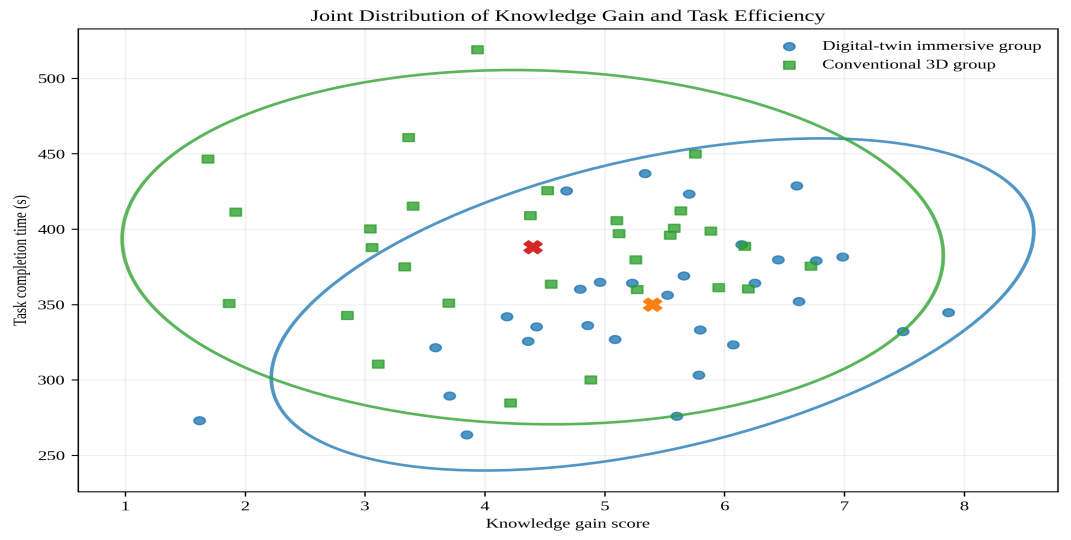
Intangible cultural heritage is highly process-oriented, embodied, and context-dependent. Conventional text, video, and static 3D displays have difficulty presenting the continuous relationships among craft actions, object states, and cultural meanings. To address dynamic representation in immersive exhibitions, publicly available images, videos, and craft descriptions of Yangliuqing Woodblock New Year Pictures from 2018 to 2025 were used to construct a multimodal dataset. A lightweight digital twin state model was developed through 3D data processing, MediaPipe-based pose extraction, Dynamic Time Warping, and finite state modelling. A controlled VR experiment then compared a digital twin immersive condition with a conventional 3D exhibition condition. Simulated validation results showed that action recognition achieved a Macro F1 of 0.908 ± 0.026, while state transition accuracy reached 95.6%. Within-stage DTW distances were substantially lower than cross-stage distances. Participants in the digital twin condition also achieved greater knowledge gains, shorter task completion times, and fewer operational errors without a significant increase in cognitive load. These results indicate that organising geometric objects, action sequences, and semantic information into a continuous state chain can improve the computational representation of intangible cultural heritage processes. The approach provides a feasible methodological basis for immersive digital exhibitions that balance technical implementation, learning efficiency, and cultural knowledge communication.
Show more
Read Article PDF
Cite
Research Article Open Access
Counterfactual Design Fiction Based Identification of Latent Value Biases in Generative Artificial Intelligence
Article thumbnail
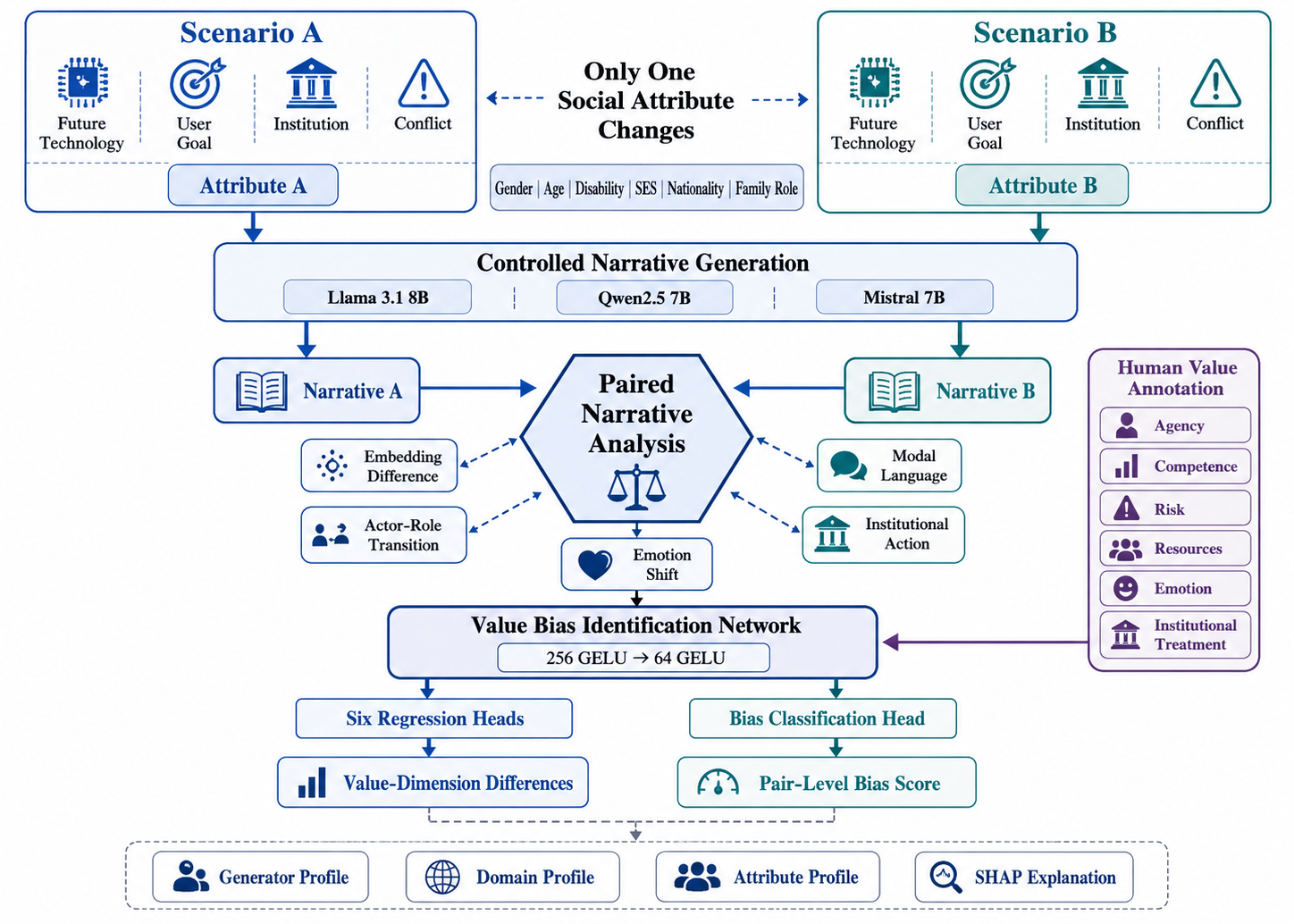
Generative artificial intelligence can produce apparently neutral narratives while embedding unequal assumptions about competence, authority, vulnerability, risk, and institutional support. This study develops a counterfactual design fiction framework for identifying such latent value biases through controlled narrative comparison. A corpus of 1,200 prompt pairs covers employment, healthcare, education, urban services, consumer finance, and domestic technology, with each pair differing in only one social attribute. Llama 3.1 8B Instruct, Qwen2.5 7B Instruct, and Mistral 7B Instruct v0.3 generate 21,600 narratives. Human annotation evaluates agency, competence, risk, resource access, emotional framing, and institutional treatment. Pairwise semantic, role, sentiment, modality, and institutional-action features are integrated through a multi-task Value Bias Identification Network. The proposed model achieved a macro-F1 of 0.882 ± 0.009 and an AUROC of 0.941 ± 0.006, outperforming cosine similarity, logistic regression, XGBoost, and a RoBERTa pair classifier. Socioeconomic status and disability produced the strongest aggregate value disparities, particularly for resource access and institutional treatment. Cross-model experiments retained a macro-F1 above 0.82, indicating that counterfactual comparison captures recurring value structures rather than model-specific lexical artifacts.
Show more
Read Article PDF
Cite
Research Article Open Access
UAV-LiteDet: A Lightweight Small Object Detection Network for Low-Altitude UAV Scenarios
Article thumbnail
Vehicles and pedestrians in low-altitude UAV images usually present features such as small object scales, dense distribution, complex background textures and low contrast. Existing high-precision object detection models often have problems including a large number of parameters, high computational cost and difficulties in edge deployment. To address the above issues, this paper proposes a lightweight Anchor-Free small object detection network UAV-LiteDet for low-altitude UAV scenarios. The network uses depthwise separable convolution to build a lightweight backbone network, and designs a shallow cross-scale fusion module to fuse shallow detail features with stride 4 and deep semantic features with stride 8, so as to reduce the spatial information loss of small objects caused by continuous downsampling. At the detection end, an Anchor-Free grid prediction method is adopted to directly regress object confidence, category, center position and bounding box parameters, which avoids anchor box clustering and complex hyperparameter design. To reduce the sensitivity of small object center positions to single grid matching, this paper further introduces a Gaussian quality assignment strategy, which generates a smooth confidence supervision signal according to the distance between the grid and the object center, enabling grids near the object center to jointly participate in feature learning. Meanwhile, an area-adaptive weight is introduced into the bounding box regression loss to improve the optimization priority of small-scale objects during training. To lower the cost of data collection and manual annotation, this paper constructs the Synthetic-UAV-LowAlt synthetic low-altitude UAV small object dataset to simulate typical scenarios such as roads, buildings, ground textures, random illumination, noise, low contrast, as well as vehicles and pedestrians. Experimental results show that UAV-LiteDet has sound training convergence and high detection accuracy, and can stably identify small-scale vehicles and pedestrians in low-altitude UAV images under complex backgrounds. Compared with the baseline network without shallow cross-scale fusion, the proposed method shows obvious advantages in precision, recall, F1-score and object localization quality, while maintaining a small number of model parameters and fast inference speed. The detection result visualization and confusion matrix further indicate that the network has strong small object feature expression ability and class discrimination ability, and can well balance detection performance, computational complexity and real-time deployment requirements.
Show more
Read Article PDF
Cite
Research Article Open Access
The Development of Black-Box Testing Technology and Its Application in Complex Software Systems
With the continuous increase in software system complexity, black-box testing, which verifies system behavior based on input-output relationships without requiring access to source code, has been widely applied to closed-source software and complex application scenarios. Based on existing studies, this paper investigates the development of black-box testing technology, including its theoretical models, testing methods, optimization strategies, and practical applications in complex software systems. With respect to testing theory, it analyzes the differences between black-box testing and white-box testing, and introduces the input-output model and fundamental testing process. At the methodological level, this paper reviews traditional test case design methods, including equivalence class partitioning, boundary value analysis, cause-effect graphing, decision tables, and scenario-based testing, and examines optimization techniques such as test case minimization and black-box fuzz testing. Regarding practical application, this paper analyzes the applicability of black-box testing methods across different system domains, using examples from industrial software, rail transit, smart home appliances, autonomous driving, artificial intelligence models, and cybersecurity protocols. The results show that artificial intelligence technology is expanding the application scope of black-box testing in requirements analysis, test case generation, and result analysis. However, complex system coverage, defect localization, and the adaptability of intelligent methods remain the main current challenges.
Show more
Read Article PDF
Cite
Research Article Open Access
Generative Artificial Intelligence Driven Product Form Innovation Design Method
Article thumbnail
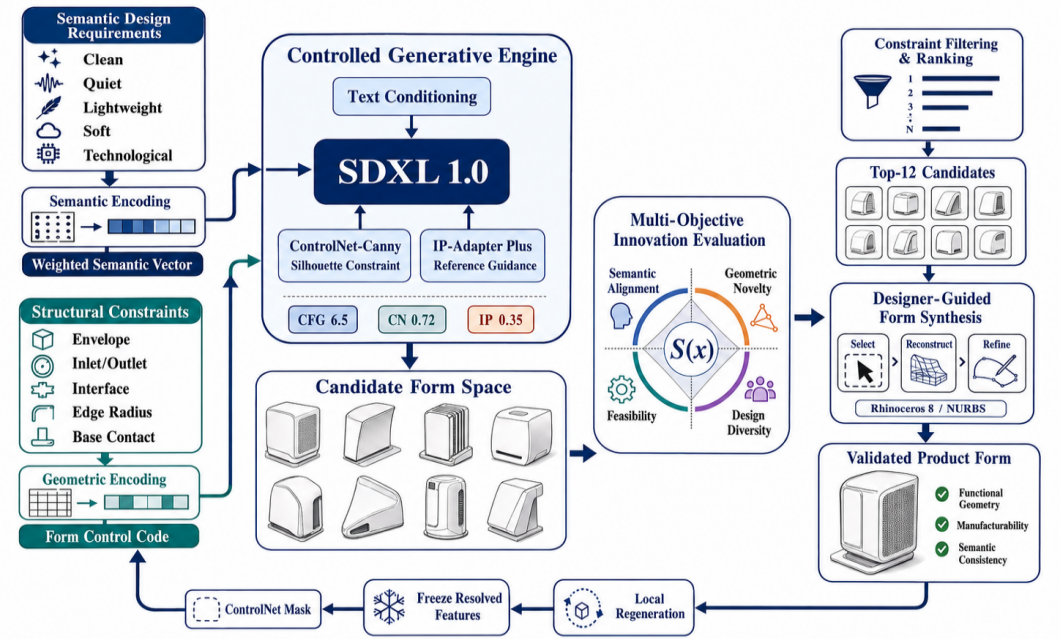
Generative artificial intelligence provides rapid visual exploration for product design, but prompt-driven image generation alone often produces attractive concepts with weak semantic control, limited geometric feasibility, or excessive similarity to existing products. This study proposes a generative artificial intelligence driven product form innovation design method that couples semantic requirement encoding, geometry-constrained diffusion generation, novelty-aware candidate selection, and designer-guided refinement. Product requirements are translated into weighted form semantics and structural constraints. Stable Diffusion XL, ControlNet, and IP-Adapter are then combined to generate candidates while preserving functional silhouette and reference-level style information. A multi-objective form innovation score integrates semantic consistency, geometric novelty, manufacturing feasibility, and intra-set diversity. The method was validated through a desktop air-purifier form design experiment involving 36 designers and 12 expert evaluators. The proposed method achieved a semantic alignment score of 0.812 ± 0.031, a geometric novelty score of 0.384 ± 0.026, and an expert innovation rating of 6.12 ± 0.41, while reducing concept-development time to 18.6 ± 3.4 min. The results indicate that controlled generative exploration can improve product-form innovation without sacrificing structural coherence or design feasibility
Show more
Read Article PDF
Cite
Research Article Open Access
An Evaluation Model for Community Social Service Responsiveness in Public Crises under Resilience Governance
Article thumbnail
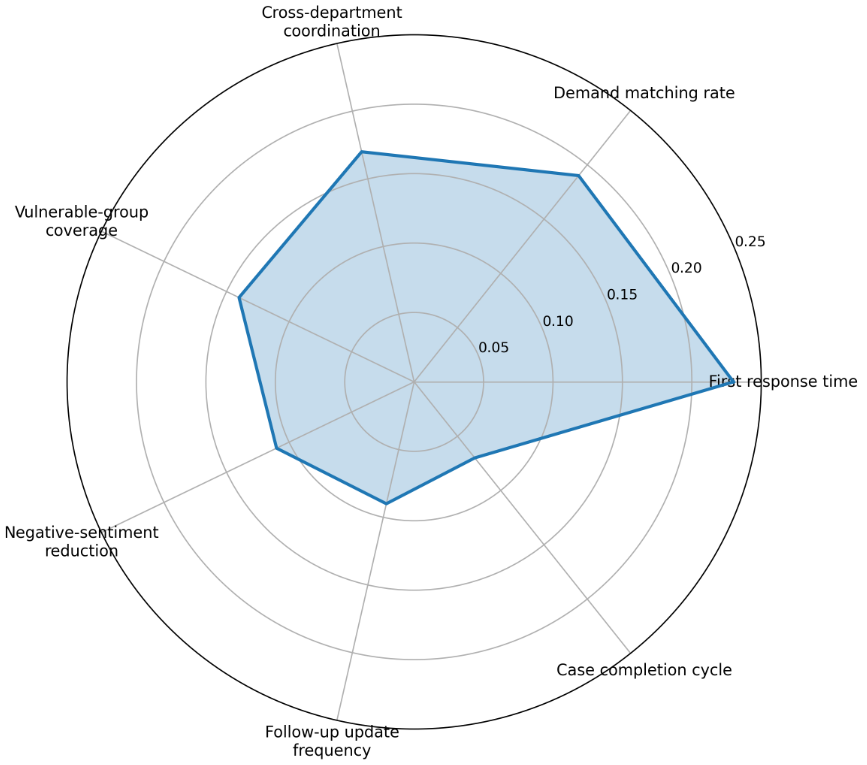
In public crises, community social services are directly related to residents' demand response, vulnerable group protection, resource coordination, and post-crisis recovery. Conventional grassroots service evaluation often relies on post-event summaries and manual assessment. It is difficult to reveal differences among communities in response speed, demand matching, service equity, and recovery feedback in a timely manner. From the perspective of resilience governance, an evaluation model for community social service responsiveness is developed. Publicly available data from 2020 to 2024 are collected, including government service hotline monthly reports, community announcements, emergency management notices, civil affairs information, GDELT event records, and public Weibo texts. Public health emergencies, urban flooding, extreme weather, and temporary control events are transformed into computable community service event units. In terms of method, AHP and the entropy method are combined to generate composite weights and calculate responsiveness scores. An XGBoost regression model is then used for score prediction, while SHAP is applied to interpret key influencing factors. The results show that first response time, demand matching rate, cross-department coordination frequency, and vulnerable group coverage rate are the main variables affecting community service responsiveness. The model can effectively identify governance weaknesses across different crisis scenarios. This evaluation framework provides a quantitative, explainable, and updateable analytical tool for improving grassroots public services.
Show more
Read Article PDF
Cite
Research Article Open Access
Game‑Theoretic Optimisation of Resource Sharing and Carbon Reduction Synergies in Closed‑Loop Supply Chains
Article thumbnail
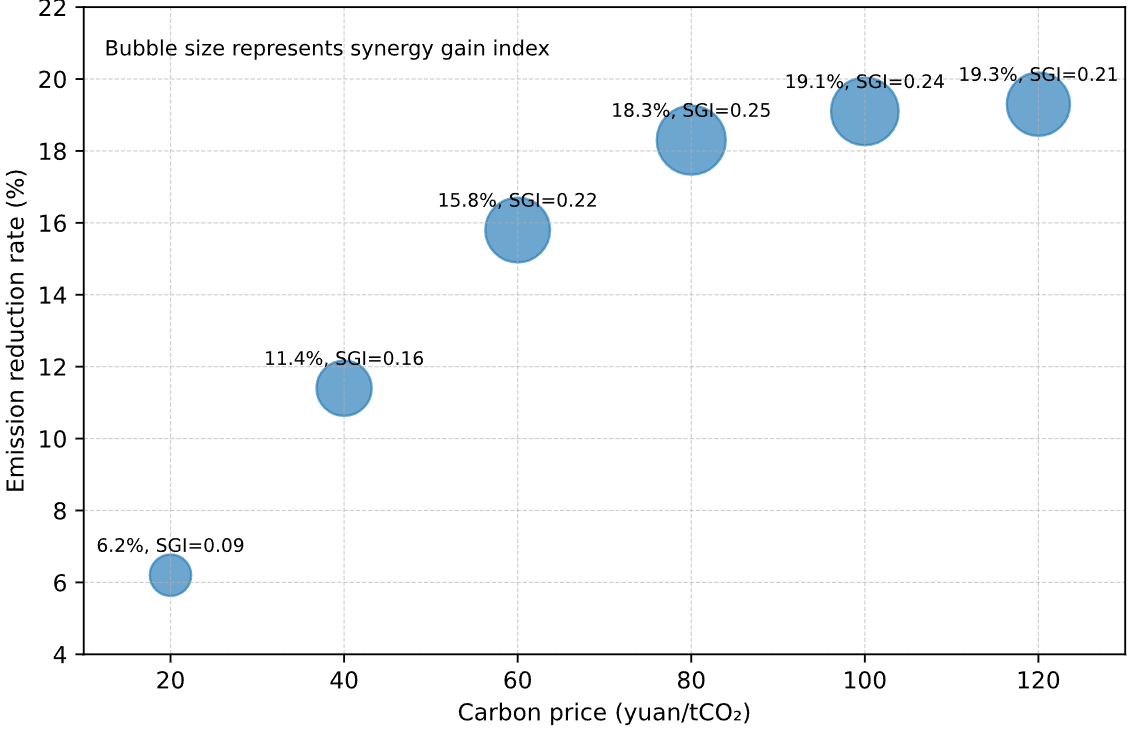
Closed loop supply chains play an important role in the green transformation of manufacturing because they connect production, sales, recovery, and remanufacturing. However, independent investment in recovery capacity and low carbon technologies may lead to duplicated resource input. It may also intensify conflicts over cost sharing and benefit allocation among supply chain members. A decision scenario is developed for a consumer electronics closed loop supply chain with a manufacturer, a retailer, a third party recycler, and a resource sharing platform. Public data from 2020 to 2024 are used to calibrate basic parameters, while simulated parameters are generated through Latin Hypercube Sampling. Based on these inputs, a Stackelberg Nash hybrid game model is constructed to compare three scenarios: no sharing, resource sharing, and resource sharing with carbon cost. The results show that resource sharing improves total supply chain profit and recovery rate. Carbon cost further strengthens carbon reduction investment and remanufacturing utilisation. Carbon price sensitivity results indicate that a moderate carbon cost expands the synergy gain of resource sharing, while an excessively high carbon price compresses the profit space. The findings suggest that resource sharing is not only a cost reduction mechanism. It can also form a coordinated emission reduction pathway through recovery efficiency, remanufacturing substitution, and low carbon investment. This provides a computational basis for platform governance and low carbon coordination in closed loop supply chains.
Show more
Read Article PDF
Cite
Research Article Open Access
Service Journey-Based Design for Sustainable Consumption Behavior Guidance and Feedback Reinforcement
Article thumbnail
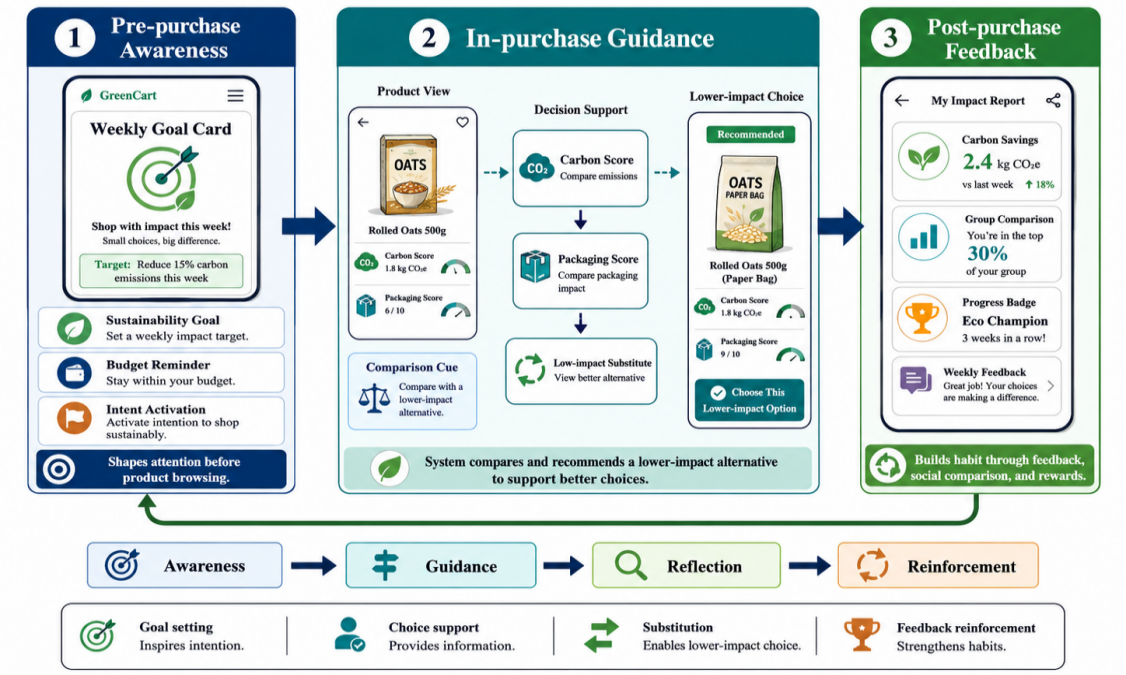
The current study introduces a service journey-based design approach aimed at encouraging sustainable consumer choices in a digital environment of grocery shopping. A mobile shopping prototype named GreenCart Journey has been designed to provide pre-purchase guidance on sustainability, low-carbon purchase decision support, and post-checkout reinforcement feedback. The experiment took place during a four-week period among 120 university students including 60 people in the experimental group and 60 in the control group. The product database consisted of 180 grocery products distributed over six categories including information on price, packaging type, nutrition label, and carbon footprint. The research shows that by the end of Week 4 the ratio of low-carbon purchases of the experimental group is higher than that of the control group (0.64 ± 0.11 vs. 0.46 ± 0.13; p < .001). Furthermore, the average carbon score of the basket decreased by 18.72 ± 5.46 points, and sustainable substitution rate increased by 0.31 ± 0.08 (p < .001). These findings indicate that journey-based behavioral guidance and feedback reinforcement can transform sustainability information into repeated low-carbon purchase decisions.
Show more
Read Article PDF
Cite
Research Article Open Access
Tail Risk Pricing of Structured Products Based on Heterogeneous Investor Search Behavior
Article thumbnail
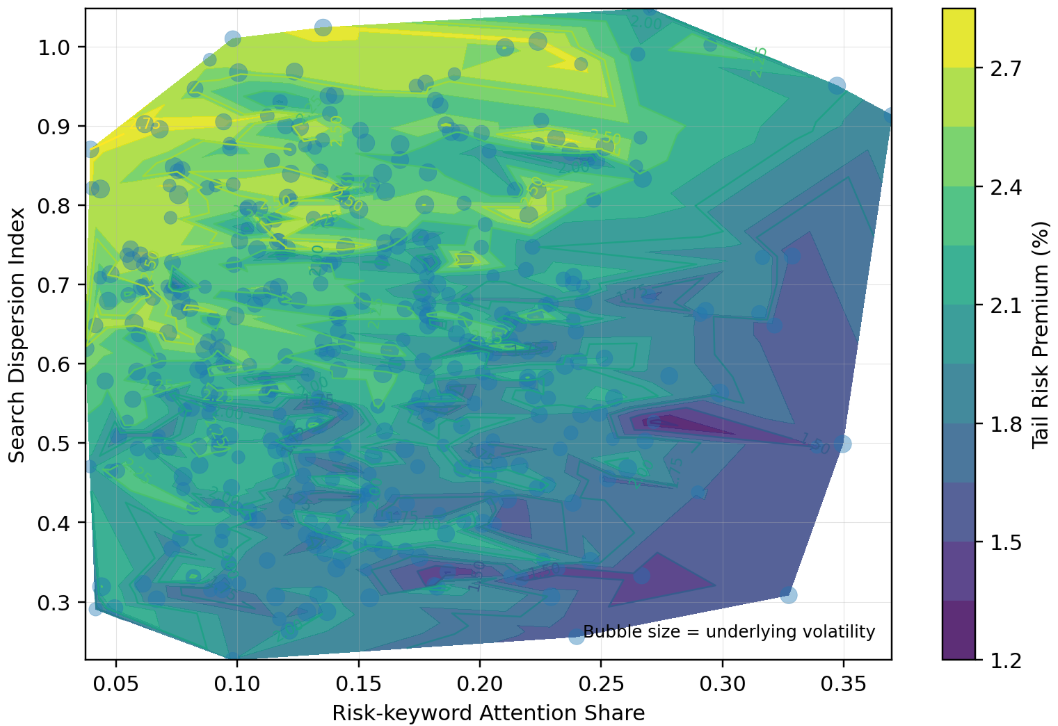
Structured products are widely used in wealth management markets. Their enhanced coupons, barrier protection, and autocallable mechanisms increase product attractiveness, while they also embed less visible tail risk premia in issue prices. Existing pricing studies mainly focus on option replication, risk neutral valuation, and issuance costs. Less attention has been paid to how heterogeneous investor search behavior affects risk recognition and pricing deviations. Based on publicly disclosed structured product prospectuses from SEC EDGAR, market data, and Google Trends search indices from 2018 to 2025, a combined data framework is developed to link issuance terms, market volatility, and investor attention. Monte Carlo simulation, CVaR measurement, and search dispersion indicators are used to identify the formation mechanism of tail risk premia. The results show that issue prices are on average higher than model implied fair values. Products with shallower barriers, longer maturities, and higher volatility show higher CVaR. Higher attention to risk related keywords reduces tail risk premia, while higher search dispersion increases pricing deviations. These findings indicate that structured product pricing is shaped not only by contractual terms and market risk, but also by the quality of investor information search. The framework provides computable evidence for valuation review, risk disclosure improvement, and investor protection.
Show more
Read Article PDF
Cite