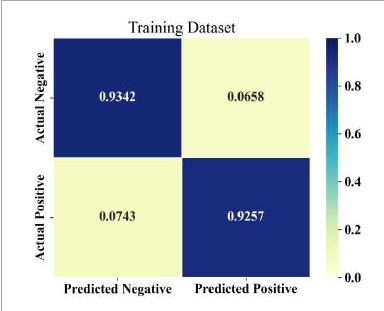
From 2020 to 2023, SARS-CoV-2 destroyed much of our society, while few treatments were available due to the time required for drug discovery. However, with recent advancements in artificial intelligence, it is now ready to fight viruses such as SARS-CoV-2. Chemprop, a machine-learning backbone for molecular properties prediction, can be used to discover novel antiviral drugs by training a classifier model with hundreds of thousands of data points that include molecular information represented by SMILES strings and the observed efficacy in inhibiting SARS-CoV-2 in laboratory tests. The resulting model predicts the effectiveness of untested molecules, which then can be manually tested, minimizing tedious hunting traditionally done by human scientists. With promising performance, the proposed method pushes the boundary of machine learning’s involvement in drug research. The trained model achieved a high accuracy in predicting the effectiveness of drugs against SARS-CoV-2 with an AUC score of 0.8455. However, the model loses accuracy when predicting the effectiveness of drugs against SARS-CoV, a different strand of coronavirus, with an AUC of 0.7302. The model was then run on one of the data sets to locate the molecule most likely effective against COVID-19, demonstrating its applicability. The result was a molecule with SMILES string CN1CCN(CC1)C(=O)COC=2C=CC(C)=CC2 also called 1-(4-Methyl-piperazin-1-yl)-2-p-tolyloxy-ethanone. Then the model DrugChat was utilized to determine the properties of the molecule. The model’s ability to find likely drugs can hasten drug research drastically, potentially saving countless lives during future pandemics.