Articles in this Volume

Research Article Open Access
Review on natural language processing models
Article thumbnail
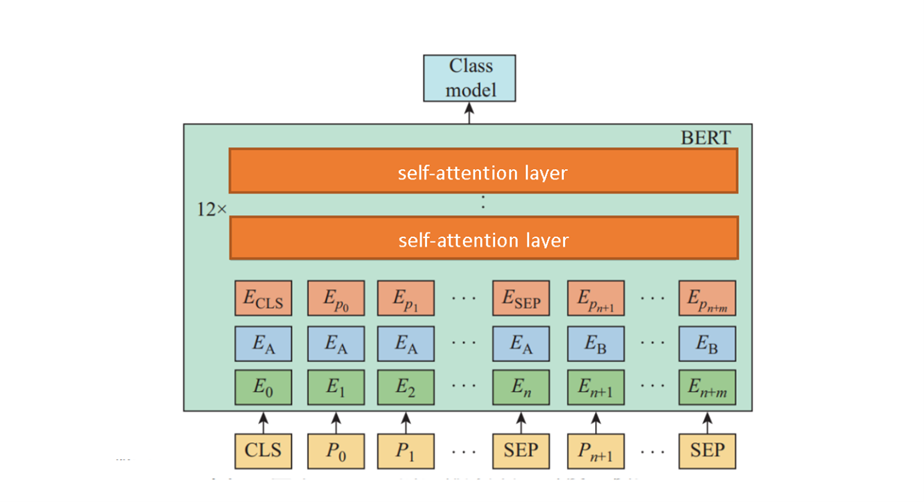
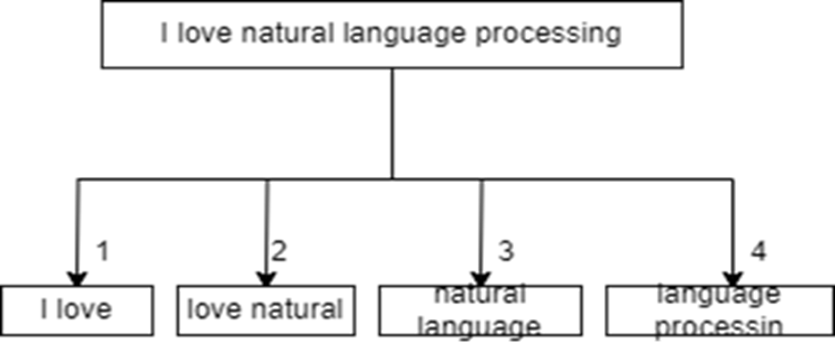
Accessing information has grown simpler as a result of the internet's expanding use and the arrival of the big data era. Compared to traditional approaches, employing NLP for information condensation and amalgamation proves to be a highly effective method. This article focuses primarily on the sentiment analysis aspect of NLP, offering a comprehensive exploration of two deep learning models: BERT and CNN. It delves into the intricacies of their principles, analyzes their respective strengths and weaknesses, and proposes potential avenues for enhancement. By delving into these models, Researchers and practitioners can obtain a better understanding of sentiment analysis and its applications in diverse fields.
Show more
Read Article PDF
Cite
Research Article Open Access
An overview of the emotional brain-computer interface
Article thumbnail
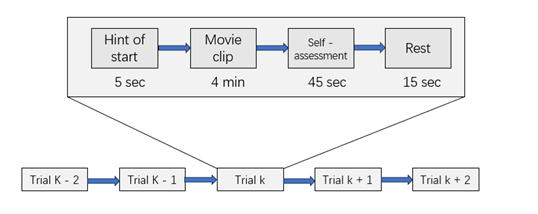
This paper provides a comprehensive review of current research advances in emotional brain-computer interfaces. We introduce an approach to classifying emotions and highlight the two main datasets used for emotion recognition (DEAP and SEED). Subsequently, an extensive analysis of existing emotion recognition methods, both traditional and deep neural network methods, is presented. Finally, we explore the potential benefits of using transfer learning techniques to improve the performance of emotion recognition methods. Various deep neural network models exhibit redundant neural units and complexity, while facing challenges such as reduced computational power and reaction speed, increased storage requirements, and hardware dependency. The authors propose to integrate learned neural network pruning algorithms to simplify complex models, minimise hardware resource requirements without compromising accuracy, and improve operational capabilities with improved discriminants.
Show more
Read Article PDF
Cite
Research Article Open Access
The application of artificial intelligence in aerospace engineering
Article thumbnail
In recent years, there has been considerable interest in applying Artificial Intelligence (AI) in the field of aerospace engineering. However, the existing literature on this topic is not sufficiently comprehensive. This paper is purposed to solve this problem by providing a thorough analysis and overview of the current state of AI in aerospace engineering. The paper is divided into four sections. Firstly, the use of AI in autonomous navigation and flight control is explored, focusing on advanced algorithms and sensor technologies that enable highly autonomous and efficient aircraft navigation. Secondly, the application of AI in image recognition and computer vision is discussed, highlighting its significance in remote sensing and aerospace component quality inspection. The third section examines the integration of AI in unmanned aerial vehicles (UAV), covering the control system and the utilization of machine learning techniques for improved UAV capabilities. Lastly, the paper explores the impact of AI on data analysis and prediction in the aerospace industry, encompassing weather forecasting, resource allocation, and decision-making processes. Finally, this paper gives a general overview of the nowadays application of AI in aerospace engineering.
Show more
Read Article PDF
Cite
Research Article Open Access
A research of the impact of ChatGPT on education
Article thumbnail
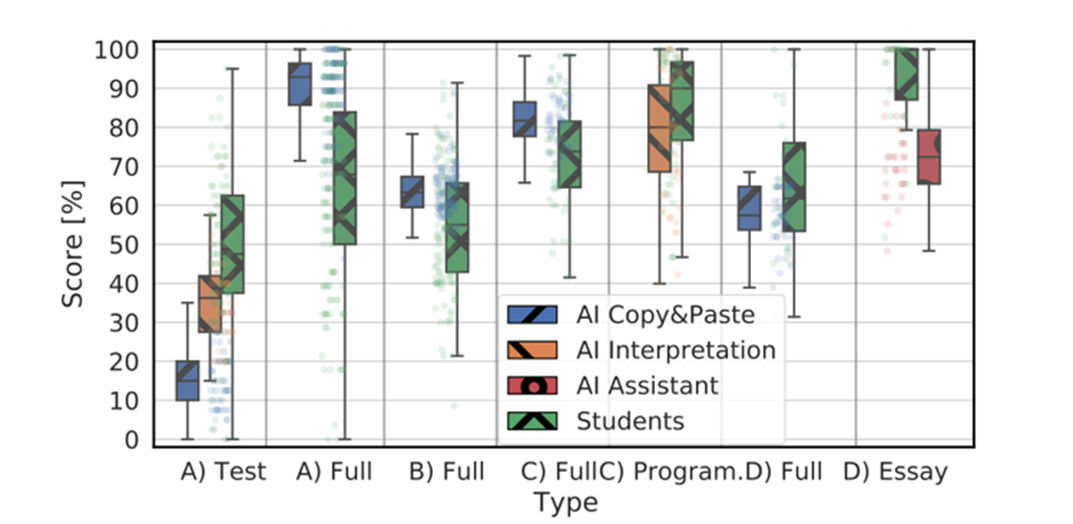
The integration of AI language models, particularly ChatGPT, into higher education has sparked concerns about academic integrity and its impact on student learning experiences. This research aims to explore the applications, benefits, challenges, and future implications of ChatGPT in education, striving to achieve a balanced and beneficial integration of AI in higher education. The study reviews related works on ChatGPT, investigating its development, capabilities, and potential applications in education. Firstly, the paper emphasizes that ChatGPT changes teaching methods, enabling teachers to adopt more flexible and interactive approaches to education. Secondly, the paper highlights that ChatGPT can provide personalized learning experiences for students by generating customized teaching content based on their needs and offering real-time assistance and guidance, thereby enhancing learning effectiveness. However, the paper also acknowledges some potential challenges and issues, including concerns regarding plagiarism and privacy, as well as the possibility of biases and the generation of erroneous information. Addressing these issues requires technological improvements and the development of sound usage policies. The paper concludes by summarizing the findings and prospects of the research.
Show more
Read Article PDF
Cite
Research Article Open Access
Application and existing problems of artificial intelligence technology in the agricultural field
Article thumbnail
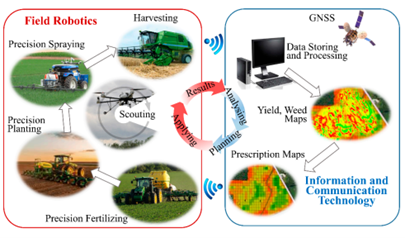
In recent years, the application of artificial intelligence technology in the field of agriculture has been rapidly developed. This paper summarizes the application of artificial intelligence in agriculture and divides it into two main directions: monitoring system and expert system. This paper analyzes the soil monitoring, pest monitoring, and plant growth detection of the monitoring system, the simple decision chain of the expert system, and the complex expert system combined with artificial intelligence technology. Utilizing sensor networks, image processing, and machine learning techniques, artificial intelligence enables real-time monitoring of soil parameters, automatic identification of pest and disease, analysis of plant growth status, and provision of tailored management recommendations. By employing rule-based expert systems, artificial intelligence assists farmers in making informed decisions. These applications have significantly advanced resource management optimization, pest control, precise growth monitoring, and intelligent decision-making in agriculture. At the end of the article, this paper summarizes the full text and looks forward to the future trend.
Show more
Read Article PDF
Cite
Research Article Open Access
Application of matrix in signal processing
Article thumbnail
Signal processing, a foundational discipline in modern technology, encompasses a diverse array of applications, ranging from audio and image processing to communication systems and medical imaging. This review investigates how matrix-based techniques are widely used to advance signal processing methodologies. In order to discretize continuous-time signals for digital processing, which occurs in the first section of the paper, matrices play a crucial role in signal sampling. A key principle, the Nyquist-Shannon Sampling Theorem, directs appropriate sampling rates to prevent aliasing, with matrices permitting effective signal representation. The effectiveness of matrix-based filtering methods for frequency modulation and noise reduction, such as convolution and correlation, is then investigated. By utilising matrix operations, these methods enable real-time signal processing. The Fourier Transform and Wavelet Transform are also featured in matrix-driven signal transformation, providing insights into frequency analysis and non-stationary signal characterization. By reducing noise components, matrix-based approaches, particularly Singular Value Decomposition (SVD) denoising, are essential for improving signal quality. Additionally, image compression employs SVD. Matrix-based compressive sensing revolutionises signal recovery from sparse data and results in data-efficient reconstruction. Signal processing has been transformed by matrix-based approaches, which have enabled previously unheard-of levels of efficiency, accuracy, and adaptability. The review highlights their significant influence on several signal processing fields.

Show more
Read Article PDF
Cite
Research Article Open Access
An overview of 6G wireless systems
With the demand of low latency communication explodes, the inherent limitations of the fifth generation communication is constantly exposed to the public. Such 5G shortcomings are spurring worldwide activities focused on defining the next-generation 6G wireless communication system. So the paper offers an overview of 6G wireless systems based on existing literature and statistical data. The paper concentrate on the driving forces in the development of 6G. In the meanwhile, the paper presents some potential application scenarios in the future. In the last section, the paper points out some challenges that are most likely to encounter in the coming development of 6G. Based on current prospect of 6G, it is likely that 6G features low latency and high efficiency and has 100 times better transmission capacity than 5G. The future applications are holographic telecommunications, mutual interaction of emotional thinking, and digital twinning. In conclusion, integrated with different technologies like AI,Terahertz Communications, and blockchain, 6G features many advantages and will permeate into people’s daily lives.
Show more
Read Article PDF
Cite
Research Article Open Access
Deep learning for sentiment analysis on IMDB movie reviews using N-gram features
Article thumbnail
In the rapidly evolving digital landscape, the synergy of deep learning techniques and abundant datasets has opened new frontiers in various domains. This research delves into the film industry, specifically harnessing the potential of the International Movie DataBase (IMDB) dataset for sentiment analysis. Through a deep learning paradigm, we embark on sentiment classification of movie reviews, discerning between positive and negative sentiments. By navigating data preprocessing and N-gram feature extraction, we engineer a deep learning model comprising embedding, global average pooling, and multi-layer dense architectures. The experimental results underscore the model's prowess in sentiment analysis, emphasizing its capacity to empower informed decision-making within the film industry.
Show more
Read Article PDF
Cite
Research Article Open Access
A review of 3D reconstruction methods based on deep learning
In computer vision, an important research area is three-dimensional reconstruction. Using computer technology to reconstruct three-dimensional models of objects has become an indispensable part of in-depth research in many fields. This thesis presents the development process of 3D reconstruction methods that use deep learning. Compared with traditional methods, the 3D reconstruction method based on deep learning has more flexible input and output and higher efficiency. This thesis classifies the methods by the type of 3D model representation and discusses different frameworks for 3D reconstruction based on deep learning. With the introduction of the method NeRF (Neural Radiance Field), the three-dimensional reconstruction work based on deep learning has got a great development. NeRF can achieve good results in a very short period of time in the face of various complex scenes. With the continuous improvement of NeRF by researchers, this method has achieved more amazing results. Finally, the existing problems in the field of 3D reconstruction, the causes of problems and possible solutions are analyzed. Finally, the future development trend and direction of this field are hypothesized and discussed.
Show more
Read Article PDF
Cite
Research Article Open Access
Surgical robot navigation based on SLAM technology
Article thumbnail
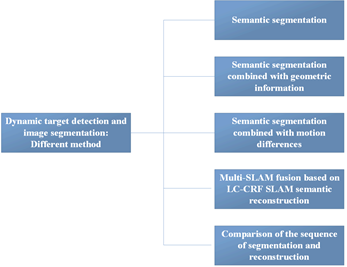
With the widespread application of surgical robots and the development of computer vision, SLAM-applicated surgery is receiving increasing attention. However, due to the unique surgical environment, SLAM faces some challenges. Two key issues will be discussed in this article: dynamic object detection and image segmentation, as well as scene reconstruction under data scarcity. Firstly, dynamic object detection and image segmentation is an important issue in SLAM applications. During the surgical process, doctors often use surgical instruments, which may partially or completely obscure the object, making it difficult to detect the target. Methods based on traditional feature matching may not be able to accurately detect dynamic targets perform image segmentation. Therefore, this article will combine semantic networks for analysis to improve the performance. In addition, scene reconstruction under data scarcity is another challenge in SLAM applications. Traditional SLAM methods typically rely on a large amount of feature points or map data. But in surgery, due to the complexity of occlusion and geometric structure, reliable data may not be easily obtained. This article will develop with the steps of reconstruction and analyze feasible methods that can improve the accuracy and stability of reconstruction. To conclude, this article will concentrate on these two issues, analyze recent papers, and ultimately summarize some feasible solutions, providing ideas and references for other researchers in this field.
Show more
Read Article PDF
Cite