Articles in this Volume

Research Article Open Access
Construct a garbage recognition model using automatic machine learning based on EasyDL
Article thumbnail
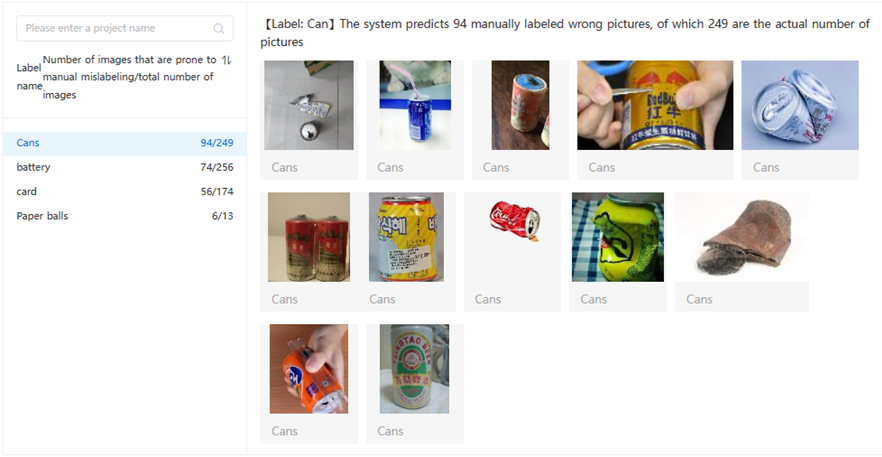
In modern times, machine learning has become an indispensable part of various industries. As the amount of data increases, reducing the time cost of manual annotation is crucial. AutoML emerges as a solution that effectively automates labor-intensive tasks like image annotation. In this article, we use Tencent's EasyDL to develop a garbage recognition function. The garbage recognition model completed through EasyDL achieved an average of over 90% in terms of accuracy and F1 score. This indicates that autoML can greatly reduce manual participation while ensuring a certain level of accuracy.
Show more
Read Article PDF
Cite
Research Article Open Access
Syntax-aware bidirectional decoding Neural Machine Translation model
Article thumbnail
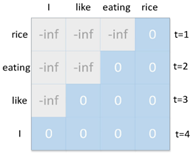
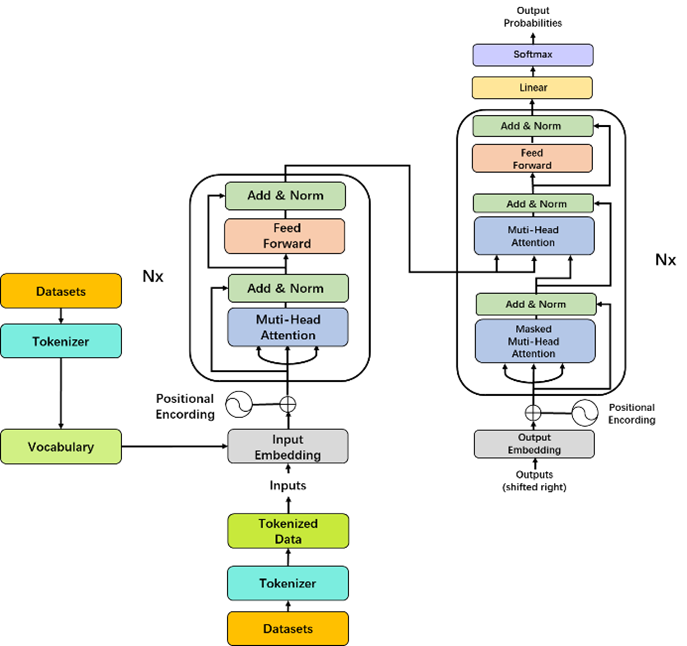
The mainstream model in neural machine translation, the Transformer, relies heavily on self-attention mechanisms for translation operations. This approach has significantly improved both accuracy and speed. However, there are still some challenges. For instance, it lacks the incorporation of linguistic knowledge and the ability to leverage syntactic structure information in natural language for translation, leading to issues such as mistranslation and omission. Addressing the limitations of the Transformer's autoregressive decoding, which decodes from left to right without fully utilizing context information and is prone to exposure bias, this paper proposes a syntax-aware bidirectional decoding neural machine translation model. By employing both forward and backward decoders, the generated decoding results can encompass contextual information. Additionally, the model integrates dependency syntax to generate target language sentences with syntactic guidance. Finally, an optimization strategy involving the Teacher Forcing mechanism is introduced to balance the discrepancies between the Teacher Forcing training phase and the autoregressive testing phase, thus alleviating exposure bias issues.
Show more
Read Article PDF
Cite
Research Article Open Access
Research advanced in Chinese word segmentation methods and challenges
Chinese word segmentation refers to the process of dividing a sequence of Chinese characters into individual words. It constitutes a fundamental component of Chinese natural language processing. Due to the intricacies of the Chinese language, Chinese word segmentation has garnered significant attention from researchers. Based on a review of historical literature, segmentation methods can be broadly categorized into rule-based, statistical, semantic-based, and comprehension-based approaches. With the advancement of machine learning, neural networks have emerged as the mainstream algorithm for word segmentation. However, Chinese presents several unique challenges, leading to segmentation results that are less effective compared to morphological analysis in languages like English. Moreover, word segmentation faces new challenges such as dependency on the quality and scale of corpora, as well as domain-specific segmentation in diverse fields. Addressing these emerging challenges will undoubtedly become a focal point in future research endeavors in this field. This review provides a comprehensive summary of existing methods, discusses the current state of Chinese word segmentation, and outlines directions for addressing the evolving complexities in the field. As Chinese language processing continues to advance, finding robust solutions for accurate word segmentation remains a critical area of research.

Show more
Read Article PDF
Cite
Research Article Open Access
Machine translation of classical Chinese based on unigram segmentation transformer framework
Article thumbnail
In the translation work of Chinese ancient books, traditional manual translation is difficult and inefficient. As an important field of natural language processing, machine translation is expected to solve this problem. Due to the rapid development of NLP technology, prior works mainly follow the pipeline of Transformer when dealing with the machine translation task, which can extract the high-quality feature representation with its self-attention mechanism. The great success of Transformer has inspired the direction of our ancient text translation work. In this paper, we screen the Unigram word division by exploring and comparing, and propose a solution for the translation of ancient literary texts. Specifically, we adopt the evaluation of BLEU value and achieve the BLEU values of 43.4 and 40.03 for short and long sentences respectively. When compared with the results of Baidu Translation, our BLEU values increase by 8.12 and 5.18. Additionally, our translation results are more in line with the original text than Baidu Translation, demonstrating the potential and advantage of the model in bridging the ancient and modern Chinese era rift.
Show more
Read Article PDF
Cite
Research Article Open Access
Decoding sentiment: A sentiment analysis model for movie reviews
Article thumbnail
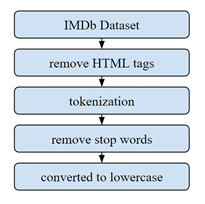
Sentiment analysis of movie reviews can provide valuable insights into movie reactions and preferences. To this end, this study proposes the Convolutional Long Short-Term Memory (ConvLSTM) neural network for movie review sentiment analysis. ConvLSTM can efficiently capture sequential information due to its recurrent neural network characteristics. Specifically, the movie review data are first tokenized. Next, the ConvLSTM analysis model is constructed additionally by fine-tuning its parameters to optimize the performance. The ConvLSTM model consists of multiple storage units that retain contextual information, enabling the model to identify long-distance dependencies in the text. The network is trained using a combination of positive and negative movie reviews, and the training process involves adjusting the model weights to minimize the classification error. Experimental results demonstrate the effectiveness of the proposed method in accurately predicting movie review sentiment. It outperforms traditional machine learning methods in sentiment analysis tasks. The findings demonstrate the potential of LSTM-based sentiment analysis in various applications such as movie recommendation systems and market research. This study's findings help advance the development of sentiment analysis techniques and are of great relevance in understanding and catering to audience preferences in the movie industry.
Show more
Read Article PDF
Cite
Research Article Open Access
Analysis of Naive Bayesian and Back Propagation algorithms in iris classification
Article thumbnail
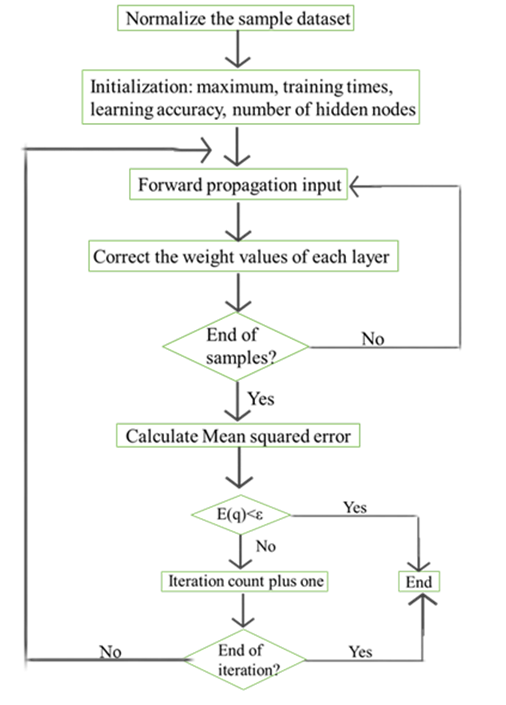
An efficient taxonomy of irises can provide botanists with valuable tools. Machine learning algorithms can effectively improve the performance of iris classification models because they can automatically analyze and summarize data. To this end, this paper introduces Naive Bayesian (NB) and Back Propagation (BP) to build classification models. When creating the NB model, the petal and sepal data from the iris dataset are used sequentially as classification criteria to classify the data. When constructing the BP model, the author sets different iterations and outputs the loss function and accuracy of the BP model under different iterations. The study finds that the NB model has higher classification accuracy when using petal length and petal width as classification criteria, which is 17% higher than the classification accuracy using sepal length and sepal width. Therefore, the NB model is more suitable for classifying independent data. By studying the use of the BP algorithm to classify iris flowers, the automatic classification of iris flowers can be realized and the accuracy of classification can be improved. Compared with the traditional NB algorithm, the BP algorithm can better mine the hidden patterns and information in the iris data and make effective classifications. This study provides new insights and discoveries for the taxonomic study of Iris plants.
Show more
Read Article PDF
Cite
Research Article Open Access
Prediction of diabetes progress based on machine learning approach
Article thumbnail
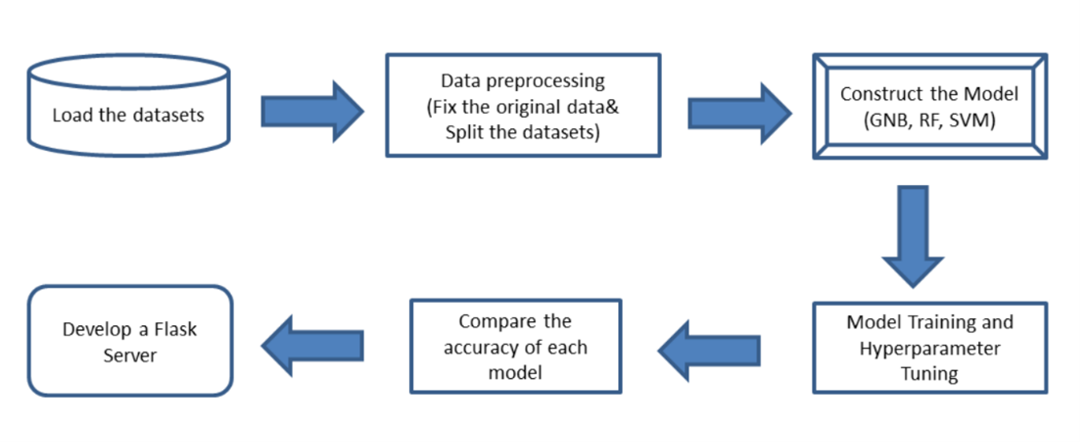
Uropathy is a serious chronic disease whose prevalence is increasing at an alarming rate. Early detection and prediction of diabetes in women is important because of the increased risk of diabetes-related complications during pregnancy. This study introduces machine learning models to assess the likelihood of diabetes in women. The importance of studying characteristics and improving prediction accuracy to understand the nuances of categorization. Specifically, for data preprocessing, experiments are conducted to solve the problem of missing values and outliers by replacing the zero values of certain features with the median values of the corresponding features. This step reduces the impact of less reliable data on model performance. As recognition models, Gaussian Naive Bayes (GNB), Support Vector Machine (SVM), and Random Forest (RF) are built. Performance analysis is performed along with a careful exploration of the hyperparameter space. Scores for Receiver Operating Characteristic - Area Under the Curve (ROC-AUC) are used to compare various models. Different features affect the classification to different degrees. The experimental findings indicate that the modified random forest model demonstrates superior prediction accuracy and robustness. These findings can assist physicians in predicting a patient's risk of developing diabetes earlier.
Show more
Read Article PDF
Cite
Research Article Open Access
Performance analysis of GFSK modulation over AWGN channel
Article thumbnail
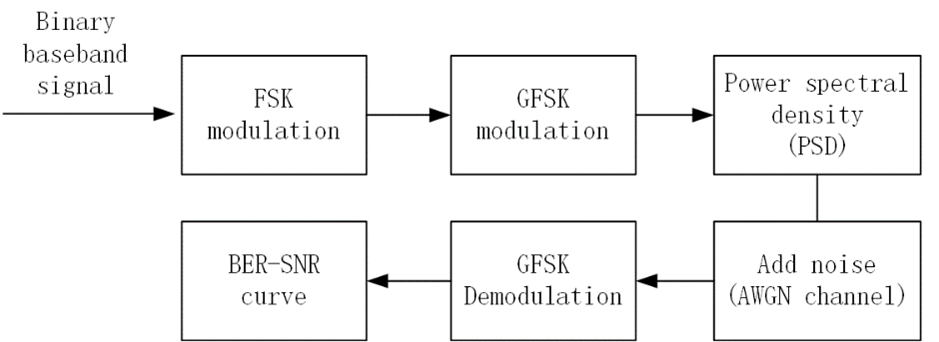
This paper analyses the performance of Gaussian Frequency Shift Keying (GFSK) modulation in Additive White Gaussian Noise (AWGN) channels. Using MATLAB 2022b for simulations, the study explores GFSK modulation principles, the role of Gaussian low-pass filters, the characteristics reflected by Power Spectral Density (PSD), and the influence of Bit Time-Bandwidth Product (BT) on Bit Error Rate (BER). It has been observed that the Gaussian filter restricts sidelobe amplitudes and enhances spectral efficiency. Through varying BT values, it is observed that higher BT values correlate with lower BER. Additionally, the study successfully reconstructs original baseband signals through sampling decisions, confirming GFSK modulation effectiveness.
Show more
Read Article PDF
Cite
Research Article Open Access
Inclusive games: Accessible game design for the visually impaired
Article thumbnail
Accessible game design is a key effort aimed at creating games that transcend physical and cognitive limitations. By carefully integrating a series of functions and strategies, designers empower players with various abilities to participate in the interactive field. Resolve visual barriers through high contrast visual effects, scalable fonts, and alternative color dependent information. Auditory elements are accompanied by visual cues or subtitles to ensure that the game narrative can be understood by auditory impairments. By utilizing customizable controls, motion sensitivity adjustments, and optional input methods, motion challenges are overcome. Recognize cognitive diversity by providing clear explanations, intuitive interfaces, and adjustable rhythms. This inclusive approach promotes innovation and encourages developers to explore new paths in game design, resonating with a wider range of users. As the gaming industry places increasing emphasis on usability, it emphasizes the industry's commitment to equal participation, while enhancing the creative process of each participant and enriching game gameplay.
Show more
Read Article PDF
Cite
Research Article Open Access
Analysis of the prospective application of artificial intelligence in swimming
Swimming has consistently maintained its status as a highly favored athletic pursuit for a span of one hundred years. In contemporary times, the burgeoning field of artificial intelligence (AI) has exhibited notable advancements, resulting in significant impacts across all domains. Examples of industries include finance, the service industry, and engineering. Furthermore, it has been implemented in various other sports previously. Presently, a predominant focus of scholarly inquiry is in the exploration of artificial intelligence (AI) applications within the realm of team sports, including disciplines such as basketball, volleyball, and rugby. Nevertheless, swimming shares certain characteristics with the aforementioned sports. In order to enhance the advancement of the swimming domain through the utilization of artificial intelligence (AI) technology, this essay will examine the feasibility of implementing certain AI applications that have been employed to support other sports, and will also introduce several AI technologies that have the potential to make distinctive contributions to the field of swimming.
Show more
Read Article PDF
Cite