Articles in this Volume

Research Article Open Access
McDonald's food target recognition and calorie display based on YOLOv5 algorithm
Article thumbnail
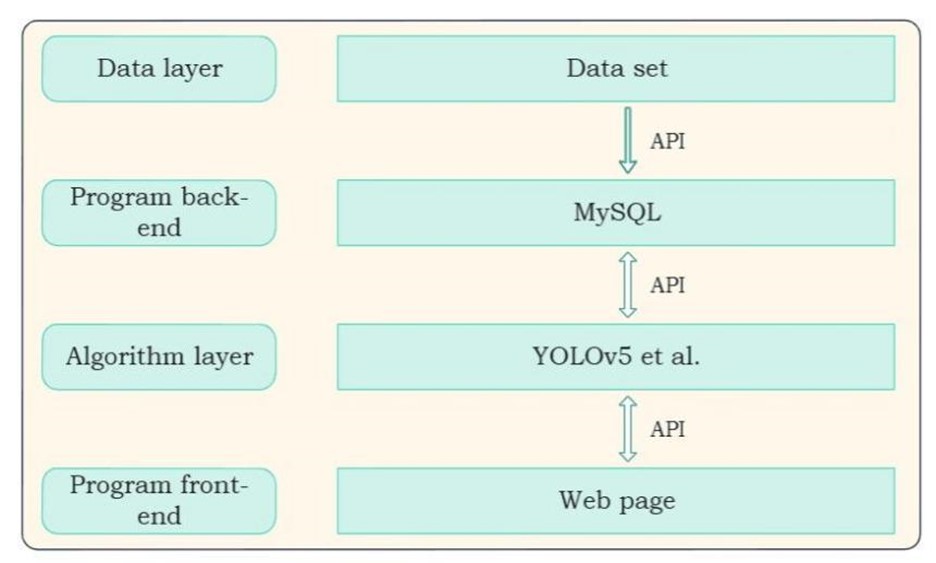
This research paper delves into the development and assessment of a novel food recognition and evaluation system tailored for McDonald's menu items, leveraging the capabilities of the YOLOv5 algorithm. The study demonstrates that the system can successfully identify McDonald's food items from images and seamlessly query calorie and nutritional information from a backend database. The data is then presented to the user, aiding in more informed dietary choices and promoting public health awareness. The system has particular utility for McDonald's customers, facilitating real-time decisions that align with individual health goals and nutritional requirements. Our experimental findings show a high degree of accuracy and efficiency, although the system's scope is currently limited to five key menu items. Future directions for this work include expanding the range of recognizable food categories and implementing user feedback mechanisms to refine recognition accuracy. Moreover, the paper discusses potential optimizations for reducing system response time and further enhancing the practical utility of the technology. This research serves as a significant step towards utilizing computer vision technologies for public health interventions, aiming to combat the rise of obesity and related diseases.

Show more
Read Article PDF
Cite
Research Article Open Access
Research on autonomous mobile robot maze navigation problem based on Dijkstra’s algorithm
Article thumbnail
In recent years, the field of autonomous mobile robotics has garnered significant attention due to its potential applications in various domains such as logistics, surveillance, and search and rescue operations. A crucial challenge in this area is the efficient navigation of robots within complex and dynamic environments, particularly when navigating through maze-like structures. The maze navigation problem involves finding optimal paths for robots to traverse from their initial positions to designated destinations while avoiding obstacles and making intelligent decisions to ensure timely and safe navigation. This study aims to investigate and apply Dijkstra’s algorithm to solve the maze navigation problem for autonomous mobile robots. By analyzing the navigation challenges faced by autonomous mobile robots in maze environments, a solution based on Dijkstra’s algorithm is proposed. In conclusion, this study contributes to the field of autonomous mobile robotics by proposing and evaluating the application of Dijkstra’s algorithm for maze navigation. The experimental results validate its potential to address the challenges of navigating intricate maze environments. However, it is acknowledged that further refinement and innovation are possible to continue improving the performance of autonomous mobile robots in maze navigation scenarios.
Show more
Read Article PDF
Cite
Research Article Open Access
Guiding to available parking spots with AR device
Article thumbnail
Parking congestion has become a pressing issue in urban areas, leading to increased traffic congestion and environmental pollution. This paper presents a comprehensive study on intelligent parking systems aimed at addressing these challenges. The study targets urban drivers, transport authorities and citizens who are affected by parking difficulties and traffic congestion. Intelligent Parking System is a technology-driven solution that aims to optimise parking space utilisation and reduce traffic congestion. It efficiently guides drivers to available parking spaces through real-time data collection and analysis. The study was conducted in Unity3D environment over a period of 2 weeks and covered the phases of system design, development, testing and implementation. The main motivation for this research was to mitigate the negative effects of parking congestion. Intelligent parking systems have the potential to increase traffic efficiency, reduce air pollution and improve the overall quality of life in cities. Server and Unity models were used in the study. Real-time sensors collect parking occupancy data, which is processed to provide real-time parking availability information to drivers via the server. In conclusion, this paper presents an intelligent parking system that can solve the challenges of parking congestion. By utilising server technology and data-driven insights, the project aims to improve the way cities manage parking and contribute to more sustainable urban mobility.
Show more
Read Article PDF
Cite
Research Article Open Access
An evaluation of the impact of ChatGPT on network security
Article thumbnail
ChatGPT, a very advanced natural language generation model, represents a momentous paradigm shift inside the realm of the internet. ChatGPT, which was made available to the public by OpenAI on November 30, 2022, is an enhanced version of OpenAI’s GPT-3.5 model. It has been further developed through the implementation of fine-tuning methods that combine both supervised and reinforcement learning approaches. Furthermore, it provides a client interface that is easy to use, allowing users to actively participate in interactive question-and-answer exchanges with the model. Nevertheless, the utilization of these chatbots likewise presents noteworthy cybersecurity concerns that necessitate attention. The primary objective of this research study is to examine the cyber dangers that are inherent in the utilization of ChatGPT and other comparable AI-driven chatbots. This investigation will encompass an analysis of potential vulnerabilities that may be susceptible to exploitation by individuals with malevolent intent. Additionally, the paper proposes strategies for mitigating the aforementioned cyber risks and vulnerabilities.
Show more
Read Article PDF
Cite
Research Article Open Access
Using data resampling and category weight adjustment to solve sample imbalance
The purpose of this thesis is to investigate the application of artificial intelligence and machine learning in solving the sample imbalance problem. The sample imbalance problem refers to the phenomenon that the number of different categories of samples in the training data varies greatly, resulting in the poor performance of traditional machine learning algorithms on a few categories of samples. To address this problem, this paper proposes a new approach combining data resampling and category weight adjustment strategies. First, the sample distribution of the dataset is adjusted by undersampling and oversampling techniques to balance the number of samples from different categories. Then, during the model training process, different weights are assigned to the samples of different categories so that the model pays more attention to the samples of a few categories. The experimental results show that the method achieves significant performance improvement on multiple datasets. In addition, this paper compares other commonly used methods for solving the sample imbalance problem and analyzes and discusses them in detail. Finally, this study offers a practical solution to the problem of sample imbalance and provides guidance for research in related fields.
Show more
Read Article PDF
Cite
Research Article Open Access
Deep learning based multi-target detection for roads
Article thumbnail
The vehicle target detection algorithm based on deep learning has gradually become a research hotspot in this field. In recent years, with the significant breakthrough of deep learning in the field of target recognition, the vehicle target detection algorithm based on deep learning has gradually become a research hotspot in this field. For the task of vehicle target detection, this paper first briefly introduces the process of traditional target detection algorithms and some optimization methods. It summarizes the development process of YOLO, the current mainstream one-stage vehicle target detection algorithm, and the process of Faster R-CNN, the second-stage vehicle target detection algorithm, and its improvement. Then the characteristics of several types of representative convolutional neural network algorithms are analyzed in chronological development order. Finally, it looks forward to t he future research direction of vehicle target detection algorithms, and also provides new ideas for the optimization of the subsequent vehicle target detection algorithms, which have good engineering application value. Provides algorithmic support for the underlying logic of autonomous driving.
Show more
Read Article PDF
Cite
Research Article Open Access
Further exploration on deep learning in flower recognition
Flower recognition is an important research direction in the field of computer vision, and automatic classification of flower images through deep learning methods is of great significance for ecological environment monitoring and plant research. With this background, this study aims to further optimize the existing flower recognition system and improve its classification accuracy by adjusting key parameters. Based on the existing deep learning model and several rounds of training, this paper explores the tuning strategies for parameters such as different learning rates and weight decay to achieve higher recognition accuracy. In the experiments, this paper uses the classical flower dataset and enhances the diversity of the data through image preprocessing and data enhancement. Through a hundred rounds of training, the model in this paper achieves about 80% classification accuracy on the test set, which is significantly improved compared with the initial model. Further analysis of the results shows that by reasonably adjusting the learning rate and weight decay parameters, the model achieves certain improvements in different flower classes, demonstrating the impact of parameter tuning on the overall performance of the model.
Show more
Read Article PDF
Cite
Research Article Open Access
Design and analysis of adaptive control systems: Adaptive control algorithms using machine learning
A growing field of research is the use of adaptive control algorithms with machine learning techniques like Q-learning and SARSA. With prospective applications in robotics, healthcare, and other fields, this interdisciplinary method strives to combine the stability and robustness of conventional control systems with the self-learning skills of reinforcement learning. Making sure that systems are stable and that learning occurs effectively is the main research problem. This paper demonstrates the stability and convergence of existing adaptive control algorithms when integrating with machine learning. There are mainly four primary methods of control algorithms: reinforcement learning, neutral network, support vector machine and deep learning. Reinforcement learning is the main focus of this paper. Data efficiency, robustness, and generalization are the main problems with reinforcement learning. Q-learning and SARSA (State, Action, Reward, State’, Action’) are two algorithms for reinforcement learning. The research will be done by analyzing these two algorithms based on existing material and the actual application of these two algorithms. SARSA is believed to be more safe as its on-policy methodology, and Q-learning is believed to be more proactive as its off-policy methodology.
Show more
Read Article PDF
Cite
Research Article Open Access
From ELIZA to ChatGPT: A brief history of chatbots and their evolution
Article thumbnail
Over the years, chatbots have grown to be used in a variety of industries. From their humble beginnings to their current prominence, chatbots have come a long way. From the earliest chatbot ELIZA in the 1960s to today’s popular Chatgpt, chatbot language models, codes, and databases have improved greatly with the advancement of artificial intelligence technology.This paper introduces the development of chatbots through literature review and theoretical analysis. It also analyzes and summarizes the advantages and challenges of chatbots according to the current status of chatbot applications and social needs. Personalized interaction will be an important development direction for chatbots, because providing personalized responses through user data analysis can provide users with a personalized experience, thus increasing user engagement and satisfaction.
Show more
Read Article PDF
Cite
Research Article Open Access
Research on multi-role classification task of online mall based on heterogeneous graph neural network
Article thumbnail
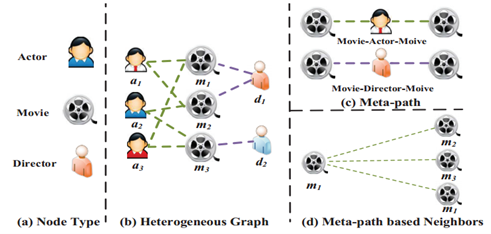
With the rapid development of e-commerce, online shopping malls have become an indispensable part of daily life. In order to better meet the needs of consumers, marketplace platforms need to accurately identify and categorize different user personas to provide personalized services and recommendations. In traditional role classification methods, basic information and behavioral data of users are typically used for classification. However, this approach often ignores the complex relationships between users and multiple heterogeneous data such as goods, reviews, social networks, and more. Therefore, we propose a new approach based on heterogeneous graphs to model different types of data in the form of graphs to better capture the connections between users and various elements in the marketplace. In this study, graph embedding technology is used to map nodes in heterogeneous graphs into low-dimensional vector spaces to capture similarities and relationships between nodes. Then, using the vector representation of these nodes, we can apply algorithms such as attention mechanisms for multi-role classification. Specifically, we use algorithms such as support vector machines to train classification models and use heterogeneous graph attention mechanisms to obtain the final feature representation of nodes. Experimental results show that our method shows significant advantages in multi-role classification tasks. Finally, the results of this study are discussed and summarized. We found that the classification model based on heterogeneous graph can effectively classify multiple roles in the online mall to provide personalized services and recommendations for the mall. At the same time, we also find that the construction of heterogeneous maps and the choice of graph embedding technology have important impacts on the classification results, which need further research and optimization. Therefore, multi-role task classification of online shopping malls based on heterogeneous graph neural networks is of great significance for improving the user experience and recommendation effect of online shopping malls, and also provides new ideas and methods for research in related fields.
Show more
Read Article PDF
Cite