Articles in this Volume

Research Article Open Access
Application of artificial intelligence and machine learning in financial forecasting and trading
Article thumbnail
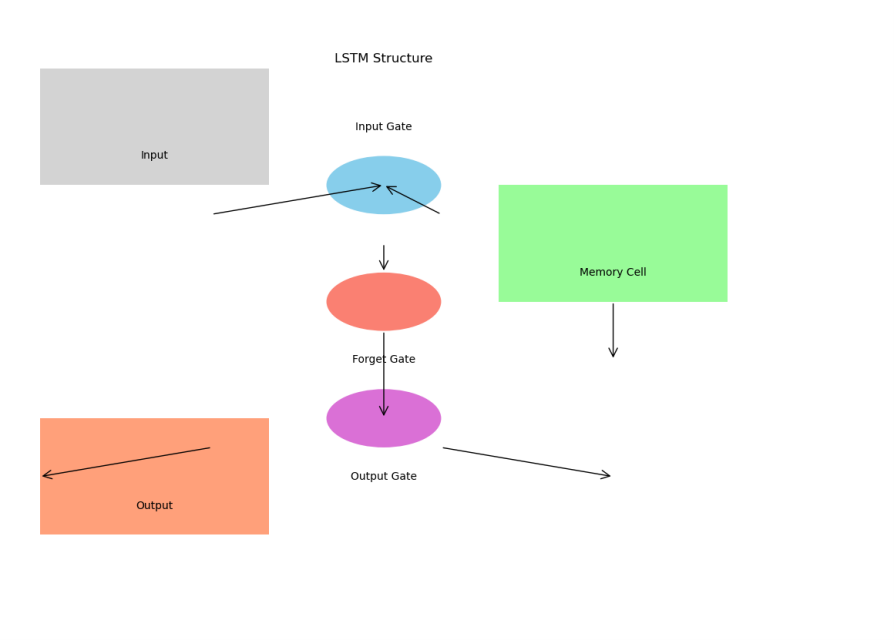
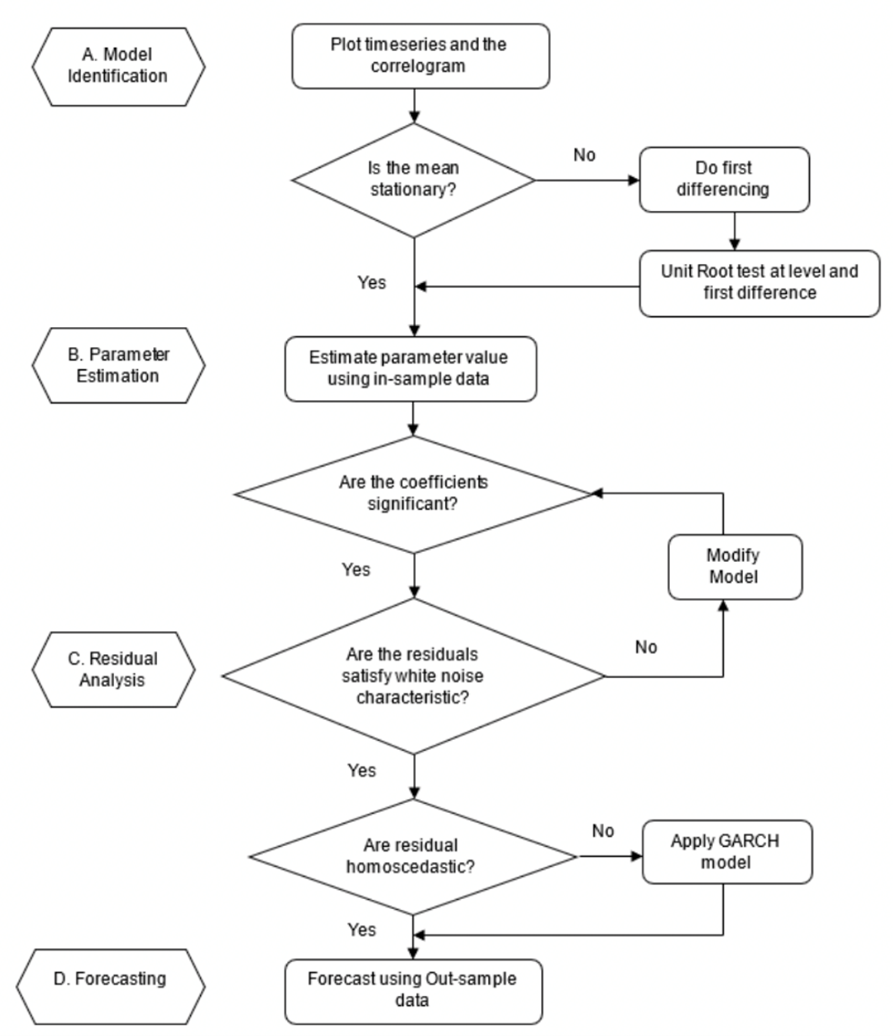
Artificial Intelligence (AI) and Machine Learning (ML) have been employed in the field of financial forecasting for many years. Existing scientific research has substantiated the effectiveness of AI/ML in the financial market. Currently, approximately 35% of the total capitalization of the US stock market is influenced by quantitative analysis, primarily consisting of AI/ML methodologies and their variants. This paper reviews classical advanced methodologies of AI/ML in financial forecasting and automated trading. Specifically, it focuses on discussing representative methods from three categories: statistical approach (including ARIMA-GARCH), machine learning approach (including SVM and LSTM), and the logistic approach (including the Fuzzy System). In detail, this paper delves into the fundamental aspects of each method and illustrates their effectiveness through existing results from relevant papers. The structure of this paper begins with the introduction of each method, followed by their applications, and a discussion of their pros and cons. Furthermore, this paper offers an outlook on the hotspots and prospects for the development of this research topic.
Show more
Read Article PDF
Cite
Research Article Open Access
Investigation and designing a comprehensive supply chain database for Walmart
Article thumbnail
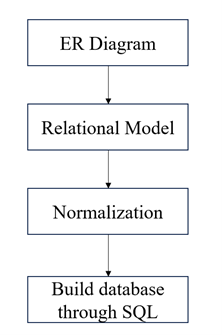
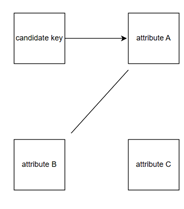
In light of the rapid progression of digital technology, fierce competition, and the ever-shifting demands of consumers, the contemporary retail sector is continually evolving. This underscores the critical need to embrace digital solutions. This study seeks to aid Walmart, one of the world's largest retailers, in improving supply chain efficiency, optimizing inventory management, and enhancing the overall customer experience by creating a comprehensive supply chain database. Specifically, we employ the core entity method to identify Walmart's key entity, which is the "product," and ascertain its associated entities. Subsequently, we establish relational models based on the attributes and relationships of each table, considering real-world scenarios, such as one-to-many and many-to-many relationships. We employ normalization techniques to ensure the proper utilization of functional dependencies and candidate keys for each entity. This guarantees that the designed tables adhere to the principles of the First, Second, and Third Normal Forms, preserving data integrity while minimizing redundancy. Furthermore, we create a set of logical database commands, illustrated through flowcharts, and rigorously test their functionality and efficiency. Lastly, we explore potential directions for future research. The successful implementation of this design relies on robust data management practices and a reliable database system tailored to meet Walmart's specific needs. This results in a logically structured and standardized supply chain database. The research findings underscore the vital importance of a well-conceived supply chain database in addressing the challenges faced by large-scale retail operations like Walmart supermarkets.
Show more
Read Article PDF
Cite
Research Article Open Access
Investigation related to database design for letter of credit
Article thumbnail
The "Letter of Credit" is a fundamental payment mechanism in global trade, and its efficiency has significantly declined due to the impact of the COVID-19 pandemic. This document delves deeply into the development and execution of a comprehensive database for managing Letters of Credit (L/Cs). It is designed with a real-world case study derived from the International Settlement Department of the Bank of China. The central goal of this database is to enhance the efficient management and simplification of the complex procedures inherent in L/C transactions. The development process follows a systematic approach, commencing with the establishment of three fundamental assumptions to delineate the scope of the study. Subsequently, the database design progresses through stages involving Entity-Relationship Diagram (ERD) development, relational model construction, and normalization procedures. These steps collectively culminate in the creation of an intelligently structured database comprising thirteen distinct tables. In conclusion, this paper not only delves into the design and implementation of the L/C database but also showcases its practicality through real-world scenarios. The database, fueled by meticulous design and thoughtful implementation, is poised to revolutionize the management of L/C operations, offering enhanced efficiency and accuracy in international trade transactions.
Show more
Read Article PDF
Cite
Research Article Open Access
Traffic light control with reinforcement learning
Article thumbnail
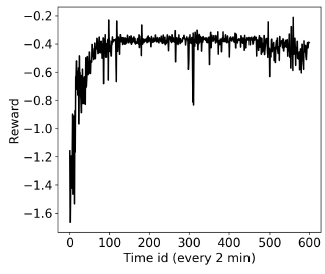
Urban traffic signal optimization is important for alleviating congestion in urban transportation systems. This study proposes a real-time traffic light control algorithm based on deep Q learning with a reward function that accounts for queue lengths, delays, travel times, and throughput. The model dynamically decides phase changes based on current traffic conditions. The training of the deep Q network involves an offline stage from pre-generated data with fixed signal timing and an online stage using real-time traffic data. A deep Q network structure with a“phase gate component is used to simplify the model's learning task under different phases. A“memory palace" mechanism is used to address sample imbalance during the training process. Both synthetic and real-world traffic flow data are used to validate our approach under an urban road intersection scenario in Hangzhou, China. Results demonstrate significant performance improvements of the proposed method in reducing vehicle waiting time (57.1% to 100%), queue lengths (40.9% to 100%), and total travel time (16.8% to 68.0%) compared to traditional fixed signal timing plans.
Show more
Read Article PDF
Cite
Research Article Open Access
Research on the application of deep learning algorithms to PCB defect detection
In today's electronics industry, Printed Circuit Boards play a crucial role in providing the layout for circuit components and conductive traces in nearly all electronic devices. The quality of components soldered onto Printed Circuit Boards directly impacts product performance. To ensure the performance of electronic devices, Printed Circuit Boards defect detection based on deep learning algorithms has become a pivotal technology in the defect inspection process within the electronics industry. However, the application of deep learning algorithms in this context faces several challenges. These challenges include difficulties in acquiring Printed Circuit Boards defect datasets, limited generalization capability in Printed Circuit Boards defect detection, and slow and low-quality Printed Circuit Boards image stitching processes. To enhance researchers' understanding of deep learning-based Printed Circuit Boards defect detection, this paper analyzes the challenges associated with deep learning in the Printed Circuit Boards defect detection process and proposes several viable solutions. In conclusion, this paper provides insights into the future of deep learning-based Printed Circuit Boards defect detection.
Show more
Read Article PDF
Cite
Research Article Open Access
Conversational agent in HCI a review
Nowadays, AI technology is developing rapidly and slowly covering all areas of life. AI facilitates different parts of our lives and provides us with a lot of help. For example, in learning, students can acquire knowledge more conveniently through AI, and buyers can find suitable goods more conveniently through AI when shopping. At the same time, more and more technology is used in the field of voice agents, which allows humans to enjoy a lot of better services. In this article, we will study to better understand "how to understand human natural language and how the repository of knowledge is built." In the article we build with examples and deep learning models (CNN and RNN) through databases. Through repeated research and analysis, we can find that there are some limitations in this paper, such as the single learning model and the insufficient elaboration of data analysis and signal system technology. But at the same time, we also found a lot of future application prospects that voice agents can develop, it can be applied in many fields, such as finance, medical care, education and so on. For example, in children's education, parents can use voice agents to set time limits and monitor their children's progress. Existing digital interactive storytelling systems have limitations in terms of available storybooks and hand-crafted issues. Voice agents are becoming more popular in everyday scenarios, and more users are adopting devices like Siri and Google Assistant. In the future, conversational agents are expected to play an important role in oral communication with users.
Show more
Read Article PDF
Cite
Research Article Open Access
Application of AI conversation agent in new frameworks and fields and improvement in sensory aspects
Taking a big step with the development of AI, the functions of conversation agents are becoming increasingly mature, and people's lives are becoming increasingly dependent on the conversation agent system. Its assistance to people is reflected in many fields. This has sparked people's exploration of some emerging fields, it is necessary to organize and summarize the new technologies, functions, data, and methods for training new data required for studying emerging fields. More and more deep learning technology have been applied to conversation agents that improve the quality of the service significantly. It is still in the initial stage, and needs improvement both at modeling methods and datasets gathering.
Show more
Read Article PDF
Cite
Research Article Open Access
A comprehensive analysis of gesture recognition systems: Advancements, challenges, and future direct
Article thumbnail
Gesture recognition emerges as a potent avenue for human-computer interaction, harnessing mathematical algorithms to interpret gestures. It promises to surpass text-based or graphical interfaces, enabling touchless device control through simple gestures. Our review of 7 papers encompassing various fields and methods underscores its diverse applications. Challenges persist, such as distinguishing genuine user intent from accidental actions amid environmental interference. Creating a universal EMG pattern recognition model demands intricate individual pre-training. Sensor-based gesture recognition grapples with real-world dynamics, necessitating adaptable models that discern user intent from non-intent actions. Addressing these gaps holds the key. Adaptable models and personalized approaches can enhance robustness and accuracy across applications, surmounting challenges in the gesture interaction technology realm.
Show more
Read Article PDF
Cite
Research Article Open Access
Review of collaborative filtering recommendation systems
Article thumbnail
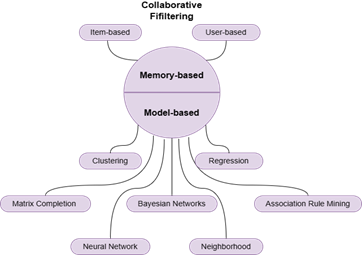
In the era of information overload, recommender systems develop rapidly. And because the needs of information consumers are full of diversity and the information data provided by information producers is too large, to enhance the efficiency and quality of recommendations, the research community has introduced numerous approaches to optimize recommendation systems. As collaborative filtering stands as a time-tested technique in recommendation systems, This paper facilitates a swift comprehension of recent advances in collaborative filtering. It does so by examining the techniques presented across the entire collaborative filtering recommendation systems research field in recent years, especially its development in the domain of deep learning, and have a solid understanding of the field of study.
Show more
Read Article PDF
Cite
Research Article Open Access
Should machine learning be applied in credit risk accessment
Article thumbnail
In the past, analysts evaluated whether to offer loans to particular applicants using rule-based approaches. However, due to the sudden rise in applicants and a labor shortage, financial institutions have created quantitative methods of decision-making. Credit scoring models are constructed. In this essay, random forest model, support vector machine regression model and Probit model are performed and compared according to the dataset from a major U.S. credit cards company. The result demonstrates that while machine learning techniques can improve the efficiency and accuracy of credit risk assessment, it does face some problems and limitations. Random forest model is capable of handling high-dimensional data and is not complicated to run. However, database with fewer features or samples will have lower classification accuracy. Support vector machine regression model has high accuracy and prevents overfitting to some degree. It is sensitive to the choice of kernel parameters and regularization term. By testing how important Mill Ratio is, the Probit model produces more accurate results. However, the model is more complex than the other two. In future research, we propose to enhance and extend our work by using more artificial intelligence algorithms and evaluation metrics.
Show more
Read Article PDF
Cite