Articles in this Volume

Research Article Open Access
AdaGCR: An improved method for optimizing machine learning training process
Article thumbnail
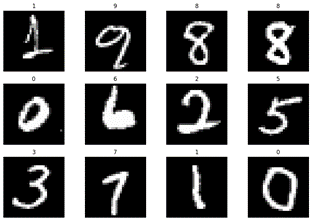
In contemporary machine learning, training datasets are typically divided into batches, and models are updated incrementally through batch iterations to save memory and reduce overfitting. However, determining the optimal hyperparameters like learning rate, batch size and number of epochs remains a challenge which often relying on empirical insights. This paper explores a novel method called Adaptive Gradient Conflict Rate (AdaGCR) to optimize the training process. It leverages the idea of gradient conflict rate, which reflects the model’s position within a batch model set and accordingly adjusts the global learning rate. This proposed method is tested by training a Deep Neural Network (DNN) model with MNIST dataset which represents simple tasks and a ResNet-18 model with CIFAR-10 dataset which represents more complicated tasks for solving real world problems. Experiments conducted on DNN demonstrates the proposed method’s effectiveness in reducing overfitting and enhancing convergence, particularly with a well-suited initial learning rate. However, its applicability to more complex models like ResNet-18 may require further refinements, such as layer-specific learning rate adjustments. Future research should focus on fine-tuning AdaGCR and extending its utility across diverse machine learning models and tasks.
Show more
Read Article PDF
Cite
Research Article Open Access
The investigation and prediction for salary trends in the data science industry
The aim of this study is to utilize machine learning techniques to analyze salary trends within the data science industry spanning the last three years. Initially, this study presented an overview of four machine learning models: Random Forests, eXtreme Gradient Boosting (XGBoost), Neural Networks, and Support Vector Regression (SVR), elucidating their fundamental principles and characteristics. Subsequently, this study gathered, preprocessed, and engaged in feature engineering with salary data from the data science sector over the past three years. These four machine learning models are then employed for salary prediction, and the ensuing model outcomes are meticulously examined. By conducting a comparative analysis and evaluating each model’s performance, their respective strengths and weaknesses were identified. In conclusion, this study summarized the study’s findings and deliberated on potential future research directions. The innovation inherent in this research lies in the application of diverse machine learning models to forecast salaries within the data science industry, coupled with the comprehensive comparison and evaluation of these models. The main conclusion is that XGBoost performs best in salary prediction, while neural networks are more accurate and complex, and SVR has limited applicability. Future research prospects include improving the accuracy and interpretability of models, exploring more features and data processing methods to enhance the accuracy and practicality of salary prediction in the data science industry.
Show more
Read Article PDF
Cite
Research Article Open Access
Stock prediction and analysis based on machine learning algorithms
Article thumbnail
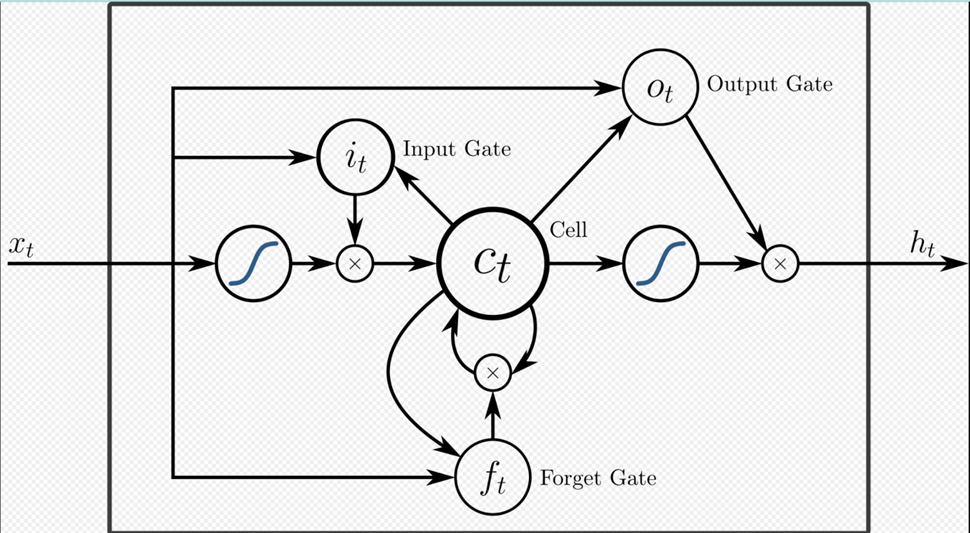
The stock market has consistently remained a focal point of substantial concern for investors. Nevertheless, due to the intricate, tumultuous, and often noisy nature of the stock market, forecasting stock trends presents a formidable obstacle. To augment the accuracy of stock trend predictions, the author adopts a combination of the Long Short-Term Memory (LSTM) neural network and a noise reduction technique known as Ensemble Empirical Mode Decomposition (EEMD). This composite model is employed to develop predictions for the daily stock price increases, aiming to provide more precise insights into market behavior. The framework is capable of generating the daily stock price change trend curve based on the training outcomes. EEMD, standardization, and other data preprocessing methods can effectively reduce the noise of the stock market. In this paper, three U.S. stocks from 2010 to 2023 are chosen as the research subjects. After the training is completed, the prediction curve generated by the model closely aligns with the actual curve. Furthermore, three commonly used evaluation metrics were utilized to assess the model’s performance. Based on all those experimental outcomes, this model adeptly forecasts the stock’s trend.
Show more
Read Article PDF
Cite
Research Article Open Access
Exploration of classical neural network architecture in cycleGAN framework with face photo-sketch synthesis
Article thumbnail
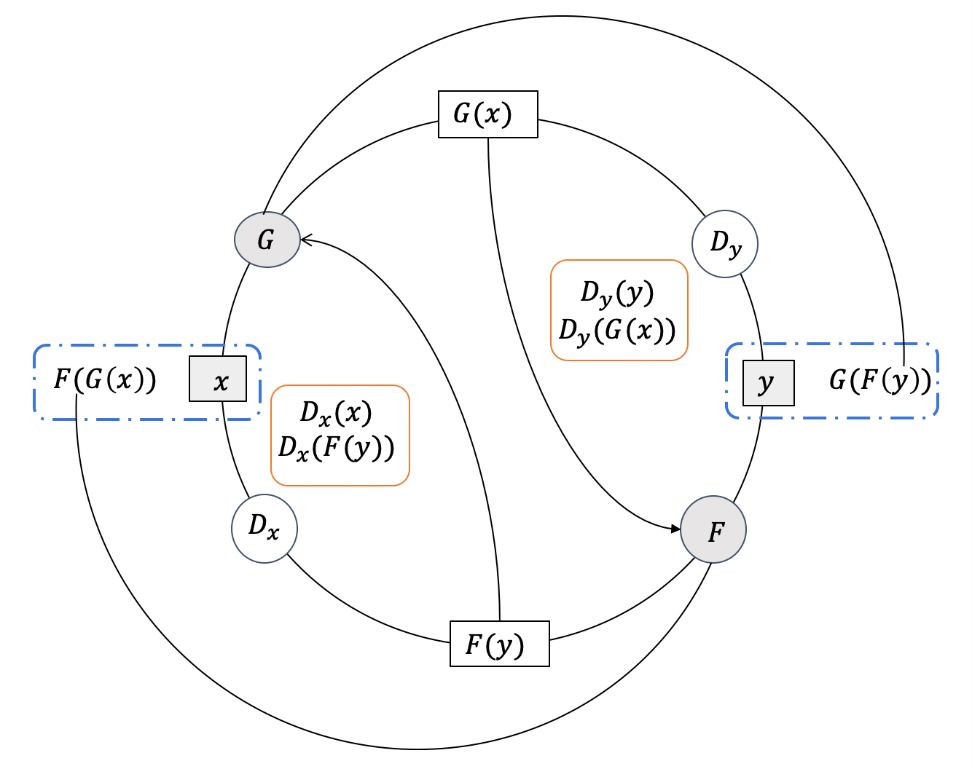
CycleGAN has been a benchmark in the style transfer field and various extensions with wide applications and excellent performance have been introduced in recent years, however, discussion about its architecture exploration which could enable us to further understand the concept of generative model is scarce. In this paper, several architectures referenced from classical convolutional neural networks are implemented into the generator and discriminator of the cycleGAN model, including AlexNet, DenseNet, GoogLeNet, and ResNet. Their feature extraction modes are imitated and modified into blocks to embed into the encoder part of the generator while the discriminator directly uses their model except it outputs a patch classification. In advance to mitigate the possible imbalance between generator and discriminator ability, a self-adjusting learning rate strategy based on the discriminator confidence is introduced. Multiple evaluation metrics are utilized to measure the performance of each model. Experimental results indicate an AlexNet-like architecture model could achieve a competitive performance than the baseline cycleGAN and present better fine details and high-frequency information.
Show more
Read Article PDF
Cite
Research Article Open Access
Enhancing mask detection performance based on YOLOv5 model optimization and attention mechanisms
Article thumbnail
Due to the COVID-19 pandemic, there has been a significant increase in the usage of masks, leading to more complex scenarios for mask detection techniques. This paper focuses on optimizing the performance of mask detection using the You Only Look Once (YOLO) v5 model. In this study, the yolov5 target detection model was employed for training the mask dataset. Diverse model improvement techniques were explored to enhance the model's capability to capture crucial features and differentiate masks from the background in complex scenarios. Finally, the modified model was compared with the earlier original target detection model to identify the most considerable performance gain. The CSPDarknet design with the TensorFlow framework is utilized in this study, and the Attention Mechanism module is implemented through the Keras library. The objective is to optimize the three feature layers between the backbone network and the neck by integrating multiple attention mechanisms. This will enable the model to more quickly and accurately capture important features when dealing with complex scenarios by adjusting the feature map weights. Additionally, in the feature pyramid network, shallow feature maps are fused with deeper feature maps in a certain order to determine the most efficient feature fusion method. Finally, this study identified the optimal combination of attention mechanism and feature fusion through ablation experiments. The results of the experiment demonstrate that the combination of SE block and shallow feature fusion (SE + FF2 model) can greatly enhance category confidence, leading to an improved model performance.
Show more
Read Article PDF
Cite
Research Article Open Access
Translation from sketch to realistic photo based on CycleGAN
Article thumbnail
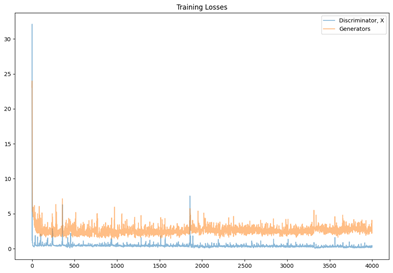
Forensic sketches serve as crucial tools for law enforcement agencies in identifying individuals of interest. However, their effectiveness can be limited due to constraints such as incomplete information and variations in interpretation by sketch artists, often rendering these sketches unrecognizable to the general public. In response to this challenge, this paper introduces an innovative approach—a CycleGAN-based image generation model. This model aims to transform monochrome forensic sketches into images with realistic colors and textures, offering an alternative visual representation that aids the public in identifying wanted individuals. The model is trained on unpaired datasets containing sketches and photographs of human faces, encompassing diverse scenarios. Through this training, it learns to generate images that closely resemble photographs captured in everyday environments. Impressively, the proposed model demonstrates rapid convergence, with both the generator and discriminator reaching optimal performance within just 500 epochs. Consequently, the generated images prove to be significantly more recognizable than the original sketches, thus enhancing the potential for successful identifications.
Show more
Read Article PDF
Cite
Research Article Open Access
An improvement on common optimization methods based on SuperstarGAN
Article thumbnail
Image processing has long been a focal point of research, offering avenues to enhance image clarity and transfer image features. Over the past decade, Generative Adversarial Networks (GANs) have played a pivotal role in the field of image conversion. This study delves into the world of GANs, focusing on the SuperstarGAN model and its optimization techniques. SuperstarGAN, an evolution of the well-known StarGAN, excels in multi-domain image-to-image conversion, overcoming limitations and offering versatility. To better understand its optimization, this study explored the effects of different optimizers, such as Adam, SGD, and Nadam, on SuperstarGAN's performance. Using the CelebA Face Dataset with 200 million images and 40 features, this study conducted experiments to compare these optimizers. The results revealed that while SGD and Nadam can achieve comparable results to Adam, they require more iterations and careful tuning, with SGD showing slower convergence. Nadam, with its oscillatory nature, shows promise but requires proper learning rate adjustments. This research sheds light on the critical role of optimizer choice in training SuperstarGAN. Adam emerges as the most efficient and stable option, but further exploration of Nadam's potential is warranted. This study contributes to advancing the understanding of optimization techniques for generative adversarial networks, with implications for high-quality facial image generation and beyond.
Show more
Read Article PDF
Cite
Research Article Open Access
Analysis and prospects of automobile intelligent assisted driving characteristics based on FPGA technology
Article thumbnail
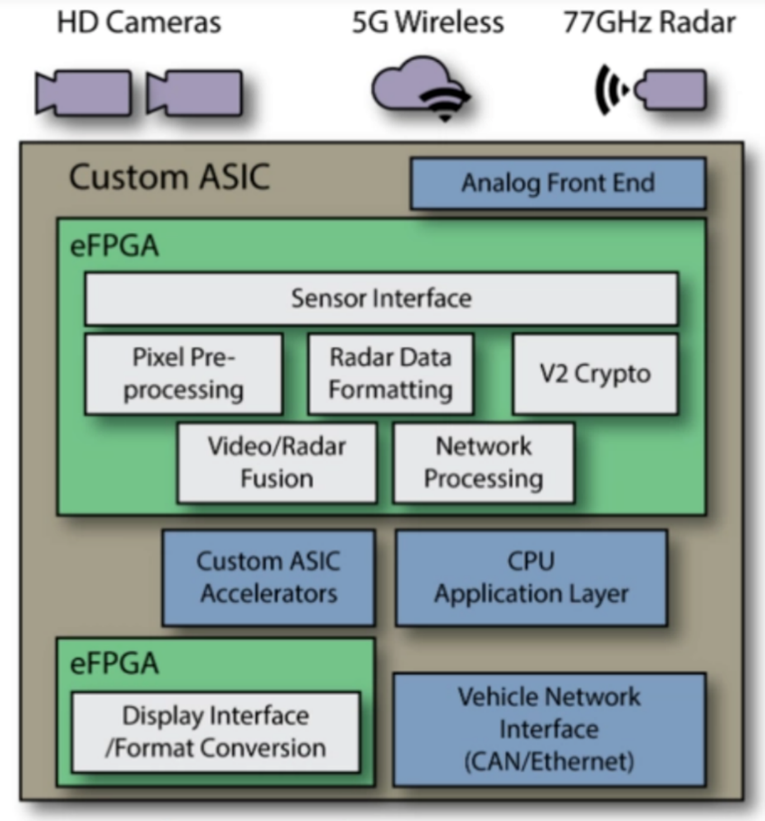
This article provides a comprehensive exploration of the pivotal role that field-programmable gate arrays (FPGAs) play in the advancement of autonomous driving technology. FPGAs, which made their debut in the early 1980s, have emerged as a crucial component in this field, owing to their robust parallel processing capabilities, real-time data analysis capabilities, and exceptional customizability. With the ever-increasing demand for autonomous driving solutions, the adoption of FPGAs has become indispensable in meeting the requirements for high-speed data processing and instantaneous response times. Within these pages, we delve into the significant role that FPGAs assume in elevating intelligent driving systems, offering a deep dive into this subject through meticulous case studies and technical insights. This article casts a spotlight on several compelling instances where FPGAs shine, notably in adaptive cruise systems, obstacle recognition, automatic emergency braking, and intelligent parking assistance, achieved through seamless integration with YOLO technology. These real-world examples serve to underscore the pivotal role that FPGAs play in ensuring road safety and propelling technological advancement in the realm of autonomous driving.
Show more
Read Article PDF
Cite
Research Article Open Access
Predicting customer subscriptions to fixed-term deposit products based on machine learning approach
Article thumbnail
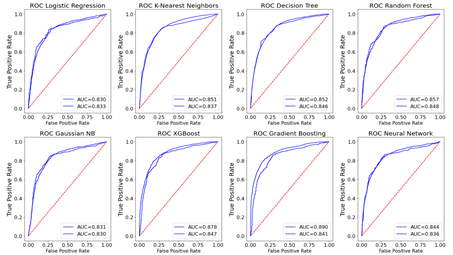
In the contemporary dynamic financial milieu, financial institutions confront the exigency of comprehending and tailoring services to meet the idiosyncratic demands of individual customers, with a particular emphasis on forecasting fixed-term deposit commitments. The integration of machine learning proffers a robust framework to disentangle the intricacies inherent in customer decision-making processes. This investigation expounds upon a systematic framework encompassing data rectification, validation, and the process of feature curation, underscoring the imperative nature of a scrupulous and methodical approach. The exposition introduces an array of machine learning models, including XGBoost, Logistic Regression, Random Forest, Neural Networks, and Gaussian Naive Bayes, offering elucidation on their respective applications. Noteworthy attention is accorded to the Random Forest and Neural Networks models, with detailed explanations of their operational principles and strengths. The study underscores the criticality of conscientious data preprocessing, featuring a presentation of pertinent Python libraries and methodologies for data refinement, validation, and feature selection. The discourse culminates in a delineation of the potential of neural networks as a potent instrument in the domain of machine learning, affording insight into their intricate architecture and the iterative training process, whilst accentuating their versatility across diverse domains. In summation, this inquiry furnishes a comprehensive and pragmatic compendium on the utilization of machine learning methodologies for the prediction of customer subscriptions within the financial sector.
Show more
Read Article PDF
Cite
Research Article Open Access
Optimizing molecular design through Multi-Armed Bandits and adaptive discretization: A computational benchmark investigation
Article thumbnail
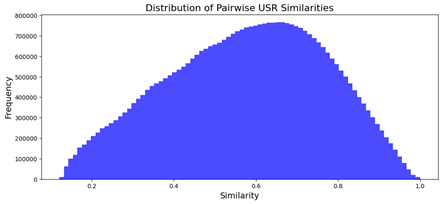
In the present benchmark study, a novel strategy is unveiled for the optimization of molecular design by integrating Multi-Armed Bandits (MAB) with cutting-edge adaptive discretization techniques. Central to this approach is the employment of the Ultrafast Shape Recognition (USR) method – a proven technique for assessing molecular similarity. Moreover, the integration of the Zooming Algorithm is noteworthy. This innovative algorithm demonstrates dynamism, adjusting in real-time to adeptly navigate the vast expanse of chemical space. One of the standout revelations from this investigation is the significant influence of a scaling factor. It serves as the fulcrum for striking an optimal balance between computational agility and peak performance. Such insights profoundly challenge the limitations inherent in conventional discrete MAB methodologies, especially when operating within the bounds of finite computational bandwidth. Beyond merely delineating a blueprint for future interdisciplinary endeavors, this research illuminates the intricacies of molecular design optimization. Additionally, it suggests that a marriage between network and cluster analysis could be the key to enhancing and fine-tuning the reinforcement learning journey.
Show more
Read Article PDF
Cite