Articles in this Volume

Research Article Open Access
Random Forest model-based risk prediction of COVID-19 regional infection
Article thumbnail
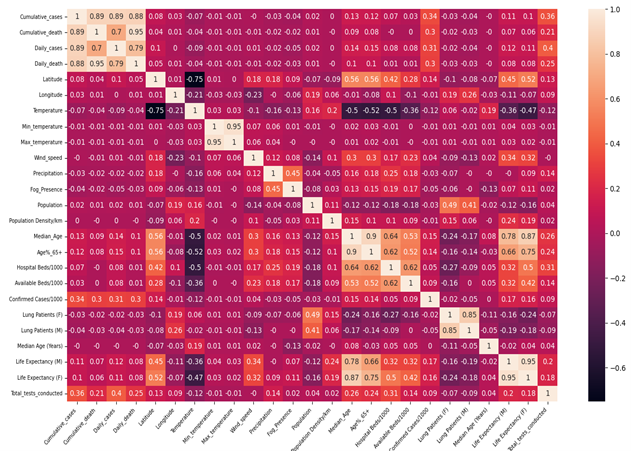
The current prevalence of the COVID-19 pandemic worldwide has posed numerous challenges and questions. To assist governments, medical institutions, and the public in making informed decisions and minimize the risk of further spread of COVID-19, this paper employs the Random Forest model to predict the infection risk within certain regions. The dataset utilized underwent data cleaning and feature engineering, allowing predictions to be made using publicly accessible data such as local basic climate conditions. After conducting performance comparisons with other common machine learning models, including Linear Regression and Decision Tree Regressor, it was found that the Random Forest Regressor model exhibited superior performance across all evaluation metrics, with all error values below 0.05. Notably, the MAE for the Random Forest model was only 0.001089. This strongly suggests that the Random Forest model outperforms the other models used in this task.
Show more
Read Article PDF
Cite
Research Article Open Access
NFT auction: Implementing smart contracts for decentralized transactions
Article thumbnail
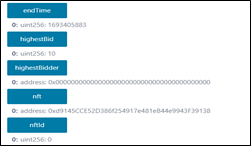
In the wake of blockchain and Web3 technological advancements, Non-Fungible Tokens (NFTs) have emerged as prominent digital assets within the realms of art, gaming, and virtual commodities. Unlike their traditional counterparts, NFT auctions harness the virtues of decentralization, transparency, and immutability, ushering in a new era for trading artworks and other digital assets. This paper embarks on an exploration, first laying down the foundational principles of blockchain technology and NFTs. A comparative analysis follows, juxtaposing the dynamics of NFT auctions with the modus operandi of traditional auctions. Within the theoretical scaffold, the nuances of decentralization and trust in NFT auctions are elucidated, spotlighting the pivotal role of smart contracts throughout the auction trajectory. The emphasis also gravitates towards transparency and security, two cornerstones ensuring the integrity of the auction process. Diving into the methodology, this section delineates the research blueprint and the techniques employed for program testing. Delving into the practicalities, the discourse meticulously unpacks the architecture and operability of the smart contract, gauging its efficacy through rigorous assessments. Beyond the present scope, the paper ventures to uncover potential applications and horizons awaiting NFT auctions across diverse sectors.
Show more
Read Article PDF
Cite
Research Article Open Access
Generative adversarial networks: Core principles, cutting-edge models, broad applications, and contemporary challenges
Article thumbnail
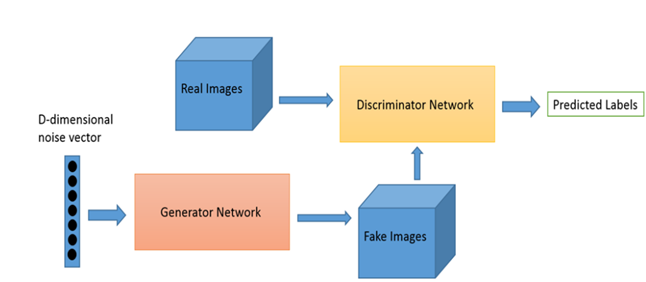
Generative adversarial networks stand out as one of the most notable innovations in the field of artificial intelligence. Often lauded for their capacity to emulate specific data distributions, their primary function is to discern the underlying characteristics of these distributions and subsequently generate data that mirrors them. In the realm of computer vision, GANs have showcased remarkable prowess by producing high-quality, realistic content. This capability has not only bolstered their reputation but also expanded their applicability across a multitude of tasks. However, the ascendancy of GANs isn’t without its set of challenges. Training them can often be a delicate balancing act, as they require careful tuning to ensure stability. Issues like mode collapse, where the generator produces limited varieties of outputs, or training instabilities are not uncommon. Nonetheless, the inherent scalability and versatility of GANs continue to captivate researchers, making them a hotspot for innovation. As we delve deeper into the AI epoch, the potential of GANs remains vast, presenting both unprecedented opportunities and challenges.
Show more
Read Article PDF
Cite
Research Article Open Access
Stock price forecast model for CATL based on BP neural network regression
Article thumbnail
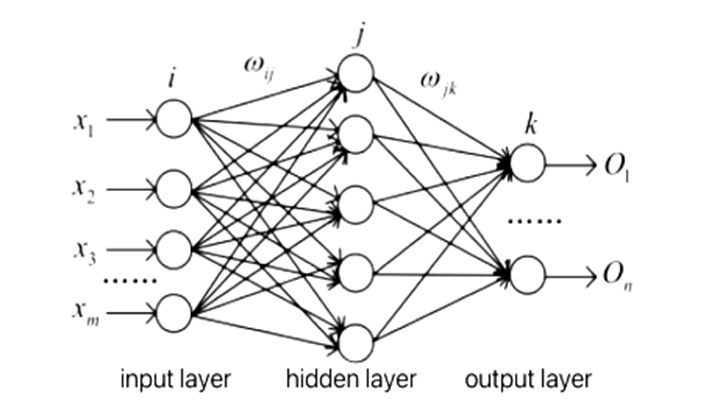
With the introduction of the "Dual Carbon" policy and the increasing environmental awareness among residents, the new energy vehicle industry is experiencing positive growth momentum. New energy vehicles use non-traditional energy sources as their power supply, effectively reducing carbon emissions, enhancing energy efficiency, and contributing to the improvement of China's existing energy landscape, thus supporting environmental protection and the early realization of "carbon peak" and "carbon neutrality" goals. Contemporary Amperex Technology Co., Ltd. (CATL), a prominent and competitive player in China's emerging clean energy industry, focuses on researching, developing, manufacturing, and marketing power battery and energy storage systems specifically designed for new energy vehicles. Moreover, in recent years, machine learning and deep learning have gained wide application in various domains, including stock price prediction and financial investment. This paper constructs a stock price prediction model for CATL based on a BP neural network regression, considering factors related to traditional energy, carbon trading, environmental aspects, and industry-specific factors.
Show more
Read Article PDF
Cite
Research Article Open Access
Comparative analysis of the KL-UCB and UCB algorithms: Delving into complexity and performance
Article thumbnail
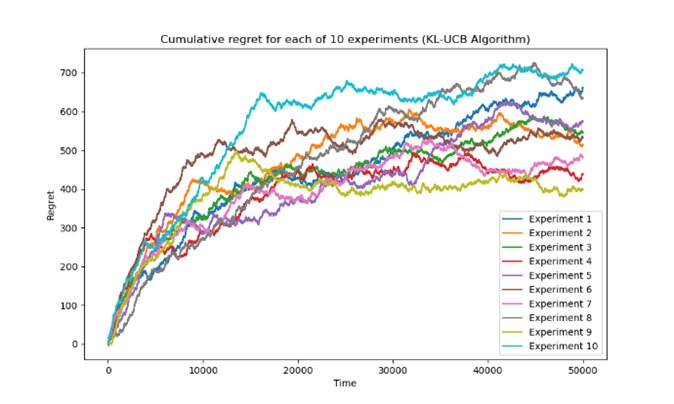
This paper embarks on a meticulous comparative exploration of two venerable algorithms often invoked in multi-armed bandit problems: the Kullback-Leibler Upper Confidence Bound (KL-UCB) and the generic Upper Confidence Bound (UCB) algorithms. Initially, a comprehensive discourse is presented, elucidating the definition, evolution, and real-world applications of both algorithms. The crux of the study then shifts to a side-by-side comparison, weighing the regret performance and time complexities when applied to a quintessential movie rating dataset. In the trenches of practical implementations, addressing multi-armed bandit problems invariably demands extensive training. Consequently, even seemingly minor variations in algorithmic complexity can usher in pronounced differences in computational durations and resource utilization. This inherent intricacy prompts introspection: Is the potency of a given algorithm in addressing diverse practical quandaries commensurate with its inherent complexity. By juxtaposing the KL-UCB and UCB algorithms, this study not only highlights their relative merits and demerits but also furnishes insights that could serve as catalysts for further refinement and optimization. The overarching aim is to cultivate an informed perspective, guiding practitioners in choosing or fine-tuning algorithms tailored to specific applications without incurring undue computational overheads.
Show more
Read Article PDF
Cite
Research Article Open Access
A comparative study of machine learning-based regression models for supply chain management
Article thumbnail
The rise of machine learning technology has opened up unprecedented opportunities for the retail industry. Machine learning, as an essential branch of artificial intelligence, enables computers to improve their performance through continuous learning and experience. It has demonstrated its ability to handle large-scale data and complex problems effectively. In retail, machine learning predictions and methods can also lead to significant breakthroughs in supply chain management, helping businesses identify better ways to maintain economic stability and growth, which are crucial for improving people's living standards, eliminating poverty, promoting social stability, driving technological progress, and reducing inequality. This is achieved through different algorithmic regression methods, which can predict future trends and consumer behavior with high accuracy. Machine learning algorithms can analyze vast amounts of data to identify patterns and trends and make accurate predictions about future demand, product inventory levels, and other important factors that drive business success in the retail industry.
Show more
Read Article PDF
Cite
Research Article Open Access
Comparison of transfer-learning for lightweight pre-trained model on image classification
Article thumbnail
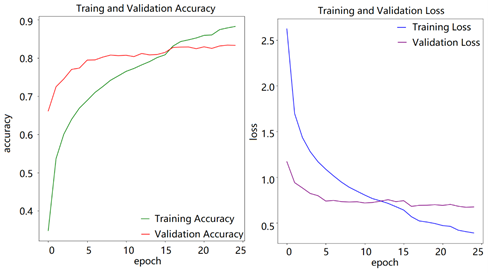
This paper presents a comparative study of the performance of three convolutional neural network (CNN) architectures - EffcientNet-B0, ResNet-50, and AlexNet - for a given image classification task. The study provides a comprehensive investigation of the training process, hardware configurations, training time, and individual model performance. The investigation also assesses the models’ suitability for different applications. The findings can help both researchers and practitioners select the most suitable model for their specific needs and applications. The paper provides an analysis of each CNN architecture and discusses their strength and weaknesses. The results demonstrate that EffcientNet-B0 achieves the highest accuracy, but its training performance is not optimal. ResNet-50, on the other hand, exhibits high accuracy with efficient training using transfer learning. Finally, ALEXNET provides a baseline for comparison with traditional CNN designs. The paper also highlights the trade-offs involved in selecting a CNN architecture and highlights their relative advantages and disadvantages. The reader is provided with insights into which CNN architecture is most suitable for specific applications based on their requirements.
Show more
Read Article PDF
Cite
Research Article Open Access
Systematic analysis of FPGA-based hardware accelerators for convolutional neural networks
Article thumbnail
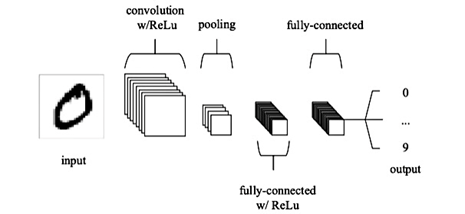
In the modern era, machine learning stands as a pivotal component of artificial intelligence, exerting a profound impact on various domains. This article delineates a methodology for designing and applying Field Programmable Gate Array (FPGA) based hardware accelerators for convolutional neural networks (CNNs). Initially, this paper introduces CNNs, a subset of deep learning techniques, and underscore their pivotal role in artificial intelligence, spanning domains such as image recognition, speech processing, and natural language understanding. Subsequently, we delve into the intricacies of FPGA, an adaptable logic device characterized by high integration and versatility, elucidating our approach to creating a hardware accelerator tailored for CNNs on the FPGA platform. To enhance computational efficiency, we employ technical strategies like dual cache structures, loop unrolling, and loop tiling for accelerating the convolutional layers. Finally, through empirical experiments employing YOLOv2, and validate the efficacy and superiority of our designed hardware accelerator model. This paper anticipates that in the forthcoming years, the methodology and research into FPGA-based CNN hardware accelerators will yield even more substantial contributions, propelling the advancement and widespread adoption of deep learning technology.
Show more
Read Article PDF
Cite
Research Article Open Access
Principles, applications, and advancements of the Segment Anything Model
The Segment Anything Model (SAM) is a prominent computer vision model discussed in a review paper focusing on image segmentation. This paper explores the concepts, applications, and advancements of SAM, which excels at accurately separating diverse object types and managing visual data. It leverages convolutional neural networks (CNNs), an encoder-decoder architecture, skip connections, and spatial attention mechanism to capture fine details and contextual information across different scales. SAM finds versatile applications in various domains, including medical imaging for precise anatomical structure delineation and pathology identification. It improves recognition and classification by precise positioning and segmentation. However, the SAM model faces challenges such as complex object shapes and computational requirements for real-time deployment in resource-constrained environments. To tackle these limitations, researchers have proposed advancements like feature enhancement, network architecture modifications, and regularization techniques. Future directions may involve lightweight network designs, optimization strategies, and integration of external information to enhance accuracy, efficiency, and robustness of the SAM model.
Show more
Read Article PDF
Cite
Research Article Open Access
Current status and applications of time-to-digital converters
Time-to-Digital Converter (TDC) is widely used to realize time interval measurement. The high-precision time measurement technique has important applications in the fields of laser ranging, particle identification, and radioactive nuclear medicine engineering. Based on the existing literature research and data, this paper studies the application areas of TDC in the present development and analyzes the future prospects of TDC applications. The research results showed that: TDC, based on signal screening, realizes time interval measurement as the ultimate purpose of building the system and, at the same time, completes the function of multi-pulse time interval measurement, which can meet the needs of more diversified measurements in the experiments. In the circuit structure, it can identify the feedback output in the all-digital phase-locked loop (ADPLL) and the reference clock phase and frequency information between the feedback output and the reference clock in an ADPLL. It is also promising for use in other areas of high-precision time measurement and processing of circuit signals.
Show more
Read Article PDF
Cite