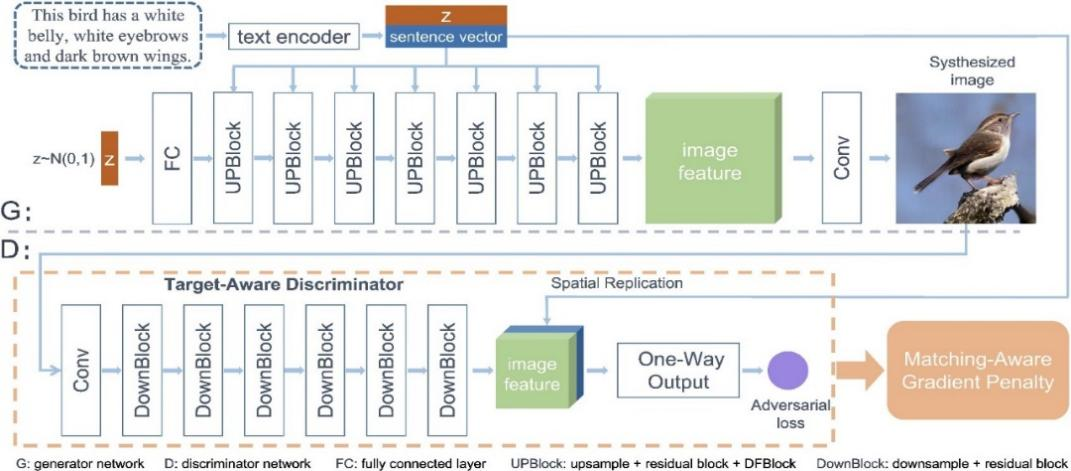
Generative Adversarial Networks (GANs) have become pivotal for generating synthetic data. This paper conducts a comprehensive comparison of three cutting-edge GAN models. In particular, this study delved deep into the architectural intricacies, strengths, and limitations of each model, emphasizing their distinct features and mechanisms. DF-GANs focus on producing natural images with a single-stage backbone, DM-GANs leverage memory structures to enhance model performance, while AttnGAN employs attention-driven, multi-stage refinement for precise text-to-image generation. Through a series of literature search, this study evaluates the applicability of these models in various scenarios, offering insights into their practical implications and potential areas of improvement. This comparative study aims to serve as a reference point for researchers and practitioners alike, shedding light on the contemporary advancements in GAN technology and guiding future developments in the domain.