Articles in this Volume

Research Article Open Access
Development Status and Future Prospects of Photovoltaic Cells
Article thumbnail
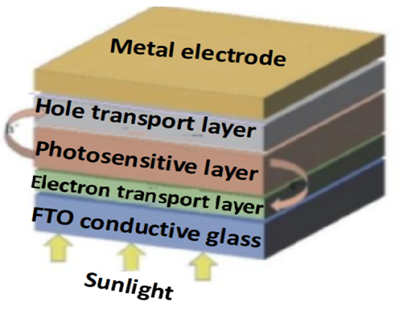
With the rapid development of social economy, the consumption of conventional energy is growing at an amazing rate. The energy shortage crisis and the environmental problems brought by conventional energy will seriously restrict social development and affect the daily lives of residents. Therefore, paying attention to the creation and use of new energy, protecting the environment, improving efficiency, controlling the emission of pollutants and realizing sustainable development have become the main research topics in the new era of the energy sector. Photovoltaic energy has the advantages of economic energy saving, green environmental protection, wide application and sustainability, and is an ideal new energy, that has been developed to the third generation. This paper mainly combs the development process of photovoltaic technology, summarizes the characteristics, advantages and disadvantages of the third generation of photovoltaic technology, analyzes the current situation and prospects of photovoltaic technology development, and analyzes the problems and challenges faced. This research finds that as the economy and technology continue to advance, photovoltaic cell technology is developing rapidly, and the application cost is constantly reduced. The photovoltaic cell industry will get more attention and better development, and its application prospect is very broad. The research of this topic is helpful in enhancing the comprehensive and objective understanding of the development of photovoltaic cell technology, and will provide a valuable reference in order to advance the photovoltaic sector in the future, which has important practical significance.
Show more
Read Article PDF
Cite
Research Article Open Access
Validation of the applicability of the ideal gas equation of state and its correction based on molecular simulation and statistical methods
The ideal gas equation of state is a theoretical model devised to simplify the behaviour of real gases, although its usefulness is limited in numerous realistic scenarios. The experimental subject of this study is the Ar atomic gas, and data is gathered using molecular simulation techniques to assess the suitability and scope of the ideal gas equation of state. Simultaneously, statistical techniques such as linear regression and polynomial regression are employed to construct a novel model. Additionally, the ideal gas equation of state is adapted under specific circumstances, leading to the proposition of a fresh empirical gas equation of state. The study determined that the ideal gas equation of state can be applied to Ar atomic gases within the temperature range of 300-500 K and gas densities ranging from 0.1-0.6 g/cm^3. However, when examining higher gas densities, specifically at temperatures of 300 K and densities exceeding 0.6 g/cm^3, a new empirical gas equation was derived. This equation demonstrates that the pressure of Ar atomic gas is influenced by the 1st and 6th power terms of its density.
Show more
Read Article PDF
Cite
Research Article Open Access
Cu-based nano-material catalysts for electrochemical carbon dioxide reduction reaction (CO2RR)
Article thumbnail
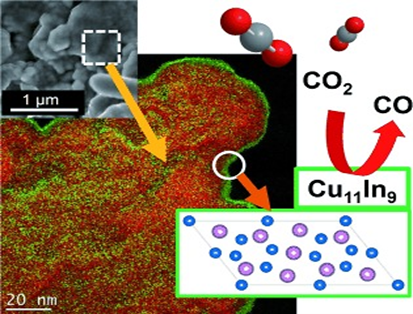
With the emergence of the global energy crisis and global climate change, renewable energy systems, such as fuel cells that turn off energetic oxygen and carbon cycles, are becoming increasingly important. Carbon dioxide reduction reaction (CO_2 RR) is an important electrocatalytic process on the gas diffusion electrode of CO_2 electrolyzer, which has been paid more and more attention by researchers. The problems of high cost, low efficiency, weak selectivity and stability of the carbon dioxide reduction reaction (CO_2 RR) also continue to be solved. Catalysts are considered a viable way to solve these problems. The Cu-based nanomaterial catalyst has been proven to have a good positive effect on the reaction. In this paper, the current research results of Cu-based nanomaterials on CO_2 RR were reviewed, and the catalytic effects of several different Cu-based nanomaterials on CO_2 RR reactions were compared. This paper collected the researches on the catalytic effect of copper-based nanomaterials on carbon dioxide reduction reactions in the past ten years, and found that most copper-based nanomaterials can improve the efficiency of the reactions and show good selectivity. The aim of this paper is to provide a possible catalytic direction for the improvement of carbon dioxide reduction reactions in industry
Show more
Read Article PDF
Cite
Research Article Open Access
Application of silicon-based nanomaterials for improving the performance of battery
Article thumbnail
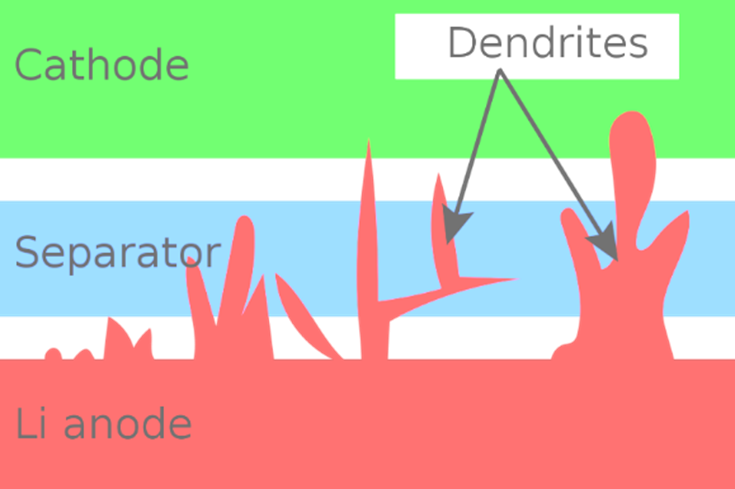
This research discussed the improvement of using silicon-based nanomaterial in batteries compared to graphite batteries because not only in electric vehicles, but also mobile phone users are requiring for longer battery life and faster charging speed and phones cannot increase into an unacceptable weight. This research first introduces how lithium-ion batteries work and analyses the failure of lithium metallic battery: high cost and low security because of dendrites growth. Secondly, this paper discussed how mobile phone manufacturers improved their batteries by using silicon: Honor’s silicon carbon battery and Xiaomi’s silicon-oxygen anode battery. Both have increased the energy density and charging speed and lighter the weight at the same time. In general, silicon can improve battery performance through its high capacity for lithium-ion, and silicon can easily be found in a natural environment which will lead to lower manufacturing costs. As a result, this research can provide a new design approach for the structural design and application performance of nanomaterials in the field of battery applications.
Show more
Read Article PDF
Cite
Research Article Open Access
Application of nanomaterials in Li-ion batteries
Article thumbnail
Lithium-ion batteries (LIBs) have become an important energy storage solution in mobile devices, electric vehicles, and renewable energy storage. This research focuses on the key applications of nanomaterials in LIBs, which are attracting attention due to their unique electrochemical properties. This research first introduces the fundamentals and current challenges of LIBs, followed by a detailed list of various nanomaterials, including two-dimensional materials, metal oxides, carbon-based materials, and their wide-ranging applications in LIBs. The research on nanomaterials has revealed significant enhancements in battery performance, including increased capacity, extended cycle life, and improved charge and discharge rates. Furthermore, this research highlights the sustainability and environmental potential of nanomaterials and their important role in mitigating the scarcity of lithium resources. Finally, it will summarize the potential impact of these studies, highlight the research significance of nanomaterials in the field of battery technology, and provide useful guidance and inspiration for the future development of renewable energy storage and electric transportation. This research will help drive innovation in battery technology and pave the way for a more sustainable energy future.
Show more
Read Article PDF
Cite
Research Article Open Access
Transforming construction: The growing role of mechatronics in building our infrastructure
Mechatronics, the synergistic integration of mechanical engineering, electrical engineering, control engineering, and computer science, is progressively transforming the construction industry. This paper explores how mechatronic technologies are being applied across the construction lifecycle to enhance productivity, quality, safety, sustainability, and cost-effectiveness. Core mechatronic technologies changing construction include automated material handling systems, advanced construction robotics, sensor networks for monitoring, laser scanning for accurate modeling and control, and building information modeling (BIM) software. Mechatronics offers multifaceted benefits spanning from enhanced labor productivity and construction velocity to superior quality control, safety, and process optimization. However, realizing the immense potential of mechatronics in construction requires overcoming key challenges including high upfront costs, lack of technical skills, organizational resistance, integration difficulties, and reliability concerns. With thoughtful leadership and implementation, mechatronics promises to revolutionize construction, shifting it towards more automated, streamlined, and optimized techniques. This paper delineates the tremendous potential of mechatronics in construction regarding benefits, technologies, and challenges. The outlook is promising for intelligent mechatronic systems to profoundly enhance productivity, quality, and safety as construction progresses towards greater automation and optimization.
Show more
Read Article PDF
Cite
Research Article Open Access
The review of how ocean acidification affect organisms and ecological environment
Article thumbnail
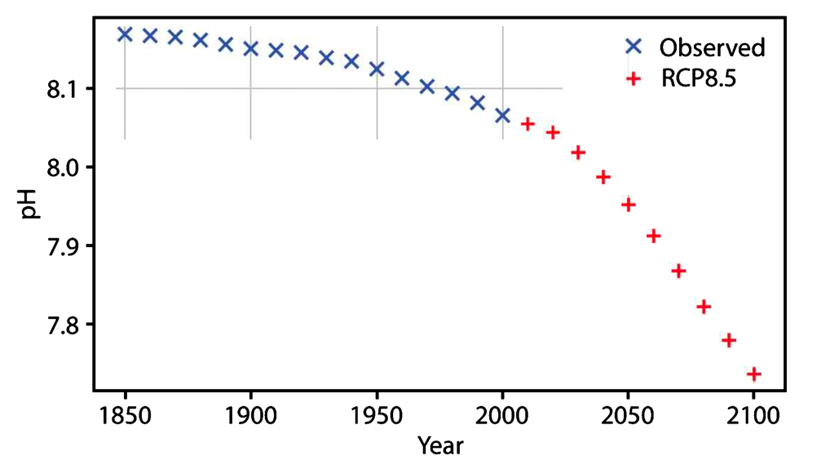
The pH of our sea water is decreasing nowadays. Therefore, ocean acidification has gradually become a problem that people have to face. Human activities since Industrial Revolution are making sea water more and more acidic. Human activity has done some damage to the environment that will directly or indirectly increases the amount of hydrogen ions in seawater, which will finally make the seawater more acidic. One of the result of this changes is ocean acidification. People should start playing attention on this problem. If people do not intervene in advance to acidify the oceans, this issue can cause some consequences that will hurt our environment. The following is the main content of this paper. The reason why carbon dioxide can cause ocean acidification, effects of ocean acidification on Marine ecological environment, the shape of Balanophyllia’s bones changes in different PH environment and Changes in metabolic pathways of phytoplankton under ocean acidification.
Show more
Read Article PDF
Cite
Research Article Open Access
Systematic analysis of microelectronic chip packaging materials
Article thumbnail
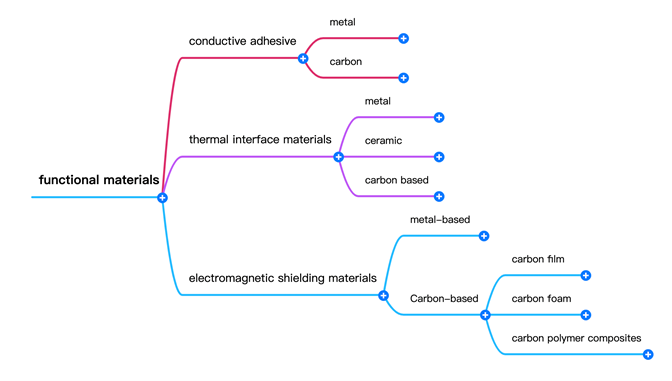
Microelectronics is a recent hot field, and packaging is an indispensable part of making microelectronic chips. This article introduces the commonly used materials in the field of microelectronic chip packaging. It first presents two complex polymer raw materials recently becoming hot topics, namely epoxy resin and silicone. Then the article presents these two materials from the perspectives of their characteristics, advantages in packaging, and further research directions, allowing readers to have a basic understanding of them while also gaining a general understanding of their research progress. Afterward, the article introduces three crucial types of functional materials in packaging. The article not only presents their respective uses, but also classifies them from the main material types. The article not only analyzes the characteristics and application fields of each material, but also provides some existing in-depth research directions for reference. This article helps readers quickly understand the relevant knowledge of some microelectronic chip packaging materials, especially in determining their future research direction.
Show more
Read Article PDF
Cite
Research Article Open Access
Application of triblock copolymers in lithium-ion batteries based on solid electrolyte
Article thumbnail
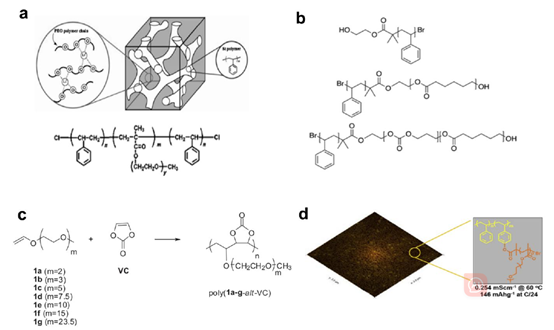
In the future, all-solid Li-ion batteries are expected to gain widespread acceptance in larger markets due to their high safety and excellent electrochemical performance. However, it is important to acknowledge their drawbacks, including the inadequate compatibility between the electrode and electrolyte interface and the low ionic conductivity at room temperature. This paper reviews the specific methods and the latest research progress of triblock copolymers to solve the above problems. Block copolymerization is an effective way to enhance the efficiency and performance of electrolyte. Its advantage is that two or more monomers with different properties can be polymerized into the same structure, which is conducive to the ionic conductivity of polymer electrolyte. In the latest research results, straight-chain block copolymers have been synthesized, which have better physical and chemical properties compared to traditional comb block copolymers. However, the electrochemical properties of the straight-chain block copolymer electrolyte and the stability of the interface between the electrode and the solid electrolyte are rarely reported. Therefore, it is particularly important to systematically study the electrochemical properties and interface properties of block copolymer electrolytes. In the future, more attention should be drawn to not only improving the properties of SPEs but also building a stable interface with low interface resistance.
Show more
Read Article PDF
Cite
Research Article Open Access
Advancements and challenges in nanomaterial-based medical implants
Nanomaterials have emerged as a groundbreaking technology with transformative applications in medicine, particularly in development of medical implants. In an era where conventional implant materials face limitations in terms of biocompatibility and long-term effectiveness, nanomaterials offer a promising avenue for innovation. This comprehensive review essay focuses on exploring advancements and challenges in employing specific types of nanomaterials, namely carbon nanotubes, graphene, and nanocomposites, to enhance the functionality of medical implants. By synthesizing findings from current literature and case studies, this essay establishes that nanomaterials offer substantial improvements in various dimensions, including mechanical strength, biocompatibility and drug delivery capabilities of implants. Carbon nanotubes have demonstrated exceptional tensile strength and flexibility, which can extend the functional lifespan of implants. Graphene, due to unique electronic properties, can be tailored for specific applications like electrical stimulation in neural implants. Nanocomposites provide a balanced combination of mechanical strength and biocompatibility, have shown potential in controlled drug release to mitigate post-operative complications. However, despite these advancements, there are substantial challenges to be addressed. Regulatory approval processes for nanomaterial-based implants are complex, often requiring extensive clinical trials that can prolong market introduction. The potential risks and long-term effects of nanomaterials in human tissues are also not fully understood, requiring further in-depth studies. The implications of this research are profound, as the innovations in nanomaterial-based implants have potential to revolutionize medical treatments and patient outcomes. The study underscores the urgency for further research and clinical trials to accelerate adoption of these promising technologies in mainstream healthcare.
Show more
Read Article PDF
Cite