Articles in this Volume

Research Article Open Access
Revolutionizing architecture: The synergy of computational design and digital fabrication
Article thumbnail
This article delves into the profound impact of computational design and digital fabrication on the architectural landscape, presenting a comprehensive overview of their theoretical foundations, technological advancements, and environmental implications. It explores the transition from traditional design methodologies to algorithmic and generative approaches, highlighting how these technologies facilitate the creation of innovative, efficient, and sustainable architectural solutions. Through the lens of pioneering case studies, the analysis demonstrates significant efficiency gains and the potential for reducing construction waste and energy consumption. The integration of computational design with digital fabrication heralds a new era of architecture that not only challenges conventional construction practices but also aligns with the urgent need for sustainability in the built environment. The article further investigates the role of material innovation, robotic automation, and software development in pushing the boundaries of what can be achieved, ultimately underscoring the environmental benefits of these integrated technologies.

Show more
Read Article PDF
Cite
Research Article Open Access
Research on wind resistance principles and design of super high-rise buildings
Article thumbnail
Due to the high and flexible characteristics of super high-rise buildings, the structure is very sensitive to wind loads, and wind vibration effects and comfort are issues that cannot be ignored in the structural design of super high-rise buildings. The paper mainly introduces the problems in wind resistance design of super high-rise buildings. Including wind load values, wind vibration effects, and vibration control methods and applications. The result show that the wind induced vibration effect and comfort of the structure are often determined through wind tunnel tests. For super high-rise buildings with complex structural forms. There are two methods for controlling wind-induced vibration in high-rise buildings: Optimizing structural form through architectural methods; Take structural control measures. At the same time, with the cost of high-performance materials and engineering technologies, it is a challenge to find building materials and technologies that can meet wind resistance requirements while keeping costs in check. However, as computational technology continues to evolve, the wind-resistant design of tall buildings will benefit from more accurate wind-tunnel simulations and computational modelling, which will help to better predict and address wind-resistance challenges. Scientists and engineers will continue to research novel materials and structural designs to improve the wind resistance of tall buildings and reduce costs.
Show more
Read Article PDF
Cite
Research Article Open Access
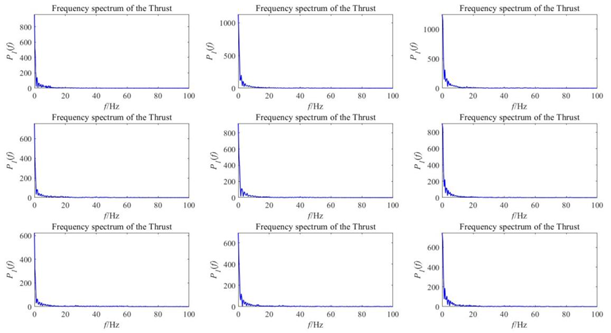
Virtual instrumentation-based data collection and analysis for CNC machining process
Article thumbnail
Using Computer Numerical Control (CNC) machine tools in manufacturing is crucial for exact processing materials. The quality of the machined product heavily relies on the machine's condition. Therefore, monitoring and assessing the machine's status is essential to ensure product quality and enhance its lifespan. However, due to cost, space, and technical limitations, only a few physical variables, such as acceleration, force, displacement, acoustic radiation, temperature, and flow conditions, can be measured. Efficient transfer and extraction of these data are critical for monitoring machine status using statistical methods or valuable signatures. Traditional measurement instruments are complex and numerous, whereas measurement and analysis systems based on virtual instrumentation technology collect necessary data from sensors and data acquisition cards, meeting the needs of test analysis. Virtual instrumentation utilizes computer hardware resources, modularization hardware, and software systems for data analysis, communication, and operation interface, providing greater versatility, flexibility, compatibility, and repeatability. Previous research has shown successful attempts at developing LabVIEW-based systems for monitoring CNC milling machines and analyzing cutting parameters and forces. This project aims to collect and process data from the CNC machining process. The main objectives include writing a LabVIEW software program, recording data from CNC machine programs using the provided hardware (myRIO) and LabVIEW program, processing the data using MATLAB software, and analyzing and discussing the obtained results. The report consists of four parts, starting with an introduction to the project's background and literature review, followed by a description of the project steps, methods, experiments, and data processing. The processed data graphs will be presented and discussed, and recommendations for future research will be provided before concluding with a study summary.
Show more
Read Article PDF
Cite
Research Article Open Access
Application of energy recovery mechanisms in wearable devices
Article thumbnail
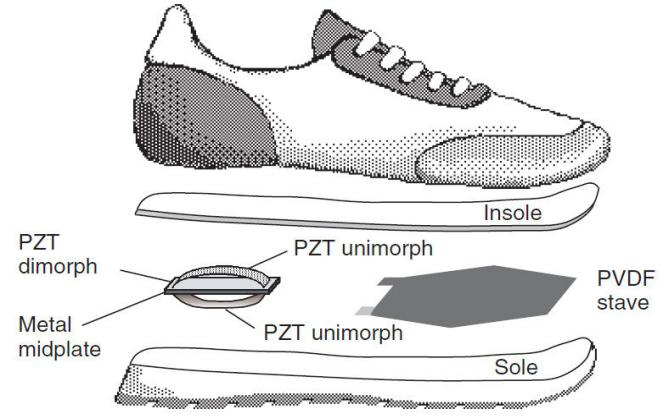
Wearable devices have almost become a necessity in modern-day society due to their multifaceted functions, providing fitness tracking and health monitoring. Apart from this foundational role, daily wearable devices play a significant role in helping with health recovery, such as Mechanical Exoskeletons, in our high-demand society. However, one of the primary limitations of these devices is their dependency on finite battery life. This review paper aims to address this problem with the concept of energy recovery (ER) technology, which could be a potential solution for prolonging the operational time of wearables. These methodologies are primarily based on the theory of energy conservation and efficiency models, branching out into different aspects of thermodynamics, piezoelectricity, and the basic principles of human motion. Through the analysis of academic journals and primary studies, this review aims to provide a detailed explanation of how ER technology would work from various perspectives, identify constraints within the use of this technology, and suggest directions for future investigation. The objective is to promote the integration of energy recovery technologies into wearable devices, ultimately enhancing their efficiency for users.
Show more
Read Article PDF
Cite
Research Article Open Access
A comprehensive analysis of different types of proximity sensors in wearable electronic devices
As the technological world has developed exponentially in recent decades, wearable electronics has been a growing industry in both size and significance. Sensors play an important role in these electronics, but research was rarely done on how different sensors play this role and serve different purposes. Thus, this paper focuses on the characteristics, pros and cons, and potential application on wearable electronics of different commonly seen proximity sensors. Namely, infrared sensors, ultrasonic sensors, and binocular vision. The research is done by analyzing different past papers and studies, piercing this information to gather to gain a comprehensive analysis and conclusions. The study reveals the vastly different characteristics of different proximity sensors and their different advantages and disadvantages displayed due to their diverse characteristics. The study also revealed potential applications of different sensors on wearable electronics. It is reasonably induced, from this study, that wearable electronics should adapt to use the most suitable proximity sensor and even use more than one type of sensor to tact the disadvantage of each to maximize its function.
Show more
Read Article PDF
Cite
Research Article Open Access
Foldable display technology and wearable device integration design
This paper explores the latest advancements in foldable display technology and its integration into wearable devices. By synthesizing relevant literature, the paper introduces the development history, principles, and application domains of foldable display technology. It subsequently discusses the advantages and challenges of incorporating foldable display technology into wearable devices, presenting various integration design approaches and future directions. The paper concludes by envisioning the potential applications of foldable display technology and wearable device integration in fields such as smart healthcare, fitness tracking, and fashion technology.
Show more
Read Article PDF
Cite
Research Article Open Access
Research on the application of automatic control theory in automatic driving technology
Autonomous driving technology has been widely used and studied in depth in recent years, and has become a hot field in the automotive industry. As one of the core methods to realize automatic driving, automatic control theory provides an important theoretical basis and practical guidance for automatic driving systems. This paper aims to explore the application of automatic control theory to autonomous driving and analyze its potential impact on improving driving safety, comfort and efficiency. This paper first introduces the basic principles and components of the autonomous driving system. Among them, automatic control theory plays an important role in decision-making and execution. Secondly, this paper discusses the specific application of automatic control theory in automatic driving. These include PID controller-based vehicle stability control, model predictive control (MPC) for path planning and trajectory tracking. These applications enable autonomous driving systems to respond in real time to environmental changes and maintain vehicle stability and safety. Finally, the paper discusses the challenges and future directions of automatic control theory in autonomous driving. Future research should focus on further improving the robustness and adaptability of automatic control algorithms to cope with complex driving scenarios and uncertainties. To sum up, automatic control theory plays an important role in automatic driving and has broad application prospects. Through continuous improvement and innovation, automatic control theory will make an important contribution to the realization of safer, more efficient, and more intelligent autonomous driving technology.
Show more
Read Article PDF
Cite
Research Article Open Access
The impact of radio on the construction of smart cities
In the process of smart cities, radio technology has played an increasingly important role. With the continuous acceleration of the global urbanization process, cities are facing many challenges. Driven by the government’s vigorous support and business promotion, wireless communication technology has developed rapidly, and new wireless communication technology has continued to emerge, providing more choices and possibilities for smart city construction. This article reviews and analyzes the actual case analysis, studies the impact of radio technology on the construction of smart cities, while explaining the importance of radio security management. The results showed that the application of radio technology enabled smart cities to achieve functions such as intelligent traffic management, intelligent communication, and intelligent energy management, but there were also problems such as leakage privacy, signal interference, and imbalance in regional development. In the process of future smart city construction, it is necessary to further optimize the safety and popularity of radio, promote the use of radio, narrow the gap between the use of different regions and cities, and enhance the radio management, so that it can better serve the construction of smart cities.
Show more
Read Article PDF
Cite
Research Article Open Access
Research on man-machine cooperation and safety in intelligent manufacturing
Securing our organization’s safety in this dynamic environment demands an all-encompassing approach, encompassing the physical, virtual, and human dimensions. It is imperative to understand that true security transcends the digital realm, encompassing the very physical spaces where innovation unfolds and the people who drive it. In order to effectively recognize and mitigate urgent threats in real-time scenarios, a commitment to adhering to established standards and leveraging state-of-the-art sensors becomes indispensable. These sensors serve as the vigilant sentinels of collaborative spaces, tirelessly monitoring interactions, and swiftly identifying anomalies. By adhering to rigorous standards, organizations ensure that their security protocols remain robust and responsive. Collaboration safety, meanwhile, hinges on the proficiency of trained and informed personnel. Properly equipping the human element within this collaborative landscape is paramount. Operators must be well-versed in the technologies they interact with, trained to navigate collaborative workflows, and imbued with a heightened sense of safety awareness. The success of collaborative ventures relies heavily on the competence and preparedness of the human workforce. From our extensive analysis, a resounding call to action emerges: the imperative to integrate diverse elements cohesively for optimal performance. This integration isn’t merely a technological endeavor; it’s a holistic approach that considers people, processes, and technology.
Show more
Read Article PDF
Cite
Research Article Open Access
How pre-trained large model can help, when SAM meets image restoration
Article thumbnail
In the process of image capture, degradation is inevitable due to noise, motion, down-sampling and so on. Therefore, image restoration is essential to improve the quality of images to enhance their visual effects and benefit downstream tasks. Adding prior knowledge can help the model better understand the image content and restoration requirements, thus improving the quality and efficiency. Semantic-level prior information can be generated by pre-trained large-scale models, such as segment anything models (SAM), and applied to a large number of downstream tasks. SAM has demonstrated powerful robustness and stability in restoration tasks, such as denoising, super-resolution, low-light enhancement, etc. Meanwhile, as an interactive component, SAM brings more control for users during the repair process. In this paper, we focus on the importance of SAM as prior information and systematically summarize a series of recent works combining SAM prior and low-level image restoration from three perspectives. In addition, we have summarized some potential problems and future directions of SAM.
Show more
Read Article PDF
Cite