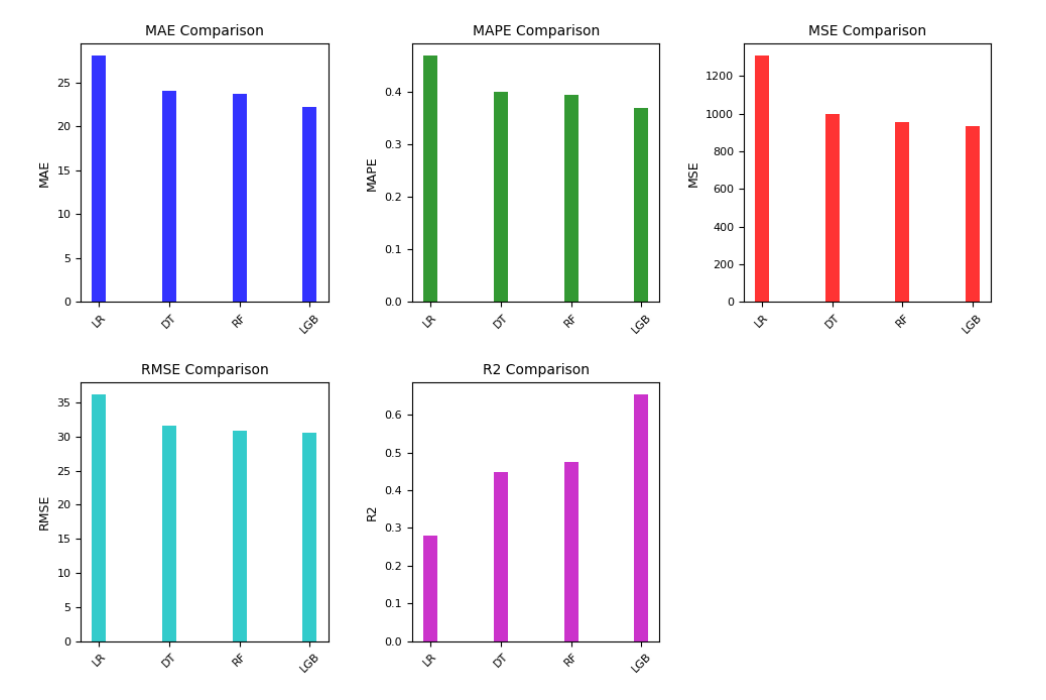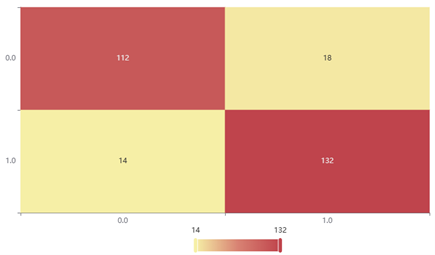
Heart failure is a common heart disease whose incidence and mortality rate are increasing year by year. In order to predict heart failure accurately, three models, LightGBM, adaboost and XGBoost, were used for training and evaluated in this paper. After data preprocessing, the data was divided into training and test sets in the ratio of 7:3 and the models were evaluated using parameters such as precision, accuracy, recall and F1 score. The results showed that the best performer in terms of prediction accuracy was the LightGBM model, which achieved 88.4% accuracy, followed by the adaboost model with 87.7% accuracy, and the XGBoost model, which also achieved 87.3% prediction accuracy. In conclusion, all three prediction models achieved more than 85% accuracy and could accurately predict a patient's heart failure. Confusion matrix results showed that each model was able to effectively identify both positive and negative samples in the test set with high sensitivity and specificity. These results indicate that these models are highly reliable and practical in practical applications, and can provide important reference information for doctors to help them better diagnose and treat heart failure patients, thus improving treatment outcomes and survival rates.