Articles in this Volume

Research Article Open Access
Automating the training and deployment of models in MLOps by integrating systems with machine learning
Article thumbnail
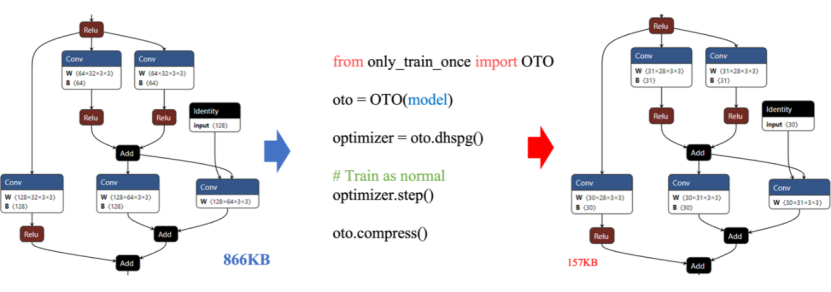
This article introduces the importance of machine learning in real-world applications and explores the rise of MLOps (Machine Learning Operations) and its importance for solving challenges such as model deployment and performance monitoring. By reviewing the evolution of MLOps and its relationship to traditional software development methods, the paper proposes ways to integrate the system into machine learning to solve the problems faced by existing MLOps and improve productivity. This paper focuses on the importance of automated model training, and the method to ensure the transparency and repeatability of the training process through version control system. In addition, the challenges of integrating machine learning components into traditional CI/CD pipelines are discussed, and solutions such as versioning environments and containerization are proposed. Finally, the paper emphasizes the importance of continuous monitoring and feedback loops after model deployment to maintain model performance and reliability. Using case studies and best practices from Netflix, the article presents key strategies and lessons learned for successful implementation of MLOps practices, providing valuable references for other organizations to build and optimize their own MLOps practices.
Show more
Read Article PDF
Cite
Research Article Open Access
Enterprise cloud resource optimization and management based on cloud operations
Article thumbnail
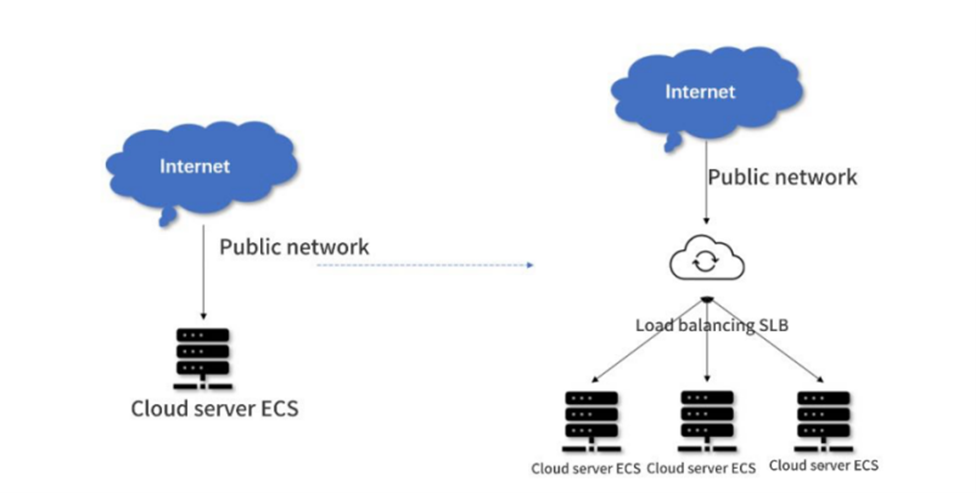
The so-called automated operation and maintenance refers to a large number of repetitive tasks in daily IT operations (from simple daily checks, configuration changes and software installation to organizational scheduling of the entire change process) from manual execution in the past to standardized, streamlined and automated operations. This article delves into the realm of enterprise cloud resource optimization and management, leveraging automated operations (autoOps) as a fundamental strategy. As industries like banking witness exponential growth and innovation in IT systems, the complexity of managing resources escalates. Automated operations have emerged as a critical component, transitioning from manual interventions to encompass standardization, workflow optimization, and architectural enhancements. Through real-world deployments and theoretical frameworks, it elucidates effective strategies for optimizing and governing enterprise cloud resources, thereby enhancing efficiency, security, and resilience in IT operations.
Show more
Read Article PDF
Cite
Research Article Open Access
Improved random forest model for smoke detection and early warning based on sparrow search algorithm
Article thumbnail
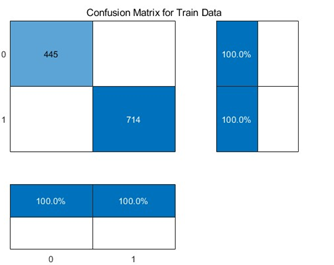
Smoke detection technology is of great significance in the field of fire safety, aiming at the timely detection of smoke released from fires or other combustion events to safeguard people's lives and properties. In this paper, a smart smoke alarm device is developed based on AI algorithm using UCL open source dataset, which is processed by AI recognition after collecting data through IoT to achieve accurate judgement of smoke situation. The dataset is divided by 6:4 ratio, and the training set confusion matrix shows that all 1159 smoke alarm tests are correctly predicted, of which 445 times predict no smoke and 714 times predict smoke, with an accuracy rate of 100%. The test set confusion matrix shows that only 1 out of 1158 tests was incorrectly predicted, of which 184 predicted no smoke, 312 predicted smoke, and 1 was misjudged as no smoke even though it should have been smoke, with an accuracy rate of 99.7%. The successful application of this technology provides a reliable guarantee for fire warning and demonstrates the great potential of AI in the field of security.
Show more
Read Article PDF
Cite
Research Article Open Access
Research on software reliability enhancement methods based on iterative development
Article thumbnail
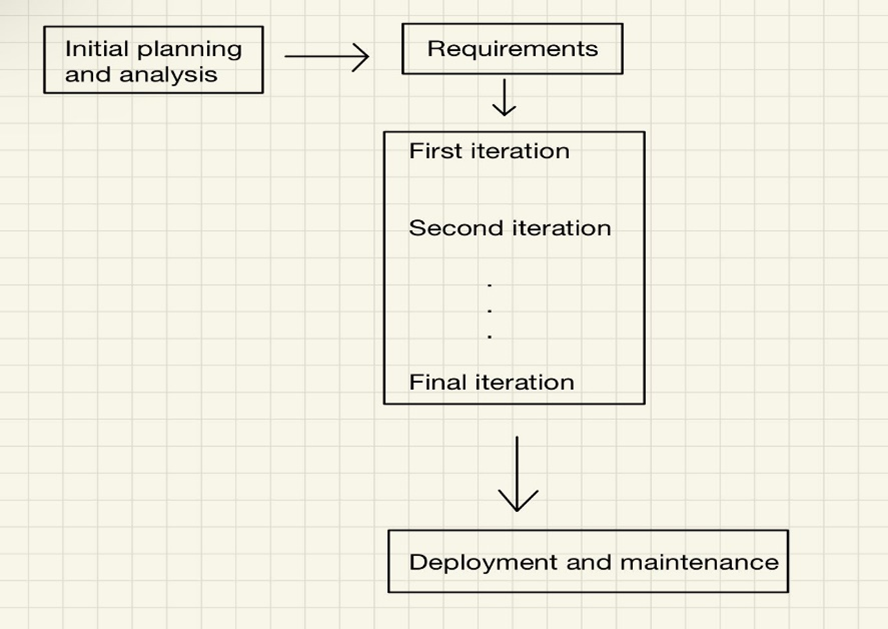
Iterative development is an agile software development methodology that speeds up the development process and increases the flexibility of software delivery. However, the current software requirements change extremely fast, which leads to its increasing uncertainty, and iterative development also faces the challenge of software reliability. The software reliability enhancement method based on iterative development is researched and discussed for the current situation of insufficient reliability in the traditional software development process. In traditional software development, one-time delivery pressure and overall design complexity often lead to software functional defects and instability, affecting software reliability. The iterative development method, on the other hand, improves software reliability by decomposing the software development process into multiple iterative cycles, each of which contains requirements analysis, design, coding, and testing, updating the software functionality in smaller increments, and gradually improving the software product. This study proposes a software reliability improvement methodology by exploring and analyzing the key factors related to reliability in the iterative development process. This dissertation can establish a reliable and high-quality software development process through the steps of meticulous requirements planning and management, iterative development and testing, automated testing and continuous integration, code quality control, defect management and continuous improvement, user feedback and user engagement, and continuous learning and technology enhancement.
Show more
Read Article PDF
Cite
Research Article Open Access
Exploring the fusion of natural language processing and information retrieval
Article thumbnail
The ongoing progress of technology has led to a strong focus on the merging of Natural Language Processing (NLP) and Information Retrieval (IR) in current research. This paper provides a comprehensive analysis of the fundamental concepts, importance, and difficulties encountered in the domains of NLP and IR, examining their effects on real-world applications. By examining the present state of NLP technology in information retrieval, it is evident that the advancement of NLP technology has introduced fresh opportunities for information retrieval, such as the NLPIR model. However, it also encounters problems in terms of adaptability and generalization capacity. Future study should prioritize enhancing the precision and efficiency of NLP technology, as well as investigating its suitability and adaptability in dealing with certain domains or languages. By consistently striving and introducing new ideas, the fields of NLP and information retrieval will have a promising future, offering individuals more convenient and precise information retrieval services.
Show more
Read Article PDF
Cite
Research Article Open Access
Machine learning for causal inference: An application to ECLS-K data
Article thumbnail
This paper explores the use of machine learning for causal inference to estimate the average treatment effect of special education services on fifth-grade math scores. Causal inference is the study of the relationship between cause and effect when changes in one variable directly affect another variable. The use of machine learning techniques in causal inference problems has been growing rapidly, offering advantages over traditional methods such as propensity score matching. such as propensity score matching. This paper compares the performance of four machine learning methods: Ordinary Least Squares (OLS), Multi-Layer Perception (MLP), Targeted Maximum Likelihood Estimation (TMLE), and Bayesian Additive Regression Trees (BART) in estimating the average treatment effect of special education services on fifth-grade math scores. This study utilizes the Early Childhood Longitudinal Study, Kindergarten Class of 1998-1999 (ECLS-K) dataset. A factor analysis is conducted to identify the key variables that influence math performance, paving the way for examining their causal effects. Our results show that BART outperforms the other methods in accuracy and robustness and that receiving special education services does not have a causal effect on math scores. This paper discusses the implications and limitations of our findings and suggests directions for future study.
Show more
Read Article PDF
Cite
Research Article Open Access
What affects customers’ online shopping behavior, research that applied machine learning to Amazon product reviews
Article thumbnail
The application of Natural Language Processing (NLP) in marketing has undergone significant evolution, with machine learning algorithms playing a crucial role in extracting valuable insights from complex textual data. This study focuses on comparing the performance of Support Vector Machine (SVM), Random Forest (RF), Naïve Bayes (NB), and a specialized sentiment analysis model, Latent Dirichlet Allocation (LDA), in the context of online platform reviews. While previous research has delved into individual algorithms, there is a paucity of horizontal comparisons. Suitable algorithms for sentiment analysis on online platform reviews, specifically for Amazon, were filtered in this work. A dataset from Kaggle (https://www.kaggle.com/datasets/arhamrumi/amazon-product-reviews) comprising 500,000 reviews and 10 columns was utilized, overcoming time and resource constraints by opting for secondary data analysis. The primary objective was to assess the performance metrics of SVM, RF, NB, and LDA in classifying reviews into positive, neutral, and negative sentiments. Despite the massive size of the dataset posing challenges to the accuracy of the algorithms, nuanced results in precision, recall, and F-score were observed, not replicated in prior studies. Attempts to enhance accuracy by switching vectorizers yielded marginal improvements. Interestingly, LDA emerged as a transformative model, leveraging its ability to generate WordClouds for a systematic analysis of customers' emotional attachments. In addition to sentiment analysis, an investigation into the identification of factors influencing consumer purchasing behavior on Amazon was conducted. By training the LDA model on positive, neutral, and negative comments, distinctive features associated with each sentiment category were extracted. This analysis aims to unravel the underlying product features that contribute significantly to customer decision-making processes. In conclusion, this work provides a comprehensive evaluation of SVM, RF, NB, and LDA in the realm of sentiment analysis on Amazon product reviews. The findings shed light on the challenges posed by large datasets, the limitations of traditional vectorizers, and the unique capabilities of LDA in uncovering emotional nuances. Moreover, the investigation into consumer purchasing behavior offers valuable insights for marketers seeking to understand the factors influencing online shopping decisions.
Show more
Read Article PDF
Cite
Research Article Open Access
Robot learning-enhanced tree-based algorithms for kinodynamic motion planning: A comparative analysis
Article thumbnail
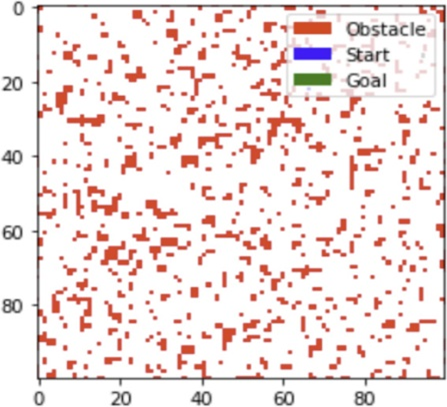
Kinodynamic motion planning is pivotal in advancing robotics, en- abling autonomous systems to navigate dynamic environments effectively while adhering to both kinematic and dynamic constraints. This study delves into the efficacy of tree sampling-based planners, namely the Rapidly- exploring Random Tree (RRT), Rapidly-exploring Random Tree Star (RRT*), and Dominance Informed Region Trees (DIRT), in kinodynamic motion planning. Through a comparative analysis focusing on both fully informed and uninformed versions of these algorithms, I explore their performance in environments with dynamic constraints. Special emphasis is placed on the integration of learned controls, aiming to enhance maneuver planning. My research reveals significant differences in success rates, iterations, and path costs among the algorithms, underscoring DIRT’s superiority under certain conditions and the beneficial impact of learned controls. These findings contribute valuable insights into the selection and optimization of motion planning algorithms, paving the way for more efficient and adapt- able autonomous systems.
Show more
Read Article PDF
Cite
Research Article Open Access
Assisting autonomous precision medical rehabilitation through gesture recognition devices
Article thumbnail
With the aging of the population and the increase of various chronic diseases, there is a growing demand for effective and accessible medical rehab solutions. In order to overcome the above problems, this project innovatively adopts the gesture recognition technology to design and fabricate the realization of an autonomous accurate medical rehab gesture recognition assistance system. In terms of hardware, this paper uses Arduino as the main controller, Paj7620 as the gesture recognition device, and OLED 0.96 display as the system display. In terms of software, this paper utilizes Arduino IDE software to successfully write the code and realize all the functions. In terms of combining with actual medical rehab needs, the team chose elbow fracture rehab as a typical type of rehab, and designed a three-device obtuse triangle placement scheme for precise monitoring of rehab training. Initial simulation test results show that over 70% of participants reported an improvement in their rehabilitation outcomes, and about 90% found the system easy to use. The results of this project will directly benefit patients requiring long-term rehabilitation.
Show more
Read Article PDF
Cite
Research Article Open Access
Automating pouring process in precision casting
Article thumbnail
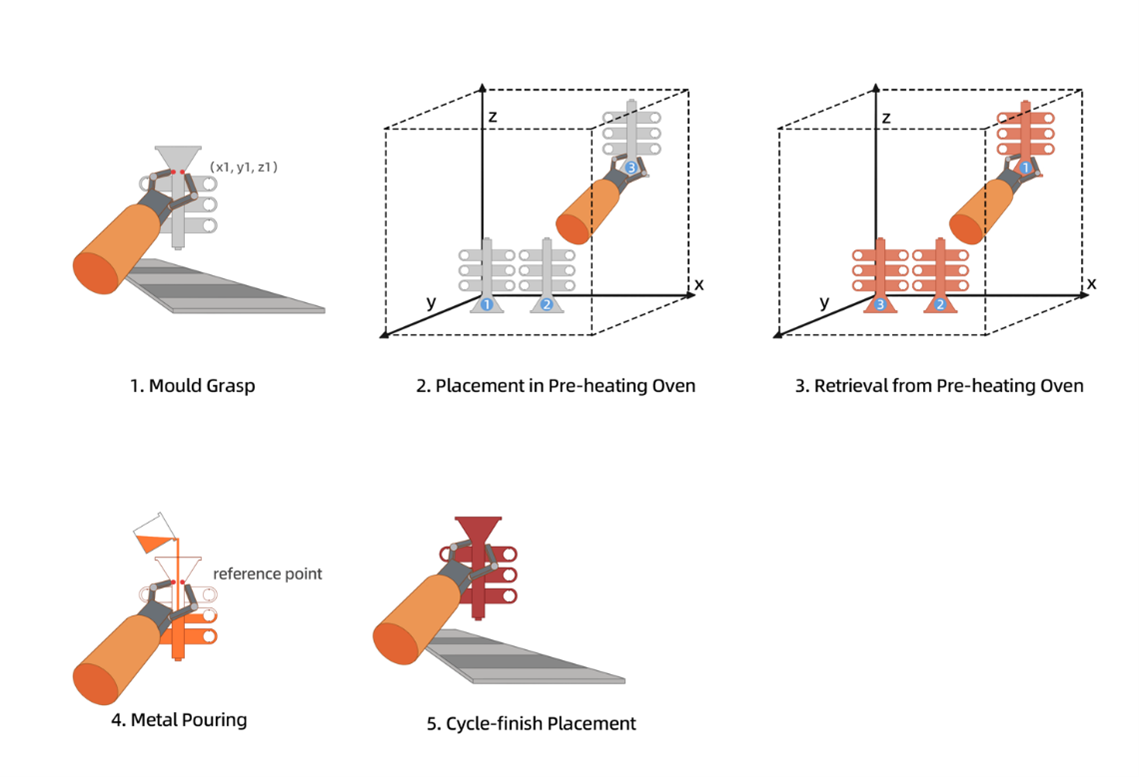
Standing at the intersection of industry 4.0, most traditional manufacturers, especially those produce non-standard parts, are still facing the challenges from multiple aspects on the implementation of automations, that indicates a significant and necessary step towards their upgrading. The potential performance improvement that could be brought by the automation may be continuingly squeezed as the increasement of complexity when dealing with the various targets. This article is extended by a general concept of implementing automation on the metal pouring process of precision casting, aims to explore an efficient and robust automation solution with the integration of human-robots collaboration and the adoption of computer science techniques. The implementation emphasizes the reduction of unnecessary complexities from each working step, the applied algorithms, such as Object Bounding, Greedy Strategy and Last-In-First-Out, have been correspondingly tailored based on the characteristics of its engaged working steps and illustrated by the flowcharts. Both the adaptability and practicability of the automation are expected to be enhanced with the principles of constructing easy-interactive frames, allowing a certain degree of human intervention, and proactively utilizing the matured algorithms.
Show more
Read Article PDF
Cite