Articles in this Volume

Research Article Open Access
Application of geometric deep learning in disease-gene relationship prediction
Article thumbnail
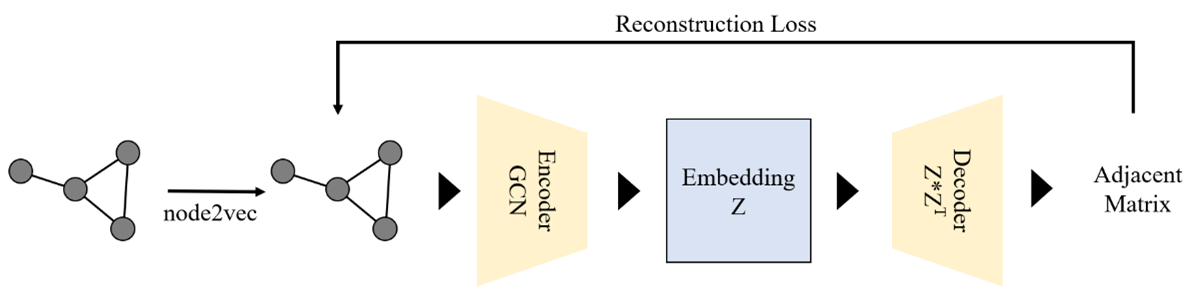
The correlation between diseases and genetic factors represents a pivotal challenge in the biomedical field, often conceptualized as a task of link prediction. Conventional methods employed for prediction, such as statistical models and various machine learning algorithms, frequently fall short in terms of accuracy when confronted with the intricacies of biological network data. These methods also tend to inadequately represent the complex relationships inherent in such data. In contrast, recent advances in geometric deep learning have introduced a powerful tool within artificial intelligence, particularly adept at processing non-Euclidean data structures. This study delves into the potential of leveraging geometric deep learning techniques to enhance the prediction of disease-gene associations. Initially, we conduct a thorough review of existing research related to link prediction, encompassing both traditional approaches and contemporary methods grounded in deep learning. Subsequently, we propose a geometric deep learning framework, incorporating Graph Convolutional Networks (GCN) and Graph Auto-Encoder (GAE), to develop and assess our predictive model. The results of our experiments demonstrate that the proposed geometric deep learning model surpasses conventional techniques in accurately predicting disease-gene associations. In conclusion, we evaluate the implications of our findings, discuss their practical applications in the biomedical domain, and suggest possible avenues for future research.
Show more
Read Article PDF
Cite
Research Article Open Access
A Review of Traditional Methods and Deep Learning for Face Recognition
Article thumbnail
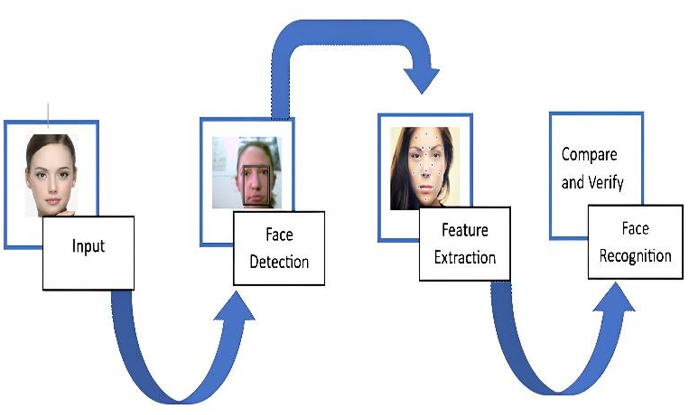
Face recognition technology is a key research direction in artificial intelligence and computer vision. It first originated in the 1960s, when Bledsoe et al. proposed and studied computer programming based on face recognition. It is divided into three steps: face detection, feature extraction, and face verification. This paper briefly introduces the wide application of face recognition in various fields such as vulnerable groups, analyses its characteristics and progress from the viewpoints of traditional learning and deep learning, and focuses on the methods based on face feature extraction (including geometric features, texture features, local features, etc.). From the previous studies appear some problems connected to environmental changes, such as light change, facial occlusion, posture and privacy leakage, etc. This paper will give the possible reasons for these problems and give the possible development direction of the future by exploring the current face recognition technology to provide a reference for the related research of face recognition technology.
Show more
Read Article PDF
Cite
Research Article Open Access
Representative Image Outpainting and Image Super-Resolution Methods Based on Deep Learning
Article thumbnail
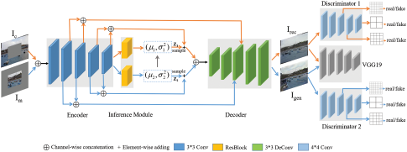
The image generation based on deep learning is a technology that can generate new images or outpaint old images or improve visual effect of old images through learning from input data, according to deep learning structure. The representative technologies of image generation are image outpainting and image super-resolution. Deep learning is widely utilized in the field of computer vision. Facing different needs, it is essential to choose proper ways. This essay reviews several representative and new methods of image outpainting and image super-resolution. Compared with the results generated by old methods, the results generated by new image outpainting methods introduced in this essay have greater precision and clarity, the methods of image super-resolution that are suitable for all fields and professional fields can learn from each other’s dataset manually to train and develop. There is still unimaginable prospect of deep learning in the field of image outpainting and image super-resolution. Therefore, it is worthy of attention.
Show more
Read Article PDF
Cite
Research Article Open Access
Research on YOLOv3 Method Based on SE Module
Article thumbnail
Object detection is a crucial and challenging task in computer vision. With advancements in deep learning technology, YOLOv3 has become a widely adopted and efficient object detection algorithm. However, YOLOv3 encounters challenges when managing complex scenes and detecting small objects. To tackle these challenges, this research introduces an enhanced YOLOv3 architecture incorporating the Squeeze-and-Excitation (SE) module to improve feature representation capabilities. The SE module captures the interdependencies between channels and dynamically adjusts their feature responses, enhancing the model’s representation capability. By integrating the SE module into YOLOv3, this study seeks to substantially improve the model’s effectiveness in complex scenes and small object detection. Experimental results indicate that the enhanced YOLOv3 surpasses the original model on the COCO2017 dataset, validating the effectiveness of this method. Additionally, the improved architecture further enhances detection accuracy and robustness while maintaining efficient detection speed. The contribution of this study lies in proposing an effective feature enhancement method, introducing innovative concepts and techniques for object detection.
Show more
Read Article PDF
Cite
Research Article Open Access
A Comparative Study of AStar, LPA* and DStarLite Path Planning Algorithms Based on Matlab
Article thumbnail
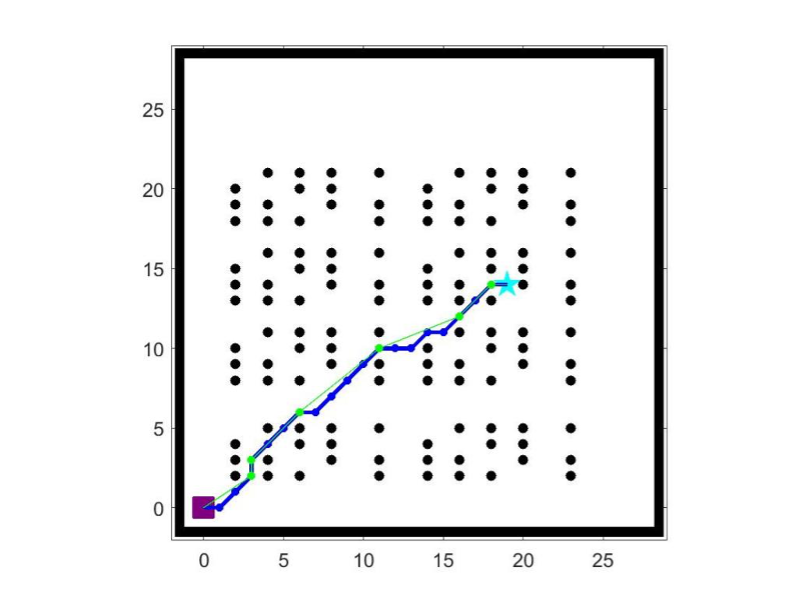
In the realm of robotics and autonomous systems, path planning is a pivotal component that determines the efficacy and safety of navigational tasks. With the proliferation of autonomous vehicles, drones, and mobile robots, the need for efficient and adaptive path planning algorithms has become increasingly acute. This paper studies AStar, LPA and DStarLite path planning algorithms based on Matlab platform, and compares their performance through simulation experiments. AStar algorithm is simple and widely applicable, but it has some shortcomings in path smoothness and computational efficiency. LPA improves path smoothness by introducing dynamic cost updating, but it may sacrifice some computational efficiency. The DStarLite algorithm performs well in dynamic environments with an efficient incremental update strategy that maintains high path smoothness and low computational costs. The experimental results show that DStarLite is the fastest in most cases, LPA* and DStarLite are superior to AStar in path smoothness. Future research may explore combining the advantages of each algorithm to develop more efficient, flexible and robust path planning algorithms to cope with complex and changeable actual scenarios.
Show more
Read Article PDF
Cite
Research Article Open Access
A Review on Computer Vision-Based Methods for Abnormal Human Action Recognition
Human behavior recognition constitutes a crucial research domain within both computer vision and behavior recognition. As a branch of human behavior recognition, abnormal behavior recognition has witnessed rapid advancement in recent years, which is capable of enhancing the governance level of public safety. To investigate the theoretical and technical progress of abnormal behavior recognition in public places within the realm of computer vision, this paper initially delineates the definition of abnormal behavior in public places. Secondly, as computer vision and pattern recognition technologies have progressed, algorithms are now divided into two distinct categories: traditional methods and those leveraging deep learning techniques. The identification of atypical human behavior can be divided into two approaches depending on the detection of body key points: one approach uses skeletal key points, while the other focuses on analyzing temporal and spatial features. Finally, this paper conducts a review of the mainstream datasets of abnormal human behavior both at home and abroad, analyzes the performance of related algorithms on the datasets, and gives future research directions as well as optimization suggestions.
Show more
Read Article PDF
Cite
Research Article Open Access
A Review of Research on Object Detection Algorithms
Object detection is a fundamental task in computer vision, widely used in fields such as autonomous driving, security surveillance, medical imaging, and drone image analysis. With the continuous advancement of technology, object detection algorithms have evolved from traditional methods to deep learning approaches. This paper categorizes object detection algorithms into four types based on their technical characteristics and implementation methods: two-stage algorithms, one-stage algorithms, keypoint-based algorithms, and emerging Transformer-based methods. Through a performance comparison on existing datasets, it was found that two-stage algorithms excel in accuracy but consume significant computational resources, leading to slower speeds; one-stage algorithms have a clear advantage in speed but show lower accuracy in detecting small objects; keypoint-based methods effectively balance speed and accuracy; additionally, the emerging Transformer-based methods perform well in capturing global information but require large amounts of training data and computational resources. This paper summarizes the advantages and disadvantages of each type of algorithm and discusses future research directions.
Show more
Read Article PDF
Cite
Research Article Open Access
A Review of YOLO-Based Target Detection Methods
Article thumbnail
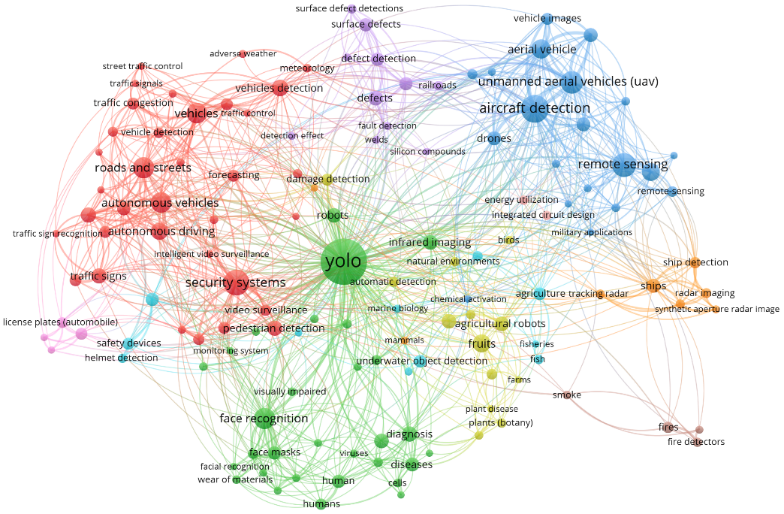
Target detection is now a popular topic in computer vision. With the development and iteration of technology, deep learning is constantly emerging. The integration of deep learning in the target detection task has led to rapid improvement in accuracy and speed, among which the You Only Look Once (YOLO) series of methods have the most rapid and varied improvements and upgrades, which have been widely used in the fields of navigation, video surveillance, face detection, text detection, and aerospace, etc. This paper initially provides an overview of the research context, importance, and challenges associated with this domain, compares and analyzes the network structure and implementation of the single-phase target detection method represented by the YOLO series with the two-phase and other improved algorithms, and then introduces the research progress of the target detection algorithms of deep learning, the characteristics of the commonly used datasets, and the key parameters of the evaluation of performance indicators, and then presents a compilation of experimental outcomes associated with several widely recognized algorithms applied to prominent datasets. Subsequently, it enumerates the experimental findings of diverse algorithms on these established datasets. Ultimately, this paper anticipates future research trajectories and developmental trends pertaining to target detection algorithms.
Show more
Read Article PDF
Cite
Research Article Open Access
A Review on Human Pose Estimation Based on Deep Learning
With the rapid development of computer vision technology, deep learning-based human pose estimation has become a hot topic of research. This review outlines the progress made in this field in recent years, with a particular focus on the development of single-person and multi-person pose estimation. Single-person pose estimation primarily focuses on identifying and locating the joints of an individual, while multi-person pose estimation further extends to simultaneously recognizing the poses of multiple individuals. The article begins by introducing the basic concepts of pose estimation, then discusses in detail the application of deep learning models in single-person and multi-person pose estimation, as well as the advantages and disadvantages of the existing modules. In addition, the limitations of current models are analyzed at the end of the paper, and possible future optimization directions are explored. The aim of this article is to provide researchers with a comprehensive perspective to understand current technological trends and potential innovation points.
Show more
Read Article PDF
Cite
Research Article Open Access
Review on Sensors and Path Planning Algorithms of Automatic Driving
automatic driving developed rapidly in recent years. Environment perception and path planning are two key functions in automatic driving, and sensors and algorithms are the basis for realizing these two functions. Through literature review and comparative analysis, this paper discusses sensors and path planning algorithms in automatic driving. An analysis is conducted on the principles, benefits, limitations, and applications of various sensor types in automatic driving. The RRT algorithm and A* algorithm are also discussed, as well as their advantages and constraints. Finally, this paper proposes suggestions such as deep learning, sensor fusion and cost reduction to update automatic driving. This paper provides a reference for the further development of automatic driving.
Show more
Read Article PDF
Cite