Articles in this Volume

Research Article Open Access
Exploring the power of KANs: Overcoming MLP limitations in complex data analysis
In the field of artificial intelligence, the requirements of models that can adeptly explore informative features of complex data sets has led to the emergence of advanced neural network architectures. Beyond the perceptron-based architectures that are currently in widespread use, a variety of innovative and cutting-edge designs have been proposed. This paper thoroughly explores the critical role of Kolmogorov-Arnold Networks (KAN) in overcoming the limitations of traditional Multilayer Perceptron (MLP) models, particularly highlighting KAN’s significant advantages in handling complex nonlinear and high-dimensional data. By analyzing the mathematical foundations and neural network architecture of KAN, and comparing it with MLP, the paper demonstrates KAN’s outstanding performance in time series analysis and image classification. The research indicates that KAN has distinct advantages in addressing high-dimensional nonlinear data. The paper also summarizes the current research progress on KAN and discusses its enormous potential in future machine learning and real-world applications, pointing out possible future research directions.
Show more
Read Article PDF
Cite
Research Article Open Access
Leveraging LSTM and NEAT for enhanced performance in multi-agent evolutionary games
Article thumbnail
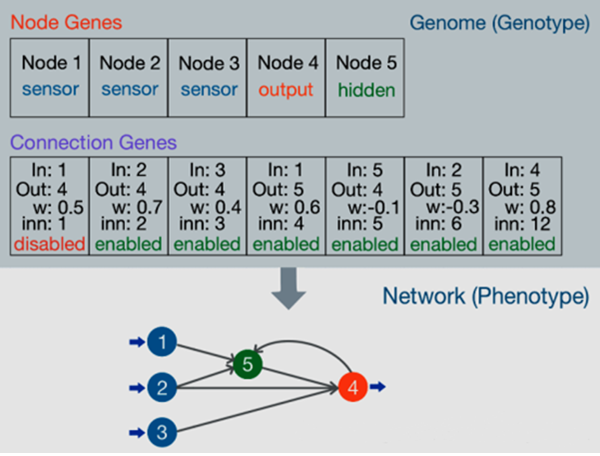
Nowadays, the application of deep learning in the field of evolutionary games has become a very popular topic. Humans use artificial intelligence as a powerful tool to predict the decision-making of multiple agents and to analyze it thoroughly, which can significantly reduce people's workload. Two of the most typical situations in game theory are the Iterated Prisoner's Dilemma (IPD) and the Iterated Snowdrift (ISD) games. In this paper, the Neuro Evolution of Augmenting Topologies (NEAT) algorithm is employed to perform population evolution in these two scenarios, and the Long Short-Term Memory (LSTM) model is utilized to predict the behavior of the population. The unique structure of the LSTM model contributes to its excellent predictive performance in forecasting the behavior of populations. Furthermore, this paper also investigates the changes in population intelligence and the frequency of cooperative behaviors during the process of population evolution, in order to explore the trends and specific proportions of different strategies as the population evolves.
Show more
Read Article PDF
Cite
Research Article Open Access
A comparative study between WGAN-GP and WGAN-CP for image generation
Article thumbnail
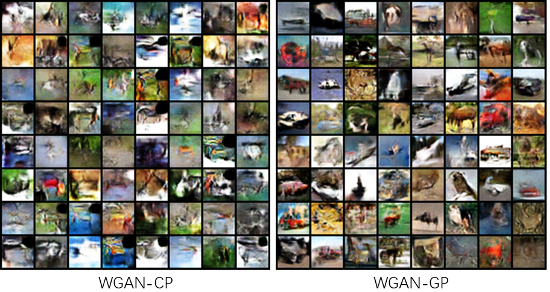
Image generation allows the creation of visual content in a convenient manner. It is critical for enhancing digital experiences, from video games to virtual reality, enabling more engaging and immersive experiences. In current technologies, Generative Adversarial Networks (GANs) have achieved significant success but face challenges like training instability and mode collapse. By utilizing the Wasserstein distance, Wasserstein GAN (WGAN) enhances conventional GANs; however, its weight clipping method may not be ideal. In this study, WGAN with gradient penalty (WGAN-GP) and WGAN with weight clipping (WGAN-CP) are compared, which aims to enhance stability by better enforcing the Lipschitz constraint. For comparison, these approaches are validated using Fashion Modified National Institute of Standards and Technology (MNIST) and Canadian Institute for Advanced Research (CIFAR)-10 datasets. Experimental results show WGAN-GP produces higher quality images and more stable training than WGAN-CP. However, WGAN-GP also requires longer training times and computational burden. The findings highlight a trade-off between training efficiency and output quality, guiding the choice of technique based on specific application needs.
Show more
Read Article PDF
Cite
Research Article Open Access
An exploration of KANs and CKANs for more efficient deep learning architecture
Article thumbnail
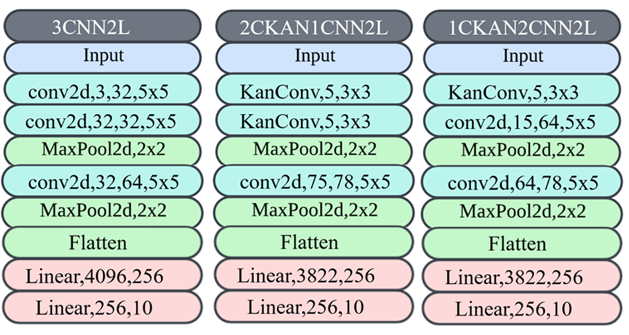
Deep learning has revolutionized the field of machine learning with its ability to discern complex patterns from voluminous data. Despite the success of Multi-Layer Perceptrons (MLPs) and Convolutional Neural Networks (CNNs), there is an ongoing quest for architectures that offer higher expressiveness with fewer parameters. This paper focuses on the Kolmogorov-Arnold Networks (KANs) and Convolutional Kolmogorov-Arnold Networks (CKANs), which integrate learnable spline functions for enhanced expressiveness and efficiency. This study designs a range of networks to compare KANs with MLPs and CKANs with classical CNNs on the CIFAR-10 dataset. Moreover, this study evaluates the models based on several metrics, including accuracy, precision, recall, F1 score, and parameter count. Based on the experimental results, networks with KANs and CKANs demonstrated improved accuracy with a reduced parameter footprint, indicating the potential of KAN-based models in capturing complex patterns. In conclusion, integrating KANs into CNNs and MLPs is a promising approach for developing more efficient and interpretable models, offering a path to advance deep learning architectures.
Show more
Read Article PDF
Cite
Research Article Open Access
Enhancing WGAN performance by architectural and optimizer variations for image generation
Article thumbnail
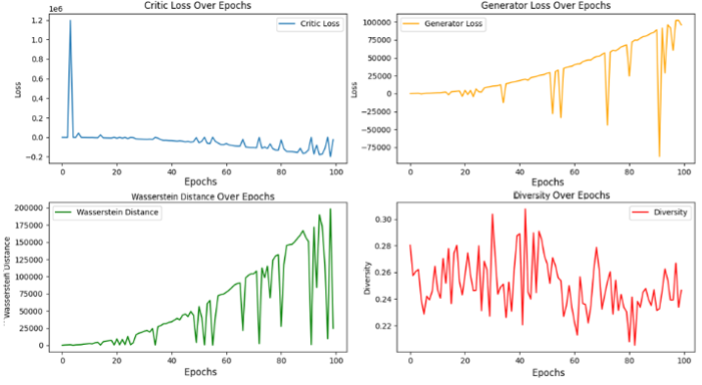
Generative model has opened up the area of image generation and has become a hot topic in recent years. Among the most famous generative models, Generative Adversarial Network (GAN) is outstanding among them, offering extensive avenues for exploration. The Wasserstein GAN (WGAN), as one of the GANs, introduces an innovative framework for training GANs based on the Earth Mover’s (Wasserstein) distance, providing a steadier training process. The experiment tried various modifications to WGAN, including changing the optimizers and the network architecture. Specifically, this work tried replacing the original Root Mean Square Prop (RMSprop) with another optimizers. Also, this work tried to add residual blocks to the network structure. These modifications provided interesting results, providing supplementary validation of the original WGAN structure, and providing some possibilities of optimization. According to the results, it could be found that the results of some modifications are very positive. However, some of the changes presented very unsatisfactory results, which gave us some insight.
Show more
Read Article PDF
Cite
Research Article Open Access
A Survey on Variants of Thompson Sampling
Article thumbnail
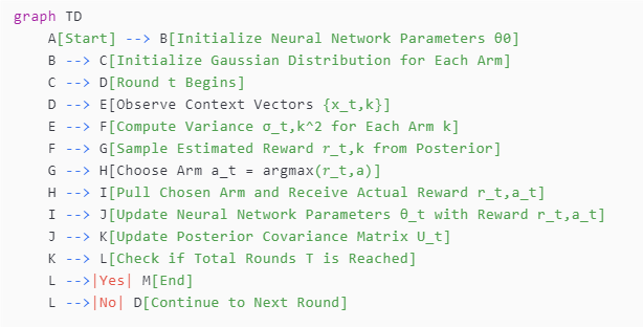
Thompson Sampling has become a prominent algorithmic approach in recent years. This review focuses on the evolution of TS and its variants, showing the innovative aspects of Neural Thompson Sampling (NeuralTS) and Meta-Thompson Sampling (Meta-TS), explaining the aggressive strategy used by Feel-Good Thompson Sampling (FGTS) and the introduction to Safe-LTS for Linear Thompson Sampling (LTS) problem. The survey first systematically review the literature, then examine the theoretical underpinnings, algorithmic frameworks and innovations of those TS variants, in the end provide our insights in future directions. In short, NeuralTS handles high-dimensional reward functions through deep learning integration, Meta-TS takes advantage of meta-learning for adapting to unknown prior distributions, FGTS applies an aggressive exploration strategy to handle pessimistic scenarios. In the end, this paper suggests that future research should emphasis on enhancing generalizability, bridging the gap between theory and practice, and improving adaptability to complex and dynamic environments.
Show more
Read Article PDF
Cite
Research Article Open Access
Comparative Study of Multi-Armed Bandit Algorithms in Clinical Trials
Article thumbnail
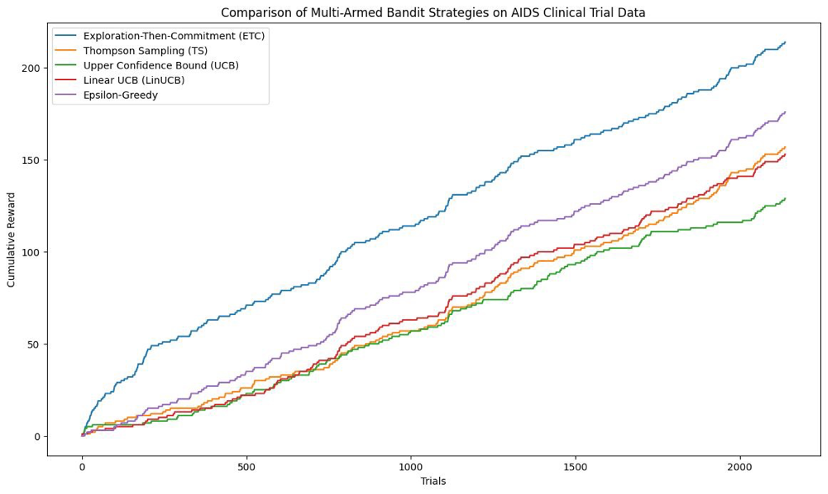
In recent years, with the rapid development of the information age, the influence of Multi Armed Bandit Algorithms (MAB) models in clinical trials for disease prevention has been increasing. In this study, based on Python programming language, Multi-Armed Bandit Algorithms (MAB) algorithm, Upper Confidence Bound (UCB) algorithm, Adaptive Epsilon-Greedy Algorithm, and Thompson Sampling (TS) algorithms to validate the idea of preventing, controlling and predicting the occurrence of diseases. The results show that the MAB model can effectively solve various decision-making problems in clinical trials, improve the efficiency of access to medical care, save doctors ‘diagnosis time, and at the same time achieve the prevention and treatment of diseases while minimising patients’ pain. This study is dedicated to proposing a more effective decision-making method and verifies that the method has a wide range of applications and great potential for development today.
Show more
Read Article PDF
Cite
Research Article Open Access
Optimizing online advertising with muti-armed bandit algorithms
The rapid digitalization of the global economy has significantly transformed the landscape of advertising, necessitating more sophisticated and adaptive strategies to reach and engage with consumers effectively. This paper explores the application of multi-armed bandit (MAB) algorithms as a powerful tool for optimizing online advertising processes. We examine how MAB algorithms can enhance various stages of the advertising cycle, from audience segmentation and creative development to bidding strategies and real-time optimization. Through an analysis of existing literature and practical applications, we demonstrate the potential of MAB algorithms to balance the trade-offs between exploration and exploitation, enabling advertisers to maximize click-through rates, conversion rates, and return on investment. Furthermore, we address specific challenges such as the cold-start problem and the optimization of search advertising, proposing innovative solutions that leverage the adaptive capabilities of MAB algorithms. Our findings suggest that integrating MAB algorithms into online advertising strategies can significantly improve targeting accuracy, user engagement, and overall advertising performance. We conclude by discussing the implications of these findings and suggesting directions for future research to further enhance the application of MAB algorithms in the evolving digital advertising landscape.
Show more
Read Article PDF
Cite
Research Article Open Access
Comparison of Multi-Armed Bandit Algorithms in Advertising Recommendation Systems
Article thumbnail
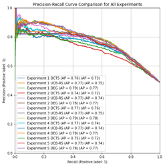
In today's rapidly evolving online environment, advertising recommendation systems utilize multi-armed bandit algorithms like dynamic collaborative filtering Thompson sampling (DCTS), upper confidence bound based on recommender system (UCB-RS), and dynamic ε-greedy algorithm (DEG) to optimize ad displays and enhance click-through rates (CTR). These algorithms must adapt to limited information and update strategies based on immediate feedback.This study employs an experimental comparison to assess the performance of the DCTS, UCB-RS, and DEG algorithms using the click-through rate prediction database from Kaggle. Five experimental sets under varied parameter settings were analyzed, employing the Receiver Operating Characteristic (ROC) curve, accuracy, and area under the curve (AUC) metrics.Results show that the DEG algorithm consistently outperforms the others, achieving higher AUC values and demonstrating robust sample identification capabilities. DEG also exhibits superior precision at high recall levels, showcasing its potential in dynamic advertising environments. Its dynamic adjustment strategy effectively balances exploration and exploitation, optimizing ad displays.The findings suggest that DEG's adaptability and stability make it particularly suitable for dynamic ad recommendation scenarios. Future research should focus on optimizing DEG's parameter settings and possibly integrating UCB-RS's exploration mechanisms to enhance performance and develop more effective strategies for advertising recommendation systems.
Show more
Read Article PDF
Cite
Research Article Open Access
Optimizing Short Video Recommendation Systems: Addressing Cold-Start and Diversity Challenges through Advanced Algorithms
Article thumbnail
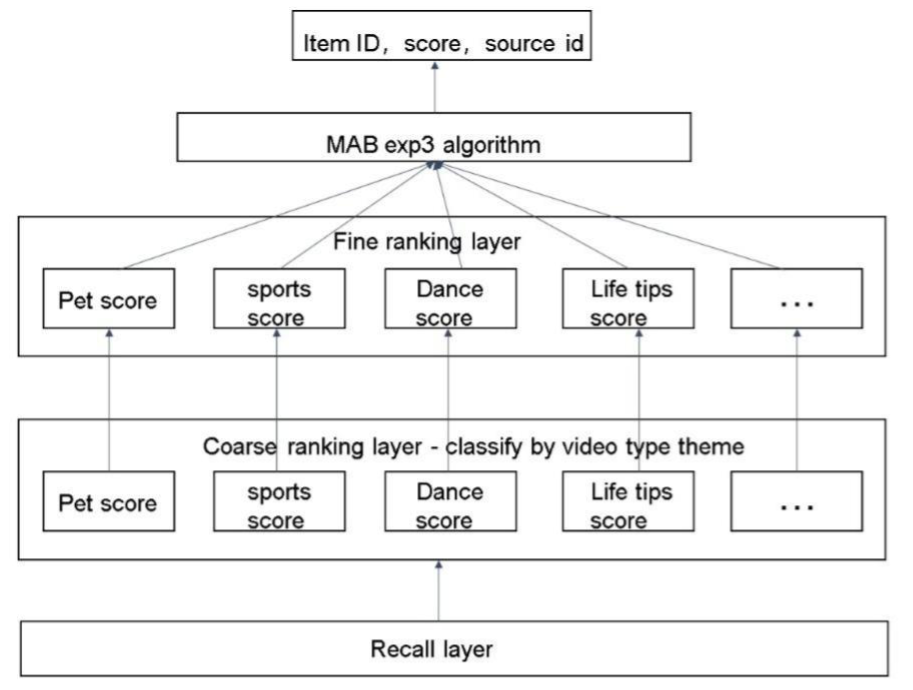
This study reviews the integration of advanced algorithms in optimizing short video recommendation systems, specifically addressing the cold-start problem and content diversity. Traditional recommendation algorithms struggle to adapt to dynamic user interests and often fail in scenarios with limited historical data. To tackle these issues, we proposed two novel approaches by integrating the Portrait Upper Confidence Bound (PUCB) algorithm and the Exp3 algorithm. The PUCB algorithm effectively balances exploration and exploitation in cold-start scenarios by leveraging user portraits and UCB scores, while Exp3 enhances content diversity by dynamically adjusting recommendation probabilities. And the combined application of PUCB and Exp3 can greatly enhance the performance of short video platforms, providing more relevant and varied content to users.
Show more
Read Article PDF
Cite