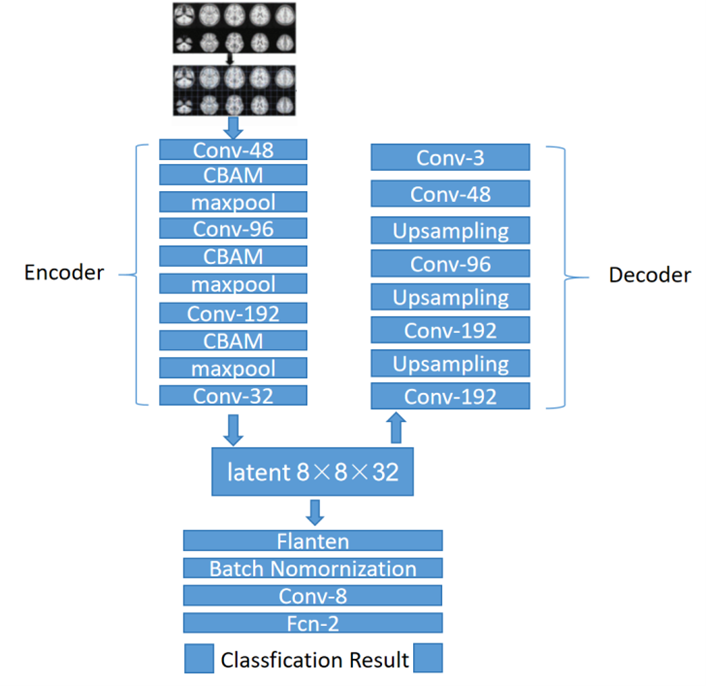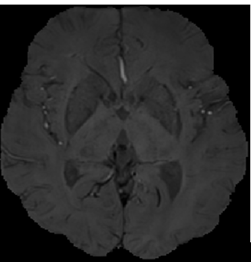
Cerebral microbleeds (CMB) is an important type of cerebral microbleeds. In recent years, many studies have proved that CMB can not only cause vascular dementia, but also increase the risk of stroke. Therefore, detection of CMB is of great clinical significance for balancing antithrombotic therapy and risk assessment in stroke patients, and detection of CMB is of great value for diagnosis and prognosis of cranial injury. This paper mainly proposes a two-stage CMB detection framework based on deep learning, which includes the screening stage of brain microhemorrhagic candidate points and the recognition stage of brain microhemorrhagic points based on deep learning. Firstly, in the first stage, we screened CMB candidate points by combining rapid radial transformation and threshold segmentation, and excluded a large number of background regions and obvious non-CMB regions. Then, in the second stage, the two-channel images spliced by sensitivity weighted imaging (SWI) and phase diagram (Pha) were used for false positive judgment by 3D convolutional neural network to distinguish the true CMB from the CMB analog.