Articles in this Volume

Research Article Open Access
Machine Learning-Based Research on the Adaptability of Adolescents to Online Education
Article thumbnail
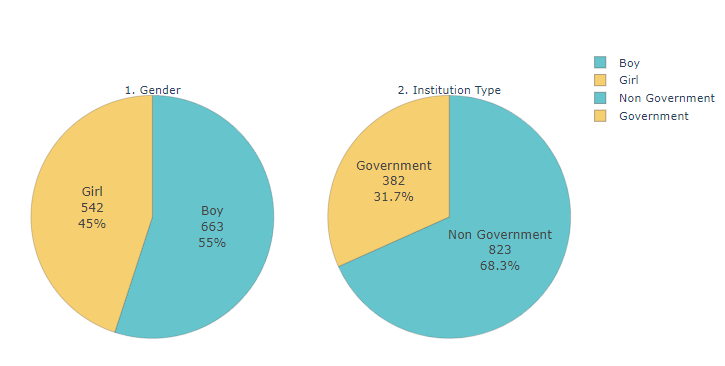
With the rapid advancement of internet technology, the adaptability of adolescents to online learning has emerged as a focal point of interest within the educational sphere. However, the academic community's efforts to develop predictive models for adolescent online learning adaptability require further refinement and expansion. Utilizing data from the "Chinese Adolescent Online Education Survey" spanning the years 2014 to 2016, this study implements five machine learning algorithms—logistic regression, K-nearest neighbors, random forest, XGBoost, and CatBoost—to analyze the factors influencing adolescent online learning adaptability and to determine the model best suited for prediction. The research reveals that the duration of courses, the financial status of the family, and age are the primary factors affecting students' adaptability in online learning environments. Additionally, age significantly impacts students' adaptive capacities. Among the predictive models, the random forest, XGBoost, and CatBoost algorithms demonstrate superior forecasting capabilities, with the random forest model being particularly adept at capturing the characteristics of students' adaptability.
Show more
Read Article PDF
Cite
Research Article Open Access
Performance Comparison of Different Code Implementations of the KMP Algorithm
Article thumbnail
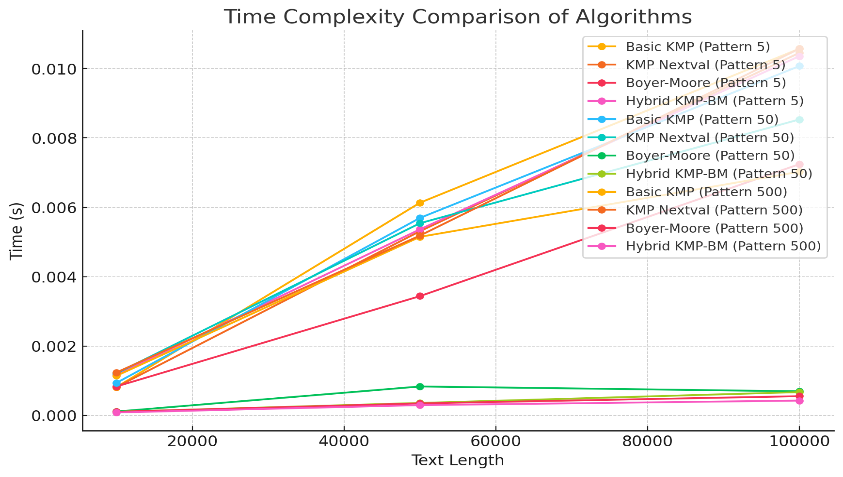
This paper presents a performance comparison of diverse implementations of the KMP algorithm, a widely employed string matching technique for efficiently searching patterns in text. The study evaluates the time complexity, space complexity, and execution efficiency of different code versions. Key findings are derived from a review of relevant literature, focusing on advantages and challenges of various implementations. The experimental setup and performance metrics are described, comparing time and space usage across different implementations. The results are interpreted, discussing the significance of selecting the appropriate implementation for specific applications. The paper concludes with recommendations for future research and potential optimizations.
Show more
Read Article PDF
Cite
Research Article Open Access
Research on Effectiveness Evaluation and Optimization of Baseball Teaching Method Based on Machine Learning
Article thumbnail
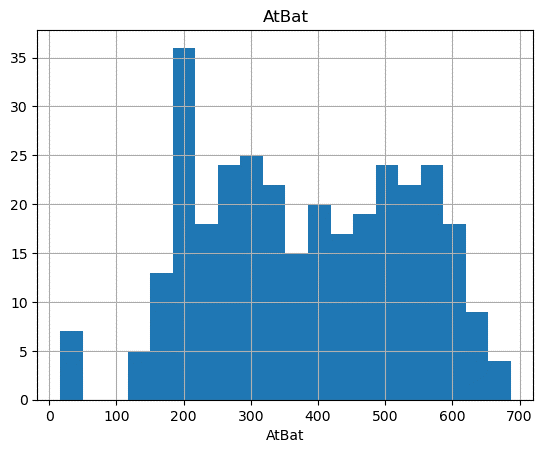
In modern physical education, data-driven evaluation methods have gradually attracted attention, especially the quantitative prediction of students' sports performance through machine learning model. The purpose of this study is to use a variety of machine learning models to regress and predict students' comprehensive scores in baseball training, so as to evaluate the effectiveness of the current baseball teaching methods and put forward targeted training optimization suggestions. We set up a model and evaluate the performance of students by collecting many characteristics, such as hitting times, running times and batting. The experimental results show that K-Neighbors Regressor and Gradient Boosting Regressor are excellent in comprehensive prediction accuracy and stability, and the R score and error index are significantly better than other models. In addition, through the analysis of feature importance, it is found that cumulative hits and cumulative runs are the key factors affecting students' comprehensive scores. Based on the results of this study, this paper puts forward some suggestions on optimizing training strategies to help students get better performance in baseball training. The results show that the data-driven teaching evaluation method can effectively support physical education and promote personalized and refined teaching plan design.
Show more
Read Article PDF
Cite
Research Article Open Access
The Integration of Artificial Intelligence in Public Policy Decision Support Systems: Applications and Challenges
Article thumbnail
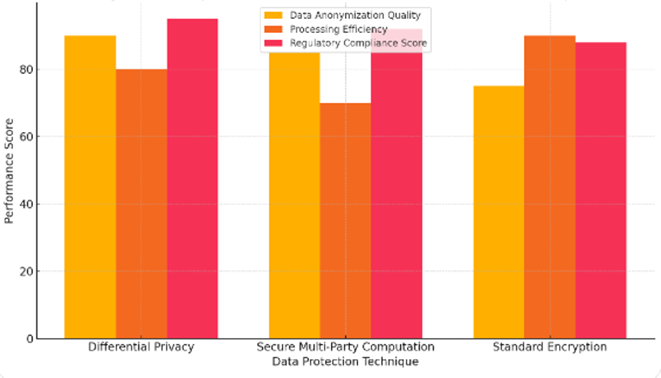
Incorporating AI into public policy has the potential to change how decisions are made, whether in the fields of public health, resource management, or social welfare. This article examines the use of AI in DSS, a public policy decision support system, its benefits and disadvantages, as well as the ethics and privacy implications. By analyzing health, welfare and urban planning case studies, this report examines the efficacy of AI on measures such as precision, effectiveness, equity and engagement. In addition, the work deals with key obstacles to AI integration, such as infrastructure constraints, biases and public mistrust, that affect its acceptability and utility. This research suggests that, while AI has significant benefits, its responsible application to public policy requires a carefully calibrated strategy with an emphasis on ethical transparency, transparency and safe data collection in order to ensure public confidence and equitable results.
Show more
Read Article PDF
Cite
Research Article Open Access
A Summary and Discussion on the Current State of CVRP Research
The Vehicle Routing Problem (VRP)is a fundamental combinatorial optimization problem in the field of transportation. Among its important variants, the Capacitated Vehicle Routing Problem (CVRP) focuses on optimizing delivery routes under vehicle capacity constraints to minimize transportation costs and enhance service quality. This paper systematically reviews the current state of CVRP research, encompassing the applications of exact algorithms and approximate algorithms, including genetic algorithms, ant colony optimization, and simulated annealing. It also explores improvements to the parent genetic algorithm (PGA) in CVRP, such as polymorphic mutation strategies and hybrid jump strategies. Finally, the paper addresses the challenges faced by CVRP in practical applications and proposes future research directions, including algorithm adaptability, exploration of hybrid algorithms, and efficient processing in big data environments. This study aims to provide a comprehensive reference framework for researchers in the CVRP field, promoting the further development and application of related technologies.
Show more
Read Article PDF
Cite
Research Article Open Access
Smartphone Price Prediction Using Decision Tree and Support Vector Regression (SVR)
Article thumbnail
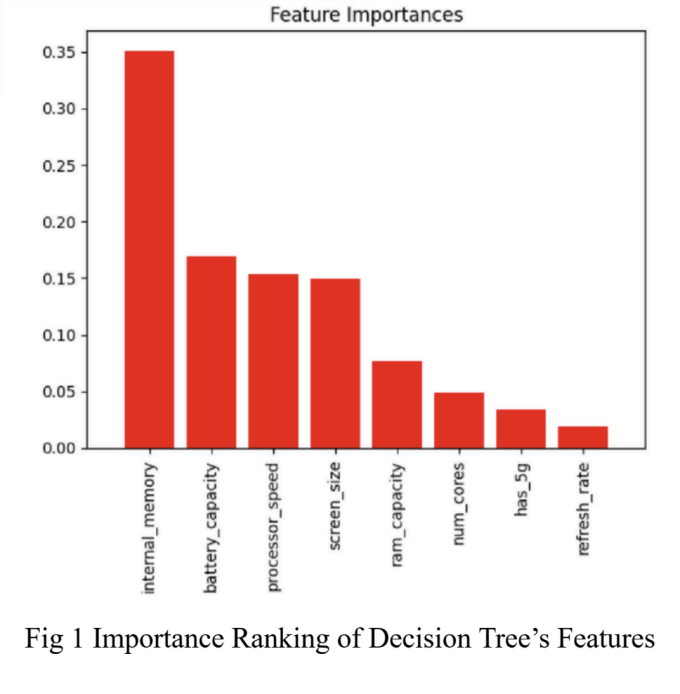
This paper explores the use of two machine learning models, Decision Tree and Support Vector Regression (SVR), for smartphone price prediction. Decision Trees provide a straightforward and efficient classification method, while SVR specializes in managing complex relationships for regression tasks. The study compares the performance of these models in predicting smartphone prices, analyzing key factors such as processor speed, memory, and battery capacity. Additionally, a combined model approach that combines Decision Tree for classification and SVR for regression is proposed to improve prediction accuracy. The results suggest that while Decision Tree performs better in classification tasks, the combination of both models demonstrates potential for more precise price predictions, particularly for low-priced smartphones.
Show more
Read Article PDF
Cite
Research Article Open Access
Find the Optimal Solution or Approximate Optimal Solution in Interval Scheduling
The interval scheduling problem is a classic optimization challenge that finds broad applications in fields like resource allocation, job scheduling, and network management. This paper focuses on exploring strategies to obtain both optimal and approximate solutions to the problem. The research compares the effectiveness of greedy algorithms, which adhere to a local optimization strategy, with dynamic programming (DP) methods that consider global solutions by decomposing problems into sub-problems. Additionally, other heuristic approaches are discussed to handle situations where computational efficiency is crucial. The results show that greedy algorithms are efficient and appropriate for cases with specific structural characteristics, while dynamic programming provides more accurate solutions for complex problems but at a higher computational cost. The conclusion underscores the significance of selecting appropriate algorithms based on the trade-off between time efficiency and solution quality, providing practical guidelines for applying these strategies in real-world scenarios.
Show more
Read Article PDF
Cite
Research Article Open Access
Prediction of Heart Disease Based on Data Classification Models
Article thumbnail
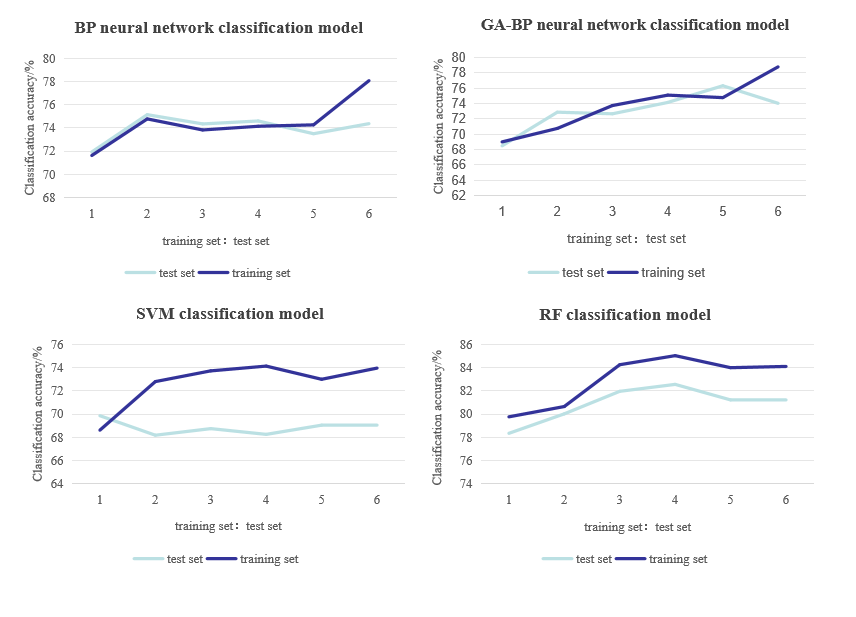
With the increasing emphasis on healthy living, the prevention of major diseases has garnered widespread attention. Heart disease, as one of the leading causes of death globally, makes early prediction and identification extremely important. Currently, the prediction of heart disease mainly relies on a multidisciplinary approach. This article focuses on machine learning and selects four supervised learning classification models, including the Back Propagation (BP) neural network classification model, Genetic Algorithm (GA) -Back Propagation neural network classification model, Support Vector Machine (SVM) classification model and Random Forests Algorithm (RF) classification model, to evaluate their performance. Simulation experiments indicate that the GA-BP neural network classification model has the best generalization ability, while the RF classification model achieves the highest classification accuracy and recall rate, with an accuracy of 82.6% and a recall rate of 88.1% on the test set. Overall, the RF classification model performs the best among the four classification models. In future research, improvements and integrations of existing multiple data classification models will play a crucial role in enhancing classification accuracy.
Show more
Read Article PDF
Cite
Research Article Open Access
Coffee Sales Prediction for Vending Machines Based on ARIMA Model
Article thumbnail
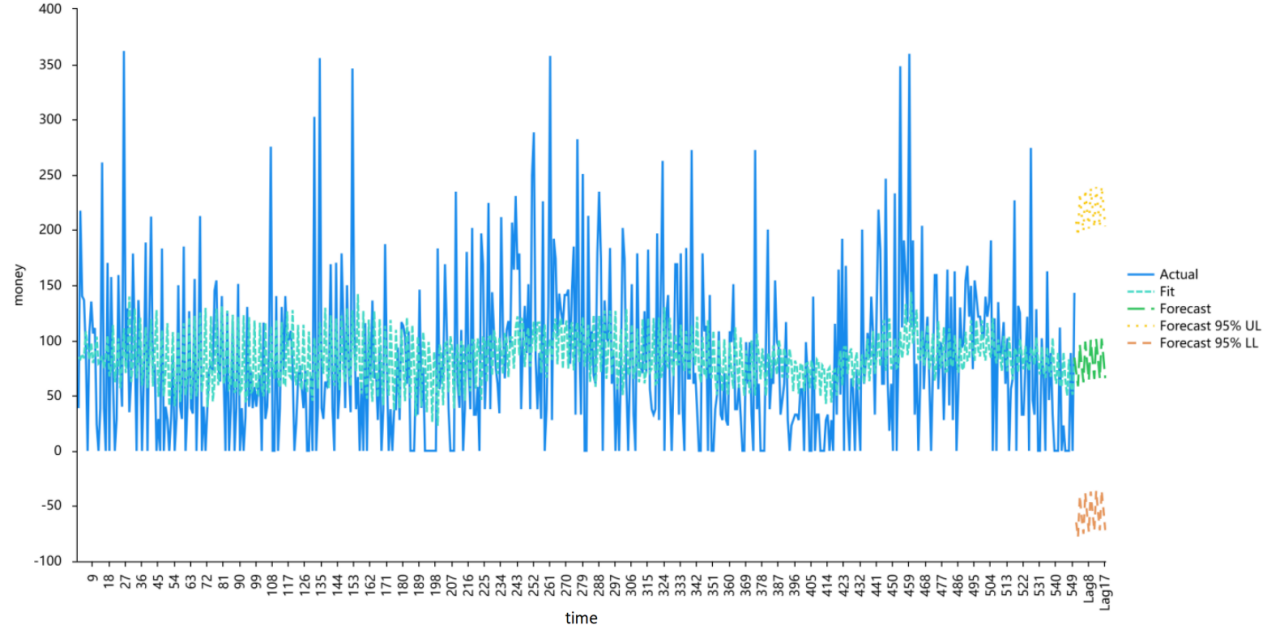
The global coffee market is booming and consumer preferences are refined. Vending machines have significant potential in coffee sales. However, predicting coffee sales to balance supply and demand, reduce inventory, and improve customer satisfaction is a crucial issue for the industry. This paper presents a study on the prediction of coffee sales in vending machines using the Autoregressive Integrated Moving Average (ARIMA) model. The analysis is based on a comprehensive dataset of daily coffee sales records, which provides valuable insights into consumer behavior and sales trends. The ARIMA model is employed to capture the temporal dependencies and patterns within the sales data. The fitted model is then validated using the Ljung-Box Q-test to ensure that the residuals are uncorrelated, indicating a good fit. The results show that the ARIMA model has a high prediction accuracy, with a Root Mean Square Error (RMSE) of 68.9416, and can roughly predict future coffee sales. This study contributes to the literature on time series analysis and forecasting in the retail industry, particularly in the context of automated vending machines. The findings have practical implications for vending machine operators, who can leverage the predictions to optimize inventory management, sales strategies, and customer service.
Show more
Read Article PDF
Cite
Research Article Open Access
The Application of Artificial Intelligence and Machine Learning in Face Recognition Technology
In the wake of the swift development of artificial intelligence (AI) and machine learning (ML) technologies, face recognition technology has emerged as a prominent research focus within the realm of biometrics. This paper delves into the most recent advancements of AI and ML algorithms with regard to enhancing the accuracy and speed of face recognition. To begin with, a comprehensive review of the development of face recognition technology is conducted. It traces the progression from traditional methods to the application of deep learning technology, while also summarizing the merits and limitations of the existing technology. Subsequently, the key technologies used in this paper are elaborated upon in meticulous These encompass the convolutional neural network (CNN), deep learning feature extraction, transfer learning, and the attention mechanism in face recognition, among others. These markedly augment the model's processing capabilities when dealing with complex scenes, varying lighting conditions, and occlusion situations. Furthermore, this paper undertakes an exploration of privacy protection and ethical concerns, It puts forward strategies aimed at bolstering data protection and privacy security without compromising the identification performance. Finally, the principal findings of this study are encapsulated, and future research directions are outlined. These include the further optimization of algorithms to curtail the consumption of computing resources, the development of more efficient data enhancement techniques to enhance model generalization, and exploration of a broader range of application scenarios, such as intelligent security, personalized services, and accessibility assistance systems. This study not only provides theoretical underpinning and practical guidance for the development of face recognition technology but also paves the way for promoting the extensive application of AI technology in social life.
Show more
Read Article PDF
Cite