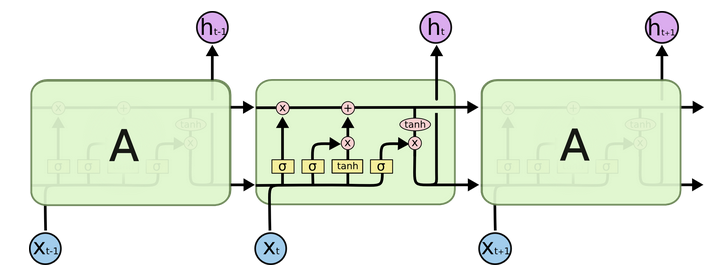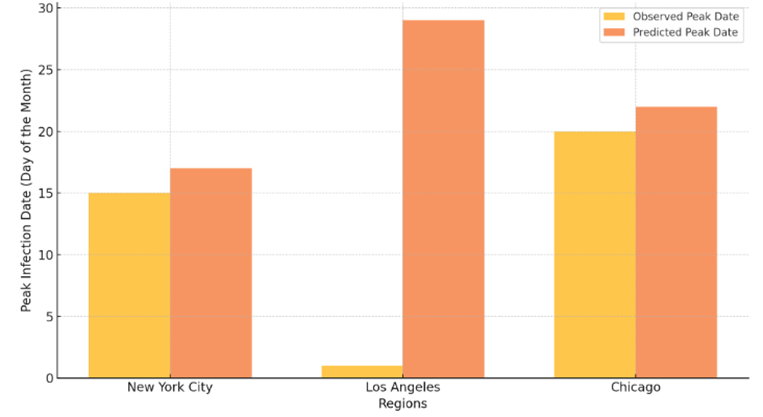
The paper discusses how AI can be used to predict epidemics and improve public health responses on a wide range of critical topics from disease prediction using data to policymaking. Even conventional epidemiological models, often constrained by parameters, find it difficult to adapt to rapidly evolving disease dynamics. Our method combines machine learning (ML) and deep learning (DL) algorithms, such as long short-term memory (LSTM) and reinforcement learning (RL), to dynamically anticipate infection peaks and outbreak hotspots. Using both time-series and spatial data, the hybrid CNN-LSTM model predicted high-risk areas at a prediction accuracy of 89% and drastically improved the public health response planning. Further, the RL-based policy optimization system outperformed the traditional approach, enabling adaptive lockdowns and resource optimisation that reduced peak infection rates by 25% in dense regions. What we’ve found demonstrates AI’s ability to deliver both practical and predictive insights on epidemic dynamics and enable customisable, adaptive health policies. The work aims to advance AI-enabled epidemic management by offering a revolving door for predictive modeling and policy adaptations, responsive to changing epidemiological needs.