Articles in this Volume

Research Article Open Access
Dynamic Reinforcement Learning for Suspicious Fund Flow Detection: A Multi-layer Transaction Network Approach with Adaptive Strategy Optimization
Article thumbnail
This paper proposes a dynamic reinforcement learning framework for detecting suspicious fund flows in multi-layer transaction networks. The framework integrates graph neural networks with adaptive reinforcement learning mechanisms to address the challenges of evolving money laundering patterns in financial transactions. The system architecture implements a novel multi-layer network construction approach that captures both temporal and structural characteristics of transaction patterns. A dynamic feature extraction module employs attention mechanisms and temporal convolution networks to generate comprehensive transaction representations. The reinforcement learning component utilizes a modified Deep Q-Network with prioritized experience replay to optimize detection strategies continuously. Experimental evaluation on a large-scale financial dataset comprising 10 million transactions demonstrates the framework's effectiveness. The proposed approach achieves a detection rate of 92.5% while maintaining a false positive rate below 3.68%, outperforming traditional machine learning methods and recent deep learning approaches. The framework's adaptive strategy optimization enables real-time adjustment of detection policies based on emerging patterns. Ablation studies validate the contribution of individual components, with the graph layer architecture and temporal feature extraction mechanisms showing a significant impact on system performance.
Show more
Read Article PDF
Cite
Research Article Open Access
Light and Small UAV Image Target Detection Based on YOLOv8 Algorithm and Experimental Reform of University Physics Course
Article thumbnail
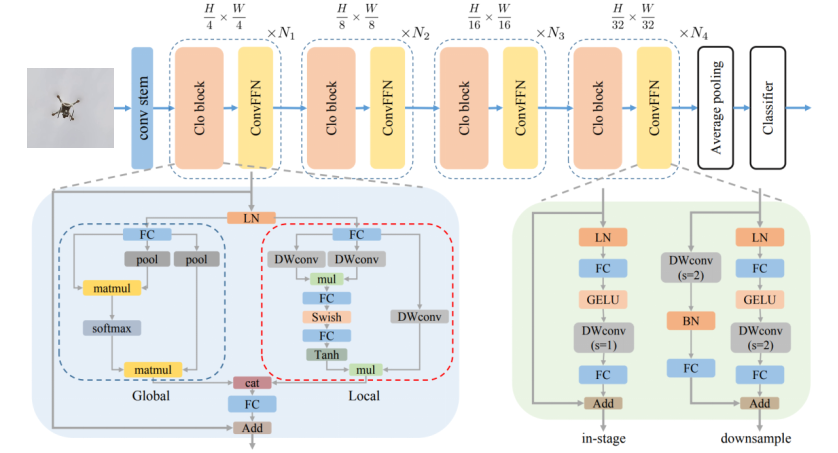
This research systematically discusses the technical advantages and application value of YOLOv8 deep learning algorithm in the field of object detection in light and small UAV images. Aiming at the technical difficulties such as small target scale and complex background in UAV aerial shooting scenes, the experimental results show that YOLOv8 algorithm can achieve real-time processing speed of 63FPS while ensuring the detection accuracy of 98.6% mAP (average accuracy mean). The multi-scale feature fusion mechanism and lightweight network design effectively balance the contradiction between detection accuracy and computation efficiency. Based on this technological breakthrough, the research further constructed an innovative application framework for the university physics experiment curriculum reform: By transforming UAV dynamic target detection technology into a "problem-oriented" experimental teaching carrier, comprehensive experimental projects integrating machine vision, automatic control and physical principles can be developed, effectively breaking the discipline barriers in traditional experimental teaching, and building a complete practice chain of "theoretical modeling - algorithm realization - hardware verification". This teaching mode driven by real engineering problems can not only visually verify physical laws through visual test results, but also cultivate students' interdisciplinary system thinking through the algorithm tuning process, and establish a multi-dimensional experimental evaluation system based on test performance indicators.
Show more
Read Article PDF
Cite
Research Article Open Access
Network Anomaly Traffic Detection Model Based on Spatio-Temporal Attention Feature Fusion
Article thumbnail
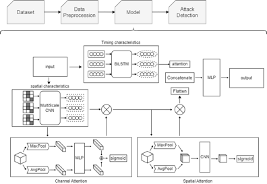
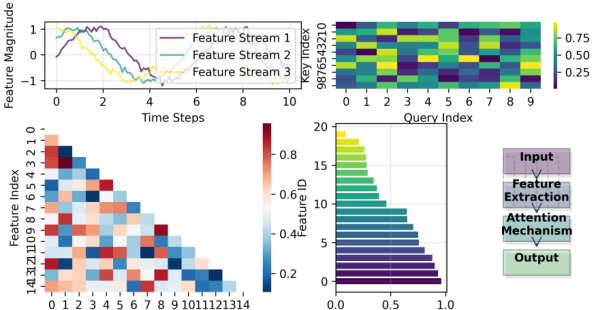
With the rapid proliferation of 5G, IoT devices are increasingly subjected to network attacks. Traditional Network Intrusion Detection Systems (NIDS) are becoming inadequate in the face of more complex network environments and massive data traffic. Deep learning-based intrusion detection algorithms have thus become a hot topic in cybersecurity research. However, existing NIDS have limitations in terms of accuracy, recall rates, false alarm rates, and generalization capabilities. The impact of data redundancy and data imbalance further degrades model performance. We have designed a new network that integrates Convolutional Neural Networks (CNN) and Long Short-Term Memory (LSTM) networks, incorporating an attention mechanism to enhance learning capabilities. This allows the model to focus on both temporal and spatial features. Additionally, the introduction of the attention mechanism makes it easier to identify key anomalous data features amidst the redundant data. We also paid special attention to the issue of data imbalance. Our model and methods for balancing datasets were validated through binary and multi-class classification experiments on the two most commonly used datasets (UNSW_NB15, CICIDS2017). The results demonstrated good convergence and high accuracy. Compared to traditional models, our model shows significant improvements in detecting large-scale and multi-scenario network data attacks, making it suitable for network security detection in modern IoT environments.
Show more
Read Article PDF
Cite
Research Article Open Access
A Rating-Enhanced Graph Neural Network Recommendation Systems
Article thumbnail
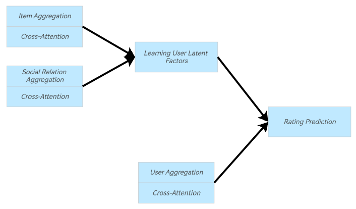
In recent years, Graph Neural Networks (GNNs) have increasingly become a research hotspot. To further explore the application prospects of GNNs in the recommendation field, this paper conducts an in-depth study on the utilization of rating information. A rating-enhanced Graph Neural Network recommendation model is proposed. This model improves upon existing approaches by first obtaining the embedding of ratings through automatic feature engineering. Then, it utilizes a cross-attention coefficient to effectively integrate the rating embedding vectors with the embedding vectors of the two nodes, thereby obtaining the coefficients for graph spatial convolution. Experimental results show that the coefficients obtained by this model are positively correlated with the ratings, and the recommendation accuracy of graph convolution is significantly improved.
Show more
Read Article PDF
Cite
Research Article Open Access
Development of a Novel Combined Nomogram Model Integrating Deep Learning-Pathomics, Radiomics, and TLS Score to Predict the Risk of Liver Metastasis in Colorectal Cancer Patients
Article thumbnail
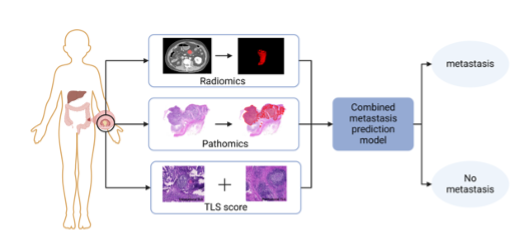
This study retrospectively analyzed 167 colorectal cancer patients from November 2013 to February 2021 in Zhongda Hospital of Southeast University, divided into liver metastasis group (37 cases) and no liver metastasis group (130 cases), and the data were divided into training set and test set according to 7:3. The study constructed traditional clinical, imaging histology, pathohistology, TLS score and multimodal integration models, and screened features by LASSO regression. The results showed that the multimodal integration model had an AUC of 0.94, an accuracy of 0.927, and precision and F1 scores of 1.000 and 0.800, respectively, which were superior to other models, with high predictive value and diagnostic efficacy, and its column-line diagram could be used in the clinic.
Show more
Read Article PDF
Cite
Research Article Open Access
Research on Application of LIDAR in Auto Driving: A Review
LIDAR (Light Detection and Ranging) technology has emerged as a cornerstone of modern autonomous vehicle systems. LIDAR systems provide high-resolution 3D mapping, precise object detection, and effective range measurements, contributing to the development of critical functionalities such as obstacle avoidance, emergency braking, and adaptive cruise control. This review aims to explore the integration of LIDAR technology in autonomous driving, analyzing its principles, current applications, and the challenges it faces. The study draws on recent advancements, including multi-sensor data fusion techniques, functional safety designs adhering to ISO26262 standards, and innovative approaches to LIDAR-based vehicle positioning using GPS and derivative data fusion. Additionally, it delves into the technological evolution of LIDAR architectures, comparing traditional scanning LIDARs with emerging FMCW (Frequency Modulated Continuous Wave) systems. The research highlights the critical role of LIDAR in enhancing vehicle safety through advanced perception algorithms and its application in real-world scenarios. The significance of this research lies in its potential to influence future smart city infrastructures by improving autonomous vehicle integration into urban environments. Ultimately, this review underscores the necessity of continuous innovation in LIDAR technology to overcome existing challenges, such as high costs, performance in adverse weather conditions, and computational demands, paving the way for safer and more reliable autonomous driving systems.
Show more
Read Article PDF
Cite
Research Article Open Access
Memory Impulse Neural Networks for Text Recognition
Article thumbnail
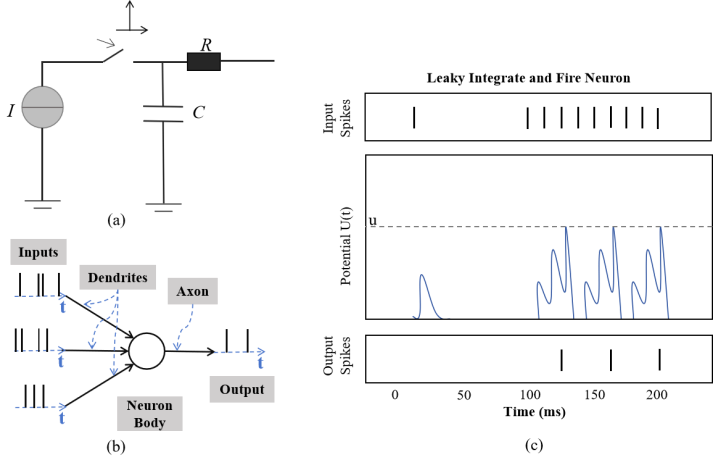
Current text recognition tasks rely on evolutionary algorithms based on Convolutional Neural Networks (CNN), which achieve good accuracy in the task, but it relies on large datasets and has high latency. In this paper, a complete amnesia based impulse neural network (SNN) model is constructed and the STDP unsupervised learning algorithm is taken for training thereby performing the text recognition work. Using this scheme, this paper incorporates the nonlinear properties of the memristor and constructs a LIF model that is more consistent with the pulse output of a real biological neuron. Based on this, an STDP learning network based on the synaptic properties of amnesia-like synapses is constructed and trained, and the introduction of amnesia can save storage space and power consumption as well as improve real-time performance. This scheme can accurately and quickly identify the sample text through simulation, and the research scheme in this paper has inspirational effects for number recognition, pattern recognition, etc.
Show more
Read Article PDF
Cite
Research Article Open Access
Research on Lie Detection Technology Based on Neurophysiological and Behavioral Signal Decoding
Article thumbnail
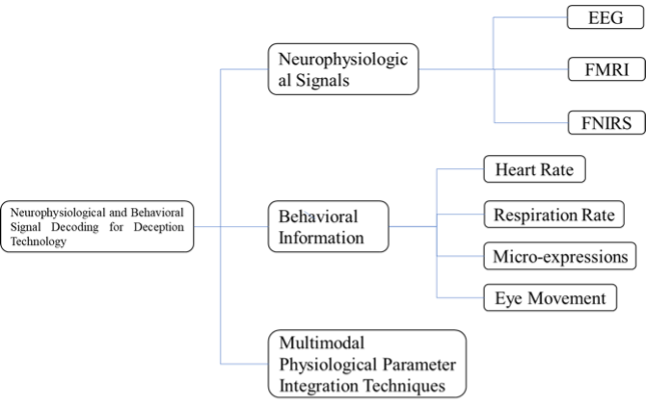
With the advancement of technology, the application of physiological parameters in lie detection technology has gradually become a hot research topic. This paper explores the latest developments in this field from two aspects: On the one hand, neurophysiological signals (such as EEG, fMRI, fNIRS) reveal the changes in brain activity during the lie detection process, helping us better understand the neural mechanisms behind lies. On the other hand, behavioral physiological signals (such as heart rate, respiration rate, eye movements, micro-expressions) capture subtle changes in emotions and stress through monitoring external physiological responses. Especially in the area of multimodal signal fusion, combining data from different physiological signals can significantly improve the accuracy and reliability of lie detection. The paper also looks forward to the future prospects of the technology, emphasizing the immense potential of artificial intelligence in the field of lie detection, and anticipates paving the way for the intelligentization and precision of lie detection technology.
Show more
Read Article PDF
Cite
Research Article Open Access
Enhancing Business Intelligence Through AI and Big Data: A Focus on Precision Mining and Real-Time Analysis
Article thumbnail
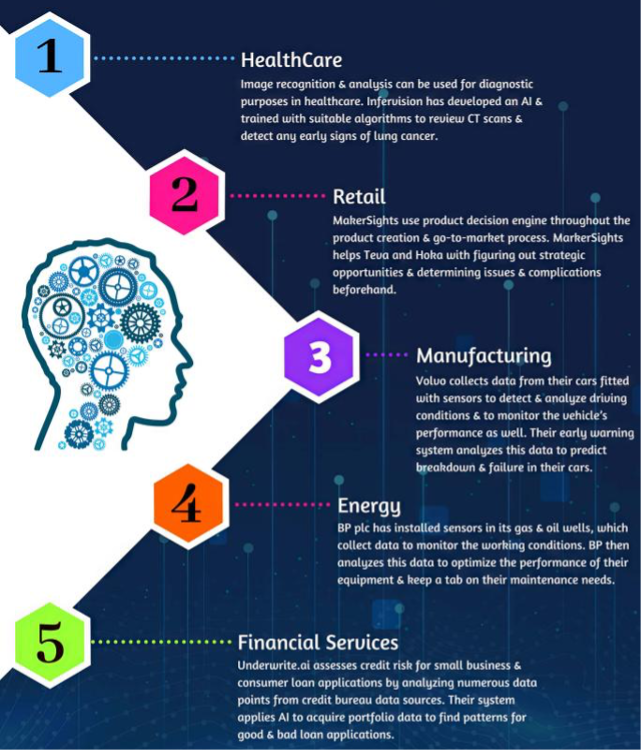
The research examines how Artificial Intelligence (AI) and Big Data work together in Business Intelligence (BI) systems to optimize data analysis and enhance both decision-making processes and operational efficiency. Businesses can discover patterns and trends within massive datasets using machine learning techniques like decision trees, support vector machines (SVMs), and random forests which enables them to perform predictive analysis for better forecasting. Deep learning methods increase processing capabilities for unstructured data formats such as text alongside images and videos. The research shows businesses benefit from AI and Big Data through actionable insights and higher accuracy while reducing operational expenses. Research findings indicate that AI-driven BI systems deliver superior predictive abilities and decision-making capabilities alongside better operational efficiency compared to conventional BI tools. The study demonstrates how these technologies enable businesses to transform their strategies while driving innovation and establishing market leadership. The study recommends organizations integrate AI and Big Data with their business intelligence systems to maximize system optimization benefits.
Show more
Read Article PDF
Cite
Research Article Open Access
Implementation of Digital Twin Campus by Mixed Virtual Reality Design and Construction Technology
Article thumbnail
This paper aims to realize digital twin campus by combining hybrid virtual reality technology, three-dimensional laser point cloud technology and BIM technology. First, Trimble TX8 3D scanner is used to collect the data of the target building, and then Trimble RealWorks is used to synthesize, splice, modify and measure the collected point cloud data. Then the synthesized point cloud model is imported into Revit as a reference, and the reverse modeling of point cloud is implemented in Revit, and the corresponding virtual 3D model of Glassroom is constructed. Because of the lack of the original drawings of the building, the second design and analysis of the target building are carried out, and the stability of the redesigned Glassroom structure is analyzed by using SAP2000. Finally, Trimble mixed virtual reality projection is used to make the digital double glass room.
Show more
Read Article PDF
Cite