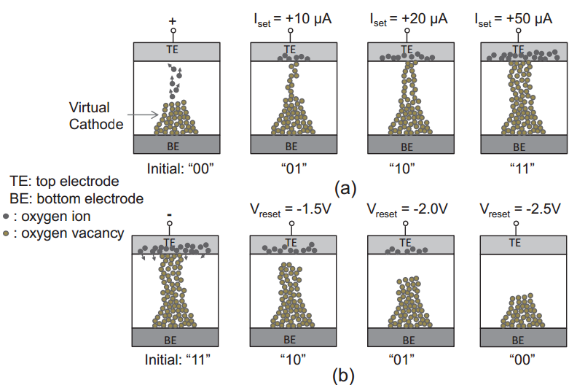
The increasing amount of data in the era of artificial intelligence imposes higher demands on the computational power of neural networks, and in order to fulfill this demand, there is a pressing need to overcome the limitations imposed by the von Neumann architecture's memory wall. Memristors, with their characteristics, are considered the optimal electronic devices for implementing neuromorphic computing. Therefore, in order to better utilize memristors for the design and research of neuromorphic chips, this paper summarizes and comparatively analyzes the memristor characteristics, the RRAM basic principles, memristor array research, crossbar array designs based on memristors, and the study of memristor-based neuromorphic computing chips through the review. The paper emphasizes the challenges that memristor-based neuromorphic computing chips still face in the future, such as non-linear resistance variation. In addition, potential future research directions for amnesia-based neuromorphic computing chips, including amnesia architecture, programming techniques, and instruction set development, are discussed and investigated