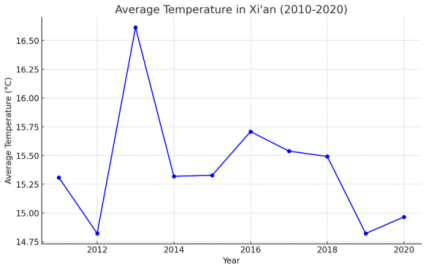
As the city of Xi'an expands rapidly, the urban heat island (UHI) effect and the greenhouse effect are becoming more and more pronounced in terms of the city's temperature impact. The dense population in the urban core, coupled with the expanding suburbs, makes the city's climate change particularly dramatic. This study examines how the greenhouse effect is further exacerbating the urban heat island effect in Xi'an, with a particular focus on the impacts on the city's energy demand, public health, and the quality of life of its residents. Based on long-term climate data, pollutant levels and satellite remote sensing analysis, the study shows that urban sprawl and the accumulation of greenhouse gases are clearly leading to an increase in the temperature difference between the city centre and the surrounding areas. These findings not only reveal the causes of localized climate anomalies, but also show increased health risks and energy demand for residents. Through these observations, this paper highlights the strong link between urban planning and climate, and suggests that the necessary measures to address these challenges are to increase green space and promote energy-efficient buildings, measures that are essential to alleviate the problems in Xi'an's urban environment.