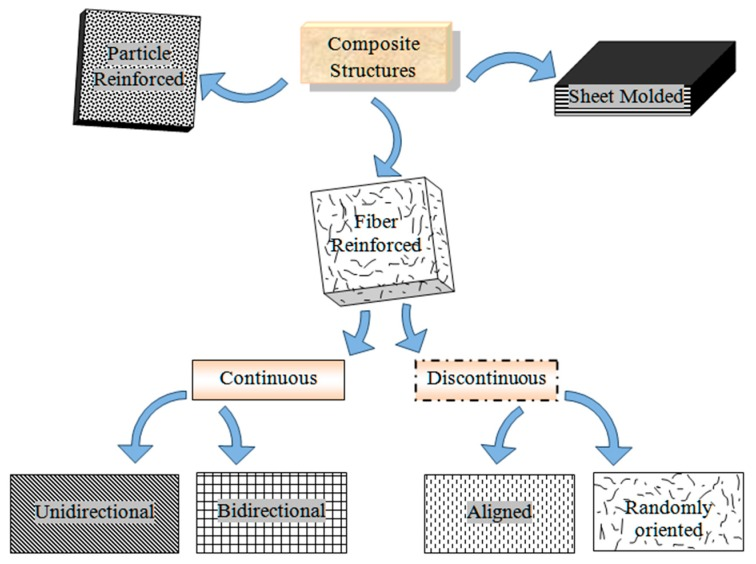
This paper presents a comprehensive review of the research advancements in fiber-reinforced polymer (FRP) composites. FRP composites, owing to their distinctive mechanical, lightweight, and corrosion-resistant properties, have emerged as essential materials across diverse fields. Structurally, they are categorized into micro-, meso-, and macro-structures, with fiber types, matrix polymers, and interface interactions being the decisive factors influencing their performance. Notably, recent years have witnessed remarkable progress. In civil engineering, the addition of specific substances has effectively augmented the properties of concrete. MXene, a two-dimensional nanomaterial, has demonstrated substantial potential in FRP composites. Its incorporation has led to enhanced mechanical strength, improved stability under harsh environmental conditions, and elevated electrical conductivity and thermal stability. Interface engineering plays a pivotal role in optimizing the performance of these composites. Furthermore, there is an increasing trend towards the development of multifunctional composites. In conclusion, this field is undergoing rapid evolution, and FRP composites are set to assume an increasingly significant position in future engineering applications.