Articles in this Volume

Research Article Open Access
A Comprehensive Review of Advancements and Evaluation Frameworks in AIGC for 3D Content Creation: Focusing on 3D Gaussian Splatting
In recent years, AIGC has made significant progress in various fields, particularly in the generation of 2D images. However, in the 3D domain, traditional 2D model training methods have not achieved ideal results due to the lack of sufficient high-quality datasets. To address this issue, methods such as utilizing 2D diffusion models as priors and emerging 3D Gaussian Splatting have demonstrated the significant potential of AIGC in the 3D field. With the rapid development of AIGC 3D, the related evaluation metrics have not yet been unified. Although quantitative evaluation of 3D content is challenging, establishing a standardized evaluation system is crucial for future research. This article summarizes the technological progress and evaluation systems in the AIGC 3D field, focusing particularly on the potential applications of 3D Gaussian point set technology, and discusses future development directions and the challenges they face.
Show more
Read Article PDF
Cite
Research Article Open Access
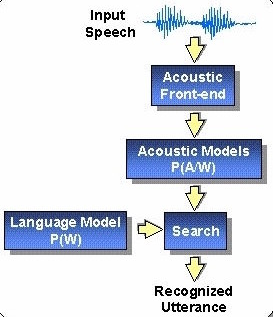
Research on the Application of Speech Recognition Technology Based on Transformer Model
Article thumbnail
Speech recognition technology has developed from the 1950s to the present, evolving from template matching methods to Hidden Markov Model (HMM) statistical methods, then to machine learning techniques, and finally to the current use of Transformer technology for speech recognition tasks. However, the Transformer model has not yet been widely adopted in the field of speech recognition. This paper explores the characteristics of Transformer model, combines it with the characteristics of speech recognition tasks, analyzes the challenges associated with using Transformer model for these tasks, and provides suggestions for directions of future research, so as to facilitate the application of Transformer models in speech recognition. The paper finds that the reasons for the limited application of Transformer models in speech recognition tasks mainly include their numerous parameters, complex structure, and high computational costs, which have prevented their extensive use in this field. In the future, efforts should focus on enhancing model compression and lightweight design, and improving the attention mechanism to boost the applicability of Transformer models in speech recognition.
Show more
Read Article PDF
Cite
Research Article Open Access
A Comprehensive Survey on Blockchain Technology: Consensus Algorithms, Data Storage Mechanisms, and Architectures
Blockchain technology has become a significant paradigm which has been utilized to transform various industries and applications. Its decentralized, transparent, and secure nature has led to widespread adoption in diverse fields such as finance, healthcare, supply chain management, and the Internet of Things (IoT). This paper presents a comprehensive survey of blockchain technology, focusing on three key aspects: consensus algorithms, data storage mechanisms, and blockchain architectures. We provide a detailed overview of various consensus algorithms, including Proof of Work (PoW), Proof of Stake (PoS), Delegated Proof of Stake (DPoS), Proof of Authentication (PoAh), and Practical Byzantine Fault Tolerance (PBFT), discussing their mechanisms, advantages, limitations, and challenges. Furthermore, we explore different data storage mechanisms, such as on-chain, off-chain, and hybrid storage, analyzing their implications for scalability, security, and efficiency. We also delve into various blockchain architectures, including single, dual, and multi-blockchain architectures, examining their suitability for different applications. This survey provides a holistic understanding of blockchain technology, highlighting its potential, challenges, and future directions. It serves as a valuable resource for researchers, developers, and practitioners interested in exploring and leveraging the capabilities of blockchain.
Show more
Read Article PDF
Cite
Research Article Open Access
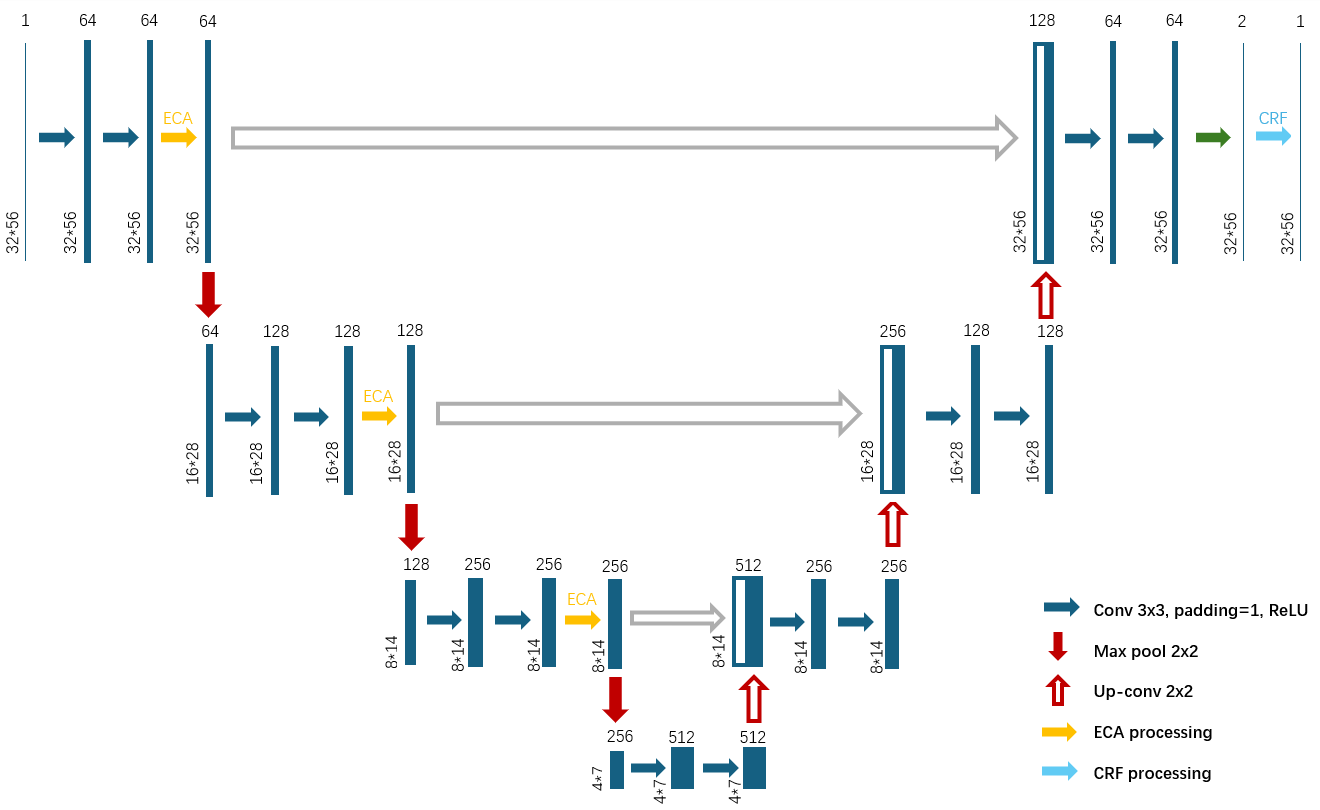
Improving U-net Model for Pulmonary Nodule Segmentation Through Attention Mechanism and Post-processing Module
Article thumbnail
Pulmonary nodule segmentation plays a crucial role in the early detection and diagnosis of lung cancer, significantly impacting patient outcomes. The U-net model has emerged as a useful architecture in medical image processing like pulmonary nodule segmentation, gaining widespread popularity. However, U-net suffers from poor fine segmentation capabilities and the presence of noise in the segmentation results. In this study, we propose an Enhanced U-net model to improve segmentation results. The Enhanced U-net uses ECA and CRF modules. ECA module can make the model focus more on important features and improve the fine segmentation ability of the model. Meanwhile, CRF module allows the model to further refine the results, reduce the noise and boundary discontinuities. Utilizing the LIDC dataset, we evaluate the model’s performance through indicators such as recall, IoU, Dice score. Our findings show that Enhanced U-net can achieve the best performance among all U-net based models. And Enhanced U-net can significantly improve segmentation outcomes for small or blurred nodules.
Show more
Read Article PDF
Cite
Research Article Open Access
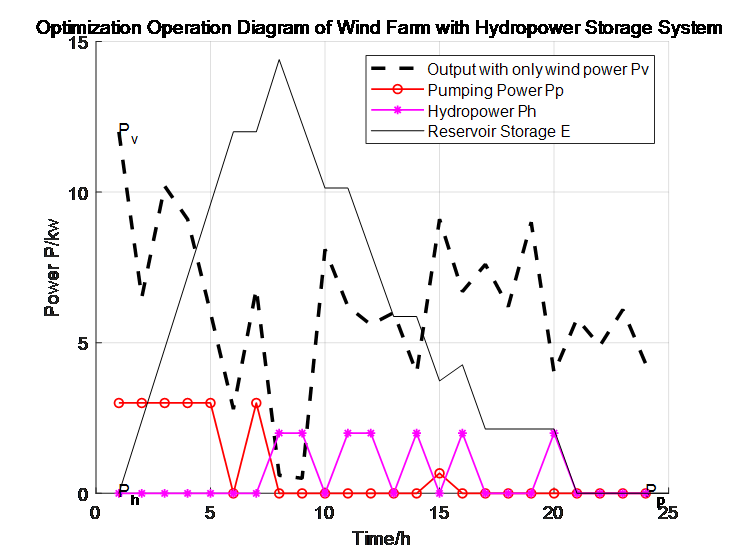
Particle Swarm Algorithm Based Economic Scheduling Strategy for Pumped Storage Wind Farms
Article thumbnail
With the goal of maximizing the benefits of Contained Storage wind farm, a particle swarm algorithm based simulation analysis is proposed for the optimized operation of Contained Storage wind farm . The simulation results show that the optimized operation and power supply of Contained Storage Wind Farm not only improves the benefit of the wind farm, but also smoothes the power output of the wind farm, which will be helpful to increase the share of wind power in the power system.
Show more
Read Article PDF
Cite
Research Article Open Access
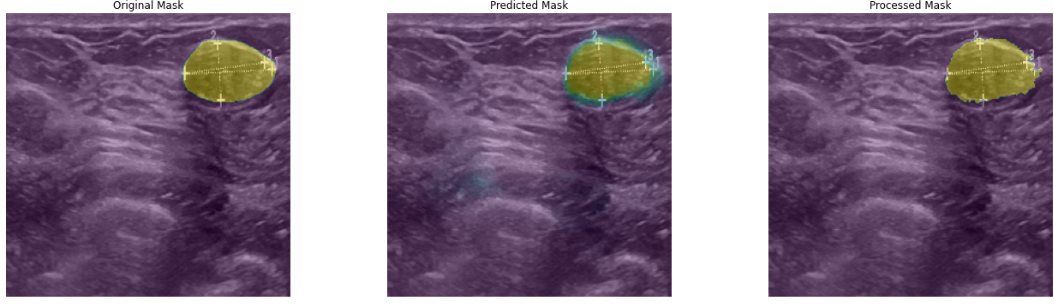
The Segmentation Model for Breast Cancer Ultrasound Image based on Attention U-Net
Article thumbnail
The segmentation of ultrasound image for breast cancer is an important task in the field of biomedical research. The traditional U-Net model, with its simple structure and remarkable performance, this approach has found extensive application in the segmentation of medical images. However, U-Net tends to be affected by background noise when handling images with complex backgrounds or blurry boundaries, which may impact the segmentation accuracy. To address this issue, the Attention U-Net model incorporates an attention mechanism, enabling the model to selectively focus on critical target areas within the image, thereby improving segmentation accuracy. This paper further optimizes the Attention U-Net architecture by increasing the depth of both the encoder and decoder sections, enhancing the model's capacity for feature extraction and image reconstruction. Consequently, both the accuracy and robustness of segmentation are enhanced. The experimental findings indicate that the proposed modified Attention U-Net model significantly outperforms traditional methods in breast ultrasound image segmentation tasks. It effectively handles various types of breast images, particularly those with complex backgrounds, blurred targets, or small sizes, maintaining high segmentation accuracy. This study offers an effective solution for the automated segmentation of breast ultrasound images, with substantial implications for enhancing both the automation and diagnostic efficiency in medical image analysis.
Show more
Read Article PDF
Cite
Research Article Open Access
The Principles of Wireless Power Transfer for Drones and Optimization of Wireless Charging Efficiency
In September 2020, the Chinese government pledged at the 75th United Nations General Assembly to achieve peak carbon emissions before 2030 and carbon neutrality before 2060. As the nation advances its carbon peaking and carbon neutrality goals, the demand for technologies supporting green and low-carbon transitions has surged, particularly in high-energy-consuming sectors like power inspection. Traditional manual inspection methods are struggling to meet the operational and maintenance demands of modern smart grids due to limitations such as low efficiency, high operational risks, and incomplete inspection coverage. While unmanned aerial vehicle (UAV) inspection offers significant advantages, its limited flight time remains a major challenge to its widespread adoption. This paper focuses on analyzing and optimizing the endurance of UAVs in power line inspection based on wireless power transfer (WPT) technology. The aim is to provide a more efficient charging solution for UAVs by proposing strategies to maximize channel gain, thereby overcoming endurance limitations and promoting the extensive application of UAV technology in smart grid inspection to support the national strategy for green and low-carbon transition.
Show more
Read Article PDF
Cite
Research Article Open Access
Challenges and Trends in Brain-Computer Interface Technology
Article thumbnail
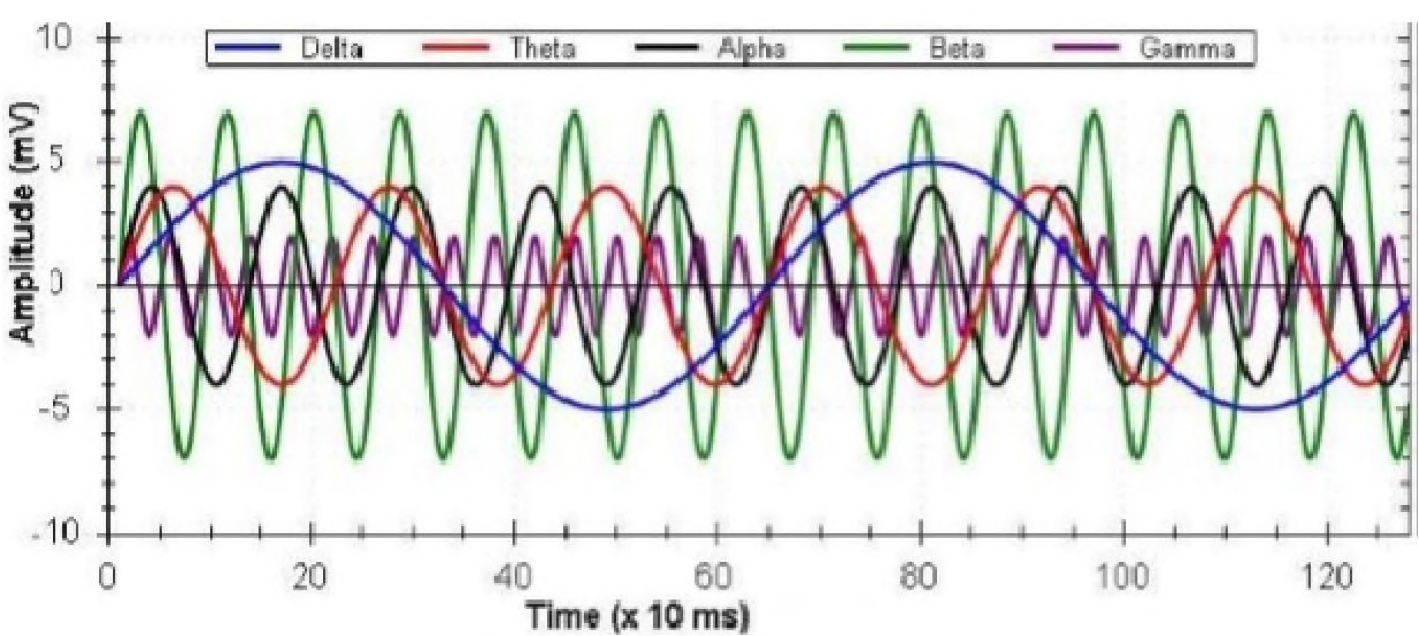
Brain-Computer Interface (BCI) technology has become one of the focal points of scientific research in the modern world. Researchers from all corners of the globe have made significant contributions to this field, driving the continuous advancement of BCI technology. By 2025, Brain-Computer Interface (BCI) technology has become a groundbreaking human-machine interaction technology, enabling communication between the human brain and the external world, no longer a fantasy from science fiction but a tangible reality. It has now been widely applied across numerous fields, including communication, movement control, environment control, neurorehabilitation, and others.This paper first presents the basic principles of brain-computer interface (BCI) technology and provides a detailed classification of BCIs. It then reviews and enumerates the latest advancements in BCI research, exploring the various steps that form a standard BCI, including signal acquisition, preprocessing, feature extraction, and the control interface, while also investigating several mathematical algorithms. The aim is to gain a deeper understanding of BCI technology. Finally, the paper concludes with a summary and outlook on the future development prospects of this technology.
Show more
Read Article PDF
Cite
Research Article Open Access
GNN-Augmented RL for Fraud Detection in Decentralized Finance
Article thumbnail
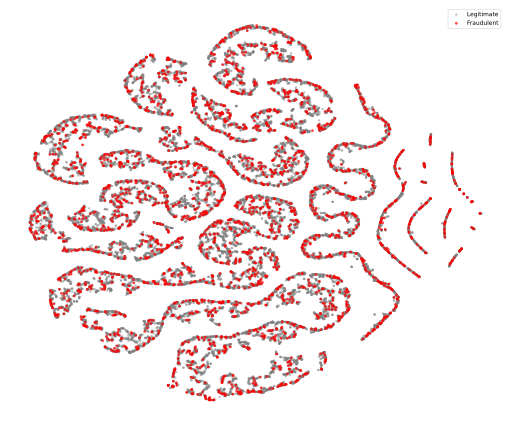
Decentralized Finance (DeFi) has revolutionized financial transactions by enabling open, permissionless access to financial services. However, its lack of centralized oversight and pseudonymous architecture have also brought by fraudulent activities. This study presents a novel framework for fraud detection in DeFi that integrates graph neural networks (GNNs) with multi-agent reinforcement learning (MARL). Leveraging a directed transaction graph comprising 50,000 Ethereum addresses and over 120,000 token transfers, this paper evaluates four detection pipelines: extreme gradient-boosted decision trees (XGBoost), a GNN-only model (GCN), a standalone reinforcement learning agent (PPO), and a proposed GNN+RL hybrid model. The hybrid system combines graph-based embeddings with adversarial policy learning, where a fraudster and a detector co-evolve through a multi-agent PPO setup using PettingZoo’s ParallelEnv. Synthetic fraud strategies are generated using a GAN and projected into the GCN embedding space to simulate adaptive threats. Experimental results show that while GCNs outperform flat-feature models, the GNN+RL hybrid achieves superior balance across accuracy (84.58%), AUC (0.8176), and F1 score (0.7493), capturing both structural and behavioral fraud signals. Reward convergence curves further illustrate emergent adversarial dynamics. The proposed framework demonstrates the effectiveness of combining relational inductive biases, dynamic decision-making, and adversarial augmentation for resilient fraud detection. Future work includes extending to cross-chain analytics and enriching contextual understanding through integration with large language models.
Show more
Read Article PDF
Cite
Research Article Open Access
Medical Named Entity Recognition Based on Bidirectional Gated Pyramid Network
Article thumbnail
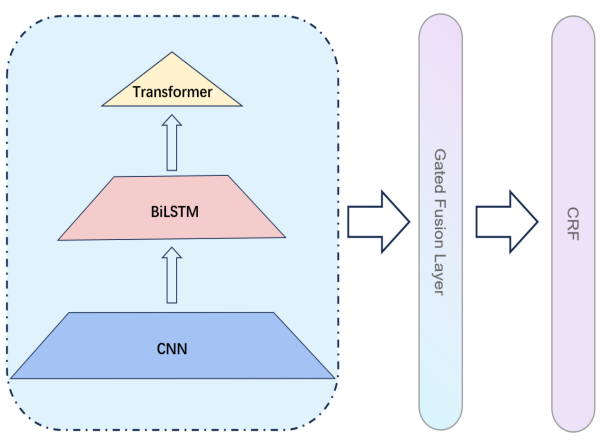
The rapid advancement of Internet-based healthcare technologies drives the daily generation of massive medical datasets, which hold substantial value for enhancing clinical decision support systems and facilitating evidence-based real-world medical research. Medical named entity recognition (NER) is important in the aforementioned research topics. In this paper, we propose a novel Bidirectional Gated Pyramid Network (BGPN), which consists of a convolution layer for extracting character-level features, a bidirectional LSTM (BiLSTM) layer for extracting local inter-sentence information, a Transformer layer for extracting long-distance textual information, and a gated fusion layer for dynamically updating the fusion weights of different levels. In addition, we incorporate a conditional random field (CRF), which enables the network to output the optimal prediction sequence of the BIO label. We validate our proposed method on the BC5CDR dataset, and the results show that our model achieves F1 scores of 0.79 and 0.70 for the two classes of named entities, chemical, and disease, with accuracies of 0.91 and 0.71, respectively.
Show more
Read Article PDF
Cite