Articles in this Volume

Research Article Open Access
Research on Stair Wear of Ancient Building
Article thumbnail
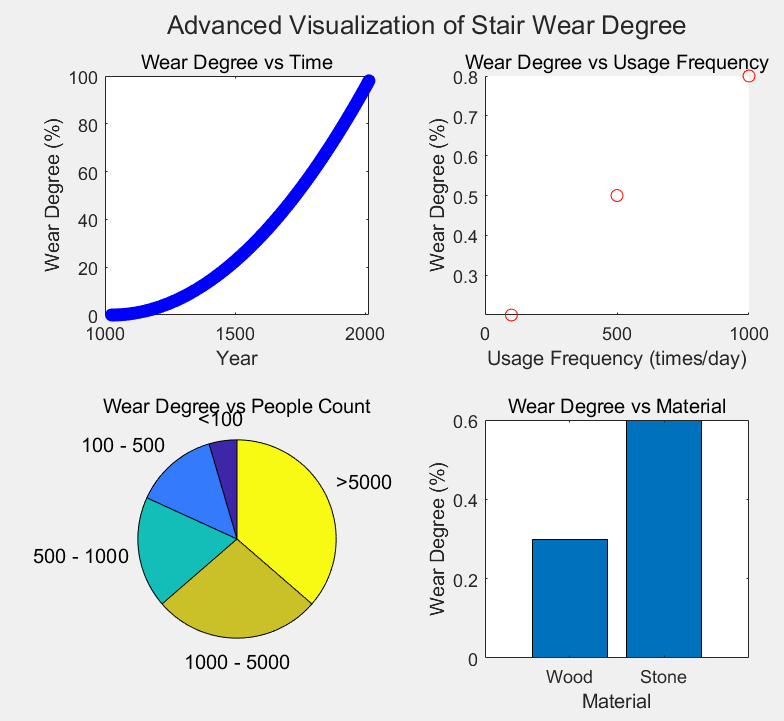
This paper focuses on the research of ancient building staircases, developing multiple models for wear analysis and traffic flow prediction. Firstly, relevant data on wear and traffic flow are collected, including material properties, surface conditions, and the number of staircase users. Model I is based on material mechanics and surface wear theory, constructing W = f (F, D, M) to examine the degree of wear; Model II combines LWR traffic flow and queuing theory, constructing Q = g(ρ, v, lq, tq) to analyze traffic flow; Model III is a PSO model that improves the first two, using the mean square error between predicted and actual data as the fitness function. The results show that the staircase wear model has good explanatory power, the traffic flow model has a high accuracy rate during peak and off-peak hours, and the mean square error of the combined model after PSO optimization is reduced by 30%, with improved fitting performance, providing an important reference for the maintenance, protection, and usage planning of ancient building staircases.
Show more
Read Article PDF
Cite
Research Article Open Access
Construction and Empirical Study of the Quantitative Model of the Whole Process of Building Carbon Emissions
Article thumbnail
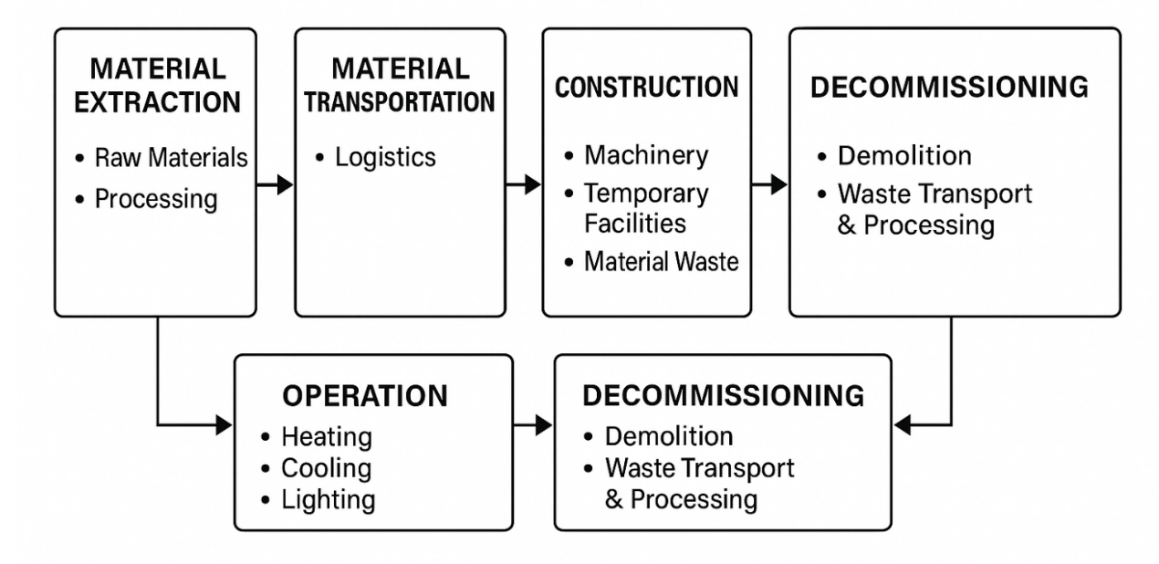
To enable systematic quantification and effective control of carbon emissions in the construction industry, this paper proposes a life cycle-based carbon emission model. Grounded in LCA principles, the model spans four stages: material production, construction, operation, and demolition. It integrates phased accounting with unified aggregation to ensure a closed-loop calculation process. Parameters are derived from the “Building Carbon Emission Calculation Standard” and the China Life Cycle Database (CLCD). Empirical validation on public buildings in Shanghai demonstrates the model’s stability and its ability to identify high-emission stages and optimization opportunities. The model proves applicable to carbon verification, green building evaluation, and full-process carbon management, showing strong practical value and scalability.
Show more
Read Article PDF
Cite
Research Article Open Access
Review on Biological-based Hydrogels for Advanced Applications
Article thumbnail
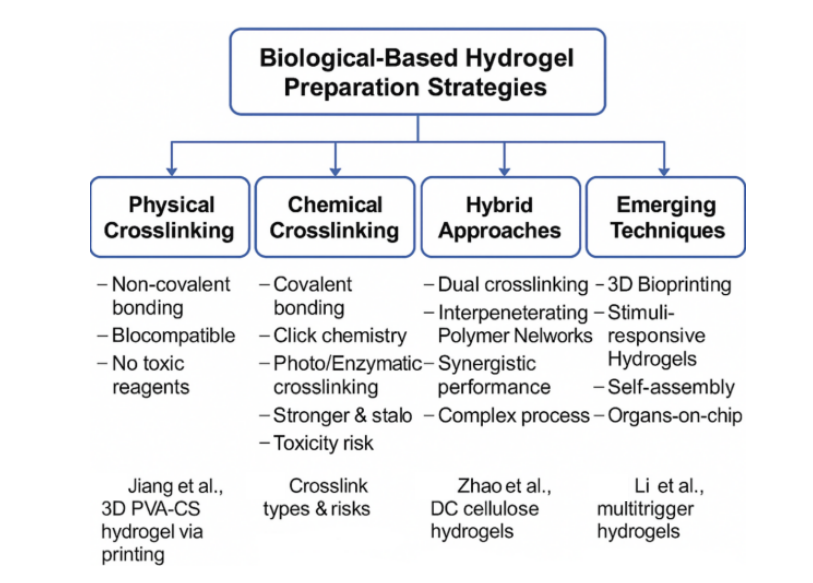
Bio-based hydrogels, derived from natural materials such as chitosan, alginate, gelatin, and collagen, have garnered significant attention for their outstanding biocompatibility and ability to mimic natural tissues. This review examines commonly used preparation methods, including physical, chemical and hybrid cross-linking, along with their primary components, such as polysaccharides and proteins. Owing to their flexibility and responsiveness, these hydrogels are widely used in areas such as soft robotics, cancer therapy and biosensing. However, despite promising advancements, significant challenges persist, particularly regarding their limited strength and stability. Future research should aim to enhance the performance and reliability of these materials to support their integration into complex medical and engineering systems.
Show more
Read Article PDF
Cite
Research Article Open Access
Study on Properties Optimization and Advanced Preparation Techniques of Alumina Ceramic Electronic Substrates
Article thumbnail
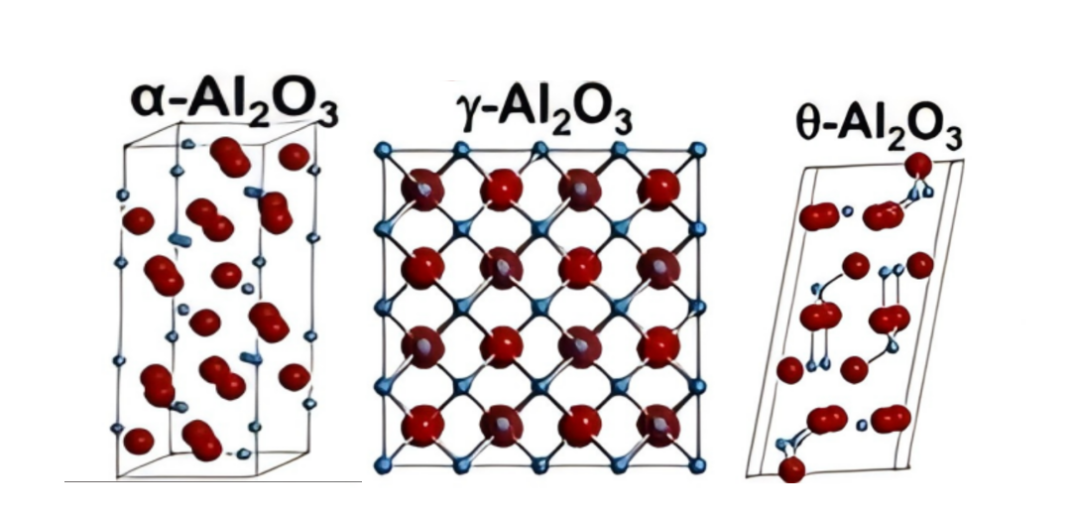
Alumina (Al₂O₃) ceramics have become indispensable materials in the field of electronic substrates due to their excellent thermal conductivity, high insulation, and mechanical stability. This study systematically investigates the atomic bonding, crystal structure, and phase transformation behaviors of Al₂O₃ under various synthesis and sintering conditions. Emphasis is placed on the correlation between phase diagrams and material performance, particularly in relation to impurity control and sintering aids such as MgO. The findings provide a theoretical and practical basis for optimizing the preparation of high-purity α-Al₂O₃ substrates to meet the stringent requirements of modern electronic packaging.
Show more
Read Article PDF
Cite
Research Article Open Access
Integrated Near-Infrared Fluorescence Bioimaging and Targeted Drug Delivery Platform Based on Carbon Dot–Doped Biocompatible Hydrogel
Article thumbnail
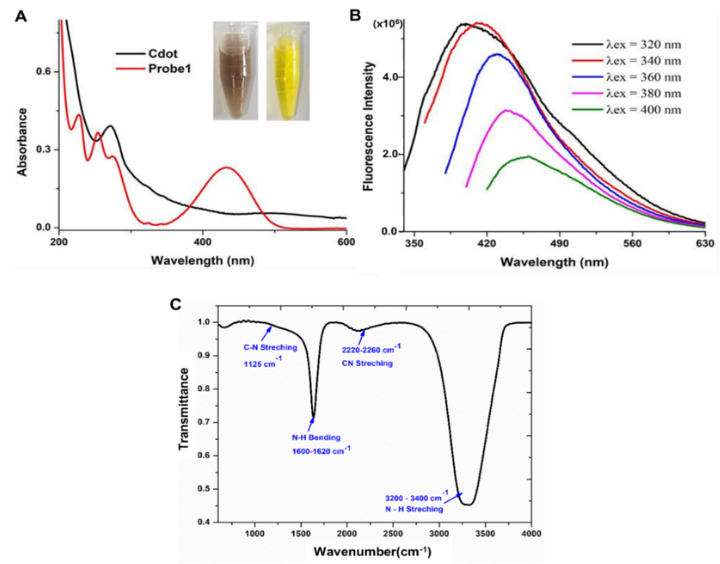
We developed an integrated diagnostic and treatment platform. Near-infrared (NIR) luminescent carbon (CD) dots are embedded in cross-linked polyethylene glycol-sodium alginate (PEG-ALG) hydrogel to achieve synchronous deep tissue fluorescence imaging and targeted chemotherapy. The average particle size of CDs synthesized by hydrothermal method was 3.2 ± 0.7 nm, the quantum yield was 43.5 ± 1.8%, and the emission peak was located at 820 nm under excitation at 760 nm. Peg-alg hydrogels (10 wt% PEG-DA, 2 wt% sodium alginate) formed porous networks (pore diameter 50-150 µm), with a compressive modulus of 18.7 ± 1.2 kPa and a swelling ratio of 325 ± 18% in PBS (37°C). The inclusion of 0.5 wt% CDs reduced the fluorescence intensity by only 8%. The encapsulation ratio of doxorubicin (DOX) was 85.2 ± 3.4%, and the cumulative rejection at 72 hours was 68.4 ± 2.1%. In vitro experiments showed that Hela cells took up CDs up to 22,400 ± 1,230 c.u. /10⁴ cells (free CDs were 4,100 ± 320 c.u.) and penetrated 4.5 mm into 3D spheres. In the in vivo experiment, the FA-CD-hydrogel /DOX reached peak tumor fluorescence at 6 hours and inhibited the growth of MCF-7 xenograft tumors by 48% within 21 days (free DOX was 14%). This platform provides a highly biocompatible and targeted specific solution for image-guided local chemotherapy.
Show more
Read Article PDF
Cite
Research Article Open Access
Construction and Application of a Directed Evolution-Based Multi-Enzyme Cascade Catalytic System for Semi-Synthesis of Chiral β-Hydroxy Acids
Article thumbnail
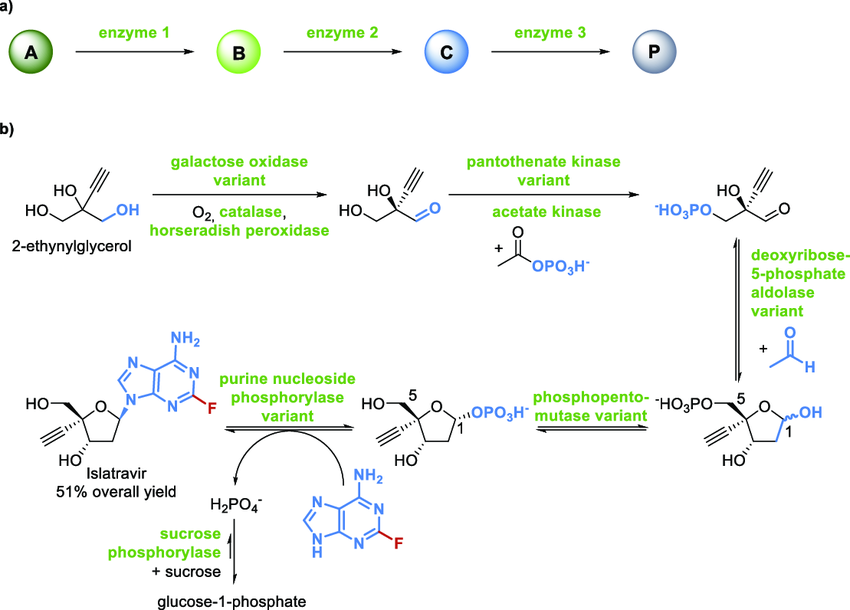
In this study, a directed evolution-driven multi-enzyme cascade system was constructed to achieve efficient semi-synthesis from β-keto acids to chiral (R)-β-hydroxy acids. Through three rounds of directed enzyme modification: ketone reductase (KRED), epoxide hydrolase (EH), and carboxylic acid ligase (CAL) were subjected to random mutagenesis, high-throughput screening, and recombination, respectively, to obtain the mutants KRED-E23, EH-M12, and CAL-F45. Under the same reaction conditions, the catalytic efficiency was increased by 3 to 5 times. In the one-pot reaction at pH 7.5 and 25℃ of this optimized system, the conversion rate of 2-oxo-4-methylvaleric acid to the target product reached 95.2 ± 1.1% within 4 hours, and the enantiomer excess value was 99.4 ± 0.2%. When scaled up to 1 liter, it maintained a high conversion rate (93.7%) and chiral purity (98.9%), obtaining 9.37 grams of product, with a spatio-temporal yield of 2.34 grams · liter ⁻¹ · hour ⁻¹. This achievement proves that the combination of directional evolution and cascade design can efficiently prepare high-value chiral blocks under mild conditions. The modularization and robustness of the system constitute a new platform for the industrial production of complex three-dimensional molecules.
Show more
Read Article PDF
Cite
Research Article Open Access
Real Time Carbon Footprint Accounting and Policy Simulation for Global Supply Chains via Multi Agent Digital Twins
Article thumbnail
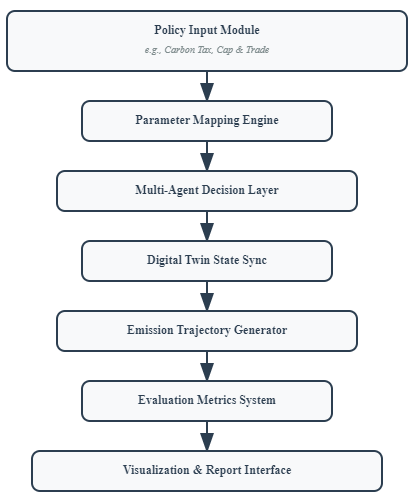
Driven by the global carbon neutral strategy, the visualization, responsiveness and strategy adaptation of carbon emissions of transnational supply chains have become the core challenges in digital sustainable governance. Aiming at the problems of poor real-time and lagging feedback of traditional LCA methods, this paper constructs a real-time accounting and policy simulation platform for global supply chain carbon footprint that integrates multi-intelligent body system and digital twin technology to realize the dynamic perception and intelligent response to the multi-node and whole process of carbon emission. The platform integrates distributed IoT collection, edge computing, cognitive prediction model and policy gaming mechanism at the system architecture level, and verifies its significant improvement in data updating frequency, prediction accuracy and event response speed by comparing experiments with static LCA and IoT semi-real-time solutions. Further, through the simulation of four types of policies, namely carbon tax, carbon trading, subsidy and technology standard, the system shows strong policy adaptability and emission reduction control ability, and it is found that the optimal combination of medium-intensity carbon tax, cap-and-trade and targeted subsidy is the optimal combination, which takes into account the environmental benefits and the economic cost control. The study shows that the platform can be used as an important technology path to support carbon governance in global supply chains, and promote the paradigm shift from “after-the-fact accounting” to “real-time sensing” and “forward-looking governance”.
Show more
Read Article PDF
Cite
Research Article Open Access
Optimizing Construction Supply Chains in Smart Building Projects via a GIS–BIM Collaborative Platform and Machine Learning–Driven Delivery Forecasting
Article thumbnail
Smart construction projects require a high degree of collaboration among multiple participants to ensure timely delivery of materials. However, traditional planning methods are often limited by dynamic site conditions and fragmented data. This study proposes a framework integrating geographic information system (GIS), building information modeling (BIM), and machine learning (ML), aiming to optimize end-to-end construction supply chain logistics. This platform integrates spatiotemporal data such as road networks, real-time traffic flows, 3D building models, and historical distribution records, and adopts a hybrid prediction mechanism combining random forest and long short-term memory (LSTM) networks. The cloud-based visual dashboard integrates 3D models with spatial scenes, synchronously pushing predictive alerts, allowing planners to simulate different scenarios and proactively avoid delays. A case study of a high-rise project in Shanghai (involving over 1,200 freight trips) shows that the integrated system achieved an on-time delivery rate of 88%, reduced the average delivery time by 23 minutes per trip, and reduced the prediction error from 48 minutes to 29 minutes. Participants reported a significant reduction in unused labor hours and emergency changes to orders. This achievement provides a scalable example of data-driven supply chain management in the field of smart construction. In the future, it will explore enhanced features such as reinforcement learning-based dynamic route planning and blockchain-backed smart contracts.
Show more
Read Article PDF
Cite
Research Article Open Access
Perovskite Quantum Dot Defect Passivation: Research Status and Future Directions
Defect passivation technology for perovskite quantum dots significantly enhances their fluorescence quantum yield and stability by suppressing surface and lattice defects. This is a critical path to overcoming the bottleneck of high color gamut and high-efficiency luminescent materials in Micro-LED displays, providing core assurance for their commercial application. Therefore, this paper analyzes the current research status and future development directions. The study adopted a literature review and analysis approach, employing strategies such as surface ligand modification (e.g., dual ligand co-passivation), ion doping (e.g., metal cation substitution), and core-shell structure design. These methods effectively suppress surface dangling bonds, halogen vacancies, and ion migration defects in perovskite quantum dots, significantly enhancing their photoluminescence quantum yield (up to over 90%) and environmental stability (humidity tolerance increased by 3-5 times). This addresses non-radiative recombination and light efficiency degradation, enabling high color gamut (>120% NTSC), narrow half-peak width (<20 nm), and excellent blue light excitation compatibility in Micro-LED displays. It provides a key material foundation for full-color, high-brightness Micro-LED devices. However, further optimization is needed for long-term stability, large-scale manufacturing, and integration compatibility. Future efforts should focus on in-situ encapsulation and dynamic defect repair mechanisms to promote industrialization.
Show more
Read Article PDF
Cite
Research Article Open Access
Application of LSTM Model Considering Temporal Dependency in Electric Vehicle Power Load Forecasting
Article thumbnail
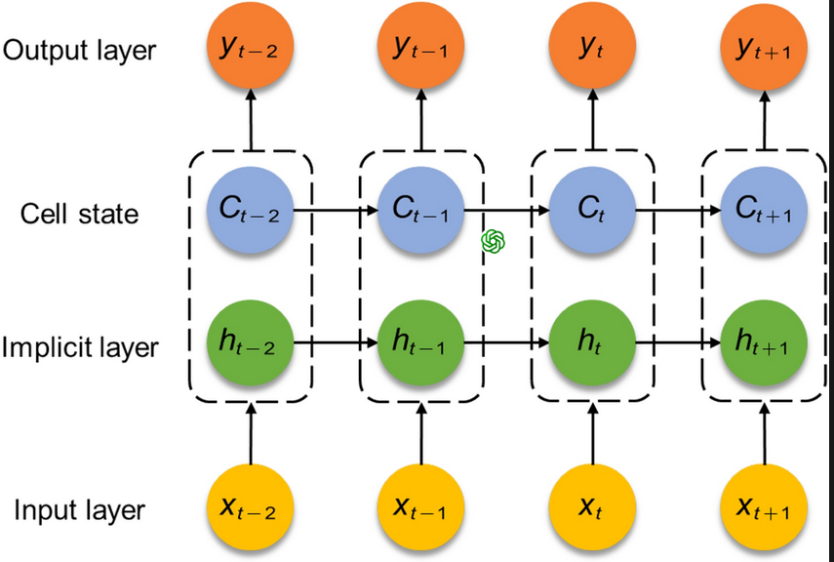
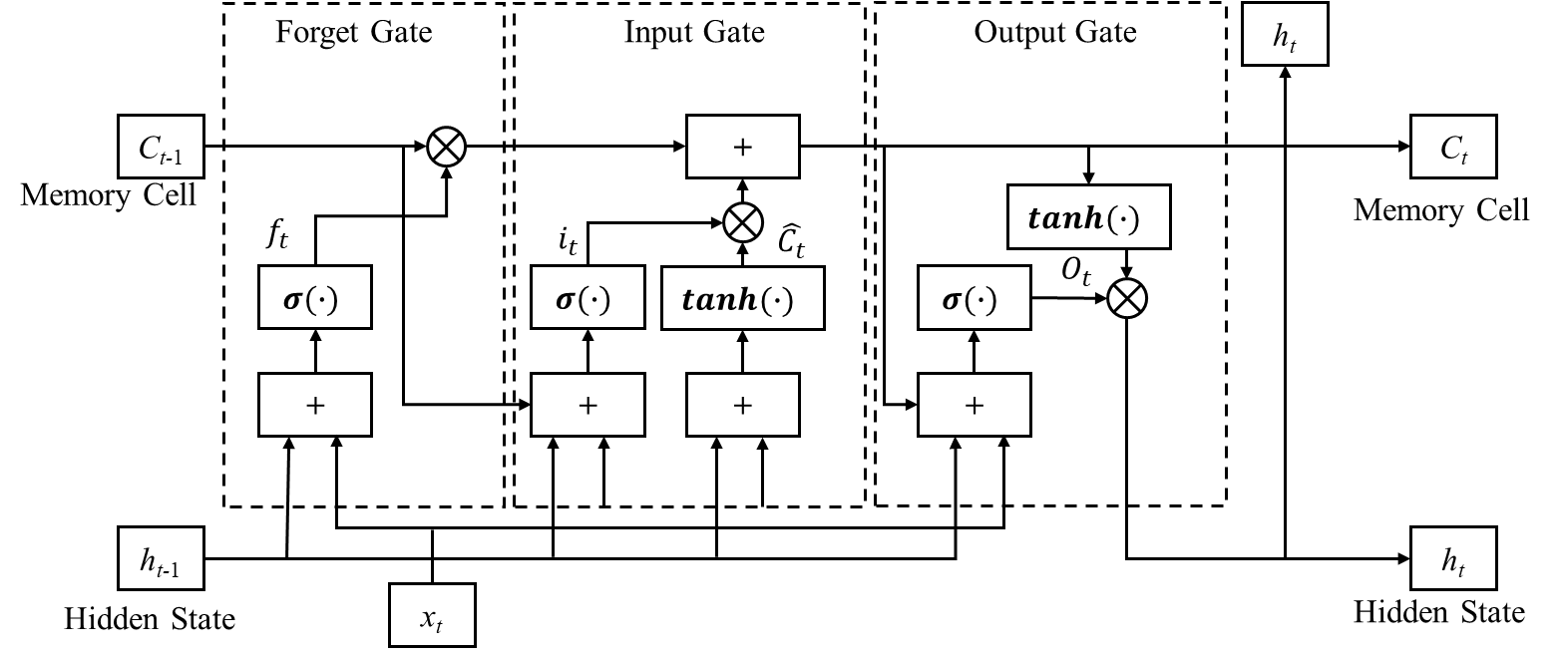
Power load forecasting is crucial for ensuring the safe and economical operation of modern power systems. Nowadays, a large number of electric vehicles (EVs) have been integrated into power systems, causing certain impacts on them. To address the issues of nonlinearity and temporal dependency in electric vehicle load data, this study proposes a short-term power load forecasting model based on Long Short-Term Memory (LSTM) neural networks. The model first performs data preprocessing, including missing value imputation and min-max normalization, and constructs 96-time-step sequences through feature engineering. It adopts a two-layer LSTM network combined with fully connected layers, with Mean Squared Error (MSE) as the loss function, and is trained for 30 epochs. Experimental results based on 2024 electric vehicle load data from a certain region in China show that the MSE of the training set and validation set drops to 0.00013 and 0.00009, respectively. The Mean Absolute Percentage Error (MAPE) between the predicted values and the actual values is only 0.91%, with a high degree of curve overlap. This indicates that the LSTM model can effectively capture the temporal dependency in power loads and provide an efficient and reliable solution for power systems.
Show more
Read Article PDF
Cite