Articles in this Volume

Research Article Open Access
Design and Simulation of a U⁺-Band Fiber Laser Using Ho³⁺-Doped ZBLAN Glass
Article thumbnail
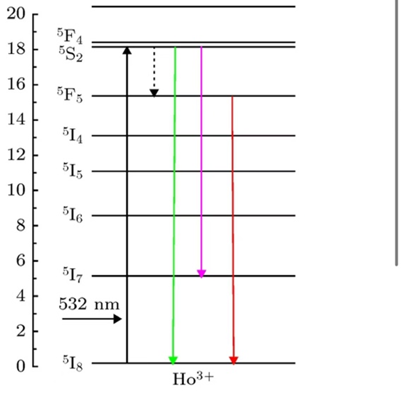
This study aims to explore the application of Ho³⁺-doped ZBLAN glass in U⁺-band (1700–1800 nm) fiber lasers. This spectral region possesses low water absorption and minimal biological tissue scattering, making it broadly applicable for deep biological tissue imaging, molecular spectroscopy identification, gas sensing, and military optoelectronic systems, thus significantly advancing optical communication, industrial processing, and biomedical fields. Using MATLAB simulation software, we constructed a theoretical model for a Ho³⁺-doped ZBLAN fiber laser based on rate equations and power propagation equations. Simulation results demonstrated a linear increase in output power with increasing pump power under conditions of fiber length 1.2 m, doping concentration 6.0×10²⁵ m⁻³, and pump wavelength of 1150 nm. Specifically, a maximum laser output power of approximately 1.28 W was achieved at a pump power of 20 W. Furthermore, the simulation results verified the consistency of the physical mechanisms of the model and the laser establishment process, with a threshold pump power of approximately 1.7 W and a slope efficiency of 6.7%. This research provides theoretical support and practical reference for the design and performance optimization of efficient U⁺-band fiber lasers. Future work could further optimize doping concentration, pumping structure, and fiber core design to enhance optical-optical conversion efficiency and output power, meeting higher power application demands and promoting technological advancements in related fields.
Show more
Read Article PDF
Cite
Research Article Open Access
Advances in Integrated Prediction Methods for Complex Volcanic Reservoirs and Their Applications
Article thumbnail
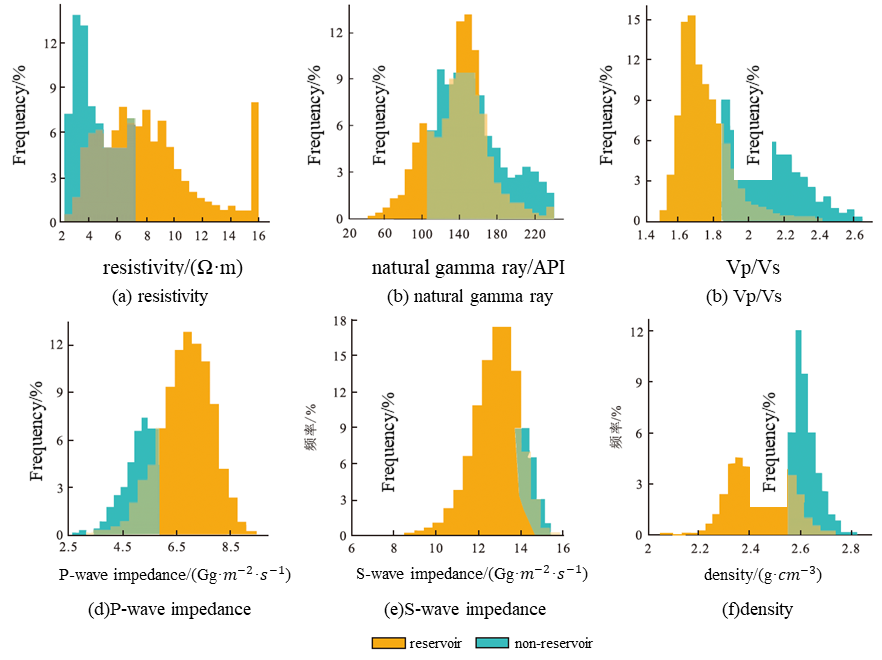
Volcanic reservoirs represent a significant domain in global hydrocarbon exploration, characterized by substantial resource potential yet considerable exploration challenges. These reservoirs exhibit diverse storage types, complex pore structures, highly variable fracture development, and strong heterogeneity, which render conventional exploration methods inadequate for effective prediction. This paper provides a systematic review of recent advances in the study of volcanic reservoirs, focusing on rock physical characteristic analysis, well-log interpretation, seismic inversion techniques, and integrated prediction using multi-scale data. The applications and limitations of existing technologies are summarized. Research indicates that the identification of sensitive parameters based on rock physical analysis offers a theoretical foundation for reservoir prediction. Techniques such as pre-stack geostatistical inversion have significantly enhanced the accuracy of volcanic reservoir characterization. Moreover, the integration of multi-disciplinary data and facies-controlled modeling has considerably improved the reliability of reservoir predictions. Nevertheless, current research still suffers from insufficient understanding of reservoir formation mechanisms, limited integration of multi-scale data, and a lack of generalizability in predictive models. Future studies should focus on developing intelligent prediction technologies leveraging interdisciplinary approaches and deepening quantitative evaluation and geological modeling of volcanic reservoirs to facilitate efficient exploration and development.
Show more
Read Article PDF
Cite
Research Article Open Access
Experimental Research on Deployable Bridge
Article thumbnail
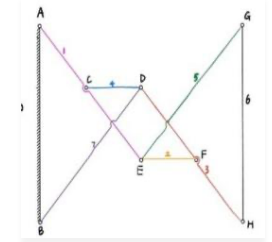
This project explores the design of a compact deployable bridge that can be quickly assembled for rescue or temporary crossing. The structure combines a four-bar linkage frame on each side with a waterbomb origami deck, allowing the bridge to fold in two directions and stay stable after unfolding. The motion of the linkage was analysed using a complex-plane vector model to determine the relationship between link lengths and folding range. Based on this analysis, the geometry was optimised to reach a maximum span of 4.33 m while keeping the folded length below one-fifth of its deployed size. The waterbomb pattern was selected for the deck because it provides higher stiffness, smoother surface alignment, and better adaptability to uneven ground compared with single-direction folds. Several wooden prototypes were built to verify the motion sequence and connection details between the deck and frame. The final design can deploy continuously and lock automatically without extra fasteners. These results suggest that combining mechanical linkages with origami geometry offers a practical solution for lightweight bridges suitable for emergency rescue, military operations, and temporary field structures.
Show more
Read Article PDF
Cite
Research Article Open Access
Research Progress of Carbon Nanotubes in Integrated Circuits
As the integrated circuit process enters the node below 7nm, Moore's Law approaches the physical limit. Carbon nanotubes (CNTs) have become the ideal channel materials in the post-molecular era due to their one-dimensional nanoscale structure, ultra-high carrier mobility, and excellent mechanical flexibility. This paper systematically reviews the research progress of carbon nanotubes in integrated circuits. First, this paper analyzes the chirality dependence of semiconductor carbon nanotubes and the challenges of ultra-high purity preparation, and focuses on the polymer purification and self-assembly technology to achieve wafer-level high-density arrays. Secondly, this paper discusses the performance advantages of carbon nanotube field-effect transistors in logic devices (such as ternary gate circuits, adders), memory, and fin field-effect transistor architecture. Finally, this paper analyzes the potential of carbon nanotubes in interconnection technology. Its current carrying capacity and thermal conductivity are significantly better than copper interconnection. Although there are still challenges in the large-scale preparation and integration process of carbon nanotube technology, it is expected to promote the practical application of carbon-based electronics through heterogeneous integration and 3D architecture innovation.
Show more
Read Article PDF
Cite
Research Article Open Access
Durability Challenges and Mitigation of Fe–N–C Single-Atom Catalysts in Acidic PEMFCs: Mechanisms, Strategies, and Perspectives
Proton exchange membrane fuel cells (PEMFCs) face critical challenges of high cost and limited operational lifespan, primarily due to the insufficient stability of conventional platinum-based catalysts. Fe–N–C single-atom catalysts have attracted extensive attention for their Pt-comparable activity; however, their durability remains a major limitation. This review systematically analyzes the trade-off between cost and durability in PEMFCs, with particular emphasis on the “deactivation chain” and associated engineering strategies. Four dominant deactivation mechanisms are summarized—demetalization, carbon/nitrogen framework corrosion, Fenton-type self-amplification, and interfacial mass-transfer imbalance—along with five representative mitigation strategies: heteroatom co-doping, secondary coordination engineering, protective shell construction, interface and water management, and self-healing approaches. Key performance indicators such as electrochemical surface area loss, voltage decay rate, and Fe dissolution rate are comparatively synthesized from the literature. The findings reveal that catalyst deactivation involves strong coupling and amplification effects, while multi-strategy integration can significantly alleviate early-stage performance degradation. Finally, the review highlights the urgent need for unified durability evaluation protocols, advanced multi-physics coupling characterizations, and scalable self-healing architectures to bridge current research gaps and accelerate the practical deployment of Fe–N–C catalysts in PEMFCs.
Show more
Read Article PDF
Cite
Research Article Open Access
Comparison of Toroid and E-I Magnetic Core in Modern Common Mode Choke
Article thumbnail
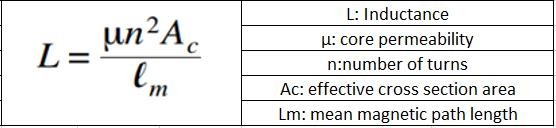
In contemporary power electronic systems, common-mode chokes are crucial parts for suppressing electromagnetic interference (EMI). High-permeability magnetic material is always desired by engineers to achieve higher inductance and better noise suppression. This article compared the inductance, impedance, and frequency response of two commonly used magnetic core structures: E-I cores and toroidal cores. Experimental results show that toroidal cores offer higher inductance at low frequencies, but their performance degrades significantly above 100 kHz due to core loss and magnetic saturation. On the other hand, the small natural air gap between the E and I elements reduces effective permeability, helping to minimize high-frequency losses and allowing the E-I core to maintain more stable characteristics across a wider frequency range. In order to address the trade-offs between permeability, inductance, and stability, the article also compares two ferrite materials (R10K and R15K) and discusses how material selection influences performance, providing useful guidance for modern common-mode choke design.
Show more
Read Article PDF
Cite
Research Article Open Access
Fuel Switching and Energy Security: Evidence from Gas–Coal Substitution in European Electricity Generation
The European energy crisis, exacerbated by the Russia–Ukraine conflict, exposed the fragility of gas-dependent power systems and underscored the urgent need to understand short-term substitution dynamics between conventional fossil fuels. While renewable energy is the long-term solution for decarbonization, near-term resilience depends on the balance between gas and coal. This study examines coal–gas substitution in European electricity generation, focusing on how relative fuel prices and carbon pricing influence generation patterns. A monthly panel of 27 EU member states from 2015 to 2024, the research employs fixed-effects models to estimate substitution effects, with robustness checks incorporating carbon-inclusive costs and heterogeneity tests by fuel structure and crisis periods. Results show that a 1% increase in the relative gas–coal price reduces the gas share by about 0.11, while a €10/t rise in the carbon price raises it by roughly 1.4 percentage points. Carbon pricing amplifies responsiveness to relative prices, with stronger substitution in high gas-share and low coal lock-in countries, whereas crisis conditions preserved price effects but weakened policy impacts. These findings provide new evidence on short-term resilience and inform strategies to enhance flexibility and reduce structural dependence.
Show more
Read Article PDF
Cite
Research Article Open Access
A Comprehensive Study on Spectrum Sharing Between Cellular Networks and Wi-Fi Networks
Article thumbnail
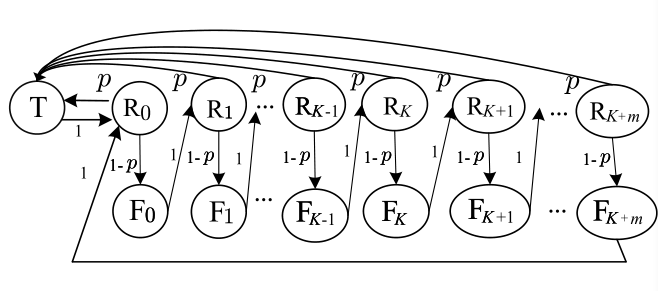
This report provides a systematic analysis of spectrum sharing between cellular networks and Wi-Fi systems. With exponential growth in wireless data traffic and emerging technologies like 5G and Wi-Fi 6, efficient utilization of unlicensed frequency bands has become a critical challenge. The paper examines technical barriers, existing coexistence mechanisms, performance evaluation methodologies, and future research directions. Fundamental differences between cellular time-division multiplexing mechanisms and Wi-Fi's competitive protocols create significant obstacles for achieving harmonious spectrum sharing. Through detailed analysis of collaborative strategies, AI-driven technologies, and physical layer innovations, the report highlights both existing advancements and unresolved challenges. Finally, it discusses emerging trends, including 6G spectrum utilization, smart metasurfaces, semantic communication, and green networks, providing a roadmap for future research and standardization efforts.
Show more
Read Article PDF
Cite
Research Article Open Access
Troubles Meet in Extreme Temperatures of Lithium-ion Battery
Article thumbnail
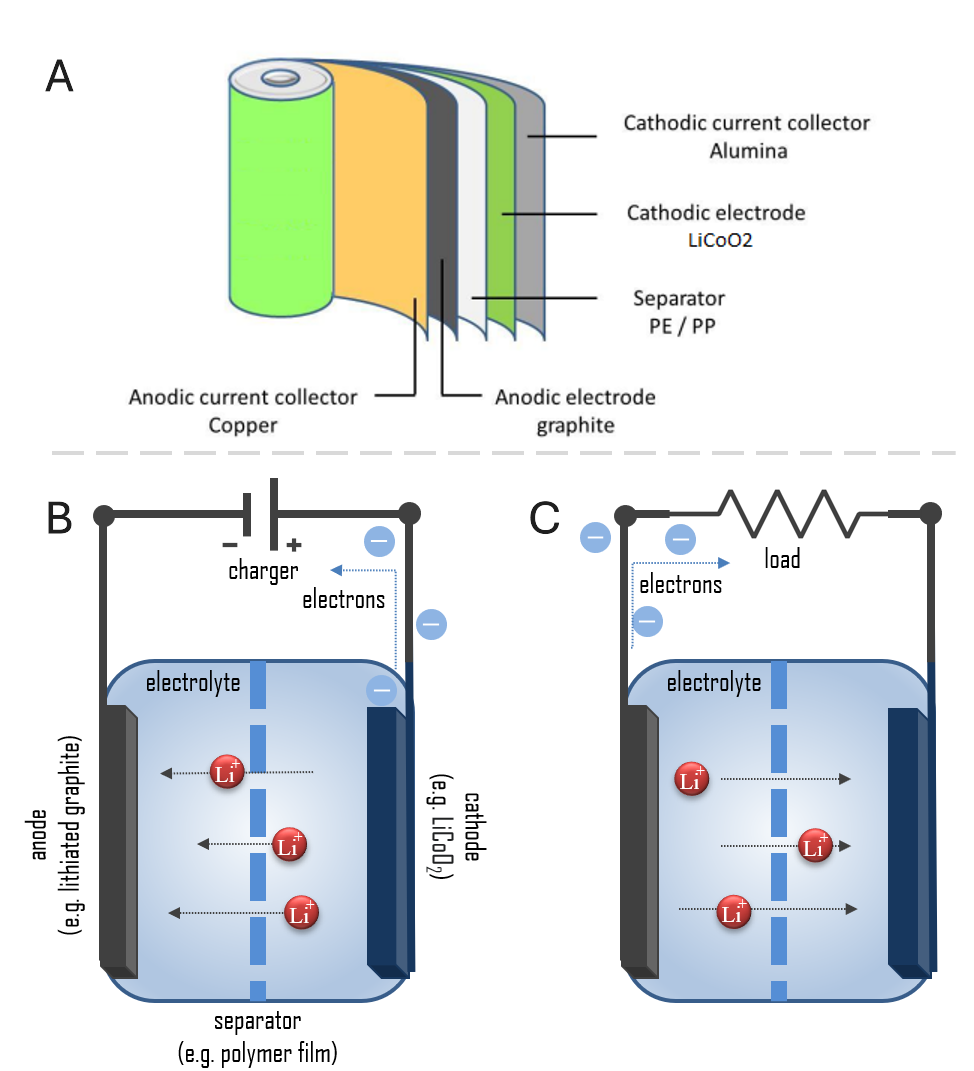
Lithium-ion batteries are widely used because of their high energy density and rechargeability, but their performance and safety are highly dependent on temperature. In order to explore the universe and deep sea, high and low temperature, extreme pressure and fatal radiation are going to be faced by these batteries, it shows highly important to improve the stability and efficiency of lithium-ion batteries. Also in common electric vehicles, rechargeable battery is an important component, it determines the battery life and charging speed. High temperatures can accelerate side reactions, degrade electrode materials, and even lead to safety hazards, while low temperatures impair lithium oxidise cathode irreversibly, induce dendrite growth, and increase the risk of internal short circuits. This paper briefly introduces four kinds of common batteries, with Popular anode materials are also discussed following. Then it reviews the impacts of both high and low temperature environments on the electrochemical behaviour and structural integrity of general lithium-ion battery. The following article will make comparation among different kinds of lithium-ion batteries and analyse their properties in room and extreme temperatures. According to this article, people can make decisions among variable rechargeable batteries easier during industrial production or research.
Show more
Read Article PDF
Cite
Research Article Open Access
Crash Safety of High-Voltage Battery Systems in BEVs: Standards, Structures, and Thermal Runaway Mitigation
Battery electric vehicles (BEVs) introduce crash-safety challenges distinct from internal-combustion platforms because their high-voltage lithium-ion packs can suffer mechanical insult, electrical shorting, and heat-driven escalation to thermal runaway. This paper synthesizes current knowledge on battery crash safety across four domains: (i) regulatory frameworks and test standards that govern post-crash electrical isolation and fire safety; (ii) structural design of pack enclosures and their integration into the vehicle load path to improve crashworthiness; (iii) prevention and containment of thermal runaway through materials, architecture, and millisecond-scale isolation strategies; and (iv) post-crash battery management system (BMS) responses and safe-handling protocols. Drawing on experimental abuse tests, finite-element simulations, and emerging pack architectures, we outline design trade-offs between weight, stiffness, energy absorption, and serviceability. We identify gaps in multi-physics modeling fidelity, module-to-pack scaling laws, and standardized post-crash procedures for first responders. The review concludes with a research agenda prioritizing structural batteries with programmable deformation, rapid reconfiguration/isolation circuitry, and validated digital twins that couple electro-thermo-mechanical failure modes under realistic crash pulses.
Show more
Read Article PDF
Cite