Articles in this Volume

Research Article Open Access
Advances in the Application of Deep Learning in Financial Market Trend Prediction
It is hard to guess what will happen in the financial market because financial data is always changing and is often noisy. Deep learning (DL) algorithms have become valuable tools for predicting financial trends because they can uncover complicated patterns and relationships that aren't straight lines. This review article provides a comprehensive overview of the latest advancements in employing deep learning to predict trends in the financial market. We examine various deep learning architectures, including recurrent neural networks (RNNs), convolutional neural networks (CNNs), and hybrid models. We also examine at how they can help us determine out how much stocks, currencies, and other financial instruments will cost. The report also talks about the issues and future of deep learning in finance, such as how hard it is to get data, how easy it is to understand models, and how strong they are. We look at the pros and cons of employing different DL approaches.
Show more
Read Article PDF
Cite
Research Article Open Access
Imaging Knee MRI Segmentation and 3D Reconstruction Based on Deep Learning
Article thumbnail
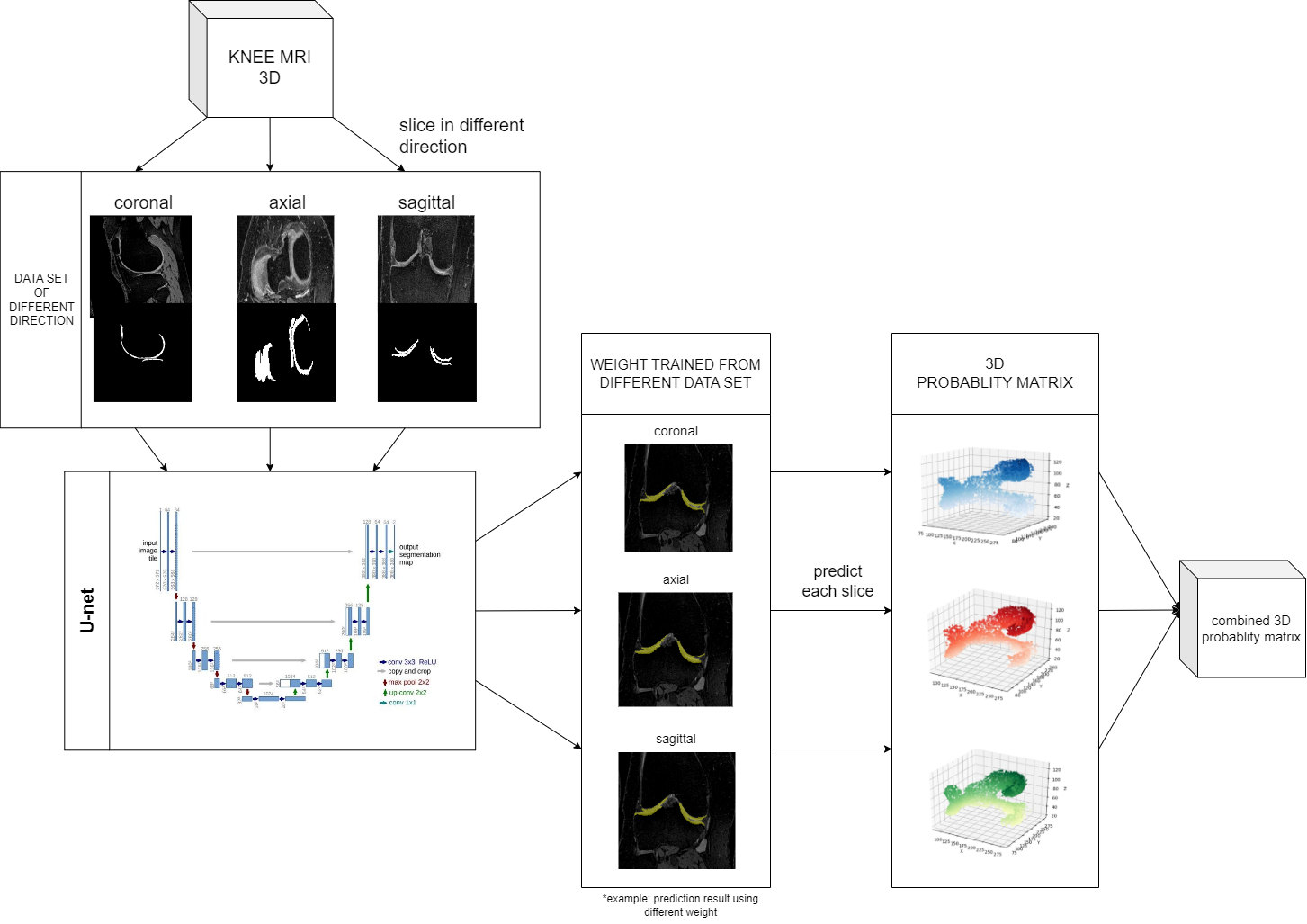
Osteoarthritis is a chronic degenerative disease that causes knee pain and movement disorder in patients. There is still no drug to treat the disease, so scientists are working on the drugs. To test new drugs, medical images have played a vital role in medical treatment and diagnosis, and their analysis has become the top priority in clinical treatment. In medical image analysis, accurate segmentation of medical images plays a crucial role in its analysis. In recent years, with the continuous development of artificial intelligence, people have tried to use deep learning and convolutional neural networks to segment images to achieve the effect of reducing the workload of doctors. In this study, we do image segmentation using UNet network from three directions, and we use three 2D segmentation model from different directions to rebuild a 3D segmentation model to have an accurate and reproducible volumetric quantification of articular cartilage in the knee.
Show more
Read Article PDF
Cite
Research Article Open Access
Empirical Analysis of Dynamics in U.S. Stock-Bond Relation
Article thumbnail
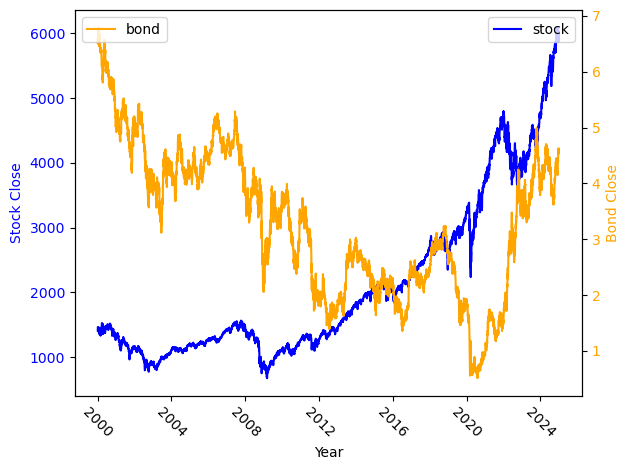
In this paper, we explore the dynamic relationship of the U.S. stock and bond market from 2000 to 2024, with the stock market represented by the S&P 500 Index and the bond market by the U.S. 10-year Treasury Note yield. We examine the fluctuations in the stock-bond correlation across different economic cycles by utilizing a series of statistical methods, including Pearson and Spearman correlation coefficients, the rolling window method, and the DCC-GARCH model, revealing a shift from negative to positive correlations in this period, and identify key drivers of these changes. Additionally, we analyze the lead-lag relationship of stock and bond returns with the VAR model and Granger causality tests, showing a bidirectional relationship with both markets exhibiting lead-lag effects.
Show more
Read Article PDF
Cite
Research Article Open Access
Visual Brain-Machine Interface — Reproduction of Sight Using Current Technology: A Literature Review
Article thumbnail
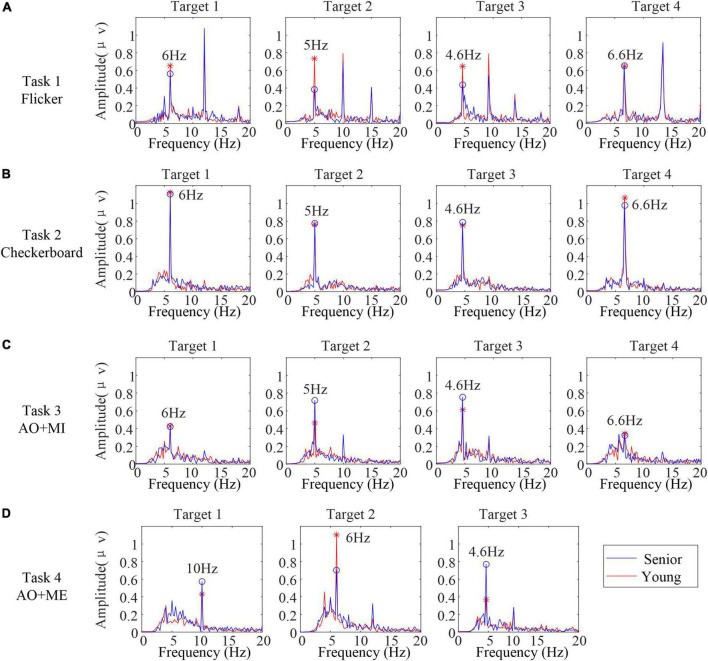
Traditional treatments for ocular motility disorders and eye prosthetics face significant limitations in restoring natural, coordinated eye movements. Conditions such as strabismus or eye paralysis alter the delicate balance between the agonist and antagonist eye muscles, resulting in misalignment, poor focus, and restricted movement. Current interventions, including surgeries or static eye prostheses, often fail to replicate the full range of motion or provide the feedback necessary for dynamic visual function. Therefore, the development of Brain-Computer Interfaces for eye movement rehabilitation was developed with the aim to better the experience of eye motion, as well as to be able to enable precisely coordinated eye control for the amputees. This paper conducted a literature review on interface design, signal image conversions, age-related data differences, and the principles of P300 Speller BCI (a system used to show target characters on a computer screen). The question researched is, “How do spellers and motor imagery function and in what scenarios are their applications suitable”. After examining numerous papers, the conclusion is that BCI technology has the potential to restore eye performance for the unsighted, including clear visual feedback and the ability for precise eye coordination.
Show more
Read Article PDF
Cite
Research Article Open Access
Dual-Model Aggregation for High-Accuracy Secret Prompt Recovery in LLMs
Article thumbnail
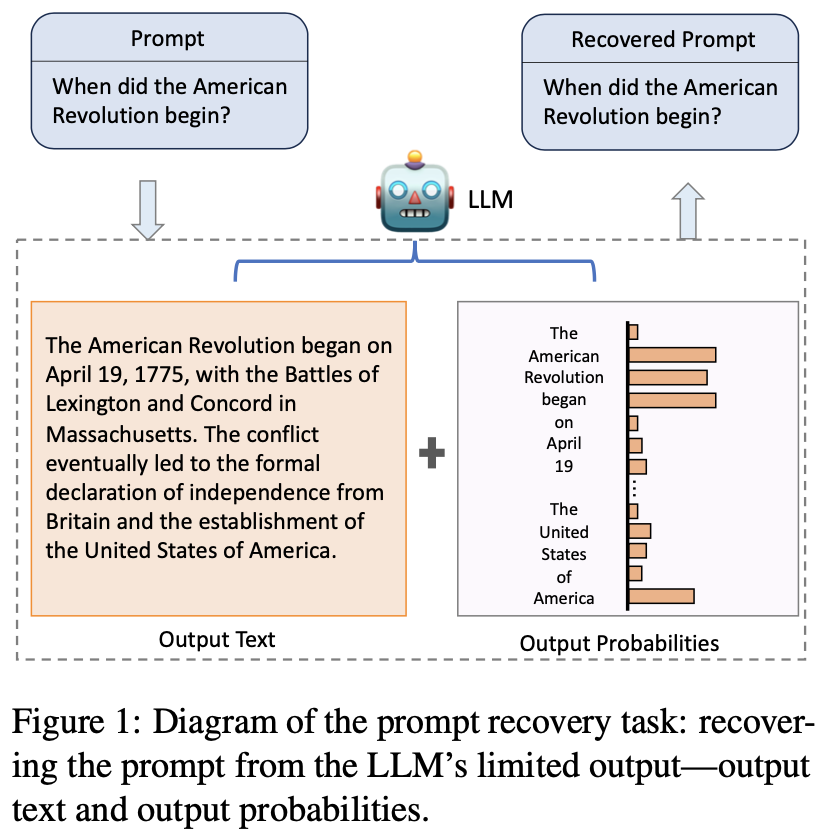
Prompt recovery in large language models (LLMs) is critical for understanding their underlying mechanisms and addressing concerns regarding privacy and copyright. Contemporary LLMs typically provide only inference results, making the process of recovering prompts exceedingly challenging and the accuracy of recovery uncertain. To address this issue, the focus is on extracting information related to prompt recovery from a limited amount of output text and maximizing its utility. LLMs use prompts to generate text, with the prompts often containing background information referred to as secret prompts, which are usually not disclosed to users. However, prompt attacks can be employed to uncover these secret prompts by crafting specific input prompts to exploit the LLMs. This study aims to improve the accuracy of recovering secret prompts by designing a method that combines secret prompts obtained through different models, including the Deliberative Prompt Recovery (DORY) model and the Prompt Attack Extraction System. This combined framework demonstrates superior performance in maintaining high accuracy under lower similarity thresholds. The paper highlights the state-of-the-art capabilities of these two recovery approaches, providing an insightful overview of advancements in prompt recovery. Additionally, it proposes a methodology for integrating an ordinary prompt recovery model with a prompt attack extraction system through a combination algorithm to enhance accuracy in prompt recovery. The study concludes by identifying current challenges and outlining future research and development directions in this domain.
Show more
Read Article PDF
Cite
Research Article Open Access
A Comparative Analysis of Pre-processed Data Debiasing of a Mathematical and SimSeed Approach
Bias in machine learning datasets and models can pose significant challenges to achieving fairness in real-world applications. In this paper, we look over two methods aimed at mitigating bias in machine learning datasets: “Identifying and Correcting Label Bias in Machine Learning” and “Debiasing made state-of-the-art Revisiting the Simple Seed-based Weak Supervision for Text Classification”. The first method utilizes a mathematical approach that re-weights training samples, addressing label bias by integrating fairness constraints directly for the optimization process. Such examples include demographic parity and equalized odds; iterative training and adjustments with fairness violation penalties establish a balance between accuracy and fairness. The second method presents seed deletion in weak supervision as a way to minimize bias in text classification tasks. By removing specific seed words from pseudo-labeled texts, and data augmentation via random deletion, the model reduces the overreliance on biased features, which improves robustness and generalization. Overall, we evaluated that these methods can achieve improvements in fairness and accuracy across diverse data sets and domains which include: crime prediction, credit scoring, and text classification. Our paper highlights the potential of combining advanced mathematical techniques with preprocessing to mitigate bias in machine learning.
Show more
Read Article PDF
Cite
Research Article Open Access
A Review of Optimizing SRAM-Based FPGA In-memory Computing
Article thumbnail
When the demand for real-time data processing and energy keeps efficiency growing in fields like Advanced Driver-Assistance Systems (ADAS) for electric vehicles, in-memory computing (IMC) is becoming a key technology. The heart of effective IMC is Static Random Access Memory (SRAM). It is widely known for its fast access times and low power requirements. For these reasons, SRAM becomes an ideal choice for FPGA-based systems. This paper delves into optimizing SRAM for IMC by comparing the performance, power efficiency, and stability of three SRAM types: 6T, 8T, and 10 T. What’s more, we introduce the innovative C3SRAM architecture. This technology leverages capacitive coupling to boost computational speed and energy efficiency significantly. Finally, we summarize the CONV-SRAM architecture, tailored for in-memory convolution operations in neural networks. Through these explorations, we provide practical insights into how SRAM can be optimized to meet the demands of high-performance, energy-efficient systems, focusing on applications like autonomous vehicles that require speed and power conservation.
Show more
Read Article PDF
Cite
Research Article Open Access
Integrating Residual Momentum with Deviation Factor Models for Stock Selection in the Hong Kong Market
Article thumbnail
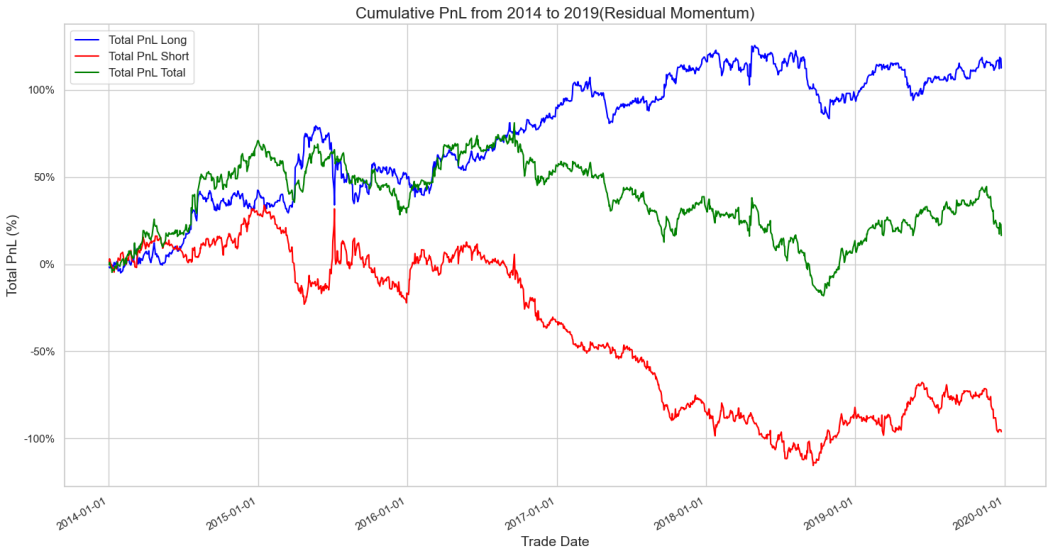
This paper investigates the application of deviation factor models combined with residual momentum strategies in the selection of stocks in the Hong Kong market between 2014 and 2024. This research uses a novel and advanced residual momentum algorithm to retrieve clean momentum components from stock returns, free from market and industry effects. Parallel to this, technical indicators such as RSI, CCI, and VWAP are also used in the research to detect price deviations and, thus, potential arbitrage opportunities. The analysis shall be among the top 300 stocks by market capitalization listed in Hong Kong, where the strategies tested for both their predictive power and risk-adjusted performance. The findings show that the residual momentum strategy is well on course to pick up excess returns, although its implementation continues to be marred by very high volatility and inefficient markets in Hong Kong. Theoretically sound, in that the deviation factor strategy underperforms, especially in high-volatility conditions. In the last section, recommendations are given on the ways to improve these strategies in being more robust and effective in the Hong Kong stock market; with the major pointers being dynamic adjustments in trading algorithms and stock selection criteria.
Show more
Read Article PDF
Cite
Research Article Open Access
JPSM: A Privilege Score Model for Libraries
Article thumbnail
More and more attention is paid to the security of software applications, particularly threatened by the use of third-party libraries. From the node package Manager (NPM), it can be imported the leader loophole. This paper introduces a model (JPSM). The security level of the database can be roughly estimated. pass Assigning weights to different permissions, we support Providing quantifiable risk assessment. Our approach includes A recursive algorithm that evaluates cumulative permissions by introducing a tool downloaded called Mir-sa to improve the accuracy of safety assessments. In this paper, the implementation of this method in JavaScript is discussed. Python and Node.js, showing it in im- Demonstrate security awareness and encourage secure coding Practice.
Show more
Read Article PDF
Cite
Research Article Open Access
Stock Price Prediction Report
Article thumbnail
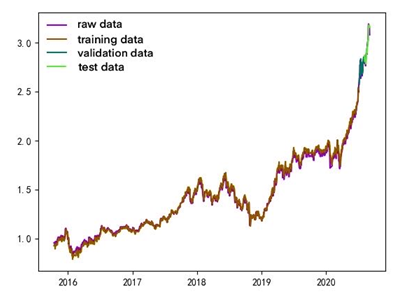
Stock price prediction is a critical aspect of financial markets, attracting the attention of investors, analysts, and researchers. Accurate forecasting of stock prices can lead to significant economic gains, but due to the complexity of the stock market behavior, accurately predicting the stock price is very challenging. Our approach is to find a relatively stable model to predict the stock price. From our early research, we found that among all the models others developed, Long-Short Term Memory (LSTM) based models might be the most efficient models in most circumstances. While only the LSTM model itself can not provide a valid prediction, we tried to find the combination of the LSTM model and other factors.
Show more
Read Article PDF
Cite