Articles in this Volume

Research Article Open Access
An Empirical Analysis of Firm-Level Online Investor Sentiment and Short-Term Stock Price Changes
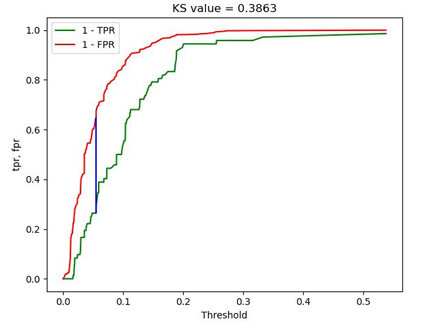
Online financial forums have become a popular channel through which investors express their opinions to the firm-level information. This raises a natural question: does user-generated sentiment predict short-term stock price movements? This study examines the relationship between firm-level online investor sentiment and next-day stock price changes using user comment data from a Chinese financial forum. We construct a daily sentiment measure using the proportion of negative comments and relate it to next-day stock price change. Besides, two regression models are employed for estimate if the stock price change can be predicted by daily sentiment measure. Our linear regression results show that, although the estimated sentiment effects are consistent in direction of price change, the model exhibits low explanatory power and the effects are not statistically significant. The logistic regression model achieves moderate classification accuracy in determining the direction of price change, but the ability is still limited. Overall, the results suggest that sentiment derived from online investor comments contains limited informative signals for next-day stock prices. The evidence is consistent with the interpretation that such comments primarily reflect immediate reactions or noise rather than forward-looking signals.
Show more
Read Article PDF
Cite
Research Article Open Access
Application of Independent Component Analysis (ICA) Methods in EEG Signal Processing
Article thumbnail
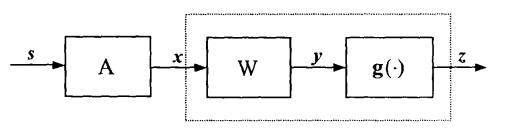
EEG is a non-invasive technique for recording brain activity, valued for its high temporal resolution and low cost. Independent Component Analysis (ICA), a blind source separation method, effectively decomposes EEG signals into independent components. Widely used in both medical research and brain-computer interfaces (BCIs), ICA has become essential for improving EEG data quality. As demand grows for real-time and robust neural signal processing, advanced methods like ICA remain crucial for advancing EEG applications. This paper investigated the application of ICA in EEG signal processing. The research first reviewed the core principles of ICA, including its mathematical model and algorithms such as Infomax and FastICA. The results clearly demonstrated that ICA can effectively decompose raw EEG signals into statistically independent components. This enables the identification and removal of artifacts while preserving neural information. It also showed that while ICA is a mature method for EEG preprocessing, challenges such as source number determination and real-time processing bottlenecks still exist. At the end of the research, future developing trends of ICA and its integration with other methods are discussed.
Show more
Read Article PDF
Cite