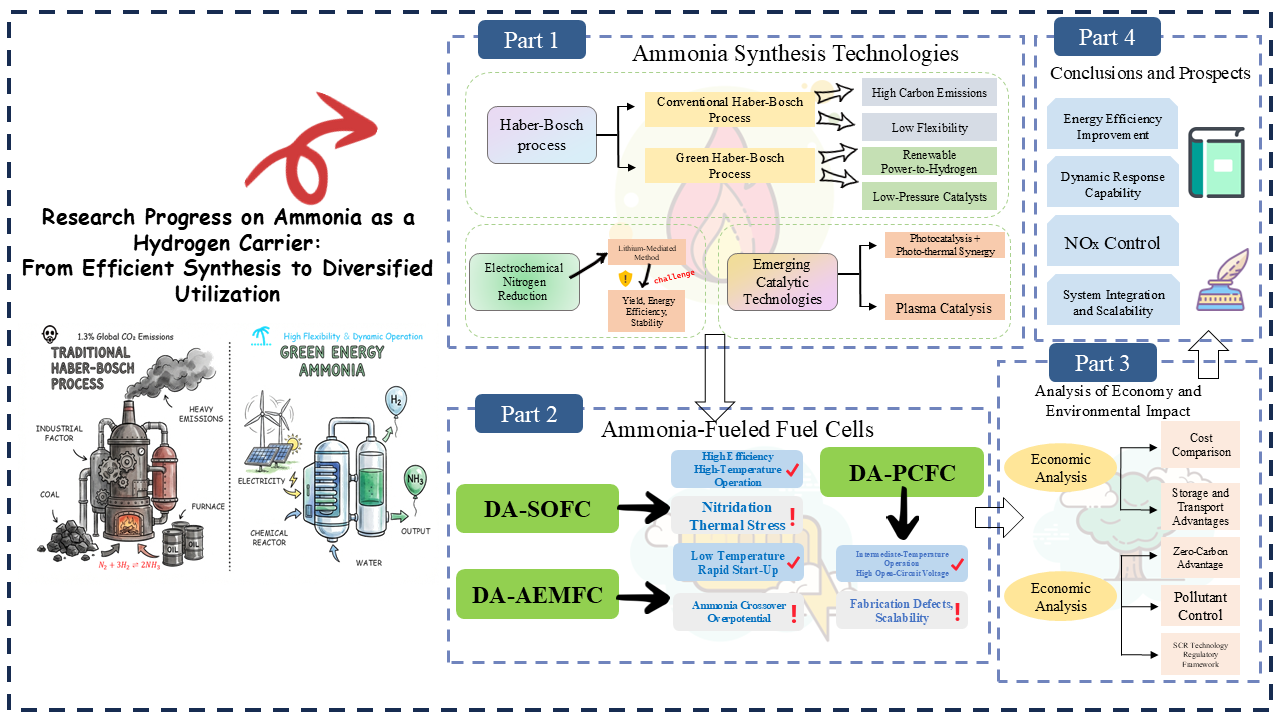
Ammonia, as a carbon-free and hydrogen-rich compound, with its high volumetric hydrogen density, mild liquefaction and storage transportation conditions, as well as a mature global supply chain, is gradually becoming an ideal hydrogen carrier. This article systematically reviews the research progress of the entire "ammonia-hydrogen" industrial chain. Firstly, this paper analyzes the high carbon emissions and low flexibility challenges faced by the traditional Haber-Bosch process in the energy transition, and discusses the design principles and performance bottlenecks of emerging green ammonia synthesis technologies such as the green Haber process, electrochemical nitrogen reduction, photocatalysis, and plasma catalysis. Secondly, the focus is placed on the diversified utilization of ammonia in the downstream conversion field. The technical paths, electrochemical performances and commercialization obstacles of direct ammonia solid oxide fuel cells, direct ammonia anion exchange membrane fuel cells and proton-conducting ceramic fuel cells are compared. Subsequently, based on this, an analysis from the perspectives of economy and environmental impact is conducted. Finally, the economic advantages of ammonia in the storage and transportation process, as well as its compatibility with existing infrastructure, give it the potential to replace traditional fuels in high-emission sectors such as shipping and power generation.