Articles in this Volume

Research Article Open Access
An Analysis of the Practicality of DNN Models versus LR Models in Credit Scoring
Financial technology is playing an increasingly vital role in loan decision-making, and financial institutions are increasingly relying on machine learning techniques to support credit decisions. The purpose of this review is to provide a critical overview of analysis comparing the practical applicability of deep neural network (DNN) and logistic regression (LR) models within the credit scoring domain. This paper systematically collects existing studies on the application of DNN and LR models in credit scoring. The research objects include DNN and LR models, as well as their improved variants developed on the original model frameworks. On this basis, it integrates theoretical research findings with comprehensive analyses to investigate and evaluate the practicality of DNN models. The research results indicate that DNN models still exhibit significant limitations in credit scoring applications. Further model improvements or hybrid integration with other models are therefore required to enhance their practical applicability in real-world scenarios.
Show more
Read Article PDF
Cite
Research Article Open Access
Transparent and Reproducible Spike Sorting: Baseline Construction and Experimental Analysis for Simulated Neural Signals
Article thumbnail
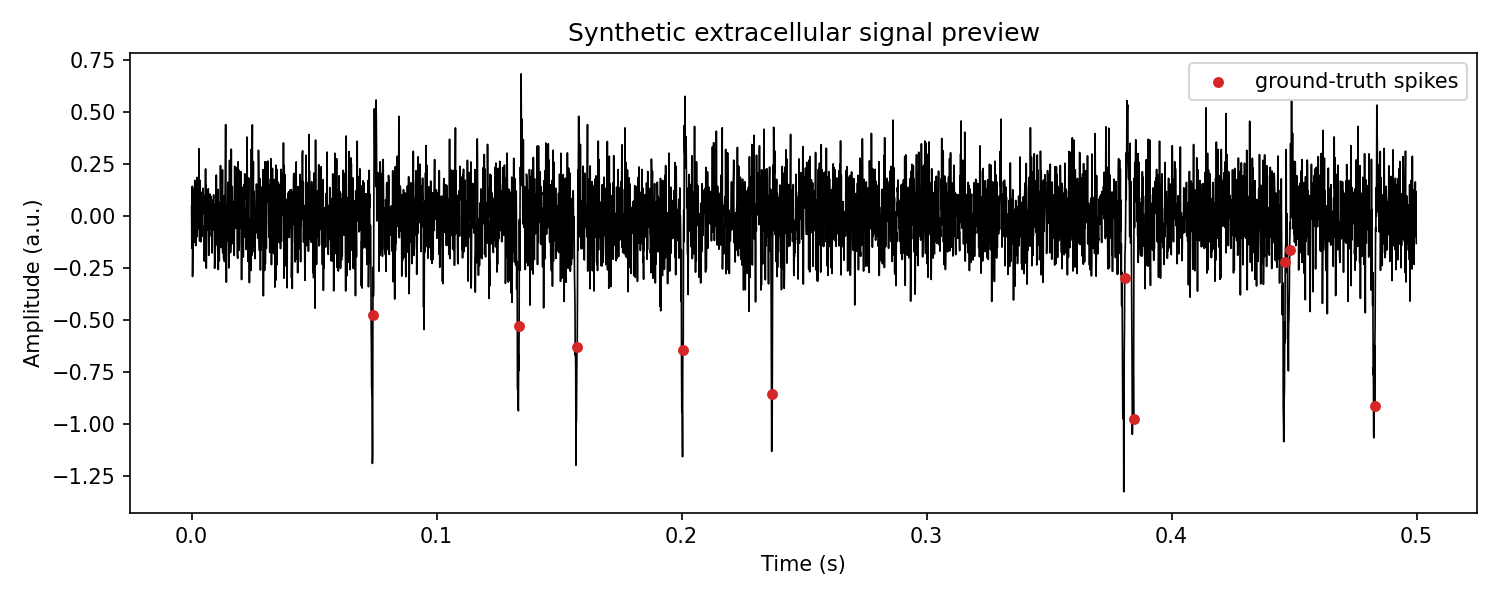
Spike sorting is a fundamental step in extracellular neural signal analysis, but educational implementations are often difficult to inspect and reproduce because processing assumptions, parameter choices, and evaluation procedures are distributed across multiple stages. This paper constructs a transparent and reproducible baseline workflow for simulated neural signals rather than proposing a new sorting algorithm. The workflow integrates band-pass filtering, threshold-based spike detection, fixed-window waveform extraction, principal component analysis, KMeans clustering, one-to-one temporal matching, and automated metric export in a configurable Python implementation. Experiments are conducted on repository-generated synthetic datasets with easy, medium, and hard noise settings and on the Wave_Clus Easy1 noise series. Detection F1-score decreases from 0.812 to 0.457 as the synthetic setting becomes harder, while Wave_Clus Easy1 results range from 0.340 to 0.907 across noise conditions. The low clustering scores observed in several settings further show that accurate event detection does not necessarily imply reliable unit separation. The study contributes an auditable baseline, a reproducible evaluation process, and a teaching-oriented example that makes the distinction between detection and clustering performance explicit.
Show more
Read Article PDF
Cite