Articles in this Volume

Research Article Open Access
Comparison of Hybrid Vehicle Technology and Hydrogen Fuel Cell Engine Technology
As a new automotive technology, hydrogen fuel cell engines still have many differences compared to traditional hybrid technologies. This article studies the core comparison between the two technologies, starting with an introduction to the evolution of automotive engines, and then introducing the components, technical characteristics, and working principles of hybrid vehicles and hydrogen fuel cell vehicles, comparing the quantitative performance of the two using data, and listing qualitative advantages. The study will discuss the current problems of both and provide corresponding improvement suggestions based on references, and reflect on the future development trends of both through references. Research has shown that hybrid vehicles are currently the optimal choice, while hydrogen fuel cell vehicles are a long-term solution to achieve decarbonization goals. While comparing the two types of technologies, this article will also evaluate their roles in sustainable development. This article aims to provide a more comprehensive perspective to help people better understand hybrid technology and hydrogen fuel cell technology, as well as their impact on today's automotive industry.
Show more
Read Article PDF
Cite
Research Article Open Access
Start-Stop Regulation and Membrane Degradation Mitigation in Proton Exchange Membrane Electrolyzers for Offshore Wind-to-Hydrogen Applications: From System Control to Materials Modification
In offshore wind-to-hydrogen systems, the frequent start-stop cycles are a big challenge for the PEM electrolyzers used in these setups. Wind intermittency drives these cycles, and the consequences cascade across three coupled domains: electrochemical corrosion of iridium-oxide catalyst layers, thermomechanical fatigue of Nafion membranes, and disrupted two-phase mass transport at the gas diffusion layer. This paper pulls those threads together. This paper examine start-stop dynamics and degradation pathways, then evaluate mitigation strategies at both the single-stack control level and the broader system architecture level. On the control side, power-temperature adaptive control stands out—it adjusts electrolysis temperature in real time rather than chasing a fixed set point, a distinction that matters enormously when input power swings by tens of kilowatts within minutes. For multistack arrays, rolling optimization with adaptive state switching redistributes load continuously, trimming unnecessary on/off transitions. At the system scale, this paper argue for hybrid electrolysis architectures, digital-twin-based health monitoring, and floating platforms designed around liquid or chemical hydrogen carriers. Together, these layers do not merely improve efficiency figures—they determine whether offshore green hydrogen ever becomes commercially viable.
Show more
Read Article PDF
Cite
Research Article Open Access
Boundary-Condition Fidelity and Reynolds-Number Effects in CFD Validation for Vehicle Aerodynamics
Article thumbnail
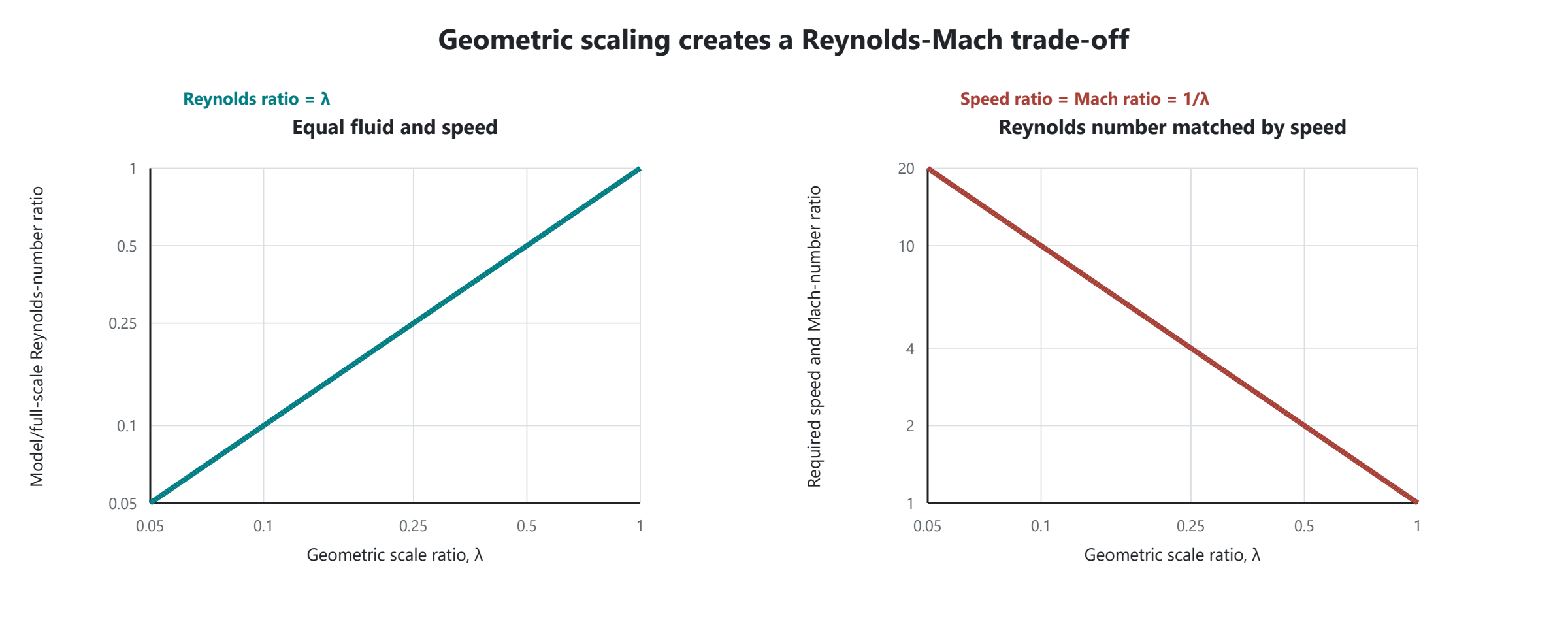
Credible validation of computational fluid dynamics (CFD) in vehicle aerodynamics depends on the engineering decision being supported. For a fixed vehicle at one operating condition, total drag with quantified uncertainty may be sufficient when only that force is required. It is insufficient, however, for explaining a flow mechanism, predicting a design delta, ranking closely spaced concepts, or transferring a model across geometries and conditions. Starting from the nondimensional governing equations, this paper examines three linked causes: geometric scaling changes Reynolds number and relative boundary-layer thickness; ground, wheel, and tunnel treatments change the represented physical system; and local errors may cancel in an integrated force. Evidence from Ahmed-body, detailed-vehicle, wind-tunnel, moving-ground, and rotating-wheel studies is evaluated through comparison. A decision-oriented framework then separates numerical verification from physical validation and links the required evidence to the intended use. Vehicle CFD is best treated as a conditional prediction whose credibility is bounded by geometry, operating state, physical setup, quantity of interest, and decision.
Show more
Read Article PDF
Cite
Research Article Open Access
Future Integrated Network of Sensing, Computing, and Communication: Low-Altitude Economy under High-Speed Trajectory Tracking Dominated by General Artificial Intelligence
Article thumbnail
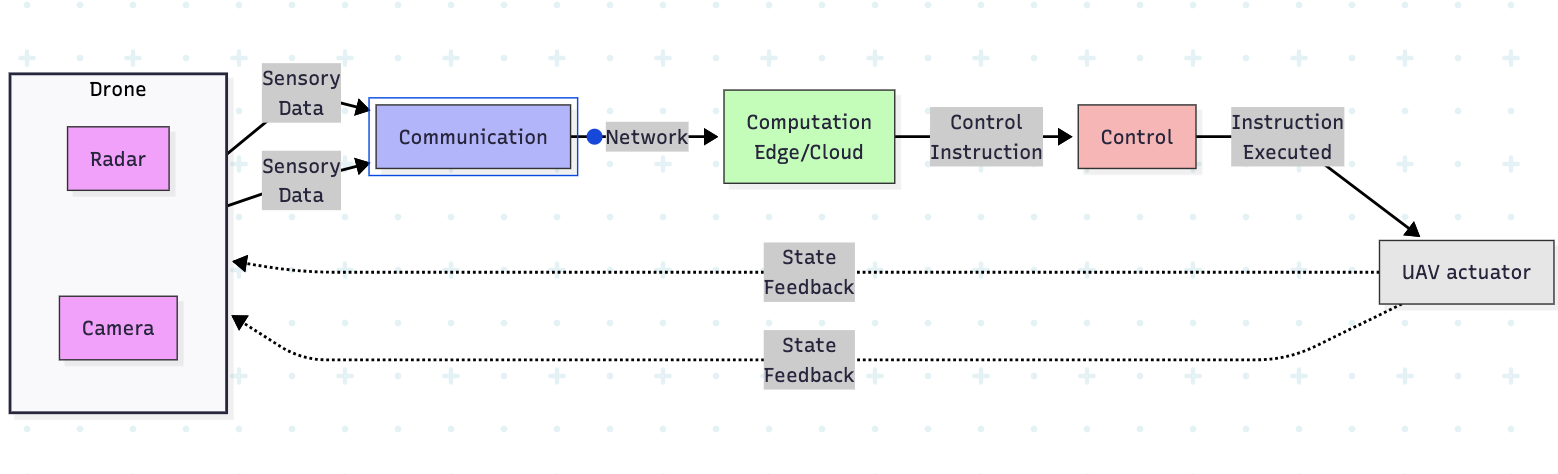
The rapid expansion of the low-altitude economy (LAE)demands highly reliable Unmanned Aerial Vehicle (UAV) systems. However, traditional UAV control engineering suffers from severe time latency inherent in its serial architecture and is significantly amplified in complex urban environments. To address this challenge, 6G-enabled Integrated Sensing, Communication, and Computing (ISCC) architectures are being utilised to reduce transmission delays. Furthermore, Large Language Models (LLMs) are introduced to shift the design paradigm of control engineering, aiming to improve decision timeliness through predictive state estimation and reasoning. This article reviews the advantages of coupling 6G ISCC with LLMs. The synthesis indicates that this integration effectively minimises system latency by substituting iterative mathematical calculations with direct semantic prediction, its transition to real-world deployment faces severe engineering bottlenecks where the intrinsic "black-box" hallucinations of LLMs are paramount. This paper concludes that autonomous UAV operations necessitate a fundamental shift toward Trustworthy and Explainable AI (XAI), coupled with high-fidelity digital twin validation, to guarantee system stability in safety-critical domains.
Show more
Read Article PDF
Cite
Research Article Open Access
Research Progress of Thermal Conductive Materials for Lithium-ion Batteries
Fast charging easily leads to heat accumulation inside batteries, resulting in large temperature differences among cells, material aging and even thermal runaway risks. As the core of thermal management, thermal conductive materials directly determine the temperature uniformity and heat dissipation performance of battery modules, and are critical to guarantee the safe and long-term operation of energy storage devices. This paper systematically reviews the respective characteristics of three types of thermal conductive media for lithium-ion batteries: metal-based, carbon-based and phase change materials. Metal-based materials feature high thermal conductivity and high mechanical strength yet suffer from heavy weight and lack heat storage capacity; carbon-based materials are lightweight with excellent in-plane temperature homogenization, but their through-plane thermal conductivity is poor and high-end fillers cost a great deal; phase change materials realize constant-temperature heat storage while their intrinsic thermal conductivity is extremely low. Studies indicate that single-component thermal conductive materials all possess obvious drawbacks. Carbon-metal and phase change composite systems can complement multiple properties and have become the mainstream improvement schemes at present. In the future, the industry will carry out technical research focusing on three directions: multi-phase composite modification, low-cost large-scale preparation and integrated coupling of thermal management. The summary and review in this paper can provide important theoretical references for power battery PACK design, optimization of energy storage temperature control schemes and development of novel thermal conductive fillers.
Show more
Read Article PDF
Cite
Research Article Open Access
Nanomaterial Modifications for Mitigating Polysulfide Shuttle Effect on Lithium-Sulfur Batteries: A Review
Article thumbnail
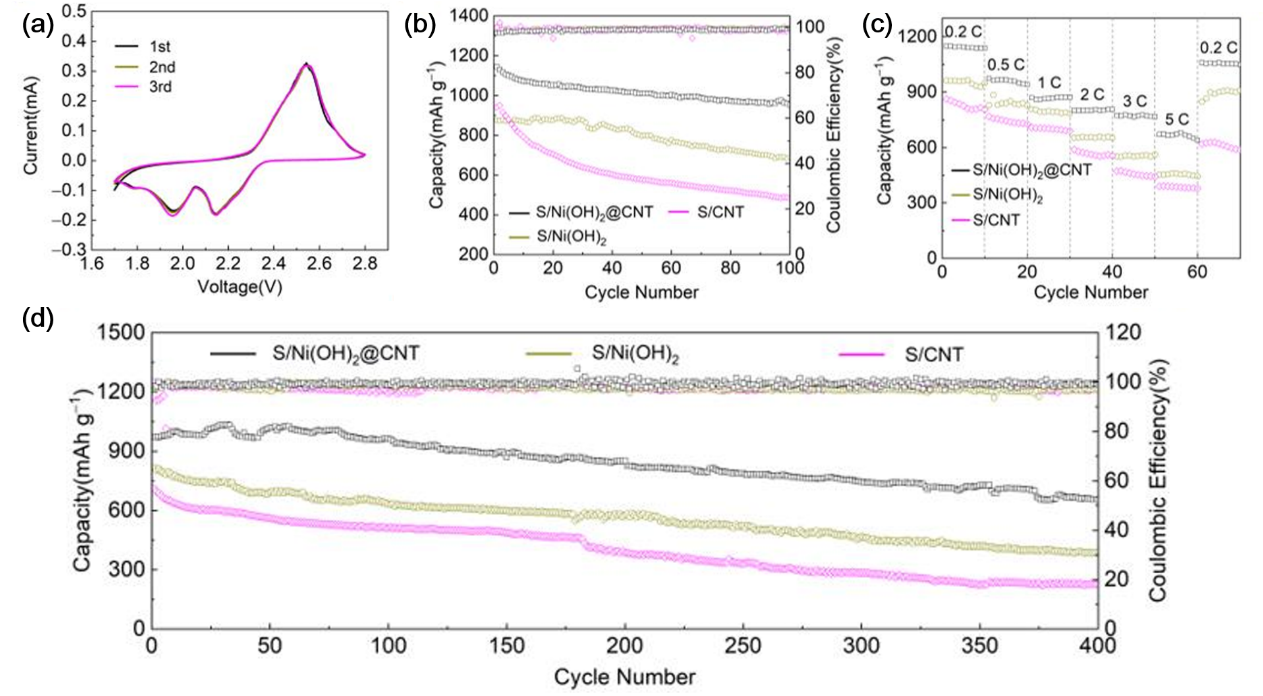
With the rapid development of electric vehicles and large-scale energy storage systems, conventional lithium-ion batteries may be incapable of meeting the gradually increasing energy demands. Accordingly, lithium-sulfur batteries, which feature an ultra-high theoretical energy density, have emerged as a research hotspot worldwide. This review focuses on various strategies for modifying lithium-sulfur batteries using nanomaterials to mitigate the internal polysulfide shuttle effect. This study aims to systematically sort out various effective modification approaches and clarify their underlying functional mechanisms. By adopting the literature analysis method, this work collects, organizes and compares experimental research findings from the past decade concerning two major modification schemes: nanostructured cathode hosts and functional separators. The study reveals that carbon nanotubes combined with polar metal composite materials can achieve a synergistic effect involving a physical barrier, chemical polysulfide trapping and electrocatalysis, which substantially reduces the capacity decay rate and improves the Coulombic efficiency. This review also summarizes several widely recognized bottlenecks for the industrialization of lithium-sulfur batteries and proposes a few directions for future research based on existing literature. Additionally, it aims to accelerate the commercialization process of lithium-sulfur batteries.
Show more
Read Article PDF
Cite
Research Article Open Access
Working Principle, Classification and Development Prospects of Solar Cells
Carbon neutral countries have listed photovoltaic technology as an energy priority. Solar cells have attracted much attention as important photoelectric conversion devices. Therefore, this article introduces the basic physics of photovoltaic effect, common methods for classifying solar cells, and the true advantages and limitations of major photovoltaic technologies. Research has found that crystalline silicon maintains its market leading position thanks to mature production lines and long-life modules. However, perovskite exhibits impressive rapid efficiency growth and supports solution coatings with adjustable band gaps, although stability issues and risks associated with heavy metal lead remain unresolved. In addition, organic, dye-sensitized, and quantum dot batteries have unique advantages, especially for flexible or semi-transparent devices. In the future, solar cells should maintain higher efficiency, lower costs, and wider adoption. Researchers can develop improved series architectures, scalable large-area coating technologies, stronger stability, and robust lifecycle assessment frameworks. The aim is simply to give researchers and engineers a short, physically grounded picture of how solar cells work and where they seem to be heading.
Show more
Read Article PDF
Cite
Research Article Open Access
A Recent Comprehensive Review of Fuel Cells: Development History, Types, and Applications
Article thumbnail
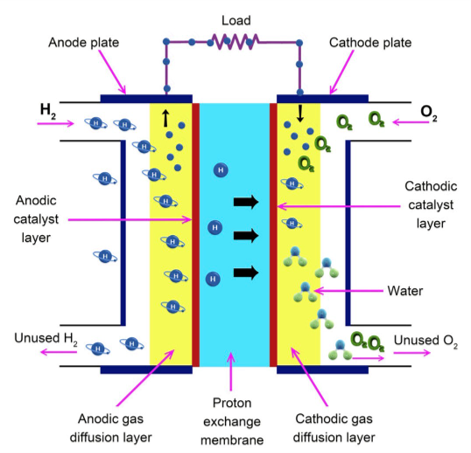
As global energy demand rises, fossil fuel combustion has caused severe CO₂ emissions and environmental pollution. Hydrogen energy has gained growing attention. Fuel cell as a new technology, has developed fast recently. The paper mainly introduces two types of fuel cell. Direct methanol fuel cell and proton membrane fuel cell. The proton exchange membrane fuel cell (PEMFC), which converts hydrogen into electricity and produces only water and heat as by-products, offers high efficiency and zero emissions, making it a key technology for energy transformation. However, PEMFC's commercialization faces three major barriers: high platinum catalyst costs, loss of membrane conductivity above 80 °C, and limited durability. This paper reviews recent progress over the past five years, it also briefly discusses global fuel cell developments in Japan, the United States, Europe, and South Korea, as well as direct methanol fuel cells (DMFCs) as a related technology. Future challenges include cost reduction, limited durability and material recycling. These advances have laid a solid foundation for PEMFCs to play a significant role in the clean energy transition.
Show more
Read Article PDF
Cite