Articles in this Volume

Research Article Open Access
Smart Manufacturing Driven Multi-objective Carbon-Constrained Production and Supply Chain Coordination Optimization
Article thumbnail
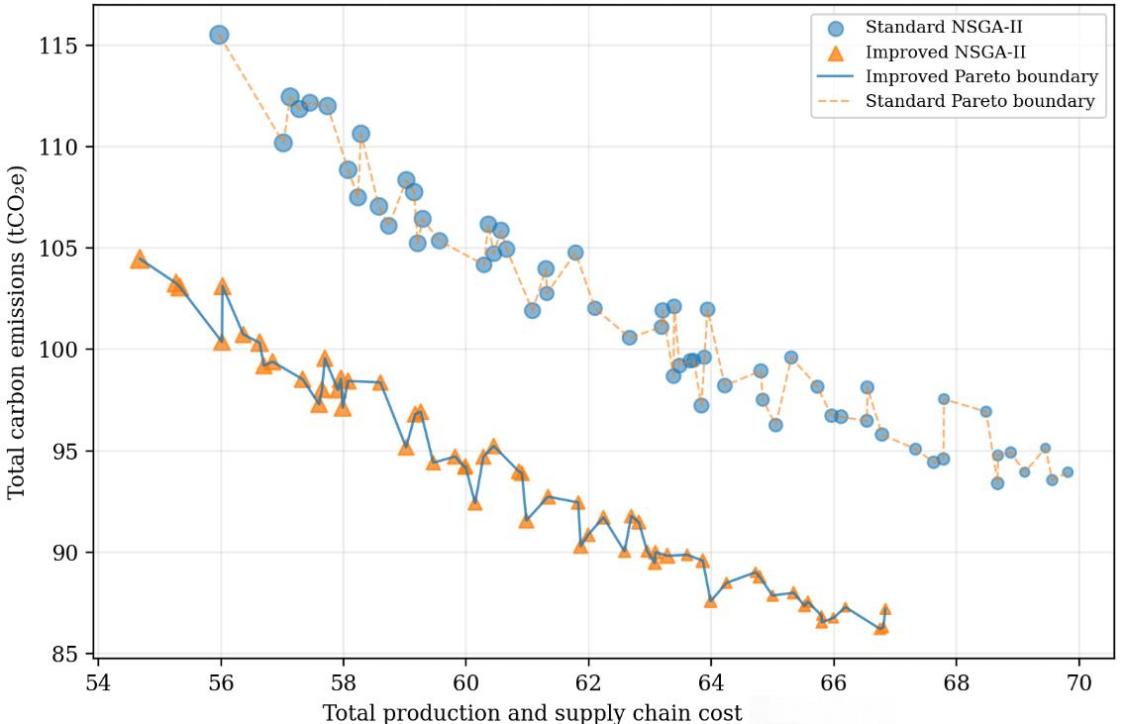
The low-carbon transformation of manufacturing makes production planning no longer limited to cost reduction and delivery efficiency, as carbon emissions, energy consumption, and supply chain coordination have become key decision factors in smart manufacturing systems. Focusing on carbon-constrained production and supply chain coordination optimization, a multi-objective optimization framework is constructed by integrating equipment status, machining processes, order delivery, inventory configuration, transportation batching, and carbon emission accounting. The experiment uses open equipment-state data, CNC machining data, and carbon emission factors from 2020 to 2026 to construct reproducible controlled simulation instances. An improved NSGA-II algorithm is applied to obtain Pareto solution sets for cost, makespan, and carbon emissions. The results show that the improved NSGA-II outperforms the standard NSGA-II in total cost, maximum makespan, carbon emissions, Hypervolume, and Spread, while maintaining delivery stability and reducing system-level emissions. These findings indicate that smart manufacturing data-driven coordination optimization can provide computable and comparable decision support for low-carbon production scheduling and supply chain coordination.
Show more
Read Article PDF
Cite
Research Article Open Access
High Dimensional Factor Discovery for Cross Sectional Equity Returns via Sparse Deep Learning
Article thumbnail
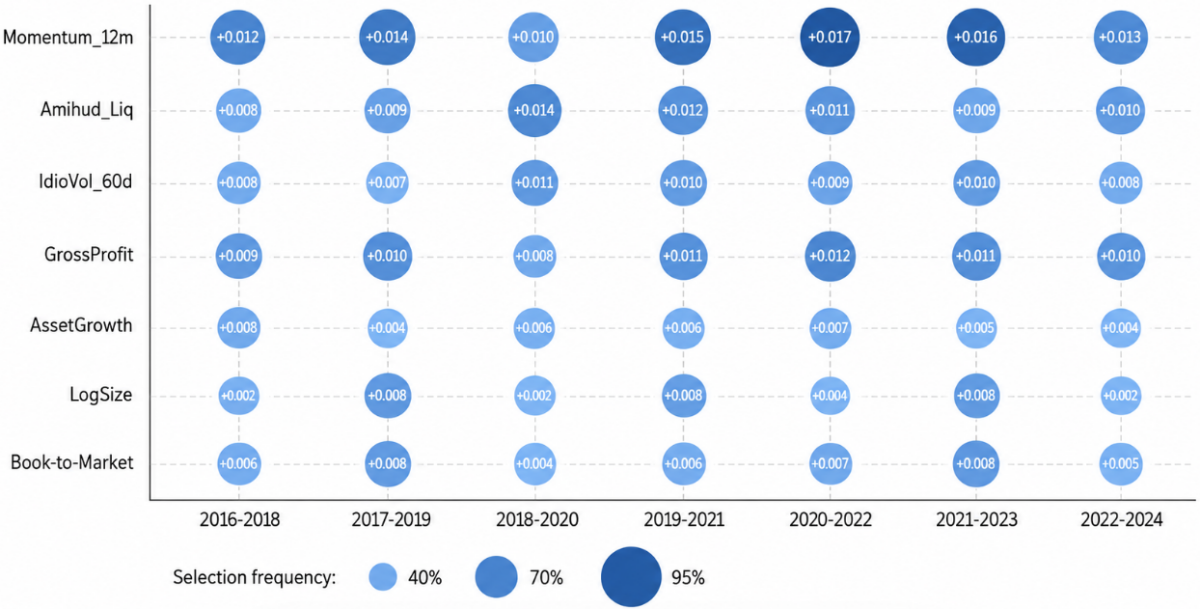
The expansion of high-dimensional firm characteristics has made cross-sectional equity return prediction more difficult because redundant variables, accumulated noise, and nonlinear exposures often appear at the same time. Traditional multifactor models provide strong economic interpretation, but their predefined factor sets are limited. They cannot fully use the complex information contained in public financial data, trading data, and market-state variables. The study focuses on U.S. common stocks listed on major exchanges from 2010 to 2024. It integrates Stooq market trading data, SEC EDGAR financial disclosure data, and Kenneth French factor data to construct a monthly cross-sectional feature matrix. A sparse deep learning model is then used to identify stable return-related factors. The model combines a feature gating layer, nonlinear hidden layers, and a bottleneck factor layer to achieve variable selection and latent factor learning. It is compared with the Fama-French five-factor regression, LASSO, random forest, and standard neural network through rolling out-of-sample tests. The illustrative experimental results show that the sparse deep model achieves an out-of-sample R² of 0.72 percent, a Spearman IC of 0.031, and a long-short portfolio Sharpe ratio of 0.91. After transaction costs, the Sharpe ratio remains 0.73. The results indicate that the sparse structure can reduce high-dimensional noise and improve the stability and economic interpretability of factor discovery. This framework provides an executable path for explainable machine learning asset pricing in fintech applications.
Show more
Read Article PDF
Cite
Research Article Open Access
AI Driven Early Warning of ESG Performance in Real Estate Enterprises
Article thumbnail
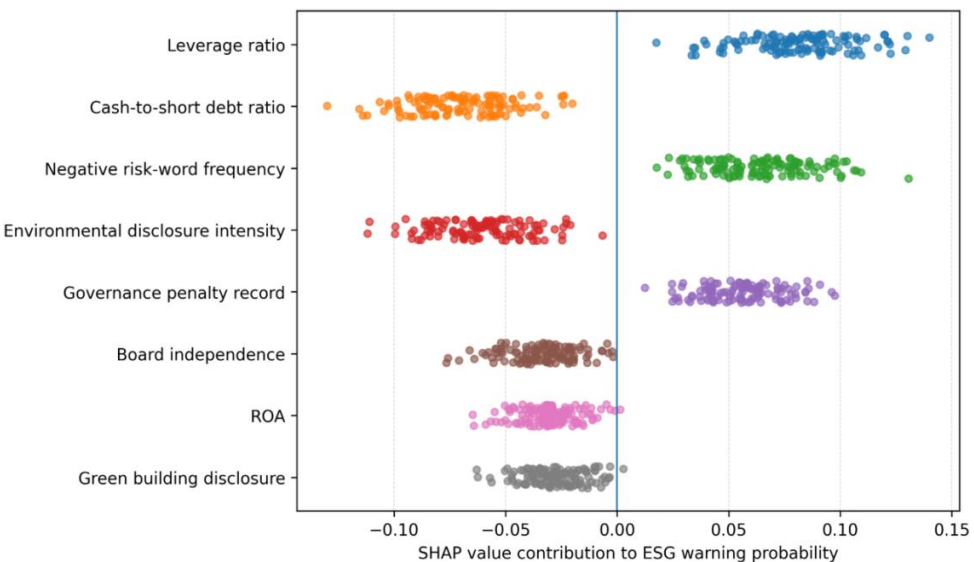
Real estate enterprises face increasing pressure from green transition, financing constraints, and higher requirements for governance transparency. ESG performance has become an important basis for evaluating sustainable operation, risk exposure, and management quality. Due to high leverage, long development cycles, and strong externalities in the real estate industry, ESG performance deterioration often appears together with liquidity risk, weak disclosure, and governance defects. Based on Chinese A-share listed real estate enterprises from 2015 to 2024, ESG ratings, financial indicators, governance variables, and textual information from annual reports and ESG reports are integrated to build an AI-driven early-warning model for ESG performance. TF-IDF is used to extract textual risk signals. Logistic Regression, Random Forest, XGBoost, and LightGBM are compared, while SHAP is applied to explain key driving factors. The results show that LightGBM achieves the highest AUC and F1 score on the test set, indicating stronger ability to identify firms with ESG performance deterioration in the following year. Leverage ratio, cash-to-short-term debt ratio, negative risk-word frequency, environmental disclosure intensity, and governance penalty records are the main influencing factors. This framework can support ESG risk identification, internal governance improvement, and investment risk screening in real estate enterprises.
Show more
Read Article PDF
Cite
Research Article Open Access
Cross-DATA: Cross-Data Attention Distillation for Lightweight Sound Classification with Limited Data
Using the UrbanSound8K dataset as a representative case, this study investigates how lightweight acoustic models can be trained with limited labeled data in resource-constrained environments. Because conventional knowledge distillation confines knowledge transfer to a single target dataset, it leaves the rich prior knowledge in external audio sources largely unused. We therefore propose Cross-DATA, a framework that treats a large-scale, general audio dataset such as FSD50K as an auxiliary knowledge source and integrates a newly designed Cross-data Attention Distillation mechanism. With mixed data batches as input, a powerful teacher model establishes inter-feature correlation patterns that the compact student network is encouraged to reproduce. In this way, the teacher's generic acoustic representations and discriminative capabilities can be transferred beyond the distribution of the target data, rather than being reduced to data augmentation or feature imitation. Experiments on UrbanSound8K show that the resulting student model surpasses traditional single-dataset distillation approaches in classification accuracy while using only about 4% of the teacher model's parameters and computational cost. Cross-DATA consequently alleviates the representational capacity deficit of lightweight models in small-data scenarios.
Show more
Read Article PDF
Cite
Research Article Open Access
PGSNet: Physics-Guided Scatter-Preserving Network for Large-Scale SAR Object Detection
Article thumbnail
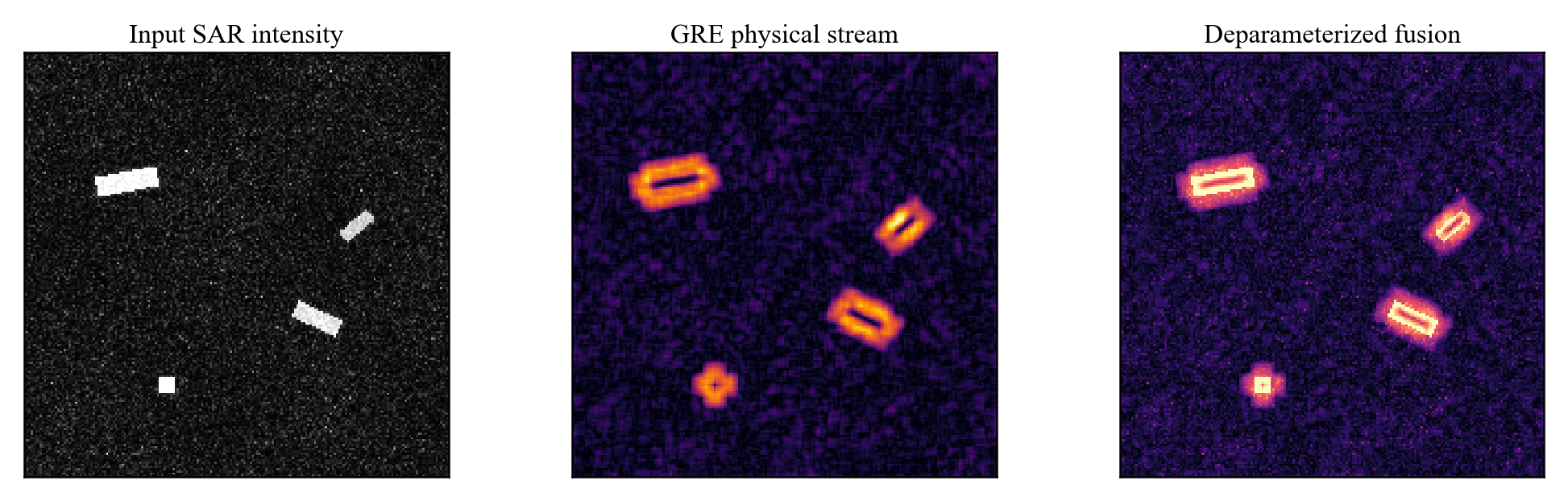
Target detection using Synthetic Aperture Radar (SAR) remains challenging: multiplicative speckle can obscure shallow features, while isolated scatterers may be overlooked under conventional fixed-step subsampling processing. Attention-based fusion methods and standard ImageNet-to-SAR transfer methods typically treat high-frequency clutter as salient structures. This paper proposes PGSNet, a single-stage detector that incorporates SAR physical prior knowledge across three complementary depths. The Physics-Guided Deparameterized Stem Network (PGF-Stem) connects the original intensity with a gradient-based ratio edge map, and aligns these two data streams via a 1×1 projection, without the need to learn a gating mechanism. Spatial-to-Depth Convolution (SPD-Conv) then reorganizes the weak scattering responses along the channel dimension, thereby preventing these responses from being spatially averaged due to resolution degradation. The coefficient-of-variation-guided feature calibration (CGFC) ultimately employs the classic speckle reliability index to reweight the feature pyramid map. Built upon the generalized focal loss (GFL) framework and trained using ResNet-50 on the SARDet-100K dataset across 12 training cycles, PGSNet achieved an mAP of 58.2% and an APS of 53.1% on the COCO dataset, outperforming DenoDet V2 (56.71%) and ConvNeXt-B with MSFA (56.4%). The detector still runs at 36.9 FPS on the RTX 3090.
Show more
Read Article PDF
Cite
Research Article Open Access
Deep Learning-Based Assisted Diagnosis of Alzheimer's Disease: From Monomodal Imaging to Multimodal Fusion
In the field of auxiliary diagnosis of Alzheimer's disease (AD), deep learning is developing along two paths: single-modal imaging and multi-modal fusion. The single-modal approach utilizes lightweight networks (with efficient receptive fields and multi-axis attention mechanisms) to optimize preprocessing and improve three-dimensional models, achieving high-precision classification while controlling the number of parameters; multi-modal fusion integrates structural magnetic resonance, genetic information, scale data, diffusion tensor imaging, and electroencephalogram, and employs technical means such as Transformer and graph convolutional networks to significantly enhance the performance of early identification and multi-classification. The existing limitations include weak cross-center generalization ability, difficulties in obtaining and aligning multi-modal data, insufficient interpretability, and the lack of longitudinal prediction. Future development directions include lightweight edge deployment, federated and self-supervised learning, incorporating low-cost modalities such as plasma markers, and constructing longitudinal prediction and frameworks with pathological prior interpretability, thereby facilitating the implementation of clinical applications. This article aims to provide a reference for the further optimization and clinical translation of related methods by summarizing the main technical paths, application progress and existing problems of deep learning in the auxiliary diagnosis of Alzheimer's disease.
Show more
Read Article PDF
Cite
Research Article Open Access
Improving Visual Clarity by Tweaking Animation Parameters and Production in 3D Scene
Article thumbnail
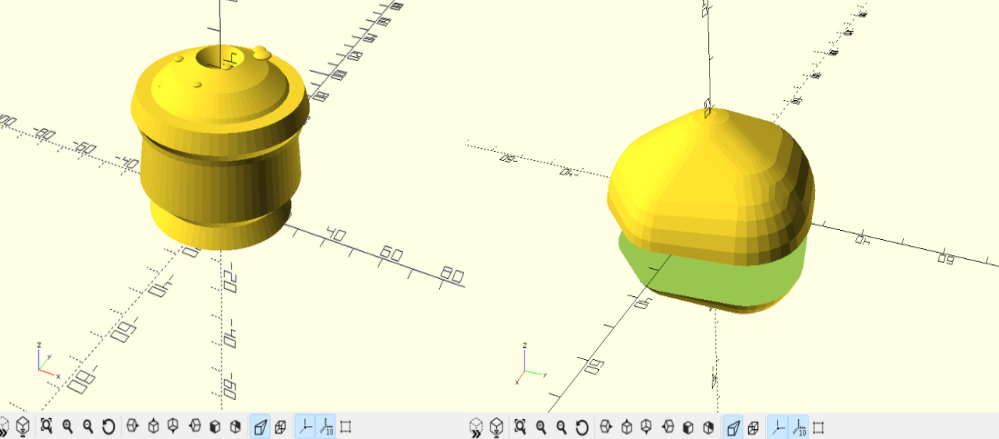
Based on the theme of "Chinese-style cookie", a short three-dimensional animation is created in this study, and the effects of different production and animation parameters on the three-dimensional animation are analyzed. The process started with polygon modeling and putting on the physically based materials, such as color, normal and roughness data for the pastry appearance. Other pastry models of a plate, package, and more were then set around the object to create the scene. Translation and rotation were keyframed and the camera moved to offer up other views. Various pacing, movement and camera setups were tried since a poor pacing could create a sudden action or limit the visual power of the action. Comparing versions showed that better timing and perspective facilitated ease of reading the cookie and yielded a more natural sequence. This results in a well-controlled animation with a good visual hierarchy.
Show more
Read Article PDF
Cite
Research Article Open Access
Modeling Hidden Degradation States and Predicting Failure Risk in Wind Turbine Gearboxes
Article thumbnail
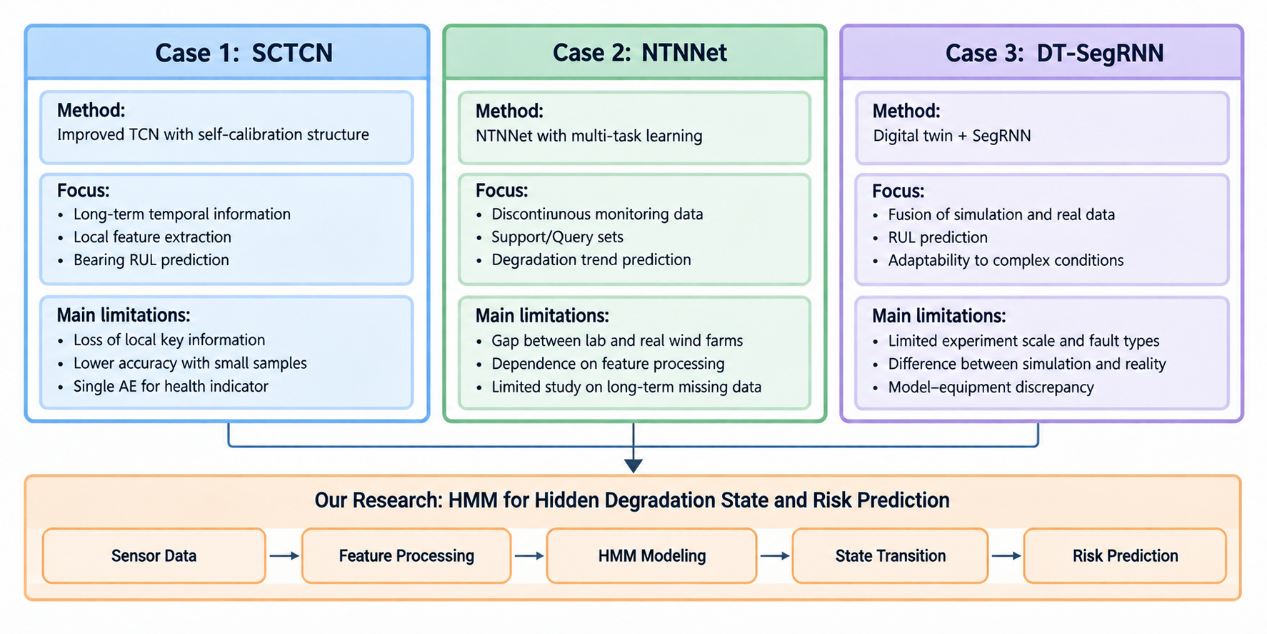
Wind turbine gear boxes have to work in a fluctuating-load and harsh-environment setting. Over time, wear and performance degradation gradually accumulate; it becomes difficult to know when they are out of service and when to carry out maintenance. Hidden states are taken as the starting point in this paper to explore how hidden markov model (HMM) can be used to model gearbox degradation and assess changes in risk over time. First, organize the sensor monitoring data and extract state-related features from signals such as vibration and temperature in the study. An HMM is then built to model the unobservable health status of the equipment as several hidden states. Observation probabilities and state transition relationships are used to show how the equipment changes from a normal operating state to various states of degradation gradually. Based on the above changes in time, the study determines whether the risk is rising. To further clarify this way, the three related methods SCTCN, NTNNet and DT-SegRNN are also studied. These faults are relatively small in scale, such as missing data, and they also differ from those in the simulation. Based on the above analysis, the primary strength of HMM is not fault classification. Crucially, it links the observations of sensors with the deterioration status of equipment that is difficult to monitor directly and supports research on prolonged health changes and risk trends.
Show more
Read Article PDF
Cite
Research Article Open Access
Energy-Efficient Optimization of YOLO Architectures for Sustainable Autonomous Driving: A Green AI Perspective
With the development of autonomous driving technology, the YOLO series of object detection models have been applied in many vehicle perception systems due to their fast speed and stable performance. However, in practical applications, whether a model is good cannot only be judged by its detection accuracy, but also needs to consider its power consumption, heat generation and deployment cost when running for a long time. As Green AI gains increasing attention, energy-efficient inference with maintained accuracy is a key challenge in autonomous driving. From the perspective of Green AI, this paper examines the evolution of YOLO models and their use in autonomous driving, investigates architectural, inference, and deployment variations across versions, and reviews key optimization methods, such as lightweighting, quantization, dynamic inference, and hardware-software optimization Moreover, it points out that many current evaluation methods focus more on accuracy and speed, and do not consider energy consumption and carbon emissions comprehensively and deeply enough. Therefore, establishing a green evaluation framework that considers accuracy, latency, energy consumption and carbon footprint simultaneously is necessary at present.
Show more
Read Article PDF
Cite
Research Article Open Access
Force Feedback and Force Sensing in Humanoid Robotic Arm Structures
Article thumbnail
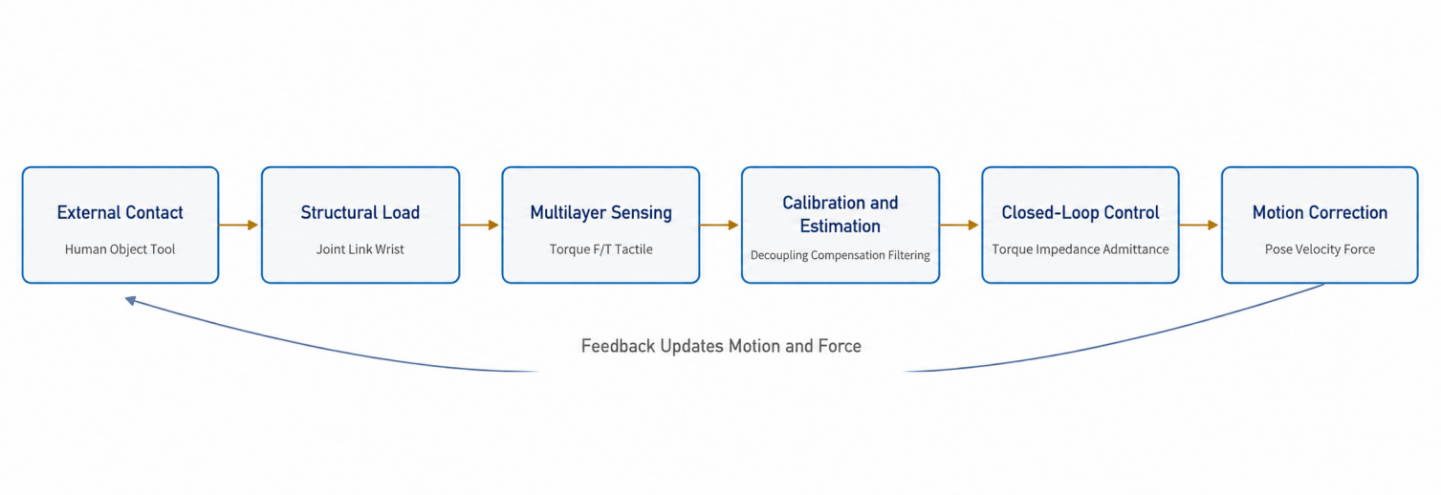
Humanoid robotic arms must manage uncertain contact during grasping, assembly, transport, and physical human-robot interaction. Vision and high-gain position control provide useful pre-contact geometry but cannot continuously reveal contact location, force direction, shear, slip, or load variation. This paper examines how force information is generated, transmitted, measured, and fed back through five actuation routes: high-gear-ratio rigid drives, series elastic actuators, variable-stiffness actuators, low-gear-ratio quasi-direct drives, and cable remote drives. Joint torque sensing, wrist six-axis force/torque sensing, and distributed tactile sensing are compared as complementary layers. The synthesis shows that interaction performance depends jointly on reflected inertia, structural stiffness, elastic elements, load paths, calibration quality, and control bandwidth. Sensor placement, overload protection, compliance, thermal management, and maintenance access therefore belong to one structural design problem rather than an afterthought. The paper provides a traceable framework for selecting sensing locations and actuation structures and identifies range, calibration, overload recovery, bandwidth, and serviceability as validation targets for future hardware experiments.
Show more
Read Article PDF
Cite