Articles in this Volume

Research Article Open Access
Mechanisms of the Liquid-to-Solid Transition in Spider Silk Spinning: A Review
Spidroin is stored in the major ampullate gland as a concentrated aqueous dope. The transition occurs in under one second under ambient conditions and yields a fiber of high tensile strength. This review examines four proposed drivers of the transition: the pH gradient, ion exchange, liquid-liquid phase separation (LLPs), and shear and elongational flow. Findings from structural, biochemical, and microfluidic studies are synthesized; no new experimental data are reported. The review synthesizes studies of the N-terminal and C-terminal domains of spidroin, pH changes along the spinning duct, and recent efforts to replicate natural silk spinning using engineered systems. The central question is how these four factors act in combination to convert soluble spidroin into a solid fiber and what this implies for the manufacture of artificial silk. The evidence generally supports a sequential rather than a parallel mechanism: acidification acts first on the terminal domains, ion exchange and dehydration follow, and shear flow completes β-sheet formation. Because each stage depends on the preceding one, single-parameter biomimetic strategies have not reproduced natural silk performance. These findings have implications beyond spider silk itself. A mechanistic understanding of this transition could inform the design of protein-based materials that are processed under mild, aqueous conditions, offering a potential alternative to energy-intensive synthetic fiber manufacturing.
Show more
Read Article PDF
Cite
Research Article Open Access
Progress in Preparation of Hydrophilic Polymer Brush-Grafted UiO-66-NH 2 Mixed Matrix Membranes and Their Antifouling Seawater Desalination Performance
Article thumbnail
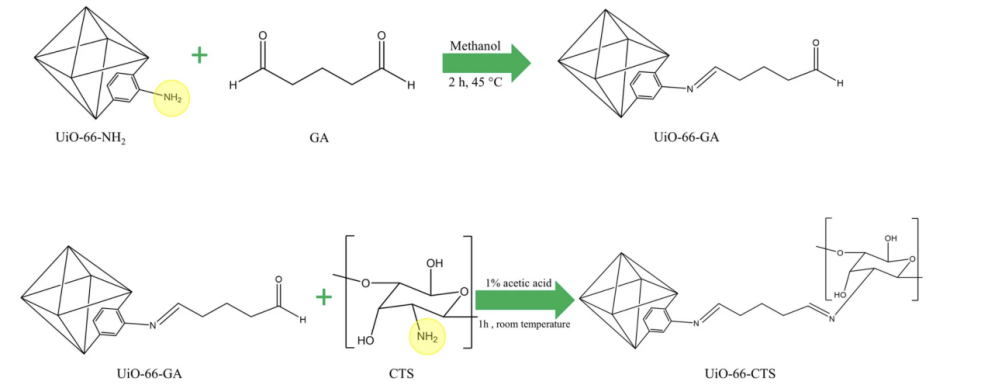
Nowadays, the primary dilemma facing humanity is the gradual depletion of freshwater resources. In recent years, global warming and the rapid growth of population and industrialization have intensified this contradiction, and seawater desalination is undoubtedly the optimal solution to this problem. Currently, the most mainstream seawater desalination technology worldwide is reverse osmosis. According to data from the Global Water Intelligence, seawater reverse osmosis accounts for more than 70% of global seawater desalination capacity. Membrane fouling is one of the main limitations of reverse osmosis, including organic fouling, inorganic scaling, and colloidal fouling. Fouling leads to flux decline, increased energy consumption, shortened membrane lifespan, and requires frequent use of chemical cleaning agents, further increasing costs and environmental burden. This paper reviews membrane preparation methods and compares the performance of modified MMMs and TFNs with their respective pristine membranes. From the data, MMMs and TFNs demonstrate superior performance and are fully capable of serving as primary membrane materials for seawater desalination. Research has found that polymers are undoubtedly the most suitable for seawater desalination research. The general process involves first synthesizing UiO-66-NH 2 nanoparticles, then performing polymer brush grafting modification, followed by preparation into mixed matrix membranes and thin-film nanocomposite membranes, and then conducting performance tests on the two different membranes. Polymer brush-grafted UiO-66-NH 2 shows significant advantages in antifouling and desalination. However, long-term stability and cost control remain the core challenges facing the industrialization of this technology.
Show more
Read Article PDF
Cite
Research Article Open Access
Application of Nanocomposites in Automotive Lightweighting
Article thumbnail
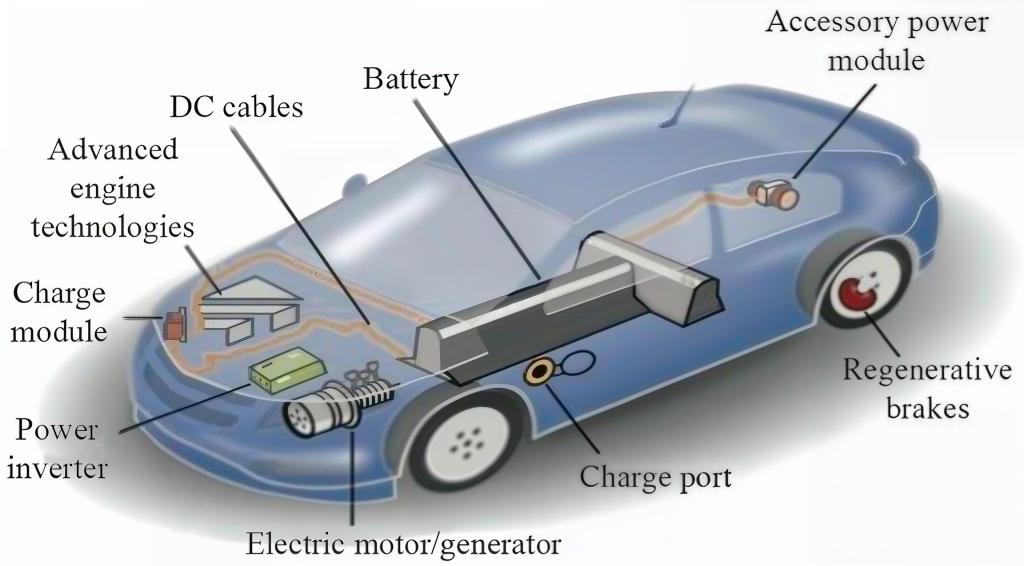
In the development of the global automotive industry, electrification has become a trend, and lightweight vehicles have attracted the attention of all sectors of society, which is the key to improving structural performance and saving energy.The use of fiber composites or metal materials can not achieve the unity of performance and weight, which is not conducive to the development of the industry. The advantages of nanocomposites are reflected in the low content of fillers, which can play the role of multifunctional integration, attract the attention of more and more people in the automotive industry, and promote the development of automotive materials. This paper systematically introduces the characteristics of nanofillers and composites, reviews the mainstream manufacturing process, analyzes the impact of factors such as cost, agglomeration and adaptability, and forecasts the development trend of technology.
Show more
Read Article PDF
Cite
Research Article Open Access
Recent Progress in the Structural Design of Silicon/Carbon Composite Anodes for Lithium-Ion Batteries
Article thumbnail
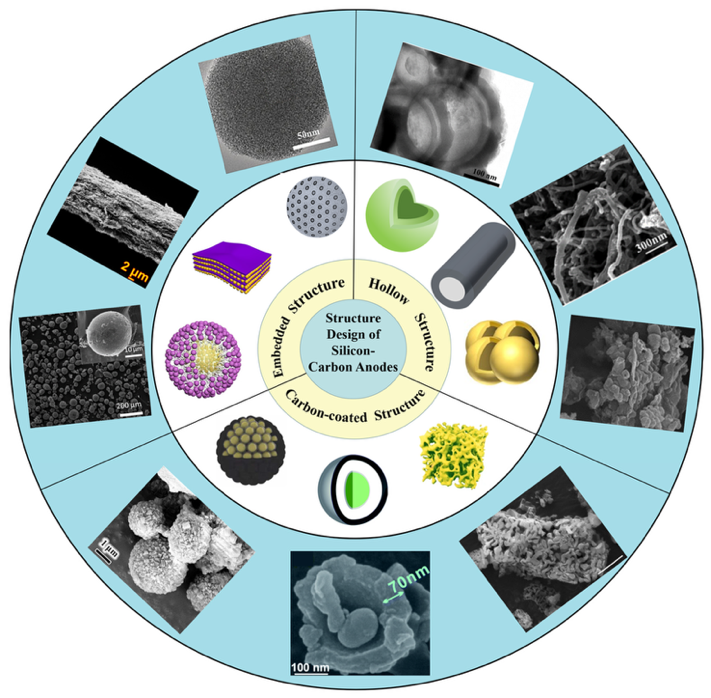
Silicon is considered to be a promising anode material for the next generation of lithium-ion batteries due to its high theoretical specific capacity. However, it will produce significant volume changes during the lithium insertion and delithiation processes, which further cause problems such as particle cracking, repeated rupture and formation of the solid electrolyte interphase (SEI), and loss of electrical contact. Silicon/carbon (Si/C) composite materials provide an effective way to alleviate the above problems by combining the high capacity of silicon with the good electrical conductivity, mechanical support capability and interface stabilisation of carbon materials. This article reviews the structural design of Si/C composite anodes, focusing on three typical structures (carbon-coated, embedded and hollow/porous), and compares their roles and limitations in interface protection, electron transmission, mechanical buffering and volume expansion control. Further analysis revealed that there are trade-offs between different structures in terms of performance, energy density, preparation complexity and scaled application. The future development of Si/C anodes requires further optimisation of the Si/C ratio, interface bonding, pore structure and multiscale structural design, while taking into account high performance, low cost and scalable manufacturing.
Show more
Read Article PDF
Cite