Articles in this Volume

Research Article Open Access
A new branch of fake review detection research -- A review of fake review detection in the Chinese film industry in the post-epidemic era
In the post-pandemic era, Chinese moviegoers increasingly rely on online movie reviews, but fake reviews by spreaders can mislead moviegoers to make wrong decisions. Fake review detection has been developed to a certain extent in China. However, there is a lack of application research in the film industry. This paper summarizes some of the more advanced fake review detection methods in China in the post-epidemic era from the perspectives of review text detection and reviewer detection, introduces their indicators, feature selection methods, and training methods, and further discusses the specific steps of these methods in the detection of fake movie reviews combined with the characteristics of fake movie reviews. The research of this paper can bring guidance for the future detection of fake movie reviews, and provide a decision-making basis for consumers and investors.
Show more
Read Article PDF
Cite
Research Article Open Access
The impact of artificial intelligence on human resource management systems - Applications and risks
Organizations’ traditional human resource management model has been impacted by the ongoing optimization and advancement of artificial intelligence skills and technology, and the broadening of its application scope. The impact of artificial intelligence (AI) systems on employee recruitment, human resources allocations, and talent management is significant. This paper examines the interplay among AI, data applications, human resource management (HRM) systems and the resultant effects. It will examine the significance of effectively managing the deployment of AI systems, as existing literature defines. This study examines the effects of artificial intelligence AI technology on the effectiveness of company administration compared to traditional human resource management systems (HRMS). Several recommendations are offered to enhance the reformation and optimization of the organization’s human resources (HR) division. The research findings indicate that incorporating the new system in conjunction with human involvement can significantly enhance the efficiency of employee recruitment, allocation of human resources, and management of talent within the firm. There was an improvement observed in both employee happiness and productivity elements.
Show more
Read Article PDF
Cite
Research Article Open Access
Reinforcement learning in autonomous driving
Article thumbnail
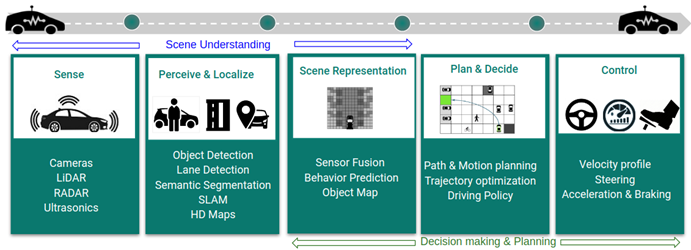
Automatic driving technology has become a highly researched field in recent years, aiming to achieve vehicle driving without human intervention. In this regard, reinforcement learning techniques have played a crucial role. This study discusses and analyses the use of reinforcement learning in automatic driving methods. The research begins with the process of reinforcement learning. In the architectural framework, there is a special emphasis on designing innovative reward functions to encourage safe and socially acceptable driving behaviour, while considering uncertainty factors through advanced Bayesian neural networks. This paper primarily focuses on aspects such as scene understanding, localization and mapping, planning and driving strategies, and control. Furthermore, the paper analyses the key elements of automatic driving and delves into the specific complexities associated with each element. It highlights the utilization of reinforcement learning within the realm of autonomous driving. Reinforcement learning assists autonomous vehicles in understanding the surrounding environment, accurately identifying paths, making intelligent driving decisions, and safely controlling the vehicle. Reinforcement learning especially working with deep learning plays a crucial role in realizing and continuously improving automatic driving. Finally, the paper concludes with a summary and outlook on the entire study.
Show more
Read Article PDF
Cite
Research Article Open Access
Exploring the influence of lifestyle on sleep health based on deep learning
Article thumbnail
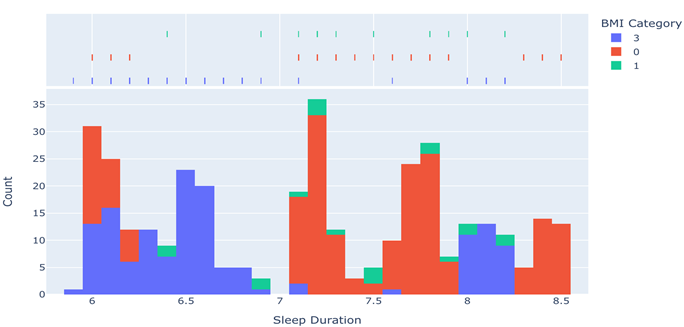
Sleep plays a crucial role in maintaining overall health. However, various lifestyle factors significantly influence sleep quality and duration. Understanding the relationship between lifestyle choices and sleep health is crucial for individuals seeking to improve their sleep patterns. The purpose of this study is to provide valuable insights into the causes and effects of sleep disorders in order to help individuals make informed decisions to optimize their sleep health. This article implements the CatBoost gradient algorithm for predictive modeling. Among various models including K-Nearest Neighbors (KNN), Support Vector Machine (SVM), Xtreme Gradient Boosting (XGBoost), Gradient Boosting Decision Tree (GBDT), Random Forest (RF), Decision Tree (DT), Logistic Regression (LR), Deep Neural Network (DNN), CatBoost shows better overall performance with an accuracy of 0.93, an Fl-score of 0.925, and a recall of 0.95. Through data analysis, Blood-pressure-Systolic, Blood-Pressure-Diastolic, and Stress Level are found to have the greatest impact on the model's output.
Show more
Read Article PDF
Cite
Research Article Open Access
The power of generative AI in cybersecurity: Opportunities and challenges
Article thumbnail
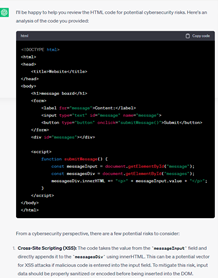
This paper undertakes a comprehensive exploration of the potential and challenges presented by Generative Artificial Intelligence, with particular emphasis on the GPT models, in the field of cybersecurity. Through a meticulous examination of existing literature and pertinent case studies, the paper evaluates the capabilities of these models in the detection and rectification of vulnerabilities, as well as in identifying malicious code. It also highlights the pivotal role of generative AI in enhancing honeypot technology, which has shown promising results in proactive threat detection. While underscoring the significant advantages of utilizing generative AI in bolstering cybersecurity measures, the paper does not shy away from shedding light on the accompanying security exposures. These range from traditional threats like vulnerabilities and privacy breaches to novel dangers such as jailbreaking, prompt injection, and prompt leakage that are associated with the deployment of these AI models. The overarching objective of this paper is to contribute to the ongoing dialogue about the integration of advanced AI technologies into cybersecurity strategies while emphasizing the importance of vigilance against potential misuse. The paper concludes with a call for continued research and development to ensure a safer and more secure cyberspace for all.
Show more
Read Article PDF
Cite
Research Article Open Access
Exploring the influence of generator channel number on the quality of anime-style portrait generation based on DCGAN
Article thumbnail
In the realm of contemporary image synthesis, this research delves into a crucial objective: exploring the connection between the quantity of generator channels and the production of anime-style portraits through Deep Convolutional Generative Adversarial Networks (DCGAN). Employing an extensive dataset of anime faces encompassing diverse artistic styles, this study systematically examines the nuanced interplay between architectural parameters and the fidelity and intricacy of the generated images. By employing the Frechet Inception Distance (FID) as a metric for image quality, this investigation contributes significantly to the field by enhancing the understanding of how the number of generator channels impacts the ultimate quality of anime-style portraits. The DCGAN framework, and in particular its variants, is the backbone of this investigation. The generator and discriminator components are involved in adversarial training, a competitive process that improves image quality through iterations. The findings reveal a non-linear relationship between the number of generator channels and image quality. While increasing the number of channels initially improves image quality and decreases the FID value, exceeding the optimal threshold leads to diminishing returns and image quality degradation. The intricate interplay between structure selection and image quality is further confirmed by the dynamics of the generator and discriminator loss functions. By elucidating the trade-off between complexity and image fidelity, this study contributes to the advancement of image synthesis techniques and encourages future exploration of architectural nuances in the field of artistic image generation.
Show more
Read Article PDF
Cite
Research Article Open Access
Design, development, and deployment of decentralized applications
Beginning with a comprehensive definition of Decentralized Applications (DApps) and their developmental trajectory, this treatise delves into their inception around 2010. It is intriguing to note that by 2020, DApps had already found preliminary applications in diverse sectors, ranging from finance to archaeology. Yet, there remains vast untapped potential awaiting exploration and refinement within the realm of DApps. The discourse then navigates the intricate web of DApps' system architecture, illuminating the cardinal aspects of their design, evolution, and eventual deployment. Herein, the essence of systematic planning during the design phase is underscored, underpinning its pivotal role in shaping the efficacy of the application. Further shedding light on DApps' expansive utility, the paper underscores their transformative influence in areas such as authentication systems and real-time operational control. However, the journey of DApps is not without its challenges. The document elucidates the complexities associated with crafting robust smart contracts, mitigating scalability concerns, and nurturing user acceptance and integration. In light of these hurdles, a clarion call is made for persistent research and avant-garde innovation, propelling DApps to their true potential in the evolving digital landscape.
Show more
Read Article PDF
Cite
Research Article Open Access
Performance exploration of Generative Pre-trained Transformer-2 for lyrics generation
Article thumbnail
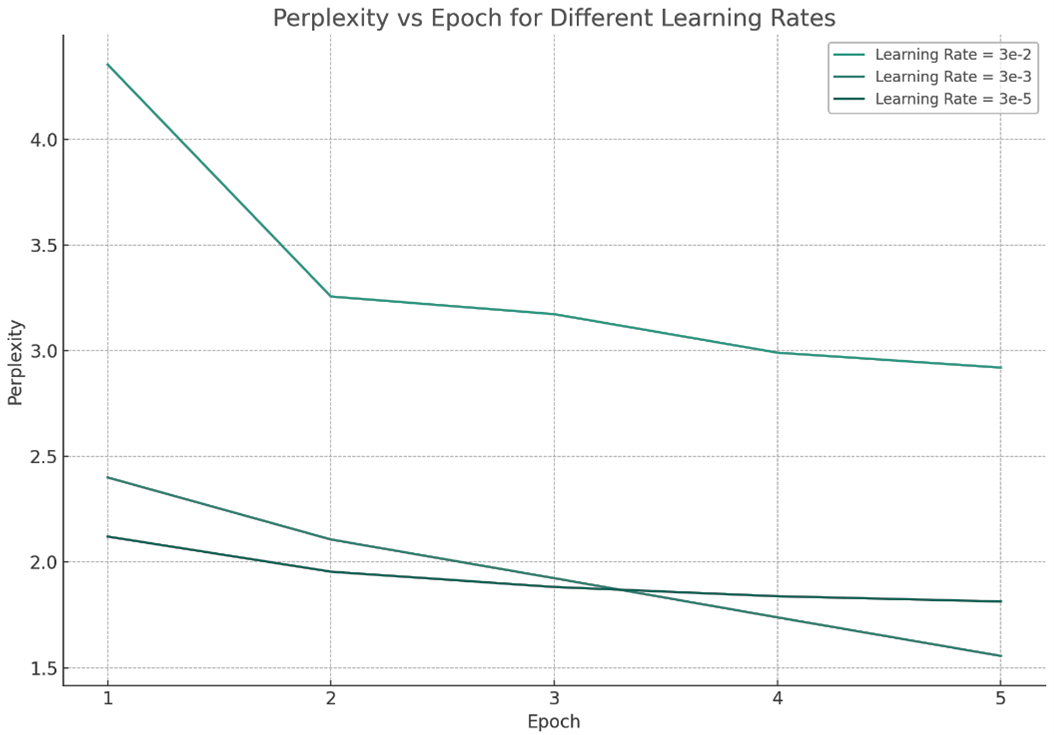
In recent years, the field of Natural Language Processing (NLP) has undergone a revolution, with text generation playing a key role in this transformation. This shift is not limited to technological areas but has also seamlessly penetrated creative domains, with a prime example being the generation of song lyrics. To be truly effective, generative models, like Generative Pre-trained Transformer (GPT)-2, require fine-tuning as a crucial step. This paper, utilizing the robustness of the widely-referenced Kaggle dataset titled "Song Lyrics", carefully explores the impacts of modulating three key parameters: learning rate, batch size, and sequence length. The dataset presents a compelling narrative that highlights the learning rate as the most influential determinant, directly impacting the quality and coherence of the lyrics generated. While increasing the batch size and extending sequence lengths promise enhanced model performance, it is evident that there is a saturation point beyond which further benefits are limited. Through this exploration, the paper aims to demystify the complex world of model calibration and emphasize the importance of strategic parameter selection in pursuit of lyrical excellence.
Show more
Read Article PDF
Cite
Research Article Open Access
Optimizing GAN parameters for efficient and accurate image generation: A study of WGAN-GP in brain tumor dataset
Article thumbnail
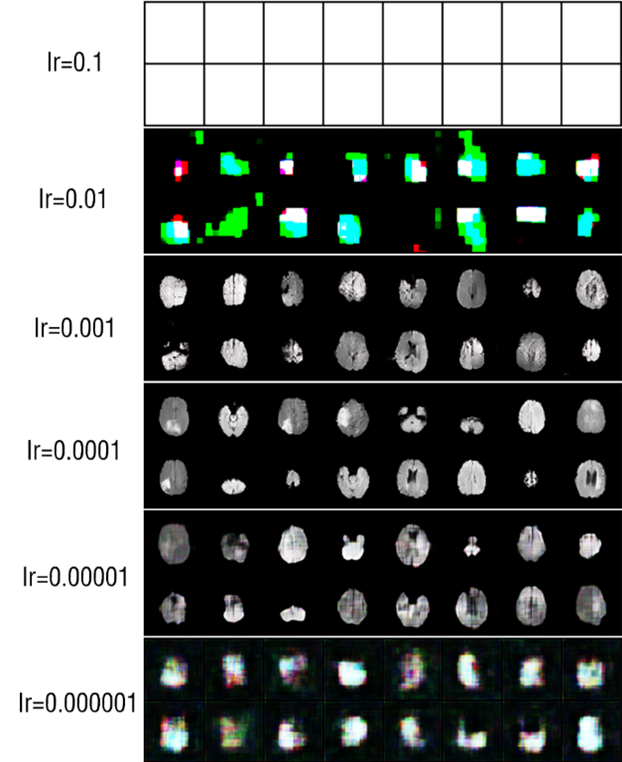
In this era of unprecedented rapid development of artificial intelligence, researchers are moving forward to develop new neural networks. Nevertheless, few have considered optimizing the extant generative adversarial network (GAN) to achieve the most effective and accurate solutions to provide optimal results for the challenges. This study aims to investigate the critical role of parameter optimization in GAN neural networks, with a particular focus on the Wasserstein Generative Adversarial Network with Gradient Penalty (WGAN-GP) architecture applied to the generation of medical images, especially images depicting brain tumors. Therefore, the project used Kaggle’s brain tumor data set as a canvas to conduct an in-depth study of the impact of these parameters on the training model and generated results. For the starter, to investigate how alterations in the learning rate impact the model, this article selects a series of values for meticulous analysis to determine the most effective configuration. Then, evaluate and find a better and more suitable choice between Adam and SGD optimizers through comparison, focusing on their impact on training dynamics. As the last one, this study examines how the Tanh activation function constrains pixel values and shapes image realism through comparative results. By dissecting and understanding the interaction of these parameters in detail, we lay the foundation for optimizing GAN neural networks, increasing their efficiency, and producing accurate solutions for accurate diagnostics and healthcare applications. The journey through the labyrinth of GAN parameter tuning ultimately provided valuable insights into seamlessly synthesizing medical images.
Show more
Read Article PDF
Cite
Research Article Open Access
Image Caption using VGG model and LSTM
Article thumbnail
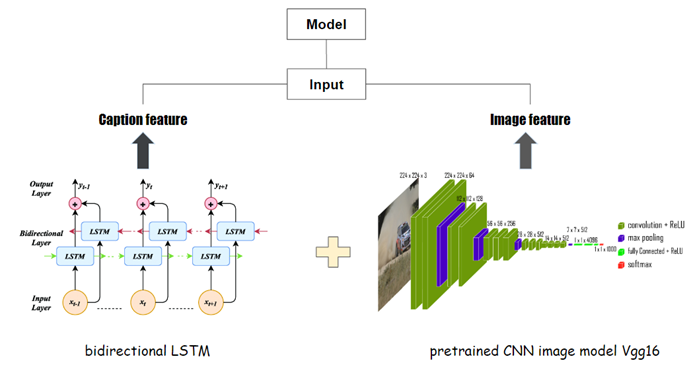
Deep convolutional networks and recurrent neural networks have gained significant popularity in the field of image captioning tasks in recent times. As we all know the performance and the architecture of models are still eternal topic. We constructed the model using a new method to enhance its performance and accuracy. In our model, we make use of pretrained CNN model VGG (Visual Geometry Group) to extract image features, and learn caption sentence features using bidirectional LSTM(Long-Short-Term-Memory) which can better understand the meaning of sentences in the text. Then we combine the image features and caption features to predict captions for images. The dataset Flickr8K is used to train and test the model. Additionally, the model has the ability to produce captions that are shorter than a specified caption length. We evaluated our model with Bilingual Evaluation Understudy (BLEU) score which measures the similarity of predicted text and to the real text. After evaluation and comparison, our model is proved to be well-done on some conditions.
Show more
Read Article PDF
Cite