Articles in this Volume

Research Article Open Access
Noise Threshold Effects in High-Order PAM Carrier Synchronization: A Three-Dimensional Performance Evaluation of SD Algorithm and Costas Loop
Article thumbnail
This study conducts a systematic comparative analysis of the Squared-Difference (SD) algorithm and the Costas loop algorithm for carrier synchronization in high-order Pulse Amplitude Modulation (PAM) systems, assessing their noise resilience and computational complexity to inform algorithm selection in high-speed communication systems. We tested both algorithms using the same simulation framework for 4/6/8-PAM modulation over additive white Gaussian noise (AWGN) channels. We looked at how well they did in terms of steady-state phase error variance, speed of convergence, and extra work needed to run the program. The most important results show that the Costas loop works better than the SD algorithm when there is a lot of noise (noise power >5) and when there is a lot of modulation (8-PAM). It has better phase tracking accuracy (with a variance of only 0.022 rad²) and is less likely to be affected by noise.The Costas loop works much better than the SD algorithm, but it costs almost twice as much to run, needing 1013 operations per symbol instead of 512. The SD algorithm matches Costas loop performance in low-noise or low-order modulation but suffers rapid degradation under high noise due to decision-directed error propagation (8-PAM variance peaks at 0.15 rad²).The Costas loop gives up speed for stability, while the SD algorithm is great at converging quickly. These insights make it clear where the application boundaries are. Satellite communications and other systems that need to be very reliable work best with the Costas loop. The SD algorithm works best for short-range links that don't use a lot of resources and have good channel conditions. This study creates a quantitative, multi-dimensional framework for choosing algorithms in high-order PAM systems.
Show more
Read Article PDF
Cite
Research Article Open Access
UAV Path Planning and Simulation Based on PSO with Greedy Initialization and 2-Opt Local Search
Article thumbnail
Unmanned Aerial Vehicle path planning is a key technology for realizing autonomous flight, which belongs to a typical NP-hard optimization problem. Genetic algorithm (GA) suffers from slow convergence speed and low iteration efficiency, whereas the standard particle swarm optimization (PSO) algorithm is prone to premature convergence and falling into local optima. In this paper,Greedy Initialization and 2-opt Local Search Particle Swarm Optimization (GILS-PSO) is proposed. A three-dimensional flight environment containing static obstacles and fixed waypoints is constructed for simulation verification. The performance of the algorithm is enhanced by means of greedy initialization, permutation encoding, adaptive inertia weight, and 2-opt local search. Under the same experimental scenario, the fitness convergence characteristics of them, are compared and analyzed.The results show that GILS-PSO is significantly superior in terms of convergence speed and optimal fitness. The optimal path planned by GILS-PSO is applied to a quadrotor UAV simulation system based on cascade PID control, and the feasibility of the scheme is verified by analyzing position, velocity, attitude angles, and angular velocity. The proposed method can provide an effective solution for offline three-dimensional path planning of unmanned aerial vehicles.
Show more
Read Article PDF
Cite
Research Article Open Access
Emotion Perception Enhancement for Embodied Robots Using AI Interaction Technology
Embodied intelligent robots have deeply penetrated social service fields such as medical rehabilitation, elderly care, and children's education. Its interactive naturalness and social acceptance highly depend on the accurate perception of human emotions. However, the sensor noise, real-time constraints, cultural differences, and individual specificity in the dynamic interactive environment make it difficult for the traditional non-embodied emotion computing model to migrate directly. This paper systematically summarizes how AI-based multimodal interaction technology can enhance the emotional perception of embodied robots, and analyzes it from three levels: multimodal perception technology, situational understanding model, embodied integration, and optimization. The research shows that technology evolution presents three trends. Multimodal fusion significantly improves perceptual robustness through signal complementarity; Situational modeling extends instantaneous perception to dynamic tracking; Knowledge guidance injects interpretability and common-sense constraints into data-driven models. Current technology is facing bottlenecks such as a lack of cross-cultural generalization, a lack of robustness of real scenes, and prominent privacy ethical risks. In the future, it needs to focus on the integration of brain-computer interface, the standardization of emotional operating systems, and the construction of ethical standards.
Show more
Read Article PDF
Cite
Research Article Open Access
Flexible and Stretchable Electrodes for Wearable Energy Storage Devices
Article thumbnail
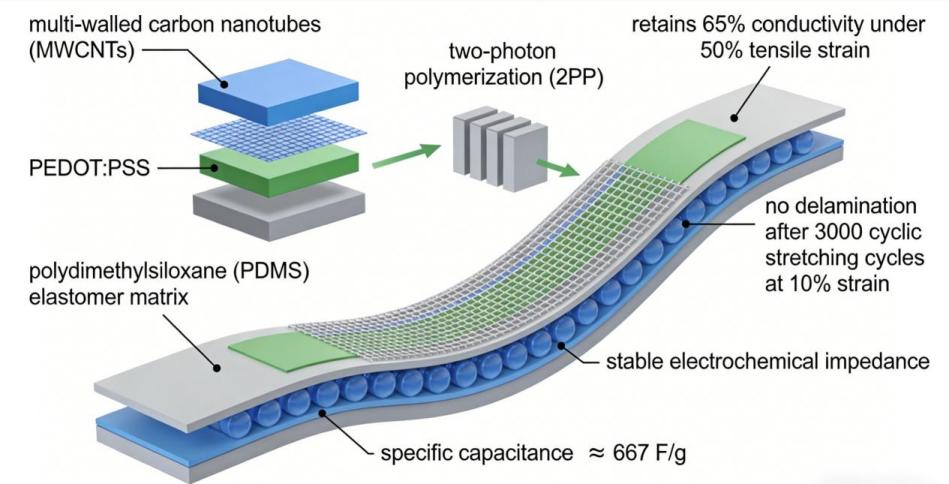
Wearable electronic devices have been developing rapidly. Whether it is health monitoring, electronic skin, or smart wearables, people have higher requirements for the high performance and safety of these devices. Flexible and stretchable electrodes are a key component of wearable energy storage devices, so they have become a research hotspot in the field of new energy materials. This review first introduces the design concepts and preparation methods of flexible and stretchable electrodes, then summarizes the research progress of several types of stretchable electrodes, including carbon-based, metal-based, and conductive polymer-based ones. Finally, it discusses their specific applications in stretchable supercapacitors, stretchable lithium-based batteries, and wearable sensors. The article also analyzes the main challenges currently faced by such electrodes and provides an outlook on future development directions, hoping to offer some reference for the research and production of related devices.
Show more
Read Article PDF
Cite
Research Article Open Access
Development and Prospect of Humidity Sensor Technology
Article thumbnail
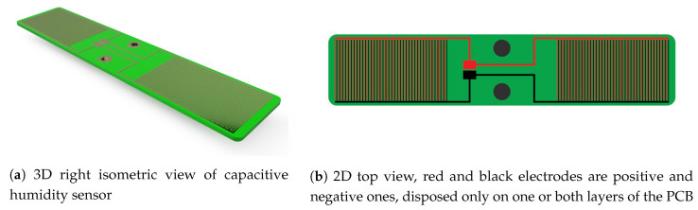
Humidity sensor is an important sensing device, which can reflect the dryness and wetness perception of the environment. The main application fields are as follows:industrial process control, medical health monitoring, environmental monitoring, smart home appliances, and Internet of Things (IoT) terminals. Three key technical indicators including relative humidity, absolute humidity and dew point temperature are depicted in this paper. Then the applicable scenarios and technical characterization requirements of humidity sensor are summarized. Subsequently, three mainstream humidity sensors (capacitive, resistive and piezoelectric) are shown according to the operational mechanisms and technical characteristics. The critical parameters of humidity sensor (measurement accuracy, response speed, operating temperature, humidity range, stability, power consumption, etc) are summarized and elaborated in detail. In the future, humidity sensors are evolving toward high precision, miniaturization, low power consumption, intellectualization and multi-parameter integration based on the technological iteration, application expansion and industrial implementation. it comprehensively analyzes the development prospects of humidity sensors, affirming their steady evolution toward high precision, miniaturization, low power consumption, intelligence, and multi-parameter integration.
Show more
Read Article PDF
Cite
Research Article Open Access
Adaptation Strategies for Few-shot Industrial Defect Image Classification
Article thumbnail
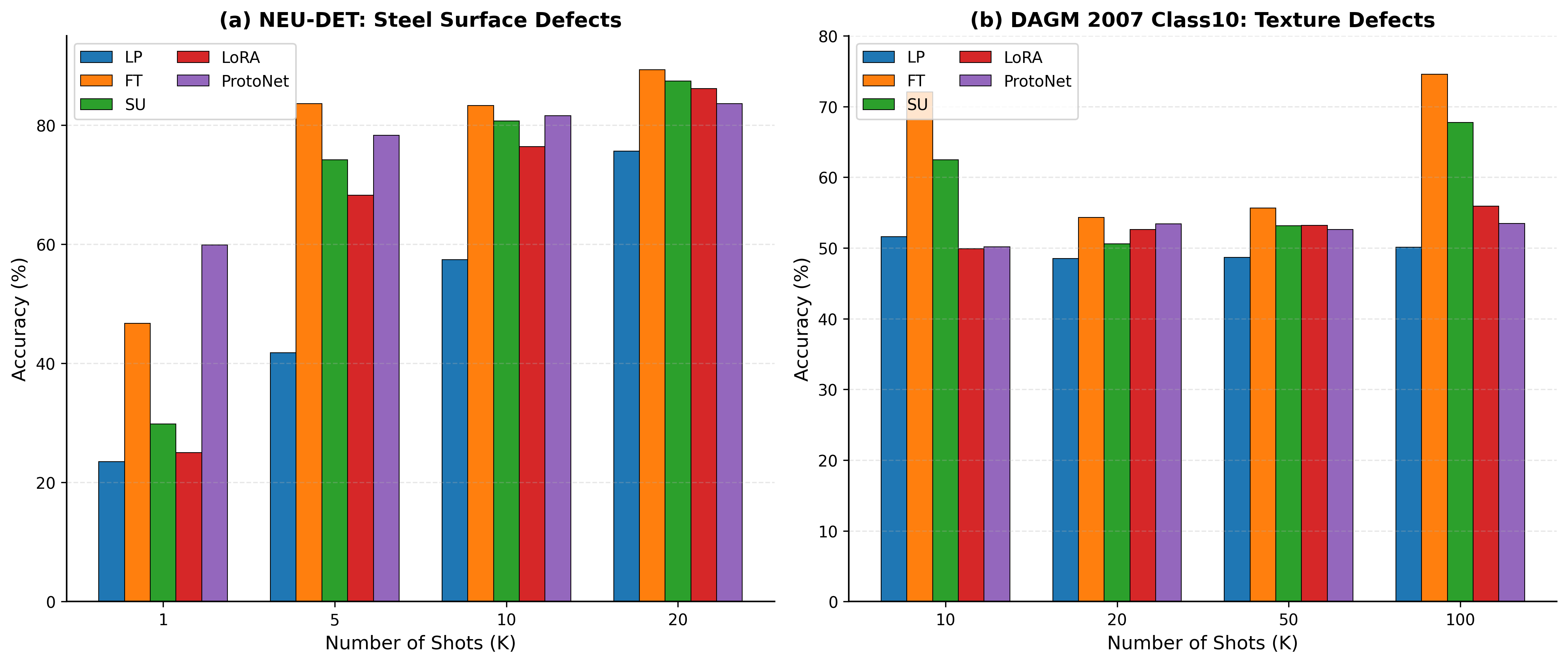
In the current industrial era, artificial intelligence is gradually integrated into various industries, bringing more possibilities to production. In industrial manufacturing, surface defect detection is a key part of product quality control, but there are still problems of unsatisfactory efficiency. Therefore, this paper compares the performance of five adaptation strategies, including Linear Probing (LP) and Full Fine-tuning (FT), in small-sample industrial defect detection through the transfer learning framework based on ImageNet pre-trained ResNet18, aiming to provide method guidance for small-sample industrial defect detection under different sample data volumes. On the NEU-DET dataset, the prototype network is the best when the sample size is extremely small, and the accuracy of full fine-tuning reaches the highest 89.28% when the sample size is 5-shot and above, and the low-rank adaptive method only achieves 96.4% of the full fine-tuning performance with only 0.73% of the trainable parameters. DAGM 2007 Class 10 cross-dataset validation shows that full fine-tuning still maintains its advantage.
Show more
Read Article PDF
Cite
Research Article Open Access
Parameter-Scanning Analysis of a Single-Phase Full-Bridge Rectifier with Capacitive Filtering: Trade-Off Between Ripple Suppression and Current Stress
Article thumbnail
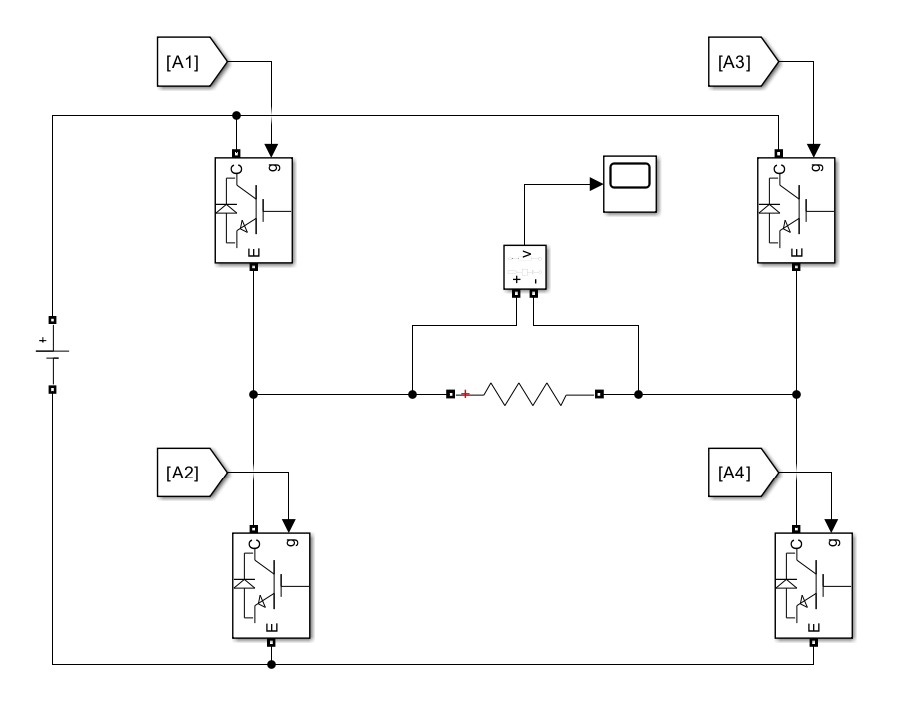
A single-phase full-bridge rectifier followed by a filter capacitor is a basic front-end structure in low-voltage DC supplies, auxiliary power units, and small power converters. A larger filter capacitor usually reduces the DC-side voltage ripple, but it also shifts diode conduction toward the peaks of the AC voltage and concentrates the charging current in a shorter time interval, increasing peak current and thermal loading in the rectifier bridge. To quantify the coupling between output-voltage quality and device current stress, this paper develops a continuous-time simulation model of a single-phase full-bridge rectifier with capacitive filtering, including diode forward voltage drop and source-side equivalent series resistance. Five capacitance values and three load resistances are scanned. Under a 50 Ω load, increasing the filter capacitance from 220 μF to 4700 μF raises the average DC voltage from 241.84 V to 283.00 V and reduces the ripple factor from 0.1751 to 0.0098. At the same time, the reported diode charging-current peak increases from 19.17 A to 32.42 A, the RMS value increases from 8.36 A to 12.08 A, and the conduction angle per charging pulse decreases from 74.33° to 47.03°. Under the 20 Ω heavy-load case, the peak current reaches 56.62 A, showing that heavy loading amplifies the current-stress penalty of large capacitive filtering. A ripple-factor versus peak-current trade-off curve further shows that capacitance selection should consider output ripple, load level, and rectifier current margin simultaneously, rather than minimizing ripple alone.
Show more
Read Article PDF
Cite
Research Article Open Access
AI-Assisted Control of Renewable-Energy Power Converters: Task Mapping, Method Adaptation, and Trustworthy Deployment
High-penetration renewable generation is reshaping the operating envelope of power electronic converters. Photovoltaic, wind, and wave-energy systems are characterized by strong time variation, severe disturbances, and coupled operational constraints, which challenge conventional control strategies based on accurate models and fixed parameter settings. Artificial intelligence can learn nonlinear mappings from operating data and support maximum power point tracking, power prediction, fault diagnosis, parameter tuning, and surrogate-based optimization. However, its real-time capability, stability assurance, and safety verifiability remain insufficient for direct use in high-frequency inner-loop control. This paper reviews recent progress in AI-assisted control and optimization for photovoltaic converters, wind-energy converters, and wave-energy converters. Supervised learning, ensemble learning, reinforcement learning, physics-informed modeling, and surrogate optimization are examined from the perspective of task suitability rather than algorithm listing. Common limitations are further discussed in terms of real-time deployment, stability boundaries, generalization, digital-twin pretraining, and lightweight implementation. The review indicates that AI is currently better suited to slow-layer optimization, state perception, parameter design, and decision support, while traditional control should remain the safety baseline for fast inner loops and protection-critical actions.
Show more
Read Article PDF
Cite
Research Article Open Access
Challenges and Progress of Solid-State Electrolytes for Silicon-Based Solid-State Batteries
Silicon-based solid-state batteries provide an attractive route for developing lithium batteries with higher energy density and better safety, but their practical progress is still limited by the difficult match between silicon anodes and solid-state electrolytes. The central issue is not only the intrinsic volume change of silicon, but also the unstable Si/SSE interface produced during repeated lithiation and delithiation. Once silicon expands and contracts, the solid electrolyte cannot wet or refill the interface like a liquid electrolyte, which easily leads to contact loss, void formation, interrupted Li+ and electron transport, impedance growth, and rapid capacity fading. This review therefore focuses on oxide, sulfide, and polymer/composite electrolytes coupled with silicon-based anodes. Oxide electrolytes generally possess good chemical stability and wide electrochemical stability windows, but their rigid and brittle nature makes it difficult to maintain continuous contact with the deformable silicon electrode. Sulfide electrolytes show high ionic conductivity and better mechanical deformability, especially under stack pressure, yet their air sensitivity, interfacial reactions with silicon, carbon-induced decomposition, and pressure-dependent performance remain serious obstacles. Polymer and polymer-based composite electrolytes are more flexible and easier to process, which gives them certain advantages in accommodating silicon volume variation, but their low room-temperature ionic conductivity, limited mechanical strength, and long-term interfacial degradation still need to be addressed. In this view, the development of silicon-based solid-state batteries cannot rely on improving one component alone. More attention should be given to the coordinated design of electrolyte composition, interfacial chemistry, and electrode architecture, so that a stable, low-resistance, and mechanically adaptive Si/SSE interface can be achieved for practical high-energy solid-state batteries.
Show more
Read Article PDF
Cite