Articles in this Volume

Research Article Open Access
Alzheimer's disease intelligent detection combining XGBOOST and NARX
Article thumbnail
Due to the current situation of mental health illness, which causing a huge impact on the society. In this paper, an attempt has been made to analyses and predict the data from ANDI using single and composite algorithms. This paper used chi-square test, Spearman’s correlation coefficient and maximum mutual information number, cost-sensitive learning, SMOTE, ADASYN, SMOTE+ENN, SMOTE+TOMEK to investigations. Specifically, this paper adopted the random forest to fill the data, and besides, given the fact that the data shows the characteristics of imbalance, this paper identifies the method of SMOTE TOMEK integrated sampling, XGBOOST and Bayesian optimization scheme to give the best performance and the best classification was obtained by XGBOOST combined with SMOTE-TOMEK. Furthermore, this paper used the NARX network to track the changes generated by time-based indicators, providing another insight to refine the study of intelligent diagnosis of Alzheimer.
Show more
Read Article PDF
Cite
Research Article Open Access
Comparison of K-Means, K-Medoids and K-Means++ algorithms based on the Calinski-Harabasz index for COVID-19 epidemic in China
Article thumbnail
The novel coronavirus spreads from person to person through close contact and respiratory droplets such as coughing or sneezing. Various studies have been conducted globally to deal with COVID-19. However, no cure for the virus has been found , and efficient data processing methods for sudden outbreaks have not yet been identified. This study compares three algorithms for data sets to analyze clustering patterns to determine the best data processing method. The data of this study comes from the Chinese Center for Disease Control and Prevention, including two attributes of confirmed cases and death cases. We selected the data from the initial stage of the outbreak until October 31, 2021. We compared the data analysis and processing results of the clustering of the spread of the new coronavirus in China by the K-Means, K-Medoids and K-Means++ algorithms. By comparing the Calinski-Harabasz index values from K=2 to K=10, the results show that the K-Means, K-Medoids and K-Means++ algorithms have almost the same clustering effect when K does not exceed 6, but when the K value is greater than 6. When the K-Medoids clustering effect is significantly better, therefore, from the three clustering algorithms used, it can be concluded that the best method for clustering the spread of the novel coronavirus outbreak in China is the K-Medoids method. The results of this study provides ideas for future researchers to choose an appropriate cluster analysis method to effectively process the data in the early stages of the epidemic.
Show more
Read Article PDF
Cite
Research Article Open Access
Signal detection algorithms for massive MIMO system
Article thumbnail
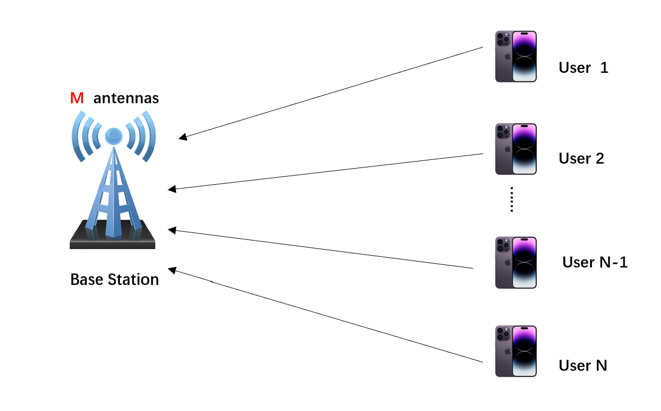
As 5G communication networks are maturing, we have higher and higher requirements for the detection of communication signals. In this paper, for the Massive MIMO system signal detection problem, we mainly summarize the detection algorithms that can be used to replace the traditional ZF and MMSE, so as to avoid large-scale matrix inverse and reduce the computational complexity. It mainly includes the general iterative method, typically represented by SSOR, which makes the transmit signal matrix constantly close to the ideal value by iterating; the other is the level expansion class solution method, which takes the order expansion of the level as the initial value of the iteration to accelerate the convergence rate of the algorithm, typically represented by the MLI algorithm. However, today where the demand for communication is gradually increasing and the number of users is constantly getting larger, the performance of the above algorithms may degrade seriously, so the AI signal detection algorithm is a good alternative, which learns autonomously through deep neural networks, including model-driven and data-driven schemes.
Show more
Read Article PDF
Cite
Research Article Open Access
On the use of PID control to improve the stability of the quad-rotor UAV
Article thumbnail
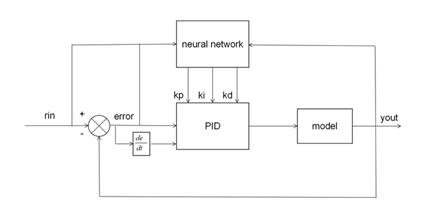
The recent development of drones has aroused great concern at home and abroad. For civil industry and agricultural plant protection industry, it can provide safer and more stable flight and improve production efficiency. For the exploration industry, the application of UAV (Unmanned Aerial Vehicle) will reduce unnecessary casualties. In places where damage is serious, UAV will bring accurate on-site information and data more quickly. It can make drones to replace people in high-risk operations, scientific and technological agricultural development and survey more stable and safe; For the military industry, it can be applied to different combat environments to increase its stability. In recent years, although UAV combat and reconnaissance are not the mainstream combat methods, UAV has become or an indispensable part. Improving the stability of UAV will also increase the military combat capability, so UAV has good development prospects and economic benefits. Nowadays, PID (Proportion Integration Differentiation) control plays an indispensable role in quad-rotor UAV. How to use different types of PID control combined with existing intelligent technology to improve the stability of quad-rotor UAV is a hot issue in recent years. This paper summarizes the previous research results in this field, briefly describes the motion mechanism of four-rotor UAV, wind disturbance resistance mechanism, the action principle and contract between traditional PID control and fuzzy PID control, as well as the effect of intelligent algorithm on PID control addition, and puts forward suggestions for PID control algorithm of the future UAV.
Show more
Read Article PDF
Cite
Research Article Open Access
GravNet: A novel deep learning model with nonlinear filter for gravitational wave detection
Article thumbnail
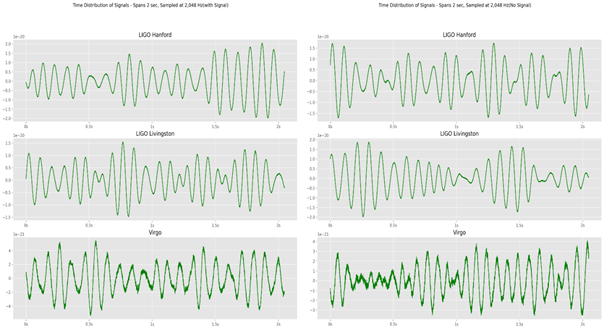
Gravitational waves (GW) detected by LIGO, VIRGO, and upcoming facilities have ushered in a transformative era for astronomy and physics. However, these cosmic ripples present unique challenges. Most GW signals are not only weak but also fleeting, lasting mere seconds. This poses a significant hurdle to current search strategies. The prevalent matched filtering technique, while effective, demands an exhaustive search through a template bank, slowing down data processing.To overcome these limitations, machine learning, particularly Convolutional Neural Networks (CNNs), has emerged as a solution. Recent studies demonstrate that CNNs surpass traditional matched-filtering methods in detecting weak GW signals, extending beyond the training set parameters. Nonetheless, optimizing these deep learning models and assessing their robustness in GW signal detection remains essential. In this study, we explore various methods to enhance CNN models’ effectiveness using simulated data from three gravitational wave interferometers. Our investigation spans denoising techniques, CNN architectures, and pretrained AI models. Notably, the Constant-Q transform (CQT) outperforms the Fast Fourier transform in denoising raw gravitational signals. Furthermore, employing the pretrained model EfficientNet enhances GW detection efficiency. Our proposed CNN model, GravNet, combines CQT, EfficientNet, and an optimized CNN structure. GravNet achieves an impressive 76.5% accuracy and 0.85 AUC. This innovative approach offers valuable insights into harnessing deep learning models for more efficient and accurate gravitational wave detection and analysis.
Show more
Read Article PDF
Cite
Research Article Open Access
House price prediction based on different models of machine learning
Article thumbnail
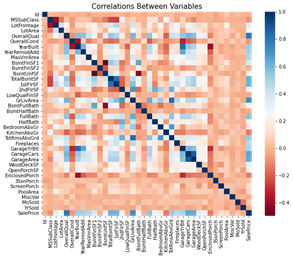
Housing price prediction is a typical regression problem in machine learning. Common algorithms include linear regression, support vector regression, random forest, and extreme gradient boosting models based on integrated learning methods. Among the specific problems, different models in the specific problem will get different results. This research will compare these three models to show which model is more accurate and robust. Given the practical problem of housing price prediction, various characteristics of houses are carried out. The research will analyze and study, apply a variety of regression models, and compare the performance of the above three models on this problem, make the horizontal comparison of the advantages and disadvantages of different models, and analyze the difference in effect Line analysis and summary.
Show more
Read Article PDF
Cite
Research Article Open Access
The advantages and short circuit characteristics of SiC MOSFETs
Article thumbnail
SiC MOSFETs have exhibited considerable benefits in high-frequency, high-voltage, and high-temperature power electronics applications with outstanding material attributes as a result of the rapid advancement of power electronics technology. SiC MOSFETs’ slower short-circuit tolerance and faster switching rates provide new issues for the short-circuit prevention technology. In the opening section of the study, Si and SiC MOSFETs are compared and evaluated using various models and parametric factors. It has been demonstrated that SiC MOSFETs outperform Si MOSFETs in a variety of conditions and applications. The many SiC MOSFET short-circuit failure types as well as their underlying theories are initially explained in the paper’s main body. In addition, it examines the fundamentals of short-circuit test procedures and SiC MOSFET test circuits. The issues and limitations of the currently available SiC MOSFET short-circuit protection technology are then explored, along with factors impacting the short-circuit of SiC MOSFETs that are thoroughly examined. Lastly, the SiC MOSFET short-circuit protection technology development trend is forecasted, and potential future areas for improvement and innovation are considered. SiC MOSFET short-circuit protection technology will be enhanced and optimized to satisfy the needs of efficient and dependable power electronic systems as technology advances and application requirements expand.
Show more
Read Article PDF
Cite
Research Article Open Access
Assessing and neutralizing multi-tiered security threats in blockchain systems
Article thumbnail
Blockchain technology, the backbone of digital cryptocurrencies, has rapidly ascended as a pivotal tool in modern commerce due to its decentralized, immutable nature. It offers fresh, innovative avenues for overcoming trust issues inherent in traditional trading systems. Yet, the unique traits that make blockchain advantageous also render it vulnerable. Cybercriminals are ceaselessly innovating, devising new tactics to exploit these vulnerabilities and resulting in a surge of security incidents that have led to substantial economic losses. The increasing frequency and sophistication of these attacks jeopardize the integrity and stability of blockchain networks. This paper offers a comprehensive study of blockchain system architecture, the principles underlying various attack methods, and viable defense strategies, all organized within a hierarchical framework. Initially, the paper categorizes blockchain attacks according to the hierarchy of blockchain systems, providing a detailed exploration of the characteristics and principles behind these attacks at each level. Next, the paper summarizes existing countermeasures and proposes effective new strategies for bolstering blockchain security. The paper concludes with a recap of its key findings and outlines the landscape for future research in blockchain security.
Show more
Read Article PDF
Cite
Research Article Open Access
Federated learning algorithm-based skin cancer detection
Article thumbnail
Owing to the oversight regarding training data privacy within the realm of Deep Learning (DL), there have been inadvertent data leaks containing personal information, resulting in consequential impacts on data providers. Consequently, safeguarding data privacy throughout the deep learning process emerges as a paramount concern. In this paper, the author suggests the integration of FedAvg into the training procedure as a measure to ensure data security and privacy. In the experiments, the author first applied data augmentation to equalize the various samples in the dataset, then simulated four users using a Central Processing Unit (CPU) with four cores and established a network architecture starting with DenseNet201. Each user cloned all parameters of global model and received an equal portion of the dataset. After updating the parameters locally, the weights were aggregated by averaging and passed back to the global model. Additionally, the author introduced learning rate annealer to help the model converge better. The experimental results demonstrate that incorporating FedAvg indeed saves training time and achieves excellent performance in skin cancer classification. Despite a slight loss in accuracy, the algorithm can address privacy concerns, making the use of FedAvg highly valuable.
Show more
Read Article PDF
Cite
Research Article Open Access
Distributed U-net model-based image segmentation for lung cancer detection
Article thumbnail
Until now, in the wake of the COVID-19 pandemic in 2019, lung diseases, especially diseases such as lung cancer and Chronic Obstructive Pulmonary Disease (COPD), have become an urgent global health issue. In order to mitigate the goal problem, early detection and accurate diagnosis of these conditions are critical for effective treatment and improved patient outcomes. To further research and reduce the error rate of hospital diagnoses, this comprehensive study explored the potential of Computer-Aided Design (CAD) systems, especially utilizing advanced deep learning models such as U-Net. And compared with the literature content of other authors, this study explores the capabilities of U-Net in detail and enhances the ability to simulate CAD systems through the VGG16 algorithm. An extensive dataset consisting of lung CT images and corresponding segmentation masks, curated collaboratively by multiple academic institutions, serves as the basis for empirical validation. In this paper, the efficiency of U-Net model is evaluated rigorously and precisely under multiple hardware configurations, such as single CPU, single GPU, distributed GPU and federated learning, and the effectiveness and development of the method in the segmentation task of lung disease are demonstrated. Empirical results clearly affirm the robust performance of the U-Net model, most effectively utilizing four GPUs for distributed learning, and these results highlight the potential of U-Net-based CAD systems for accurate and timely lung disease detection and diagnosis huge potential.
Show more
Read Article PDF
Cite