Articles in this Volume

Research Article Open Access
Quantum mechanics and statistical physics: Novel frameworks for enhancing natural language processing
Article thumbnail
This article explores the pioneering application of principles from quantum mechanics and statistical mechanics to the field of natural language processing (NLP). By drawing analogies between physical phenomena such as quantum entanglement, phase transitions, and statistical ensembles, and linguistic concepts like semantic relationships, language use dynamics, and lexical diversity, we offer a novel perspective on language analysis and processing. Quantum linguistic models, leveraging the intricacies of entanglement and quantum probability, provide a framework for understanding complex semantic networks and enhancing computational efficiency through quantum computing. Meanwhile, statistical mechanics inspires models for capturing lexical diversity and understanding the evolution of language patterns, akin to phase transitions in physical systems. This interdisciplinary approach not only deepens our understanding of linguistic phenomena but also introduces advanced mathematical and computational techniques to improve NLP tasks.
Show more
Read Article PDF
Cite
Research Article Open Access
Analysis and optimization of the efficient press shop operation
In the last decade, stamping and forming manufacturing methods have been widely used in the manufacturing industry, and the stamping and forming industry has gradually shifted from the competition of scale and quantity to the competition of high quality, cost-effectiveness, and multi-category. Therefore, it is of far-reaching significance to study the efficient operation method of the press shop. In this paper, the efficient operation modeling method, digital simulation platform, and production line improvement of the press shop are reviewed. According to analysis, it can be concluded that the dynamic data-driven modeling method is perfect, but the theoretical basis involved in the practical application process is too complicated, therefore, press shop managers may be required to have a certain degree of theoretical basis so that the method can be effectively realized. Besides, the virtual-real combination of digital simulation platforms is easy to operate in the press shop, but the model assumptions analyzed in this paper are too idealized, and potential unresolved problems may arise in the practical application of the press shop with a larger scope and wider coverage. Finally, the production-based transformation of the shop floor production line is a more suitable management method for older factories that are ready for upgrading.
Show more
Read Article PDF
Cite
Research Article Open Access
Enhancing English education with Natural Language Processing: Research and development of automated grammar checking, scoring systems, and dialogue systems
Article thumbnail
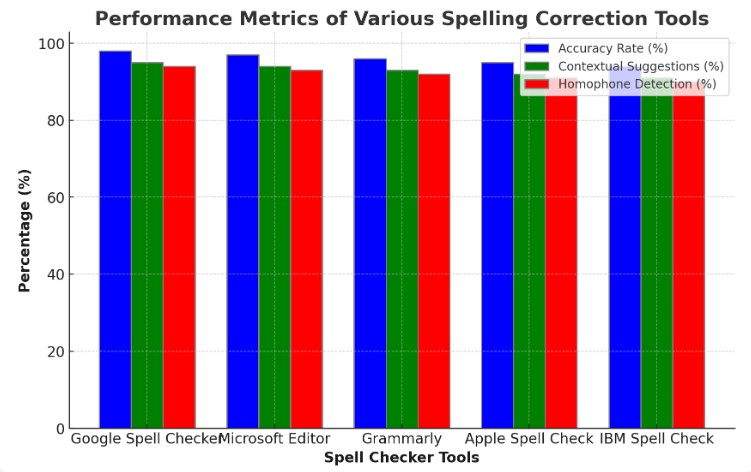
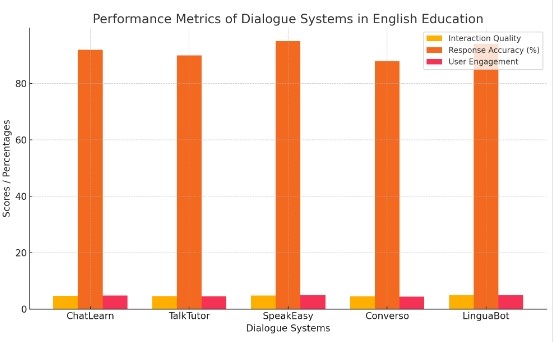
In this paper, we investigate the scope for transformational change that these technologies offer to English education. We examine how NLP can support English education through automated grammar checking having students’ text checked for grammatical errors in real time, automated scoring systems which evaluate written and verbal English against predefined criteria, and dialogue systems which interacts with learners in English to help develop their speaking and listening skills in an engaging and non-judgmental environment. We document the current status of these NLP applications, examine their educational benefits, highlight some of the challenges faced by the technologies and finally discuss the way forward for large-scale adoption of such technologies, bringing the research to a logical conclusion. We hope that this study will provide a comprehensive understanding of how NLP can be employed to transform education in English and also highlight some of the associated challenges and ethical dilemmas.
Show more
Read Article PDF
Cite
Research Article Open Access
AI-powered language learning: The role of NLP in grammar, spelling, and pronunciation feedback
Article thumbnail
The introduction of artificial intelligence (AI) and natural language processing (NLP) in language learning has transformed the practices of education. This paper analyzes the role of AI-powered tools in English language learning with specific focus on automated essay scoring (AES), speech recognition, and advanced grammar and spelling checkers. By examining the accuracy of the most effective AES systems, it is evident that automated feedback has increased the quality of writing by providing detailed, consistent, and objective feedback on submitted essays. Speech recognition is another tool that is being used to assess pronunciation and fluency of learners. The software is constantly improving, with advances in NLP and machine learning. The technology for fluency tests is becoming more accurate, and is helping to improve learner outcomes significantly. Lastly, we examine advanced grammar and spelling checkers, which are increasingly used for correcting the contextual errors of individual learners. The AI systems adapt to the user and their needs, which make the corrections more effective. This paper offers an overview of how AI is leading to personalized and effective language learning, ultimately enhancing the educational experience of students and embracing future possibilities in education technology.
Show more
Read Article PDF
Cite
Research Article Open Access
Navigating the intersection of computer technology and IoT: Innovations, challenges, and strategies for privacy protection
Article thumbnail
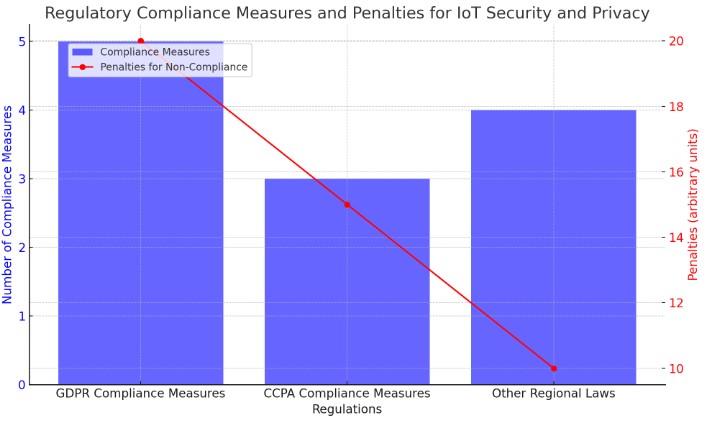
The integration of computer technology in the Internet of Things (IoT) has introduced new efficiencies, and conveniences in many sectors. However, this integration has also brought some serious challenges, and one of the most pressing ones is the need for more effective protection of privacy. This paper investigates some of the latest security developments in IoT industry, including encryption, blockchain, and artificial intelligence. Furthermore, it highlights the important challenges in IoT technology by providing an overview of data overload, regulatory and security issues in IoT devices. Besides, possible solutions to these problems are suggested in this paper. In addition, a detailed conclusion is made, which includes three future plans and some important recommendations to researchers, practitioners, and policymakers who are interested in achieving effective IoT security and privacy. The paper will have a positive impact on the research community, as it will highlight the growing need to invest in research and collaboration to improve the security of the IoT ecosystems.
Show more
Read Article PDF
Cite
Research Article Open Access
Cutting-edge techniques in 3D modeling and animation: Leveraging mathematical models and advanced software tools
Article thumbnail
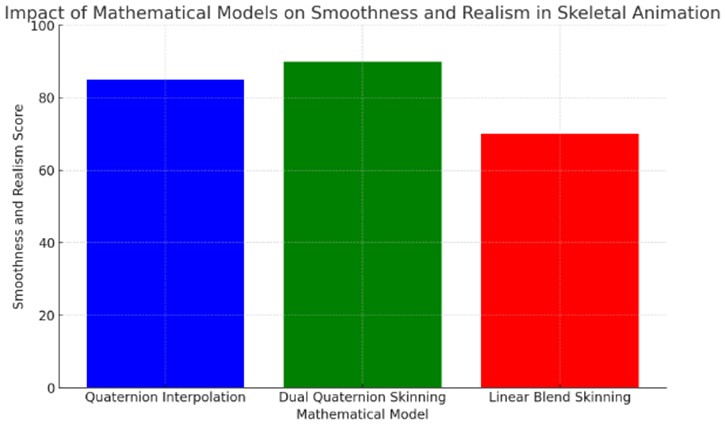
This paper explores the advancements in computer animation technology, focusing on 3D modeling and animation. It delves into the core aspects of character design, environment modeling, and animation rigging, emphasizing the mathematical models and algorithms that enhance realism and efficiency. Key techniques discussed include Bezier curves and spline interpolation for anatomy and proportions, Perlin noise and fractal algorithms for texturing, and Inverse Kinematics (IK) and Forward Kinematics (FK) for rigging. Additionally, the paper examines procedural generation and fluid dynamics simulations for environment modeling and the integration of motion capture data. The use of software tools like Blender, Autodesk Maya, and Houdini is highlighted. This study aims to provide a comprehensive understanding of the current state of 3D animation technology and its future directions.
Show more
Read Article PDF
Cite
Research Article Open Access
Application of machine learning algorithms in resource allocation for wireless communications
The accelerated advances of wireless communication technologies in recent years has highlighted the necessity of efficient resource allocation in 5G and upcoming 6G networks, particularly in large-scale, high-density network implementations such as the Internet of Things (IoT) and ultra-dense cellular networks. The application of machine learning offers a number of significant advantages over traditional resource allocation algorithms, including enhanced adaptability, robustness, scalability, and predictive power. Therefore, the paper aims to examine the process of selecting the optimal machine learning algorithm for a specific resource management task. To this end, it provides an overview of the fundamental concepts of machine learning, including deep reinforcement learning (DRL), graph neural networks (GNN), and joint learning. Furthermore, this paper examines the potential applications of machine learning in the field of wireless resource management. The research presented in this paper provides a crucial theoretical foundation and guidance for further exploration and application of machine learning capabilities in the domain of wireless communication resource management. Overall, the research elucidates the potential of machine learning in wireless communication resource management and its applications, thereby advancing knowledge in this field and providing valuable references for the development of efficient and intelligent wireless communication networks.
Show more
Read Article PDF
Cite
Research Article Open Access
Application status and prospect of machine learning in the field of enterprise development planning
Article thumbnail
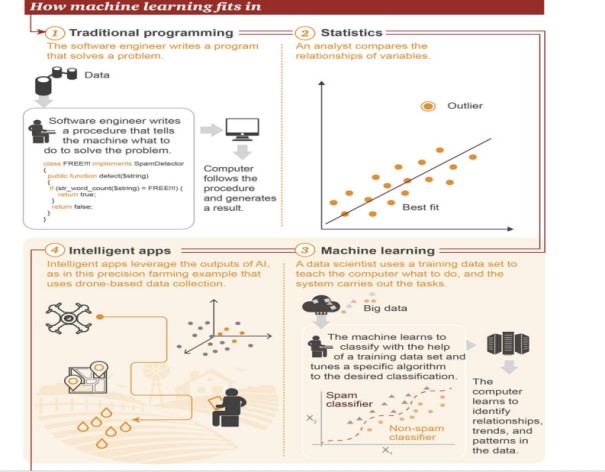
In today's digital information background, data is already an important means of production, various kinds of data continue to grow, and it is difficult to rely on the manpower to deal with such a huge amount of data. Machine learning can learn the law of data change from a large number of data and build a model for analysis, to give accurate and efficient program opinions. With the development of machine learning, deep machine learning in daily life is gradually widespread, and several successful commercial applications such as Google Translate have been born. Based on machine learning technology, this paper studies its application status and prospects in enterprise development planning. The research results show that more and more enterprises now apply machine learning to the planning and summary of the enterprise, at the same time, there are many functions of machine learning to be developed in the enterprise, through more development, enterprises can carry out more reasonable development and planning. The significance of this research is that it can provide specific application programs and solutions for enterprises, and also provide important references and guidance for the future development of enterprises, which is conducive to the healthy development of enterprises. In the future, with the continuous increase in the amount of data, the continuous progress of algorithms and the improvement of computing power, the application of machine learning in enterprise development planning will be more extensive and in-depth.
Show more
Read Article PDF
Cite
Research Article Open Access
Integrating computer vision and AI for interactive augmented reality experiences in new media
Article thumbnail
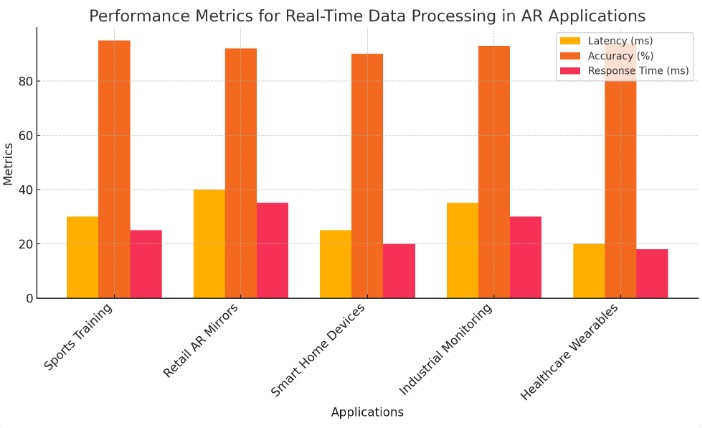
Augmented reality (AR) is a groundbreaking technology that fully immerse the user in a mixed 'reality' where the real and virtual coexist in a unique manner. Integrating more artificial intelligence (AI) and computer vision into AR devices can greatly improve user input and provide a whole novel interface. Through AI technology, such as gesture recognition, object tracking, and face recognition, AR systems can offer more intuitive and engaging interactions. An AR system featuring such improved AI technologies can process real-time data while having the contextual awareness to respond to users' input and the surrounding environment on the fly. It can also provide narrative integration, character development, and dynamic environments to users, thereby enabling them to have a more personalised and meaningful experience. This paper examines the evolution of new media by discussing the possibilities of using AI and computer vision in AR devices to create personalised experiences, all the while critically looking at technical challenges and the opportunities they present to the field of future research and development. It also looks at case studies across different sectors, such as education, training, tourism, gaming, retail, and aviation to justify the potential of future development of AI-enhanced AR.
Show more
Read Article PDF
Cite
Research Article Open Access
Intelligent agricultural mechanization: A new era engine for agricultural development
In recent years, the rapid advancement of technology and the increasing demand for efficient agricultural practices have propelled significant progress in the field of intelligent agricultural mechanization. This paper aims to comprehensively explore this important topic by analyzing the key role of intelligent agricultural mechanization in modern agriculture, examining its technological applications, and identifying prevailing challenges. Intelligent agricultural mechanization involves the integration of cutting-edge technologies such as artificial intelligence, machine learning, and the Internet of Things (IoT) into agricultural machinery and processes, revolutionizing traditional farming methods. Through an in-depth study of relevant literature, it elucidates how intelligent agricultural mechanization can significantly enhance agricultural production efficiency by minimizing resource waste, reducing labor costs, and increasing crop yields. Furthermore, the paper explores the broader implications of these advancements for sustainable development. The research results presented herein seek to provide robust theoretical support and practical guidance for advancing agricultural modernization. In this paper, future development trends are also discussed, including the potential for further innovations and the role of policy and regulatory frameworks in facilitating the adoption of intelligent agricultural mechanization.
Show more
Read Article PDF
Cite