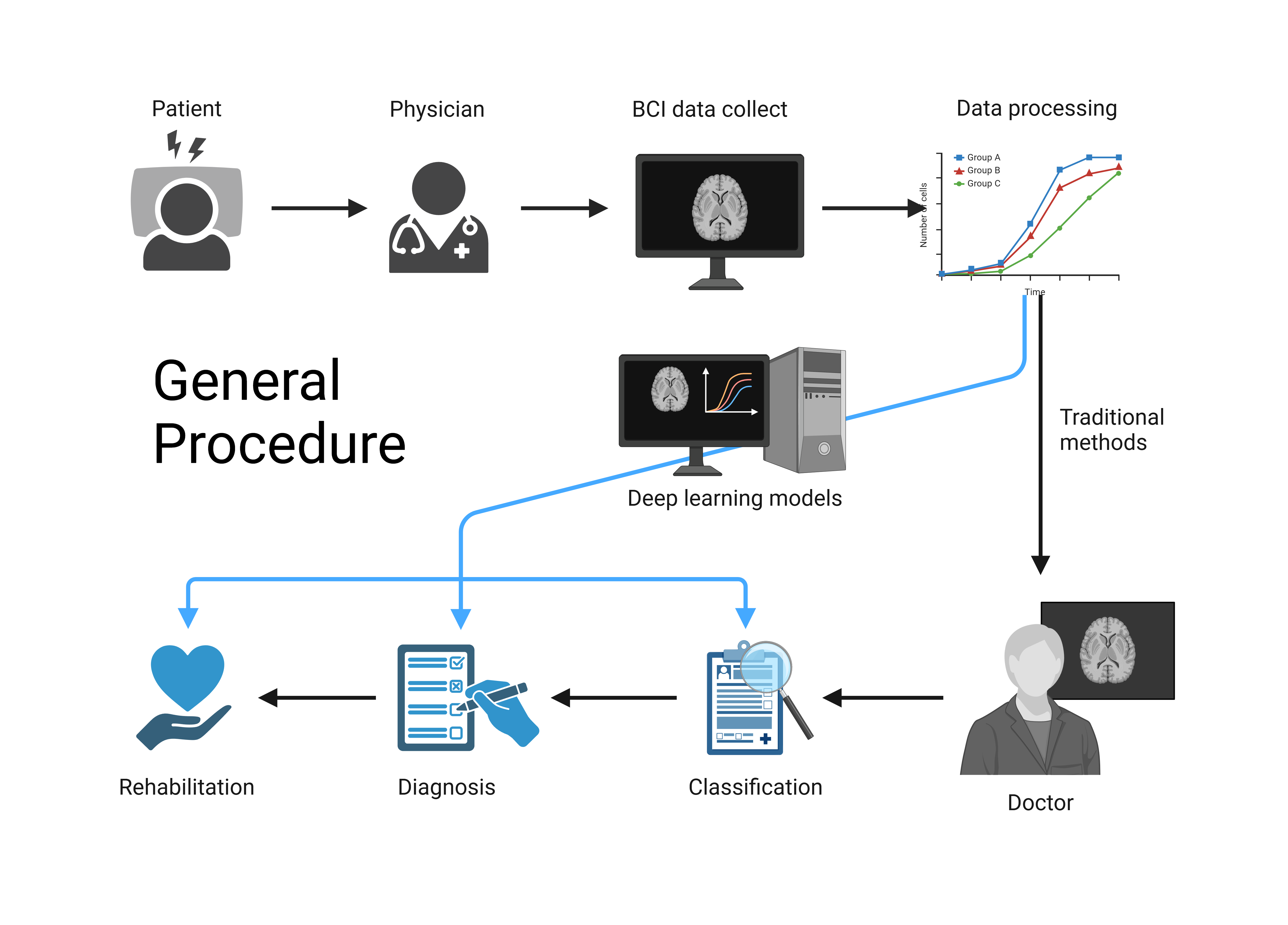
Stroke is considered a global disease that leads to death and certain neural disabilities. Deep learning techniques have revolutionized EEG-based Brain-Computer Interface(BCI), enhancing reliability and promising a transformative future for BCI applications in stroke rehabilitation. However, BCI's implementation in clinical practice has been restricted due to their low accuracy performance. The objective of this review is to summarize how the integration of deep learning and BCI technologies can contribute to the rehabilitation of stroke patients. This paper compiles studies that evaluated deep learning and BCI intersection for stroke subjects, analyses the methodological quality of these studies, and verifies the relationship between the effects of the interventions and performance achieved in rehabilitation. The deficiencies and the future development direction of stroke rehabilitation in BCI with deep learning are also discussed. The various deep learning techniques combined with BCI technology, will improve people's ability to cope with stroke and provide a way to recover from stroke.